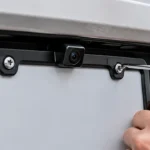
A license plate frame can go on the front, the back, or both. Install it only where a valid plate is required and displayed. The frame does not decide whether your vehicle needs one plate or two; the registration jurisdiction and vehicle class do. Front and rear openings may use the same plate size but have different brackets, cameras, lamps, sensors, recess depth, and screw requirements.
The Short Decision
| Your vehicle setup | Where a frame can go | What to verify |
|---|---|---|
| Rear plate only | Rear plate position | Rear camera, plate lamps, hatch handle, recess, screw depth |
| Front and rear plates | Either position or both | Each mount separately; do not assume identical brackets |
| Temporary rear plate | Follow the issuing authority and vehicle instructions | Do not damage, cover, relocate, or make the temporary plate illegible |
| Motorcycle or trailer | At the legally designated plate position | Vehicle class rules, plate size, lighting, bracket, vibration |
| No plate issued for a position | Do not display an unofficial plate as if it were registration | Local rules for novelty plates and front displays |
A Frame Does Not Change the Plate Requirement
Some U.S. jurisdictions issue or require front and rear plates for many passenger vehicles; others generally use one rear plate, with exceptions for vehicle classes and special registrations. Those rules can change. Check the official DMV or motor-vehicle agency for the state of registration instead of relying on a product listing or an old state map.
If two plates are required, adding a rear frame does not excuse a missing front plate. If only one plate is issued, do not move it to the front just because the bumper has a bracket. Follow the current official placement rule for your registration and vehicle class.
Why the Rear Position Needs Extra Checks
The rear plate area often contains a reversing camera, plate lamps, a hatch release, parking sensors, and a tight molded recess. A frame with a thick top bar may enter the camera image or block the handle. A wide side or bottom border can cover a registration tab or sit against the bumper. Deep screw caps may contact a trim panel before the frame seats.
Open the trunk or hatch after a loose test fit. Make sure the frame does not touch the body through the full movement, and check that the plate is still illuminated. View the camera image with the frame installed before driving.
Why the Front Position Is Different
Front brackets may sit on a curved bumper, grille, tow-hook adapter, or removable bracket. Nearby radar, parking sensors, air inlets, and active shutters can make the available envelope smaller than the plate itself. A rigid frame should not be bent to match a curved surface unless it was designed for that geometry.
Use the vehicle manufacturer’s designated mounting area. Do not drill a bumper, grille, or crash structure without model-specific instructions. Hidden sensors, wiring, reinforcement, and corrosion protection may be affected. If your vehicle lacks a bracket, use a compatible approved mounting solution rather than fastening the plate to random trim.
Can You Use the Same Frame on Front and Rear?
Often you can, because the plate dimensions match. Confirm these items at both positions:
- Plate width, height, embossed areas, and registration-tab location
- Two-hole or four-hole pattern and slot range
- Vehicle thread type, screw length, and available engagement
- Outer-corner and border clearance
- Camera, lamp, sensor, handle, grille, and airflow clearance
- Rear-face support and potential paint contact
- All required plate information visible from normal viewing angles
Do not transfer screws blindly. A front bracket and rear hatch insert may use different threads or depths. A screw that works at the front can bottom out, damage wiring, or puncture trim at the rear.
Which Direction Does the Frame Face?
The finished face, logo, or message faces outward. The plate sits behind the visible border unless the product is a rear holder with a different assembly sequence. Keep the writing upright and make sure the larger branding bar does not cover registration information.
Some frames have a wider message area at one edge. Do not rotate the frame solely to make the logo fit if the hole pattern, drainage, screw recesses, or plate opening are directional. Follow the product drawing or instructions.
How to Install a Frame in Either Position
- Confirm the plate is valid for that position and the frame opening is legally suitable.
- Clean the plate, frame, bracket, and painted contact area.
- Check the screw thread, length, washers, caps, and backing support.
- Place the plate and frame over the mounting points without forcing alignment.
- Start every screw by hand and tighten them evenly.
- Stop when secure; do not bow the frame or dish the plate.
- Check characters, state name, registration tabs, colors, and illumination.
- Check the rear camera and hatch operation or the front sensors and airflow.
- Press the lower corners to confirm the assembly does not rattle.
- Reinspect after the first drive and wash.
See our installation and removal guide for tool and hardware details.
Should You Put a Frame on Both Plates?
You can use matching frames for a consistent appearance, but there is no technical requirement to do so. The front may face more direct road debris and airflow, while the rear may have tighter camera and lamp clearances. Choose or omit a frame at each position based on fit, legal visibility, cleaning access, and the purpose you want it to serve.
If one position has little border clearance, a slimmer frame—or no frame—is better than forcing the same decorative design onto both ends.
Legal and Visibility Check
The safest design principle is simple: the installed frame should not obscure or impair any letter, number, jurisdiction name, registration tab, color field, or other required identification. It should not interfere with visual reading, authorized electronic recognition, or required lighting. Covers, shades, reflective treatments, and thick borders face more risk than an open slim frame.
Read the current official law for the state where the vehicle is registered and operated. Our U.S. license plate frame legality overview explains the general rule, while state-specific pages should be used for current details.
Fit Problems That Look Like Position Problems
If the frame fits the rear but not the front, the problem may be the bracket rather than the plate. Measure the outside envelope, hole centers, slot travel, recess depth, screw-head diameter, and local obstruction. Our license plate frame size guide provides a measurement checklist.
For a custom program, specify whether the frame must fit front, rear, or both, and identify representative vehicles. Share the target states, plate format, mounting pattern, artwork, material, finish, quantity, and packaging through the project inquiry form.
Frequently Asked Questions
Can I put a license plate frame on the rear only?
Yes, if the rear frame is legal and the vehicle still displays every plate required by the jurisdiction. A frame is optional and does not need to match the front.
Can a rear frame block the backup camera?
A thick top bar, cap, or emblem can enter the camera view on some vehicles. Test the installed camera image and check the lens and hatch handle clearance.
Can a front frame block sensors?
It can if the border, bracket, screws, or decoration enters a sensor field or interferes with the vehicle’s designated mounting area. Follow vehicle-specific instructions.
Do front and rear plates use the same screws?
Not always. Brackets and threaded inserts can differ. Confirm thread and depth at each position before installation.
Is it legal to put a decorative plate in the front?
That depends on the jurisdiction and whether a valid front registration plate is required. A decorative plate must not be displayed in a way that can be mistaken for official registration or conflict with local rules.