License plate frames are not automatically illegal in California. A slim open frame can be used when the plate remains securely mounted, clearly visible, upright, legible, and fully recognizable. California Vehicle Code § 5201 specifically prohibits a frame, border, shield, tint, or other device that obstructs or impairs plate recognition by specified electronic systems. Full-face plate coverings are generally prohibited, with narrow statutory exceptions. New penalties in § 5201.1 took effect January 1, 2026 for products intended to obscure plates.
This article is general product and installation information, not legal advice. California law, enforcement, and plate designs can change. Review the current official code before manufacturing, selling, installing, or relying on a specific product.
The Three California Sections to Know
| Code section | What it covers | Why it matters to a frame |
|---|---|---|
| § 5200 | Where issued front and rear plates are attached | A frame never replaces a required plate or changes its designated position |
| § 5201(a) | Secure fastening, clear visibility, upright characters, legibility, and mounting height | The complete plate-and-frame assembly must remain stable and readable |
| § 5201(c) | General prohibition on license plate coverings, with limited exceptions | A transparent shield is not treated like an ordinary open border |
| § 5201(d) | Devices that obstruct or impair electronic reading or recognition | The text expressly includes a frame, border, shade, tint, casing, and shield |
| § 5201.1 | Products intended to obscure, operation with such a product, alteration, and penalties | Applies to sellers and manufacturers as well as vehicle operators |
What § 5201 Requires From the Installed Plate
The plate must be securely fastened so it does not swing. It must be mounted where it is clearly visible, with characters upright and displayed from left to right, and it must be maintained in a clearly legible condition. Section 5201 also gives mounting-height rules and listed exceptions for certain vehicles.
A frame that makes the plate tilt, vibrate, sit partly inside a recess, or become hard to clean can create a compliance problem even if its empty opening looked wide enough. Review the installed assembly on the vehicle.
What Information Should Stay Visible?
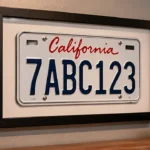
Keep the full plate number, issuing jurisdiction, registration tabs, colors, and every other official element visible. California’s cover exception for a specific license plate security cover explicitly refers to recognition of the issuing state, plate number, and registration tabs, and it does not allow any part of that security cover to rest over the plate number.
A wide top or bottom message bar is higher risk because California plate text and tabs can sit near the edges. A frame may shift as screws tighten, and flexible lips can creep after heat exposure. Approve the opening on the actual plate and recheck it after installation.
Are Clear License Plate Covers Legal in California?
Section 5201(c) states that a covering shall not be used on license plates except for limited situations. One concerns a cover over a lawfully parked vehicle to protect it from weather. Another permits a license plate security cover only when it does not obstruct or impair recognition, is limited to the area directly over the top of the registration tabs, and does not rest over the plate number.
A full clear plastic shield over the entire plate is not converted into an ordinary frame because it is untinted. Glare, scratches, condensation, dirt, and viewing angle can impair recognition. If a product combines a border and full-face shield, review it as a cover.
Electronic Recognition Is Part of the California Test
Section 5201(d) is especially important because it names casings, shields, frames, borders, shades, tints, products, and other devices. They must not obstruct or impair reading or recognition by electronic devices used by state or local law enforcement, toll facilities, or specified remote-emission systems.
A plate that looks readable to a person standing directly behind the car may still be affected by a reflective, prismatic, angled, tinted, or image-distorting device. Do not market products intended to defeat cameras, change angular visibility, or create selective glare.
What Changed on January 1, 2026?
California amended §§ 5201 and 5201.1 through AB 1085, effective January 1, 2026. Section 5201.1 now prohibits selling or manufacturing in California a product or device that obscures, or is intended to obscure, visual or prohibited electronic reading or recognition of a license plate. It also prohibits operating a vehicle with such a product and altering the plate’s reflective coating to avoid capture.
The statute provides a $1,000 fine per item sold or manufactured for a conviction under the sales/manufacturing subsection. A conviction for operating with a violating product or altering the plate under the listed provisions is punishable by a $250 fine per violation. These are the express § 5201.1 amounts; other charges and consequences depend on the applicable code section and facts.
Does California Require Front and Rear Plates?
Vehicle Code § 5200 says that when the Department of Motor Vehicles issues two plates for a vehicle, one must be attached to the front and the other to the rear. When only one plate is issued, it is generally attached to the rear, with the truck-tractor rule referenced in the statute.
A rear frame does not excuse a missing required front plate. A front frame also needs its own sensor, airflow, bracket, and visibility review. Follow the number of plates issued and the rules for the specific vehicle.
California Installation Checklist
- Display every plate issued for the vehicle in the required front or rear position.
- Use a slim open frame rather than a full-face cover.
- Keep the complete plate number, state name, registration tabs, and colors visible.
- Do not use shade, tint, reflective film, prismatic material, or camera-defeating devices.
- Keep the plate upright, clearly visible, legible, illuminated, and securely fastened.
- Confirm the border and caps do not enter the character or tab areas after tightening.
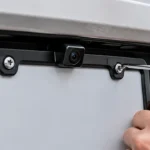
- Check the rear camera, lamps, and hatch handle.
- Check front radar, parking sensors, grille openings, and bracket clearance.
- Clean dirt, salt, water spots, and debris that can reduce recognition.
- Inspect from straight on and from ordinary law-enforcement and toll-camera angles.
What Frame Designs Are Lower Risk?
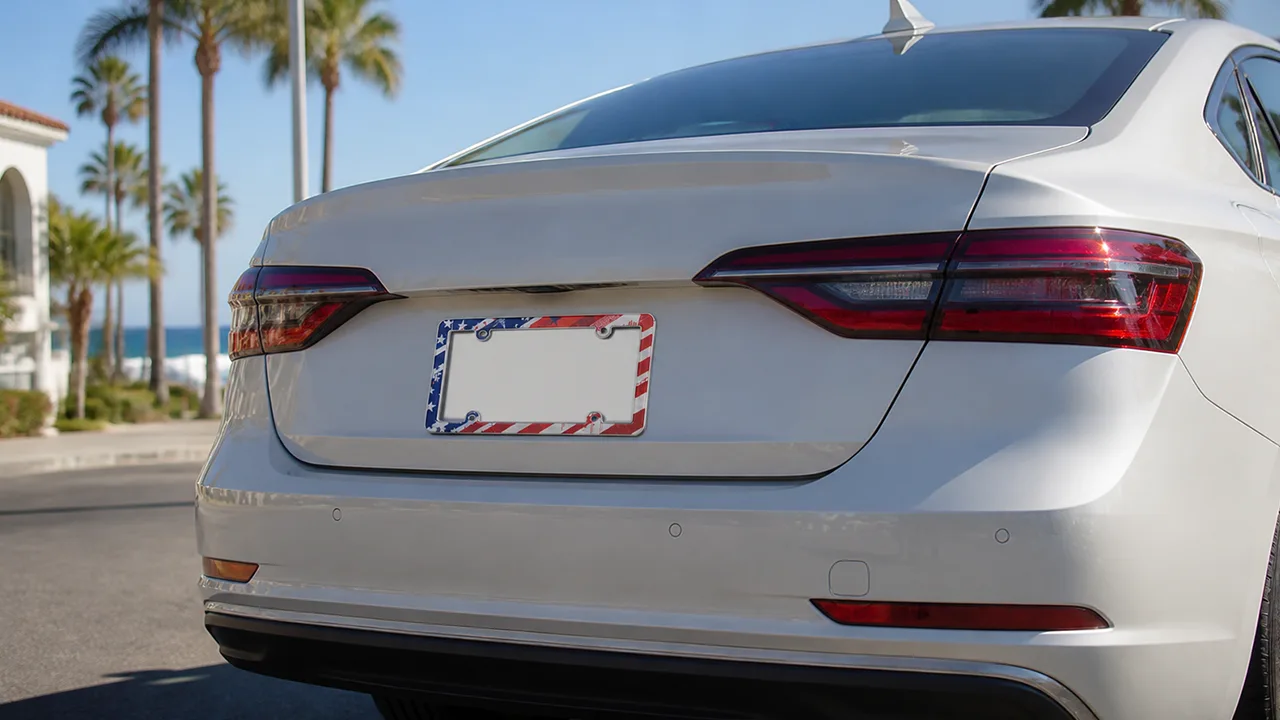
A slim open border with a generous clear window is the strongest starting point. Keep artwork and emblems within a documented safe zone. Use screw caps that remain outside the plate information. Make the frame stable enough that heat, vibration, and car washing do not move the border inward.
A silicone frame is not automatically legal because it is soft, and a metal frame is not automatically legal because it is thin. The installed opening controls the risk. Compare frame constructions in our types of license plate frames guide.
California Review for Manufacturers and Sellers
California’s 2026 text makes the intended function of a product especially important. Do not design, name, photograph, package, or advertise a frame or related device as a way to hide a plate, avoid toll recognition, defeat a camera, change viewing angles, or reduce electronic capture. A disclaimer cannot cure a product whose intended use is prohibited.
Control the visible opening, outside envelope, border width, cap diameter, mounting shift, artwork position, and installed flatness. Test representative California standard, specialty, and legacy plate layouts relevant to the target market. Photograph production-intent samples at several angles and under daylight and night illumination.
Avoid permanent, unlimited “California legal” promises. Record the official provisions reviewed, review date, plate series, vehicle configuration, and limitations. For a custom product, share the target plate formats, opening, artwork, material, finish, hardware, quantity, and packaging through our project inquiry form.
How This Page Relates to the General U.S. Guide
Our Are License Plate Frames Illegal? article explains the broad U.S. principle: a decorative border is usually evaluated by what it obscures or impairs. This page adds California’s specific cover restriction, electronic-recognition language, front-and-rear display rule, and the § 5201.1 penalties effective in 2026.
Frequently Asked Questions
Can a license plate frame cover the word “California”?
Do not design or install it that way. Keep the full issuing state, plate number, registration tabs, and other official information visible and recognizable.
Are dealership frames illegal in California?
Not automatically. A dealer frame can be used if it does not obstruct or impair visual or electronic recognition and the plate otherwise meets the mounting and legibility rules.
Are clear license plate covers legal in California?
Full-face coverings are generally prohibited. Section 5201(c) contains narrow exceptions, including a limited security cover directly over the top of registration tabs that does not impair recognition or rest over the plate number.
Are tinted or smoked covers legal?
They are not a safe or compliant choice. A tint or device that obstructs or impairs visual or electronic recognition is prohibited, and California also restricts plate coverings.
What is the 2026 fine for a plate-obscuring device?
Section 5201.1 states $1,000 per item sold or manufactured for a conviction under subsection (a), and $250 per violation for operating with a violating product or altering a plate under subsections (b) or (c).
Do Teslas and other EVs need a front plate in California?
Vehicle powertrain or brand does not create a general exemption. When two plates are issued for the vehicle, § 5200 requires one front and one rear. Use a compatible designated bracket that does not interfere with vehicle systems.
Can a frame block part of a registration sticker?
Do not allow it. California’s security-cover exception expressly protects recognition of registration tabs, and a normal frame should keep the complete official plate information visible.