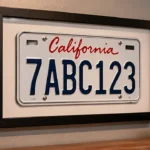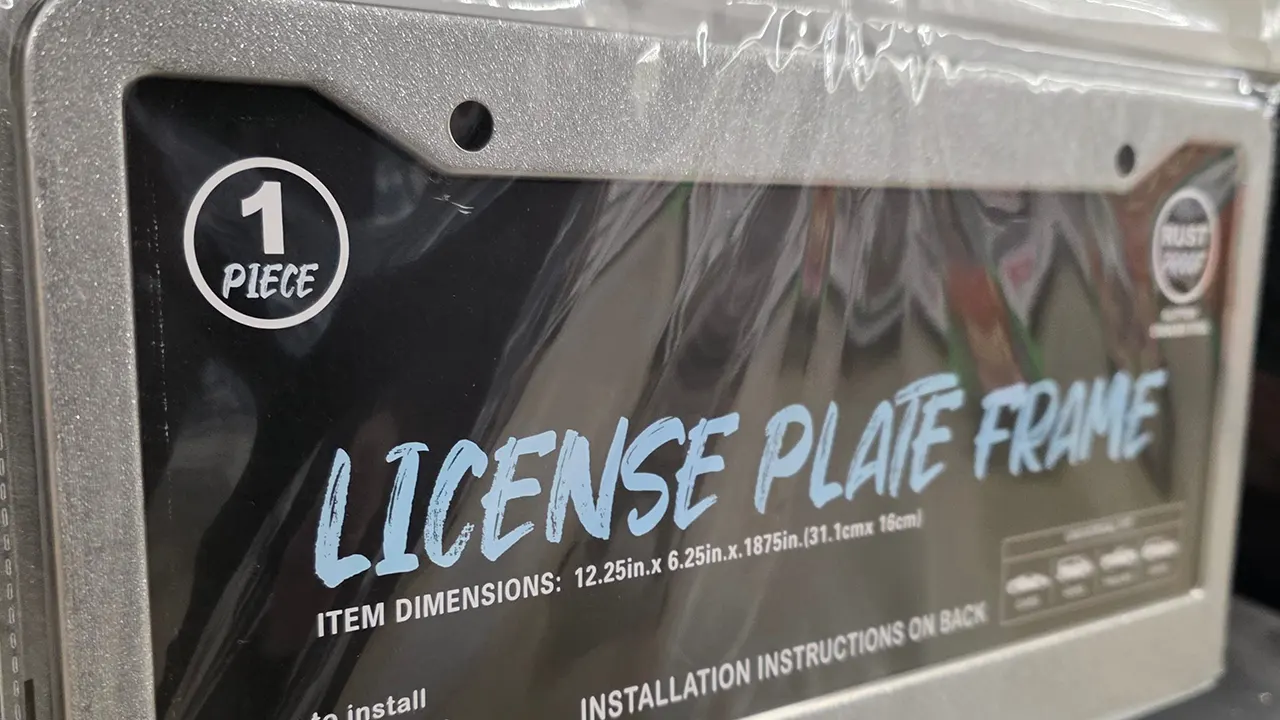
No. Massachusetts regulations expressly allow a license plate frame or border, provided it does not obscure the registration number or another part of the plate that the law requires to remain visible.
That is the good news. The limitation is equally direct: a frame that trims a character, hides protected plate information, blocks rear illumination, or works with a cover that reduces legibility can still result in a plate violation.
The legal answer without the fine print
| Setup | Massachusetts result |
|---|---|
| Slim border with the registration number and plate face unobstructed | Permitted |
| Rail or screw cap covering any part of the registration number | Not permitted |
| Cover that reduces legibility or substantially diminishes reflectivity | Not permitted |
| Rear frame that blocks plate illumination | Not compliant |
| Dirty, damaged, or illegible plate | Can still be cited or fail inspection |
| Current rule checked | August 24, 2026 |
The controlling sources are M.G.L. c. 90 § 6 and 540 CMR 22.02. The regulation is unusually helpful because it addresses frames by name instead of leaving the whole answer to a general visibility clause.
What 540 CMR 22.02 says about frames
The regulation makes two separate points.
First, you may not cover a Registry-issued plate with glass, plastic, or similar material if the cover reduces legibility or substantially diminishes the plate’s reflective qualities.
Second, a plate frame or border is not prohibited as long as it does not obscure the “register number” or another plate area protected by M.G.L. c. 90 § 6. Massachusetts defines the register number as the assigned letters, marks, numerals, or combination of them.
That distinction is practical. An open metal or plastic border can be acceptable. A clear shield over the face has to pass a different test involving legibility and reflectivity, and many real-world covers deteriorate after exposure.
Read the number from the edge, not just the center
A frame usually interferes first at the beginning or end of the registration number. The problem may be a thick corner, a screw-cap flange, or a rail that is slightly off-center rather than the main advertising panel.
Check each character as a complete shape. If the first letter loses part of its vertical stroke or the last number touches the inner lip, the frame opening is too small even though a familiar plate number may still be guessable.
Massachusetts also requires plates to be conspicuously displayed and kept clean, with the numbers legible. A narrow frame does not protect you if corrosion, peeling material, road film, or physical damage makes the issued plate hard to read.
Rear illumination is part of the frame decision
When vehicle lights are required, the rear registration number must be illuminated so it is plainly visible from 60 feet. This requirement is easy to miss during a daytime installation.
A frame can interfere in several ways:
- a tall top rail can sit between the lamp and the number;
- a decorative topper can cast a shadow;
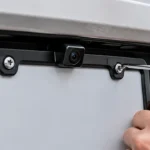
- a backup-camera bracket can move the lamp away from its intended angle;
- a glossy or curved cover can reflect the lamp back toward the viewer;
- a deep lip can leave the lower half of the number darker than the upper half.
After installation, turn on the lights in a dark area and step back. You should see a uniformly lit number, not a bright frame surrounding a dim plate.
What about clear or tinted plate covers?
A transparent appearance in a product photo does not settle the question. Under 540 CMR 22.02, a cover is unlawful when it reduces legibility or substantially diminishes reflectivity.
Clear plastic can fail that test after it:
- develops fine scratches;
- yellows in sunlight;
- traps condensation;
- collects salt at the edges;
- creates glare under headlights; or
- bows and distorts the plate from an angle.
A tinted cover is even harder to justify because tint is intended to change the light passing through the material. Massachusetts lawmakers have considered additional language aimed at tinted covers, but a filed bill is not the same thing as enacted law. The current answer should come from the statute and regulation in force, not a proposal headline.
For a low-risk installation, use an open frame and leave the plate face uncovered.
Massachusetts normally issues two plates
Massachusetts generally furnishes two plates for a registered motor vehicle, while trailers receive one. When two plates are issued, both need to be properly displayed. A front frame therefore deserves the same visibility check as the rear, even though only the rear position has the 60-foot illumination requirement.
Vehicles with older or special plate situations can follow different administrative rules. Do not remove a required front plate merely because the vehicle has no convenient factory bracket. Use a bracket designed for that mounting location and keep the plate flat and conspicuous.
Plate condition can affect inspection
Massachusetts treats an obscured, unlit, or improperly covered plate as a citable motor-vehicle offense. The RMV also provides a replacement process for damaged or illegible plates and notes that a plate may need replacement after an inspection failure.
If the plate itself is peeling or unreadable, buying a wider frame is not a repair. Replace the plate through the RMV, then choose a frame around the new plate’s clear area.
A 60-second installation audit
Use this short check after the frame is fully tightened:
- Read every registration character from directly in front of the plate.
- Look at the first and last characters from both side angles.
- Confirm no screw head, washer, or cap crosses a character.
- Wipe the plate and make sure the frame does not trap dirt along the number.
- Turn on the lights and view the rear number from roughly 60 feet.
- Remove any cover that changes brightness, color, or clarity.
- Recheck after winter driving, when salt can build up quickly.
The installation guide explains alignment and tightening. If the mounting holes or recess are causing the border to shift, compare the plate and opening in the size guide.
Massachusetts fines for number-plate violations
Massachusetts’ official schedule of citable motor-vehicle offenses groups missing, obscured, unlit, and improperly covered number plates under c. 90 § 6. The listed assessments are:
| Offense occurrence | Listed assessment |
|---|---|
| First | $35 plus a $5 public-safety surcharge |
| Second | $75 plus a $5 public-safety surcharge |
| Third | $150 plus a $5 public-safety surcharge |
A particular case can involve additional facts, and the schedule may change. Use the current court or RMV information if you are dealing with an actual citation.
Specifying a frame that works in Massachusetts
For a private-label or dealership frame, give the supplier an opening requirement rather than the phrase “Massachusetts legal.”
- Keep the full register number inside a measured safe zone.
- Include the intended screw heads, caps, and washers in the sample.
- Check the frame on standard, vanity, and relevant specialty plates.
- Verify rear-lamp clearance on the target vehicle or bracket.
- Do not combine the frame with a face-covering lens.
- Test the production finish for glare at night.
- Inspect the inner rail for sharp edges that could damage the plate coating.
The US license plate frame guide provides the common format, but final approval should use the actual Massachusetts plate and vehicle position.
Massachusetts license plate frame FAQ
Can a frame cover part of one registration character?
No. The regulation allows a frame only when it does not obscure the register number. Keep every assigned letter and numeral complete.
Are clear plate covers legal in Massachusetts?
Only if they do not reduce legibility or substantially diminish reflectivity. Because scratches, haze, and glare can change performance, an uncovered plate is the lower-risk choice.
Does the frame have to leave “Massachusetts” visible?
The regulation expressly protects the register number and also refers to other plate areas protected by c. 90 § 6. A slim opening that preserves the full issued plate avoids a narrow interpretation and works better across plate designs.
Can a frame cause an inspection issue?
Yes, if it contributes to an obscured, illegible, damaged, or improperly lit plate. The frame and plate are evaluated as installed.
Is the rear plate light optional when the number is reflective?
No. The rear registration number must be illuminated and plainly visible from 60 feet when vehicle lights are required.
What should I do with a peeling or illegible plate?
Order a replacement through the Massachusetts RMV. Do not use a frame to hide the damaged area.
Bottom line
Massachusetts permits license plate frames, but only when they leave the registration number and every legally protected plate area unobstructed. Choose an open, slim frame; skip the face cover; keep the plate clean; and verify rear illumination from 60 feet.
For a custom frame, send the plate type, target vehicle, opening dimensions, logo rail, hardware, finish, and quantity through the contact form.
This article provides general information, not legal advice. Check the current official materials for an inspection dispute, citation, or formal product decision.