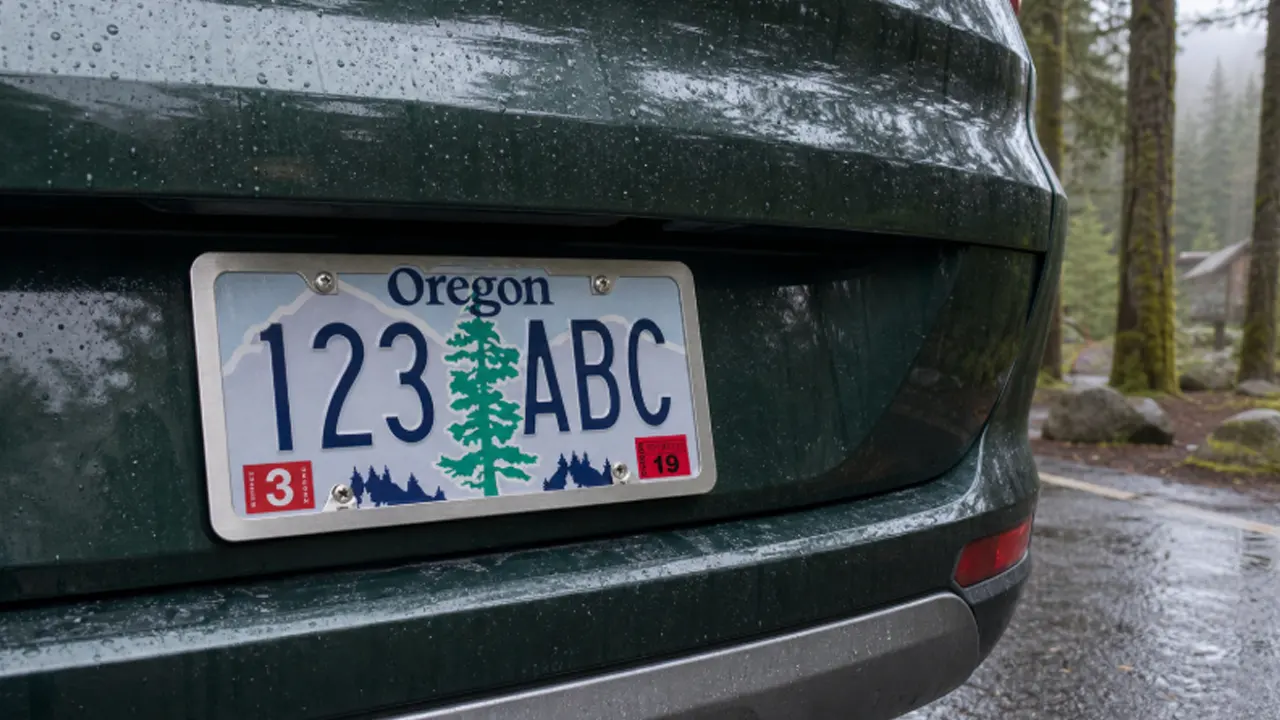
Oregon allows a license plate frame or holder as long as it does not obscure the plate’s numbers, letters, or registration stickers so that they become unreadable. The plate must also be displayed in plain view and be easy for the public to read.
Oregon law distinguishes a frame or holder from material placed over the plate face. ORS 803.550 permits the frame category only within its visibility limit, while other covering material that alters the plate’s appearance is prohibited.
Oregon’s frame rule in plain English
| Installation | Likely result under ORS 803.550 |
|---|---|
| Narrow open frame | Acceptable when numbers, letters, and stickers remain readable. |
| Wide rail over a character | Illegal alteration because the frame renders protected information unreadable. |
| Face cover that changes appearance | Prohibited material or covering, even though it is not a frame. |
| Frame covered with mud or road film | Can make the plate unreadable and fail the display requirement. |
| Plate mounted on the wrong vehicle | A separate form of illegal display under the same section. |
The statute uses a readability outcome rather than a fixed border dimension. A rail that works on one Oregon specialty plate may crowd the characters or stickers on another. Test the intended plate design.
Two related offenses carry different classifications
Failure to display plates as required by ORS 803.540 is a Class D traffic violation. That section covers placement—rear when one plate is required, front and rear when two are required—and requires the plates to be in plain view and easily read by the public.
Knowingly altering or illegally displaying a plate under ORS 803.550 is a Class B traffic violation. That section includes operating a vehicle with a plate that is covered or obscured, including by a frame that renders numbers, letters, or stickers unreadable. Court assessments depend on current law and the case, so verify the latest schedule rather than relying on an old ticket amount.
Does Oregon require front and rear plates?
When two plates are issued, one must be displayed on the front and one on the rear. When only one is required, it goes on the rear. The number issued depends on the vehicle category, so motorcycles, trailers, antique vehicles, and other special classes should be checked separately.
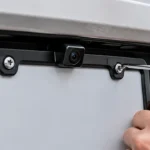
For a two-frame package, review front and rear brackets independently. The front mount may need a separate adapter or shorter screw, while the rear frame may need camera clearance and drainage.
The word “Oregon” and the statutory wording
The frame clause specifically names numbers, letters, and registration stickers. Oregon appellate notes have treated the word “Oregon” differently from “letters” in that clause. That does not make a state-name-covering frame a good product: the plate still must be in plain view and easy for the public to read, and a multi-state frame may face stricter wording elsewhere.
For a durable product decision, leave the complete jurisdiction visible. It improves identification, avoids a misleading sales claim, and makes the same opening more usable across plate series.
Why plate covers are a separate risk
ORS 803.550 identifies material or a covering—other than a frame or plate holder—placed on, over, or in front of a plate that alters its appearance. A smoked lens, reflective shield, or optical film can therefore create a problem even when the border itself is narrow.
Do not solve weather exposure by placing a face cover over the plate. Use an appropriate frame material, finish, drainage design, and corrosion-resistant hardware while keeping the official surface open.
Seven checks before you drive
- Confirm whether the vehicle was issued one plate or two.
- Install the actual Oregon plate in the finished frame.
- Leave every number, letter, and registration sticker readable.
- Check the jurisdiction and complete plate from normal viewing angles.
- Make sure front and rear plates are in plain view where required.
- Remove any covering that changes the plate’s appearance.
- Clean the frame channel so dirt cannot build up over the lower edge.
Use the frame size guide to compare openings and hole patterns. The nominal outer dimensions alone do not show what a border will hide.
Correcting a frame that is too wide
Remove it and mount the plate without the frame, or choose a slimmer design. Do not grind the inside edge while the frame is on the vehicle, cut the issued plate, relocate registration stickers, or bend the plate to fit.
Reinstall the plate with compatible screws and make sure it cannot vibrate. If the available holes do not match the frame, see the two-hole and four-hole comparison before drilling anything.
Oregon retail, dealer, and fleet specifications
- Clear opening approved with current plate series
- Sticker zones included in the inspection gauge
- Separate front and rear mounting review
- Rail depth evaluated from angled views
- Logo and screw caps kept outside protected information
- No face cover or image-altering layer
- Final inspection after coating, plating, and assembly
For a private-label program, state the verified application honestly. “Fits standard U.S. plates” describes outer size, not Oregon readability or vehicle fit. Include the bracket and hardware scope in the packaging.
Frequently asked questions
Can a frame cover the registration stickers?
No, not when it renders them unreadable. The frame clause expressly protects registration stickers.
Are clear plate covers legal in Oregon?
A covering placed over or in front of the plate is prohibited when it alters the plate’s appearance. An open frame is the lower-risk accessory.
Can I drive with only the rear plate?
Only when the vehicle requires one plate. If two were issued and required, display one at the front and one at the rear.
Does dirt count as an obstruction?
Natural buildup can still make a plate covered or unreadable. Clean the plate and frame as part of normal maintenance.
Is this legal advice?
No. It is a design and installation summary based on the official materials reviewed above. Confirm current statutes and session-law changes for a legal decision.
Review an Oregon frame project
Send the vehicle categories, plate samples, front and rear brackets, opening, artwork, finish, hardware, quantity, and packaging requirements through the contact form. We can review the physical fit while you complete final compliance approval.