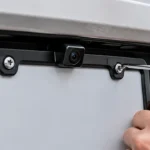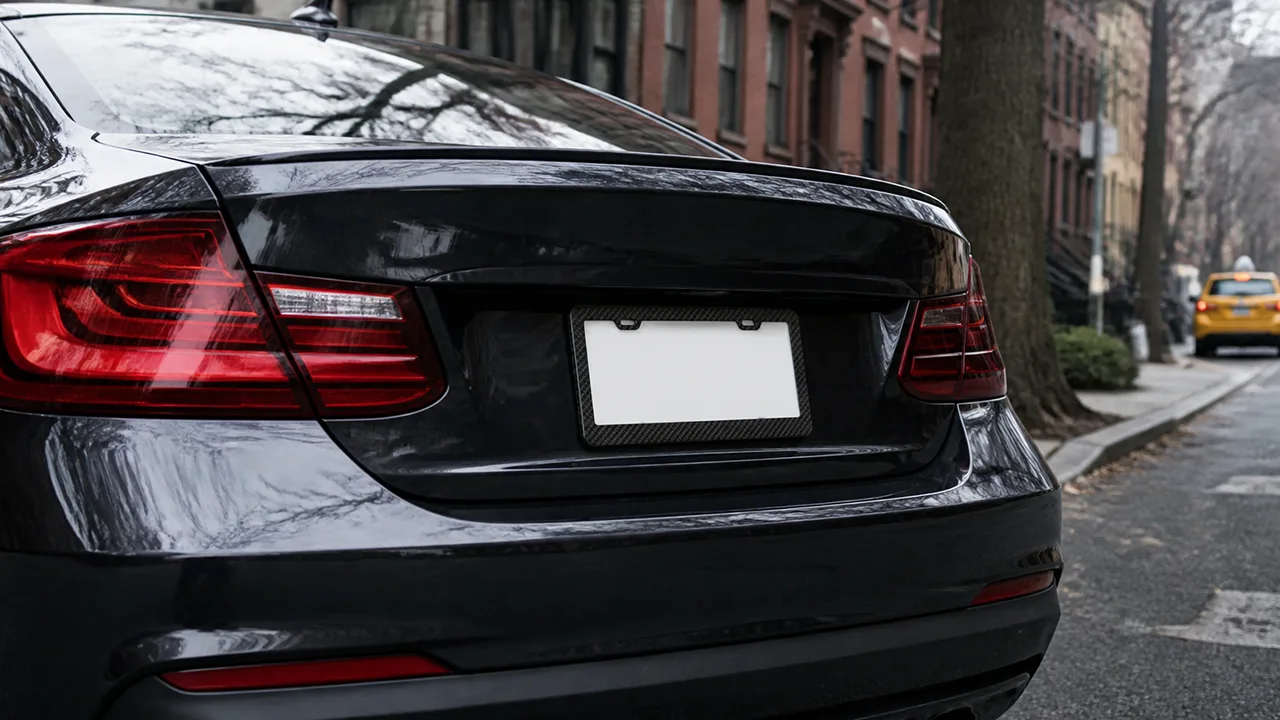
A normal open license plate frame is not automatically illegal in New York, but the installed plate must remain clean, easily readable, securely displayed, uncovered, and unobstructed. New York prohibits materials that conceal or obscure the plate or distort recorded or photographic images, prohibits glass or plastic covering over the plate, and bars obstruction by the vehicle or anything carried on it. A thick frame that covers identifying information can therefore lead to a violation even if it was sold as “legal.”
This article provides general product and installation information, not legal advice. Laws, enforcement, local parking rules, and plate designs can change. Check the current official text before you manufacture, sell, install, or rely on a particular design.
What New York Law Requires
Vehicle and Traffic Law § 402 is the central state provision. For ordinary situations, it requires issued plates to be conspicuously displayed, securely fastened so they do not swing, and placed within the stated height range whenever reasonably possible. When a set of two plates is issued, the statute calls for one at the front and one at the rear. When only one plate is issued for an authorized period, the statute describes where that plate is displayed.
The same section says plates must be kept clean and easily readable. It then addresses three separate risks: material that conceals, obscures, or distorts a recorded image; glass or plastic material covering the plate; and obstruction by the vehicle or anything carried on it, subject to a narrow toll-device exception.
| Rule area | Practical meaning for a frame | Common risk |
|---|---|---|
| Clean and easily readable | The installed border cannot make the plate hard to read, and dirt buildup still matters | Wide bar, grime in a recess, curled silicone lip |
| No concealing or obscuring material | Do not use coatings or devices that hide plate content | Reflective spray, film, shade, or thick border |
| No image distortion | The plate must remain recognizable in recorded or photographic images | Angular, reflective, lenticular, or distortion-producing device |
| No glass or plastic covering | A clear-looking plate cover is not saved simply because you can read through it | Full-face shield or cover sold as weather protection |
| No obstruction by vehicle or cargo | Accessories and carried items cannot block the plate view | Rack, load, bumper part, or mispositioned bracket |
| Secure display | The plate should not swing or sit loosely inside the frame | Wrong screws, loose bracket, unsupported plate |
Does the Frame Have to Leave “New York” Visible?
The safest answer is yes: keep the entire jurisdiction name, plate number, registration information, colors, and other identifying marks unobstructed. Section 402 uses broad language around easily readable plates, concealment, obstruction, distinguishing numbers, and other identification marks. Designing only around the large alphanumeric characters is too narrow.
New York plate layouts can place words and graphics near the border. Test the actual current and legacy plates in your intended market. A top bar that clears one plate series may overlap another. An installed frame can also shift after the screws are tightened, so review the final assembly rather than the empty frame.
Are Clear Plastic License Plate Covers Legal in New York?
New York’s current statute says number plates shall not be covered by glass or any plastic material. Do not assume a clear, untinted cover is acceptable because the plate looks readable in daylight. Scratches, glare, dirt, condensation, and camera angle can also change how a cover performs.
A frame is different from a cover when it surrounds the border without placing glass or plastic over the plate face. A product that combines a border with a clear shield should be reviewed as a cover, not marketed as an ordinary open frame.
What Changed in 2024?
Changes effective in September 2024 strengthened New York’s response to obscured and “ghost” plates. The law expanded restrictions around covers and materials and increased penalties for the plate-obstruction provisions. It also made selling, offering for sale, or distributing certain image-distorting materials, obstructing plate covers or devices, and plate-like material unlawful.
That matters to manufacturers and sellers as well as drivers. A product designed to obstruct or obscure all or part of the distinguishing number or other identification marks is not made acceptable by a disclaimer telling the buyer to check local law.
Penalties Under § 402
The general penalty in subdivision 8 is a fine of $25 to $200, but violations of the specified provisions covering concealed or obscured plates, glass or plastic coverings, and obstruction are punishable by a fine of $100 to $500. A person convicted under the glass-or-plastic provision must surrender the covering or applicable material. The statute also permits a court or tribunal, after a conviction involving concealing or obscuring material, to order its removal or the replacement of the plates.
A violation involving a vehicle parked on a public highway can constitute a parking violation under the statute. Actual consequences depend on the charged provision and facts. Do not treat an accessory’s purchase price as a reliable measure of enforcement risk.
New York Installation Checklist
- Use an open frame rather than a glass or plastic cover over the plate face.
- Keep the complete plate number, “New York,” registration information, colors, and other identifying marks visible.
- Do not use reflective, angular, tinted, sprayed, or image-distorting material.
- Clean the plate and frame so road film does not reduce readability.
- Mount issued front and rear plates as required for the vehicle and registration.
- Use the correct screws so the plate is secure and does not swing.
- Check that the vehicle, frame, rack, and cargo do not block the view.
- Confirm the rear lamp, camera, and hatch do not create a new obstruction.
- Inspect from straight on and at ordinary roadside and camera viewing angles.
- Recheck after tightening, washing, loading cargo, or installing a rack.
What Frame Designs Are Lower Risk?
A slim, open border with generous clearance around the entire plate is the best starting direction. Keep logos within a defined safe area. Avoid full-face shields, thick message bars, deep caps that enter the opening, reflective treatments, and frames that rely on stretching over the plate.
Material does not decide legality. Stainless steel, aluminum, zinc alloy, plastic, silicone, and carbon constructions can all be compliant or noncompliant depending on the installed opening and behavior. Compare product categories in our types of license plate frames guide.
What Manufacturers and Dealers Should Verify
Record the clear opening, outside envelope, border width, hole pattern, artwork zone, cap intrusion, and installed shift tolerance. Fit production-intent samples to representative New York plate designs, including any legacy layouts still in service. Photograph the final installation from multiple angles under normal lighting.
Keep product naming precise. An open frame should not be pictured or packed with an unreviewed clear shield. Do not publish “New York legal” as an unlimited promise; vehicle setup, plate series, installation, later accessories, and legal changes are outside a single frame drawing. State what the product was checked against and when.
For a custom program, share the target plate series, visible-opening requirement, artwork, material, finish, hardware, quantity, and packaging through the project inquiry form. Our general legality guide helps separate nationwide design principles from state-specific rules.
Frequently Asked Questions
Are dealership license plate frames illegal in New York?
Not automatically. A dealer frame becomes a problem when the installed border obscures or impairs required plate information or readability. Check the actual plate and frame, not the dealer’s intent.
Can a frame cover part of the word “New York”?
Do not design or install it that way. The law requires easy readability and prohibits obstruction or obscuring of the plate and its identification marks. Keep the complete state name visible.
Are tinted plate covers legal in New York?
No. New York prohibits glass or plastic material covering the plate, and separately prohibits material that conceals, obscures, or distorts images.
Can you get a ticket while parked?
Yes. Section 402 states that a violation occurring while a motor vehicle is parked on a public highway constitutes a parking violation.
Is a silicone frame legal in New York?
The material itself is not the deciding factor. The installed silicone lip must not cover plate information, and it should not be treated as permission to add a full-face plastic cover.
Do New York vehicles need front and rear plates?
Section 402 generally describes a set displayed front and rear, with provisions for periods or vehicles when only one plate is issued. Follow the plates and instructions issued for your specific registration.