Pack metal license plate frames so finished faces cannot rub, hardware cannot migrate, and the carton carries stacking and handling loads without bending the frames. A thin bag may keep off dust, but it does not stop abrasion, corner impact, compression, or a loose screw from marking a polished surface.
The right pack depends on frame stiffness, finish sensitivity, unit weight, sales channel, route, pallet pattern, and acceptable cosmetic limit. Build the package around the actual product and distribution system.
Start with the damage you need to prevent
| Failure mode | Typical cause | Packaging control |
| Hairline scratches or rub marks | Face-to-face movement during vibration | Individual sleeve, nonabrasive interleaf, or formed separation |
| Bent border or twisted frame | Carton compression, voids, or edge impact | Rigid divider, supported stack, limited pack height, stronger carton |
| Dented corner | Drop or concentrated contact | Corner clearance, cushioning, and immobilization |
| Finish staining or corrosion | Moisture, condensation, contaminated paper, or trapped residue | Clean dry packing, suitable barrier, route-based moisture control |
| Loose hardware damage | Screws or caps moving inside the unit pack | Sealed accessory bag fixed away from the show surface |
| Wrong quantity or mixed finish | Poor counting and carton identification | Standard pack count, separators, labels, and scan or count checks |
Choose the unit pack by finish sensitivity
A brushed frame and a mirror-polished, plated, painted, or printed frame do not need identical protection. Define which face is cosmetic and the defect limit for that surface.
- Bulk interleaf: efficient for robust finishes when each frame is separated and the stack cannot slide.
- Individual sleeve or bag: useful for dust control and retail handling; choose a material that will not abrade or transfer to the finish.
- Formed tray or cell divider: better for premium finishes, raised logos, sharp contours, or frames that deform under point loads.
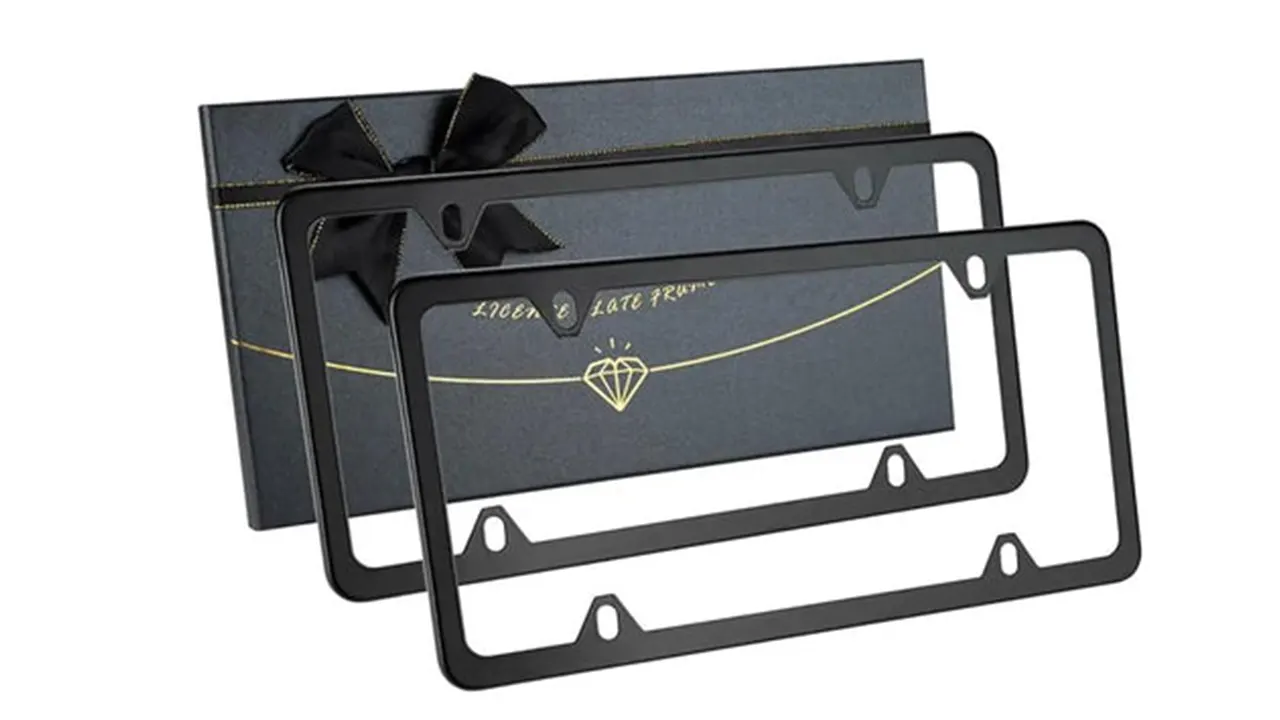
- Retail box or card pack: adds presentation and barcode space, but the insert must still restrain the frame.
Protective film should be approved on the real finish. Adhesive transfer, edge lifting, trapped particles, and difficult removal can create a new defect while trying to prevent scratches.
Keep hardware under control
Place screws, caps, washers, brackets, or tools in a sealed accessory bag. Locate it behind a backing card, in a separate cell, or in another position where it cannot touch the show face. Confirm that sharp screw tips cannot puncture the bag during vibration.
Count hardware by a controlled method and make the pack configuration visible on the work instruction. For dealer or retail programs, label any application-specific hardware clearly; a mixed screw thread can damage a vehicle insert before anyone notices the packing error.
Build a carton that supports the stack
- Orient every frame consistently and support the broad, stronger areas rather than a thin decorative edge.
- Use dividers or end pads to remove free movement. Avoid compressing raised lettering or a coated face.
- Fill voids with a designed restraint, not loose scrap that can settle during transport.
- Set the inner-pack quantity so the bottom frame is not flattened by the stack above it.
- Select the outer carton and closure for total gross weight, stacking pattern, humidity, route, and handling method.
- Keep the pallet footprint stable; use corner boards, stretch wrap, and strapping only with protection that prevents crushing.
“Five-layer carton” or a burst-test number alone does not prove package performance. Board grade, flute, box style, dimensions, joint, closure, humidity, stacking time, and pallet pattern work together.
Control moisture without making blanket promises
Pack parts clean and dry. If the route includes ocean freight, long storage, or large temperature changes, assess condensation risk with the metal and finish supplier. Desiccant works only as part of a defined moisture-control system; adding a sachet to a ventilated carton does not create a sealed barrier.
Use compatible, low-contamination papers and films. If volatile corrosion inhibitor material is proposed, confirm compatibility with the exact metal, coating, print, adhesive, and destination requirements. Packaging choices should not be used to hide an unfinished edge or unverified coating performance.
Test the finished package against the real route
Inspect a production-equivalent pack after vibration, shock or drop, compression, and relevant atmospheric conditioning. ISTA notes that packaged-product protocols address hazards such as vibration, shock, compression, temperature, and humidity; the correct procedure depends on the distribution system and package.
Write acceptance criteria before the test: no frame deformation, no defined cosmetic defects, complete hardware, legible labels, intact closure, and carton condition appropriate for the channel. Open packs from the top, middle, bottom, edges, and corners rather than checking only one easy sample.
Retest when a meaningful variable changes—frame geometry, finish, unit count, interleaf, accessory pack, carton, closure, pallet pattern, or shipping channel.
Put the packaging specification in the RFQ
Send the frame drawing and weight, finish sample, cosmetic zones, individual-pack format, accessories, units per inner and master carton, carton label data, pallet requirements, destination, channel, and required test protocol. Metal options can be reviewed through the stainless steel and aluminum license plate frame pages. For a branded pack, include artwork and barcode rules with the project inquiry.
Frequently asked questions
Can metal license plate frames be packed face-to-face?
Only when a validated separator prevents cosmetic contact and movement. Direct face-to-face stacking can create rub marks even when the finish feels hard.
Should each frame be individually bagged?
Not always. Individual bags help with dust and handling, but robust bulk programs may use interleaf or divided trays. Choose by finish sensitivity, channel, labor, waste goals, and test results.
Do desiccant packets prevent corrosion?
Not by themselves. Their effectiveness depends on moisture load, barrier properties, package volume, sealing, storage time, and the exact metal-finish system.
When should packaging be approved?
Before mass shipment, using production-equivalent frames, hardware, cartons, labels, pallet configuration, and a test plan matched to the distribution route.