No, you usually do not need a license plate frame. The legally important item is the valid plate, securely mounted in the required position and kept clearly readable. A frame is an optional accessory. It can improve appearance, carry dealer or brand information, cover a sharp plate edge, reduce certain rattles, or support a custom finish—but only if it fits correctly and does not block any required plate detail.
What a Frame Can and Cannot Do
| A frame can | A frame cannot | What decides the result |
|---|---|---|
| Create a finished border and coordinate with vehicle trim | Make a hidden or unreadable plate legal | Opening, border width, installed position, and local law |
| Carry a dealer name, logo, slogan, or custom design | Guarantee that every state plate layout remains visible | Actual target plates and approved branding zone |
| Cover the sharp outer edge of the plate | Repair a cracked bracket or stripped vehicle mount | Frame construction, rear face, hardware, and bracket |
| Reduce plate-on-body contact or rattle | Stop noise from hatch trim, camera, wiring, or body panels | Correct diagnosis and isolation at the real contact point |
| Offer different materials and finishes | Remain maintenance-free in every environment | Material grade, finish, drainage, cleaning, and exposure |
When a License Plate Frame Is Useful
You want a cleaner visual finish. A slim frame can hide the uneven outer edge of a plate and coordinate with bright, black, brushed, colored, or patterned vehicle trim. The frame should complement the plate rather than crowd it.
You need branding. Dealers, fleets, clubs, events, and retail brands use the border for names and logos. A commercial design needs a controlled visible opening, legible artwork, durable decoration, and target-state review. The largest possible logo is not necessarily the most effective one.
The plate edge touches the vehicle. A silicone surround or a rigid frame with suitable isolation can prevent direct hard-edge contact. Clean the interface periodically because trapped grit can still mark paint.
The plate itself is the confirmed rattle source. A well-fitted frame, lower supports, pads, washers, or a silicone channel can reduce movement. Use our rattle guide to confirm the noise before adding parts.
You need a specific material or decorative treatment. Stainless steel, aluminum, zinc alloy, plastic, silicone, and carbon constructions support different appearances and manufacturing methods. See our types of license plate frames for the full classification.
When You Are Better Without One
Skip the frame when the plate sits in a very tight recess, the border would cover a state name or tab, the rear camera or hatch handle has little clearance, the front plate is close to sensors or airflow, or the available hardware cannot clamp the extra thickness safely. A bare plate mounted correctly is better than an attractive frame that creates an obstruction or rattle.
You may also prefer no frame if you want the easiest cleaning access or the simplest visual treatment. Remove an existing frame if it is cracked, bent, sharp, loose, corroding, holding water, damaging paint, or no longer leaving the plate fully visible.
Does a Frame Protect the Plate?
A frame can cover and stiffen the outer edge, but it does not protect the entire reflective face. It will not prevent every bend, chip, road impact, theft attempt, or weather effect. A wide border may create more coverage, but it also increases the chance of obscuring information.
Do not confuse a frame with a cover or shield. A cover places material over the plate face and may create glare, tint, distortion, or electronic-recognition problems. Current state law controls whether a particular device is allowed.
Does a Frame Protect Car Paint?
It can reduce contact when the rear face is smooth and properly isolated. It can also damage paint if burrs, hard corners, trapped sand, corrosion products, or repeated movement are present. A silicone body is soft, but dirt between it and the vehicle remains abrasive.
Wash the plate area before installation, inspect every rear edge, use only suitable pads where needed, and tighten the assembly evenly. Remove it periodically for cleaning. Paint protection comes from clean, stable contact—not simply from adding another layer.
Are License Plate Frames Legal?
Frames are not automatically legal or illegal as a category. The installed result matters. A frame should not obscure or impair letters, numbers, the jurisdiction name, registration tabs, colors, or other official identifiers. It should not prevent visual reading, authorized electronic recognition, or required plate illumination.
Rules differ and change. Check the current official law and DMV guidance where the vehicle is registered and operated. Our legal overview explains the general U.S. design principle, and our state pages cover jurisdictions with meaningful search demand.
What Type Should You Choose?
| Your priority | Good starting type | Check before approval |
|---|---|---|
| Quiet, soft edge | Silicone surround or rigid frame with controlled isolation | Drainage, fit, tear resistance, cleaning access |
| Slim premium metal | Stainless steel | Grade, edge treatment, finish, hardware |
| Low mass and colored graphics | Aluminum | Alloy, coating pretreatment, cut edges, print durability |
| Raised logo and sculpted detail | Die-cast zinc alloy | Porosity, plating stack, border opening, weight |
| High-volume molded features | Rigid plastic | Resin, UV package, ribs, wall thickness, warpage |
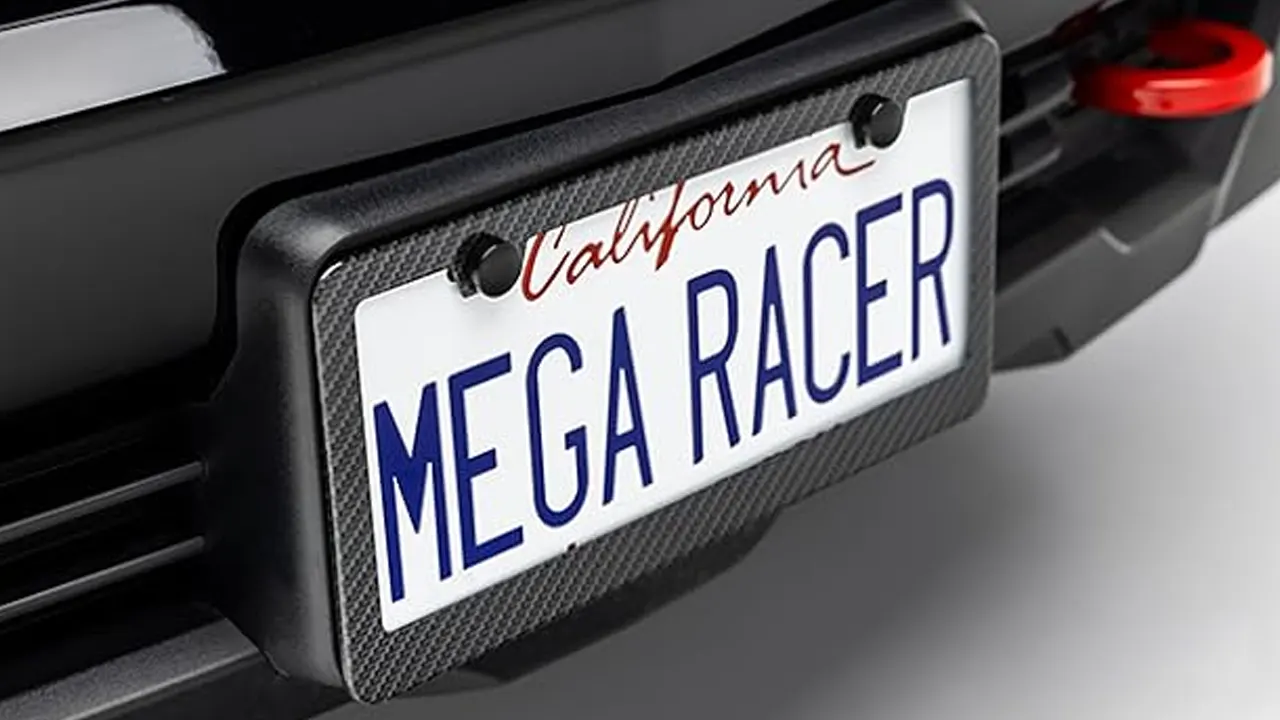
| Real woven appearance | Verified carbon composite | Authenticity, hole support, edge sealing, clear coat |
How to Decide in Five Minutes
- Check whether the plate is already secure, quiet, fully visible, and easy to clean.
- Identify the problem or goal a frame would solve: appearance, branding, edge contact, or rattle.
- Measure the plate, mounting pattern, recess, camera, lamp, handle, sensors, and outer clearance.
- Compare the installed opening with every required plate element and current local law.
- Choose a material, finish, and hardware set that suit the environment and maintenance routine.
If the frame adds no clear benefit, you do not need one. If it solves a defined problem without introducing obstruction, poor fit, or maintenance issues, it can be a worthwhile accessory.
What Commercial Buyers Should Ask For
A dealer or branded frame has to work across more than one vehicle and plate. Specify the target states or countries, plate formats, opening, outside dimensions, two-hole or four-hole layout, material, finish, artwork, logo tolerance, hardware, installation method, packaging, quantity, and durability criteria.
Approve production-intent samples on representative plates and vehicles. Keep a physical master sample and control later material or finish substitutions. Use the custom license plate frame page to review common options, then send project details through the inquiry form.
Frequently Asked Questions
Is a license plate frame required by law?
Usually no. Laws generally require the official plate itself to be correctly displayed, secure, and legible. Confirm the current rule for your vehicle and jurisdiction.
Can you install a license plate without a frame?
Yes. Use the proper bracket, screws, washers, and designated mounting points. Make sure the plate is stable, illuminated where required, and not contacting paint.
Does a frame stop a plate from bending?
A rigid frame may support the edge, but it cannot prevent every impact or compensate for a weak or broken vehicle bracket. The complete mounting assembly controls support.
Should a new car come with a license plate frame?
A dealer may provide an advertising frame, but it is optional. You can keep it, replace it, or remove it as long as the valid plate remains correctly displayed.
Can a frame cause a ticket?
Yes, if the installed border or device obscures or impairs required information or recognition under local law. A slim frame fitted to the actual plate is the safer direction.
Do you need frames on both the front and rear?
No. Even where two plates are required, the frames themselves remain optional. Check each position independently for fit and visibility.