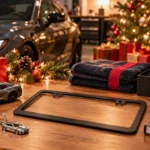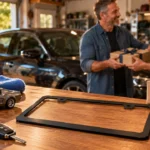
Useful car club merchandise ideas include a well-fitting shirt, an original club decal, a custom license plate frame, a key tag, and an event keepsake. Choose items members will actually use, then adapt the artwork to each product. A small, coherent collection is easier to buy, wear, and manage than a catalog full of unrelated logos.
Start by deciding whether the merchandise is for regular member use, a welcome gift, an event souvenir, or retail sales. Those purposes affect the design, quantity, price, and delivery plan. You can share one club identity across them without ordering every category at once.
Choose the Role Before the Product
Ask members where they would use an item and what they would pay for the actual version you are considering. A poll showing a design, material description, price, and collection date gives more useful feedback than a general question about whether people want club merchandise.
Separate the club’s recurring identity from a dated event design. An undated shirt or frame can remain useful between meets. A dated plaque may be attractive precisely because it marks one gathering, but leftover stock needs a different plan.
| Use | A sensible starting selection | What to settle first |
|---|---|---|
| Everyday member identity | Shirt, cap, frame, or decal | Member preference, fit, and understated artwork |
| A welcome gift | One practical item with membership information | What the joining fee includes and how choices are collected |
| An annual meet | Event shirt, plaque, or print | Approved date, design deadline, and unsold stock plan |
| A club shop | A small permanent range plus occasional editions | Pricing, seller responsibilities, and fulfillment capacity |
| Garage use | Flag, wall print, cloth, or tool roll | Real use, storage, material care, and dimensions |
Relative cost varies with product construction, decoration, quantity, and transport. Don’t treat a category label such as “keychain” or “metal frame” as a price tier. Compare the delivered version members will receive.
18 Car Club Merchandise Ideas Worth Considering
1. A T-Shirt That Works Between Meets
Picture the shirt with ordinary jeans or under a jacket, not only in a group photograph. A small chest mark with a larger original back design can work for members who want visible club identity without a crowded front. A single-position design is another good option if the artwork is strong enough on its own.
Choose the actual garment before taking sizes. Share its measurement chart and describe the fit; “medium” does not mean the same thing across suppliers.
Look at the design on the smallest and largest sizes you plan to offer. A print that fills the front of one shirt can feel lost on another. Settle that before opening the order, so members are choosing a finished idea rather than helping redesign it after payment.
2. A Club License Plate Frame
A frame puts the club identity on the car, which can appeal to members who do not wear club clothing. Start with the name. A long club name may need the lower strip to itself; a shorter one may leave room for a small original emblem. The founding year can be meaningful, but it does not have to compete with a slogan and a location on the same narrow border.
The finish can connect the frame to the vehicle. A plain dark design may suit a restrained look, while a selected metal finish creates a different effect. Let members compare a real example rather than assume everyone wants the most conspicuous version.
Custom club license plate frames can use printed artwork or, on suitable designs, raised lettering and other decoration. Compare the exact model and process. A material name alone does not establish resin, grade, thickness, or outdoor performance.
Keep the frame optional. Different plate formats and mounting arrangements need their own fit decisions, and some owners already have a preferred frame. The detailed sample check comes before the batch order; a shared club logo does not make one frame suitable for every vehicle.
3. A Hoodie or Jacket for Early Starts
For members who arrive at outdoor meets before the day warms up, a layer they actually want to wear can make more sense than another shirt. Ask whether the group prefers a heavy hoodie or a lighter jacket, then choose one to begin with. Inspect how the artwork sits around the zip, pockets, and hood. A large back design that works on a tee may need repositioning here. A sample garment lets members judge the fit and feel as well as the logo.
4. A Cap With a Recognizable Small Mark
A cap gives you a small canvas. A bold symbol or short club name can be clearer than the full crest with its tiny dates and lettering. Consider what someone could recognize from a normal conversational distance.
Compare the cap shape and adjustment as well as the artwork. Printing and embroidery reproduce detail differently, so ask for the appropriate proof and inspect the result on the chosen cap. A good logo cannot make an uncomfortable cap worth wearing.
5. A Window Decal That Leaves the Car’s Shape Alone
A small original decal can identify the club without taking over the whole rear window. Offer a clear view of its actual size; an isolated product image can make a modest mark look much larger or smaller than it is.
Specify inside or outside application and the intended surface. An inside-glass version needs the correct viewing direction.
Keep placement away from required sightlines and equipment. The exact material needs its own care and removal guidance; avoid promising that every decal is harmless on every painted panel or piece of glass.
6. A Key Tag Without Extra Bulk
A short club name or simple emblem can be enough on a key tag. Try it beside a real key and fob: a large badge that looks impressive on a display may be awkward in a pocket. Feel the edges and attachment points, and look at the smallest text. Individual names or membership numbers add a personal touch, but they also add spelling approvals and replacement work. Offer that option only if someone is ready to manage it.
7. A Plaque That Marks One Memorable Event
A dash plaque works as a keepsake when it records something specific: an anniversary meet, a tour, or a particular gathering. An original illustration and the event year may carry the story more clearly than a collection of sponsor logos. Finalize the details after the event information is settled.
Explain the intended display method. A shelf or garage display may suit the owner better than the car. It should not become a loose dashboard object or be attached where it obstructs controls or airbag areas.
8. A Patch Members Can Use Their Own Way
A patch lets a member bring the club identity to a suitable jacket, bag, or display board. Keep the stitched version simple enough that its shapes remain recognizable. The small lettering in a printed crest may need an approved variation for embroidery. Offer the actual backing and attachment instructions, since heat application depends on the fabric and is not suitable for every garment. A member should know how to use the patch before buying it.
9. A Flag for the Garage or Club Stand
A flag can give a garage a club connection without depending on a vehicle’s plate format. A shared event banner has a more practical job: help members find the stand. Decide which use you are buying for before choosing the material and mounting.
Measure the display space. A large design that looks impressive in a mockup may overwhelm a small garage wall. At a meet, follow the venue’s arrangements for the structure, fixing, and wind conditions. A decorative flag is not a vehicle-mounted accessory by default.
10. A Cleaning Cloth With a Clear Job
A cloth fits a car-care theme when the member knows what it is meant to clean. A small cloth for an appropriate cabin surface and a cloth intended for exterior care are not interchangeable just because both carry a logo.
Ask about the material, edge finish, decoration area, and intended use. A promotional print does not establish suitability for delicate paint.
Keep the cloth clean in its packaging and include the relevant washing guidance. Grit trapped in a cloth can damage a surface, so avoid a “cannot scratch” claim. Useful care information makes this a better gift than a large logo on an unexplained fabric square.
11. A Mug for the Morning Meet
A mug or tumbler can suit members who regularly stop for coffee together. Decide whether it is mainly for a table, a garage bench, or travel; the shape and lid matter more than adding another print color. If cup-holder fit is part of the offer, compare actual measurements. Use the model’s food-contact and care information, and describe dishwasher, leakage, or beverage limitations accurately. The member is buying a drinking vessel as well as a club design.
12. A Tool Roll for a Defined Set of Items
An empty organizer can be a practical choice for a garage-focused club. Decide what it is meant to hold: small hand tools, detailing brushes, or another defined set. Pocket sizes and closures become easier to judge once you have a real use in mind.
Show the empty product clearly and identify any tools in photographs as examples unless they are included. Inspect the stitching and closure, then place the club mark where it stays visible when the roll is packed. Keep the care instructions with it.
13. A Calendar Members Help Create
A calendar can show the variety within the club: completed cars, restoration stages, and shared trips. Invite submissions with clear permission and image-quality requirements, then check how each photograph crops on the printed layout.
Do the date proofing as carefully as the cover. A wrong date or a late delivery is harder to overlook than a small change in color.
Preorders can help set the print quantity. Extra dated copies need a purpose, whether that is event sales or a defined gift list. “Someone may want one later” is a weak reason to tie up the budget in stock.
14. A Lanyard That Does a Real Event Job
A lanyard is useful when it carries a credential or helps people identify the volunteer who can assist them. Give the role clear wording instead of relying only on a color. Choose the attachment and any breakaway feature for the setting, and limit displayed personal information to what is needed. It is not workshop safety equipment; follow the venue’s instructions and keep loose items away from machinery. If there is no credential or identification task, another small product may serve members better.
15. Original Artwork for a Garage Wall
An illustration can celebrate the club’s character without putting the design on another vehicle accessory. Give the artist a defined subject, print size, and intended use. Agree on the commercial rights rather than assuming that paying for one drawing covers every future product.
Plan how the print will reach the member. A larger format may need protective packing that changes the delivered price considerably. Show the size accurately and say whether a frame is included. Approved member photography can work too, with the relevant permissions.
16. A Garage Sign With a Personal Detail
A member’s chosen name or an original phrase can turn the shared club identity into something personal. Keep that area separate from the fixed artwork so every version is easier to proof. Confirm the size, edge treatment, and intended fixing method, and do not assume an indoor decorative sign is suitable outdoors. Get spelling approval from the individual. Avoid including private contact or registration information by default; the member should choose what belongs on a visible display.
17. One Edition for a Special Gathering
An anniversary is a good reason to give an established design a different treatment. It might be a new original illustration, a dated frame, or a shirt associated with the occasion. Keep enough of the main club identity that the edition still belongs to the same group.
Say what “limited” means: a genuine quantity limit, a specific order window, or a design reserved for the event. Record what you promise about future availability. That keeps a later reorder from surprising members who bought under different expectations.
18. A Welcome Kit With a Few Chosen Items
A welcome kit should help someone join in. A practical item of their choice, a small decal, and clear membership information may do more than a bag of unrelated gifts. For example, let a new member select a suitable frame or a key tag before you pack the kit.
Be clear about which items are included with membership and which are optional purchases. Collect clothing sizes or plate-format choices in advance if those products are offered.
Look at the completed kit as the new member will receive it. Are the instructions useful? Is the contact information easy to find? Does the presentation make sense without a volunteer explaining every item? Those details give the gift a purpose beyond the products.
Make the Design Work Across Different Products
Keep a common club identity, but create artwork suited to each surface. A wide wordmark may fit a frame; a simplified symbol may work better on a cap. A shirt can carry a larger illustration that would become unreadable on a key tag.
Prepare an approved main logo, a small-use version where appropriate, color references, and a note about acceptable backgrounds. Give vendors vector artwork when their process requires it, plus the exact wording and placement. A screenshot enlarged to production size does not restore missing detail.
Use original work or obtain permission covering the intended merchandise. A club’s enthusiasm for a vehicle brand does not automatically authorize reproducing the manufacturer’s emblem on products for sale. Check the rights to fonts, photographs, illustrations, and sponsor marks as well as the club logo.
Review each design at its actual size. Look at the smallest text, spaces inside letters, line thickness, and the relationship to seams or mounting holes. Ask for a physical sample when the process, color, fit, or finish could materially change the result.
Have one person collect feedback and issue the final approval. Sending separate comments from several committee members can leave a supplier unsure which version to make. Record the approved file, product model, placement, colors, and revision together.
For personalized items, use a clear spelling approval. Keep member data out of shared artwork folders unless the relevant people need it. Decide who may reorder designs if the organizing committee changes.
Give the Frame Version Its Own Fit and Sample Check
Once members like the design, test what they will actually receive. A paper proof at full size can reveal a cramped name or a screw cap cutting into a letter. A finished sample shows whether the print, raised detail, or metal finish creates the effect you expected.
The plate and mounting measurements need to cover the opening, hole positions, recess, and nearby equipment. Try the sample on representative vehicles, using appropriate hardware, and inspect the installed result for required plate information and lighting. One successful fit does not settle every member’s car or motorcycle.
A useful sample review brings appearance and fit together. Look at the lettering while the frame is mounted, not only flat on a desk. Feel the edges, compare the finish with the approved artwork, and see whether the hardware interrupts the design. If there are several plate formats, identify each accepted version clearly.
Keep the sample or a clearly identified record for a repeat order. The frame customization process is easier to repeat when the product model, decoration method, artwork, and finish stay together. Saving a logo alone leaves the next organizer to rediscover the rest.
Offer an alternative item to anyone who cannot use the frame. There is no need to alter a plate or its mounting simply to match the group’s merchandise.
Choose Between Preorders, Stock, and On-Demand Production
These approaches solve different problems. Preorders help you judge demand before committing to a batch. Stock lets a member buy and collect immediately. On-demand production can suit selected products when you want less inventory at the club. You may use more than one approach without opening a huge shop.
For a preorder, show the actual proposal: product, design, choices, price, closing date, and expected fulfillment schedule. Explain the threshold and the refund arrangements if the project cannot proceed. Collecting money is the beginning of an order you need to deliver.
For stock, think about how many boxes each choice creates. A shirt in several sizes and colors is not one stock item. Frames in different plate formats are separate versions too. A small permanent range can be easier to replenish than a large batch with a few popular variants sold out and many slow ones left behind.
An on-demand supplier may handle suitable clothing or print products, but confirm the unit cost, available decoration, shipping destinations, and responsibility for problems. Do not assume vehicle accessories can use the same production system. You can buy frames from a frame manufacturer and clothing from a garment supplier while using one approved visual identity.
Compare the complete quote for the product you are ordering: artwork, samples, any tooling, quantity, packing, freight, applicable taxes or duties, and distribution. Ask what the minimum applies to—one design, a color, a size, or the whole order. There is no single MOQ that covers every category.
Build the schedule around when members need the item in hand. Sample corrections, transport, sorting, and collection take time after the first artwork approval. If the event date is fixed, settle that requirement with the supplier before accepting payments; the day production finishes is only one part of the journey.
Price the Collection and Make Buying Straightforward
Build the selling price from the complete delivered cost and the amount the club intends to retain, if any. Include payment fees, packing, distribution, and a reasonable plan for damaged or incorrect items. A nominal markup over the product price can disappear once those costs are included.
Make listings clear about quantity. A frame may be sold individually or as a pair; a welcome kit contains several defined items. Show photographs or approved images of the actual version and explain whether the display accessories are included.
Offer a manageable set of choices and make the order record useful for fulfillment. Capture the selected product, size or format, approved personalization, payment status, and pickup or shipping choice. Confirm the order so members can catch mistakes before production.
Publish seller contact details, shipping expectations, and cancellation and return information that reflects the applicable rules. For U.S. online merchandise sales, the FTC’s merchandise-order rule requires a reasonable basis for shipment promises and appropriate handling of delays and refunds. A preorder label does not justify leaving customers without updates.
At a meet, separate the stock display from orders waiting for collection. Mark handed-over orders promptly, and set aside incomplete or disputed items so they do not get sold twice. If members ship internationally, agree on destinations, delivery charges, and responsibility for import costs before payment.
After the sale, track quantities by version, returns, and member feedback. A design that attracts compliments but produces few paid orders may need a different price or product. Use the result to refine the collection instead of adding more categories automatically.
Frequently Asked Questions
How many products should a new club launch?
Start with the few you can manage properly. A shirt, a vehicle item with verified fit, and one small keepsake can cover different preferences. Add categories when members show paid demand and someone can handle the extra work.
Should every product use the same logo layout?
Keep the identity consistent, but adapt the arrangement to the production area. Approve the variations together so suppliers are not independently redesigning the club mark.
Should new members receive merchandise automatically?
Only if the membership offer clearly includes it. Gather size or vehicle-format choices before ordering. An optional selection may work better when members have different vehicles or do not want additional branding.
Can merchandise support a fundraiser?
Yes, but decide how much of each sale supports the stated purpose and account for the costs. A merchandise sale and a charitable contribution are not interchangeable descriptions. Keep any beneficiary arrangement clear.
What happens when committee members change?
Transfer the approved files, supplier contacts, sample records, outstanding orders, and account access through the club’s agreed process. Remove access people no longer need without losing the information required to fulfill existing orders.