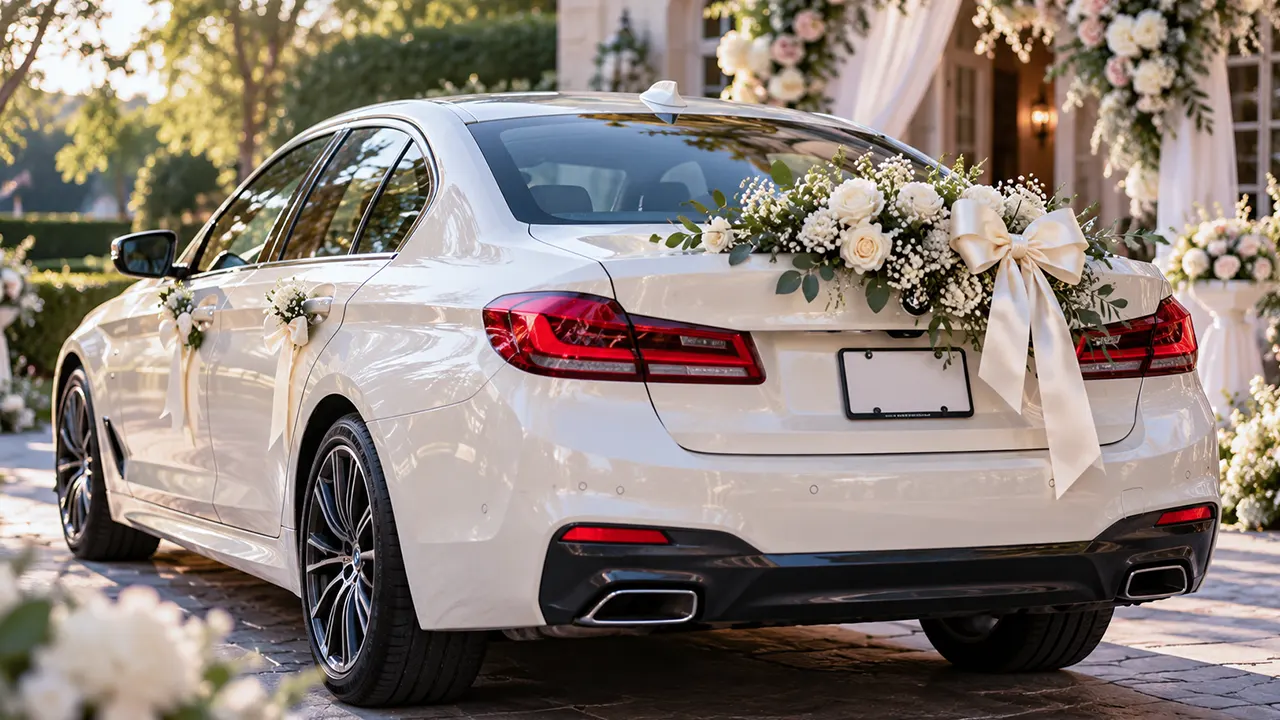
Wedding car decoration ideas work best when they suit the car and leave room for the couple. One clear message, a coordinated color palette, and a few well-placed details can look more intentional than covering every available surface. Decide which photographs you want, then choose the decoration that helps create them.
Plan the parked photo arrangement separately from anything that might remain while the vehicle moves. Balloons, trailing fabric, cans, and temporary signs can be photo props without becoming road equipment. Agree on permissions, attachment, removal, and the driving configuration with the vehicle owner or transport provider before the day.
Choose a Look Before Buying the Decorations
Start with a photograph of the actual vehicle, not only a reference image of a different car. A short banner that suits a vintage trunk may sit awkwardly across an SUV’s camera and tailgate handle. A dark ribbon can be clear on pale paint and almost disappear against a black body.
Choose one main view: the couple beside the car, a rear photograph after the ceremony, or a wider scene outside the venue. A rear arrangement does not need matching decorations on the hood simply because the kit includes more pieces.
Borrow the wedding’s color palette without reproducing every detail. An ivory ribbon and a small group of the same flowers used in the bouquet may be enough. Keep text short enough to read in the intended photograph. Names, a date, and “Just Married” do not all need equal prominence.
These choices are easier once the transport provider has said what is allowed. A rental agreement may restrict adhesives, flowers, signs, or any external decoration. Get the answer for the exact vehicle and occasion before asking a florist to make something to fit it.
16 Wedding Car Decoration Ideas
1. A Linen Just Married Banner
Linen or a linen-look fabric can suit a relaxed, understated wedding. Give the wording space rather than adding several fonts and small decorative lines. A soft neutral banner beside greenery can work for a garden setting without competing with the car’s shape.
Size it for the intended parked photograph and plan an approved mounting method. The banner does not need to stretch across the entire rear of the car to be readable.
2. One Satin Bow
A single bow can give a modern car a clear wedding detail. Compare ivory, a wedding accent color, and a tone close to the vehicle’s own finish before deciding. The difference between a modest bow and an oversized one is partly the amount of space you leave around it. Keep any tails out of moving mechanisms and treat loose lengths as photo-only styling. A small detail repeated in the bouquet may create all the connection you need.
3. A White-and-Green Floral Arrangement
White flowers and greenery offer a quiet palette that can work with several vehicle colors. Ask the florist to design for the exact display position and the time between fitting and photography. Flower choice, temperature, and exposure affect the practical plan.
Let the arrangement have a defined outline. A fuller central cluster and less material at the edges can read more clearly in a wider photograph than a thick layer spread across everything.
4. An Asymmetric Floral Corner
If a centered arrangement feels too formal, use a smaller floral accent to one side of a parked photo setup. It can lead the eye toward the couple rather than sit directly behind them. Try the composition in a photograph before finalizing the size. The position still needs the owner’s approval and clear access to lights, cameras, handles, and the plate; asymmetry is a visual choice, not permission to use any convenient attachment point.
5. An Original Couple Monogram
A simple original monogram can connect the car with the stationery without repeating the full invitation design. Keep it bold enough to remain recognizable from the camera position. Intricate overlapping initials may become a shape rather than readable letters.
A removable freestanding sign beside the parked car can give you the effect without attaching the design to the paint. Plan the stand and wind exposure with the venue.
6. A Short Name Sign
Names can feel more personal than a general slogan. Choose a comfortable spelling and order that both partners want, then leave the longer message for a separate photograph or the card. Large readable lettering is more useful than a crowded sign.
Check the physical size against the car and the people in the frame. A sign that dominates an isolated product photograph may be much too large once the couple stands beside it.
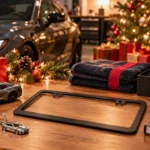
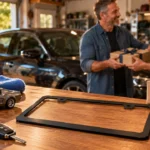
7. A Wedding License Plate Frame
A personalized frame can carry a short date, initials, or original phrase around the existing plate. It can also become a keepsake after the temporary flowers and ribbons are gone. A quiet finish may sit more naturally with the vehicle than a broad band of decorative text.
The opening and mounting fit must suit the actual plate and vehicle. Keep required plate information, stickers, lights, and nearby equipment clear, and check the applicable display requirements. The frame is a border; it is not an authorization to alter or replace the registration plate.
8. A Decorative Plate for Parked Portraits
A decorative “Just Married” plate can make a clear photo prop. A freestanding display beside the car or a hand-held arrangement avoids pretending it is a legal registration. If a provider proposes any vehicle-mounted version, settle exactly how it is used and removed.
Do not substitute it for required road plates. Include the removal in the departure plan so nobody has to remember it while the couple is being called to the next photograph.
9. Small Window Lettering
Short original lettering can suit a modern, minimal look when the owner permits the exact material and placement. A few words are easier to read than a paragraph across curved glass. Check the wording from outside the vehicle at the intended camera angle.
Glass, tint, coatings, sightlines, heaters, and cameras affect the decision. Use a product intended for the agreed surface, with its own removal instructions; a “removable” label alone is not enough.
10. Soft Tulle for a Stationary Scene
Tulle can introduce a light texture in a parked photograph, particularly against a dark car. Use a small amount with a clear shape rather than a mass that hides the body lines. Keep it away from hot parts, moving tops, doors, and mechanisms. Loose fabric belongs in a controlled photo arrangement and should be removed before movement; the atmosphere in the photograph does not depend on taking it onto the road.
11. A Greenery Wreath
A wreath gives the arrangement a recognizable outline and can frame a short central message. Compare its diameter with the space on the actual car. Too large a circle can conflict with the rear glass, plate recess, or tailgate hardware.
A florist should plan its weight, construction, surface contact, and approved support. Do not improvise by allowing wire, woody stems, or wet materials to rub against the finish.
12. A Quiet Vintage Palette
For a vintage car, the vehicle may already be the strongest feature. A modest neutral ribbon, a simple parked sign, and flowers chosen for the setting can leave its details visible. Photograph the car without decoration first, then add only what changes the wedding feeling. Older or repaired paint and decorative trim deserve particular care from the owner and the person fitting the materials. Age is not a reason to assume a surface will tolerate an adhesive or suction mount.
13. A Modern Black-and-White Arrangement
A limited palette can look deliberate on a contemporary sedan. Try a white message against a dark sign, or an ivory bow with dark lettering, while keeping the surrounding decoration sparse. The contrast should make the message easier to see rather than create several competing focal points.
Use a sample photograph to compare the sign with the car and clothing. A glossy surface can reflect differently from a matte one; approve what works at the location, not only in a flat artwork preview.
14. Balloons Beside the Parked Car
Balloons can give a playful photograph height and color without covering the vehicle. A controlled arrangement beside the car may work better than tying them to it. The venue needs to approve the setup and its removal.
Keep balloons away from vehicle sightlines and moving equipment, and remove the props before departure. Do not release them. Assign someone to collect the arrangement so the end of the photo session does not create litter.
15. Tin Cans as a Still-Life Detail
You can reference the traditional getaway image without dragging objects behind a moving car. Arrange suitable decorative cans as a parked photo detail under controlled supervision, away from paint and walking routes. The camera can tell the story while the departure remains simple. Remove the entire setup before the car moves; trailing objects introduce risks that are not needed to create a wedding photograph.
16. A Seasonal Color Accent
Use one seasonal detail instead of building a new theme for the whole vehicle. A deeper ribbon color, an appropriate floral accent, or an original sign can connect the car to the venue and time of year. Seasonal does not have to mean fragile leaves and loose material attached everywhere.
Ask the florist about the actual conditions the arrangement will face, and keep the driving setup separate. Local weather matters more than a seasonal label copied from a wedding photographed in another country.
Combine the Details Without Crowding the Car
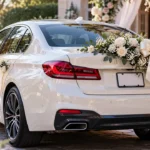
For a white sedan, consider an ivory bow and a small dark-text sign, leaving most of the body visible. If the flowers are already prominent in the couple’s bouquet, the car may need only the ribbon. Take a photograph with the people in position before deciding another arrangement is necessary.
For a dark SUV, a compact pale floral accent can create contrast while a separate sign carries the wording. Keep the camera, plate area, and tailgate functions out of the design rather than trying to work around them at fitting time.
For a vintage convertible, begin with the car alone beside the couple. Add one modest neutral detail and compare the picture. The vehicle’s shape may already provide the character you wanted. These are hypothetical design combinations to discuss with the owner, not tested mounting plans.
Adapt the Arrangement to the Vehicle
| Vehicle | A useful visual direction | What changes the plan |
|---|---|---|
| Modern sedan | One rear message or a restrained bow | Plate recess, rear camera, lighting, and trunk access |
| SUV or crossover | A defined floral accent beside open space | Tailgate movement, cameras, sensors, and rear visibility |
| Vintage vehicle | Small neutral details that leave the car visible | The owner’s rules for older paint, trim, and attachment |
| Convertible | A parked composition with the roof already positioned | Top mechanism, cabin access, and material movement |
| Rented or chauffeured vehicle | A provider-approved arrangement | Written permission, fitting responsibility, and removal |
These are design starting points, not attachment instructions. A vehicle’s shape and equipment determine what is possible. The same sign may work beside several cars while requiring completely different arrangements if it is attached to them.
Try the passenger’s experience too. Doors need to open, clothing needs space, and someone has to enter without catching a bouquet or ribbon. A beautiful detail that makes the couple struggle to sit down is in the wrong place.
For a convertible, decide when the roof will move and keep the decoration outside that process. Do not discover after fitting that a planned transition from open to closed cannot happen safely.
Decorate in a Sequence That Leaves Time for Photographs
Agree on the use. Tell the vehicle owner or transport provider which scenes you want and whether the vehicle is parked or moving in each. Obtain permission for the exact materials and locations. A reference photograph is a useful start, but it does not settle what their car allows.
Make a small plan. List the message, palette, focal point, and materials. Photograph or measure the relevant areas with permission. Send the florist or supplier those details, including doors, cameras, plate position, and any restricted surfaces.
Prepare off the vehicle. Proof the names and date, make the bows, and prepare the approved sign supports before fitting time. Keep hard edges, wire, wet materials, and loose components away from the car until the responsible person is ready to install the approved arrangement.
The actual fitting should follow the vehicle owner’s and material supplier’s directions. There is no universal tape, magnet, suction cup, or ribbon tie that is safe for every finish or shape. Clean contact areas appropriately, inspect the existing condition, and stop if the proposed attachment is uncertain.
After fitting, view the whole scene from the camera position. A sign may need moving away from a reflection, and a bow may look too large beside the couple. Make those adjustments while the vehicle is stationary and the fitting team is available.
Before any movement, remove photo-only props and have the responsible driver or provider check the driving configuration. That includes visibility, lights, plates, mirrors, cameras, sensors, door movement, and secure stowage. Keep public-road compliance separate from what looked attractive in a parked photograph.
Give removal a named owner and a place in the schedule. The person collecting the flowers should know where the keepsake sign goes and what must come off before departure. A clear handover prevents the decoration becoming an unexpected job for the couple.
Keep the Budget Focused on the Photograph You Want
Budget for the completed arrangement: materials, design, fitting, transport, removal, and any provider charges. A cheap kit may be less convenient once you add the supports and fitting work it needs. A florist’s finished arrangement should be compared with a complete alternative, not only a bag of artificial flowers.
If the budget is limited, choose one focal point. A readable banner or one well-proportioned bow can give a clearer result than several low-cost decorations competing with each other. Borrowing the wedding’s existing palette can make that small choice feel connected.
Fresh and artificial flowers involve different decisions. Ask about appearance, handling, preparation, exposure, storage, and reuse for the exact arrangement. Artificial materials do not automatically remove surface-contact or mounting concerns.
Separate keepsakes from consumable styling. A small sign or frame may have a life afterward; a large dated arrangement may not. Choose what you want to keep before spending extra on personalization that will not be seen in the photographs.
Review quantities with the person doing the fitting. More ribbon, flowers, or signs are only useful when there is a planned position for them. Keep a few agreed spare materials for corrections rather than buying a second design on impulse.
Give Names and Dates Enough Space
For a personalized sign or frame, choose the information hierarchy first. If the names are the main feature, a date can be smaller or kept on a separate keepsake. If “Just Married” is the message you want visible in a wide photograph, the names do not need to compete with it.
A custom license plate frame can use a short original design on a suitable model. Confirm the available product, decoration method, plate format, and fit. A supplier’s custom manufacturing service does not necessarily mean it sells one-piece wedding gifts or decorative plates.
Use plate and frame measurements when planning an installed frame. Review lettering at actual size and compare the opening with the plate and mounting area. Keep the applicable registration information visible and follow the requirements of the jurisdiction involved.
A decorative wedding plate belongs to a different decision. It is a photo or display object unless its use is separately authorized. Leave required road plates in their proper display arrangement; a wedding theme does not establish an exemption.
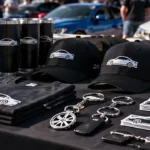
For related keepsake choices, personalized car gifts can help you decide which words belong on the object and which belong in a note. Keep the public design comfortable for both partners.
Removal Is Part of the Decoration Plan
Photograph the vehicle’s condition with the owner’s permission before fitting. Agree on who removes each material and which instructions they will follow. Do not leave an unfamiliar adhesive or mounting component for the couple to work out at the end of the evening.
Remove the photo props before the driving setup is checked, and put them somewhere they cannot interfere with the vehicle. Keep hard sign edges and loose flower stems from being dragged across the finish during removal.
For adhesive products, follow the exact material guidance and the owner’s restrictions. Paint condition, coatings, repairs, heat, and exposure can affect removal. Avoid aggressive scraping, solvents, or improvised heat when the method is uncertain; have the provider or a suitable professional handle it.
Keep a separate box for the items you want to preserve. Dry and store them as appropriate for their materials, and label personalized pieces. That is more useful than placing damp flowers and a delicate printed sign together in an unplanned pile.
Frequently Asked Questions
Can we decorate a rented wedding car?
Only within the provider’s permission and terms. Ask about the exact materials, surfaces, fitter, and removal before buying the arrangement.
Do simple decorations look unfinished?
They can look deliberate when the scale, wording, and palette suit the car. One focal point with space around it often photographs more clearly than several competing messages.
Can a Just Married plate replace the normal plate?
Do not use a decorative object in place of required registration plates. Check the issuing jurisdiction’s rules for any proposed display and use a separate parked-photo arrangement where appropriate.
Is painter’s tape automatically safe?
No single label proves suitability for every vehicle finish. Follow the material guidance and owner’s restrictions for the exact surface and duration.
What should we do if it is windy or wet?
Reassess the planned scene with the provider and venue. A simpler sheltered photograph or a freestanding prop may be preferable to trying to keep an unsuitable arrangement attached.