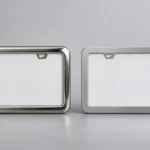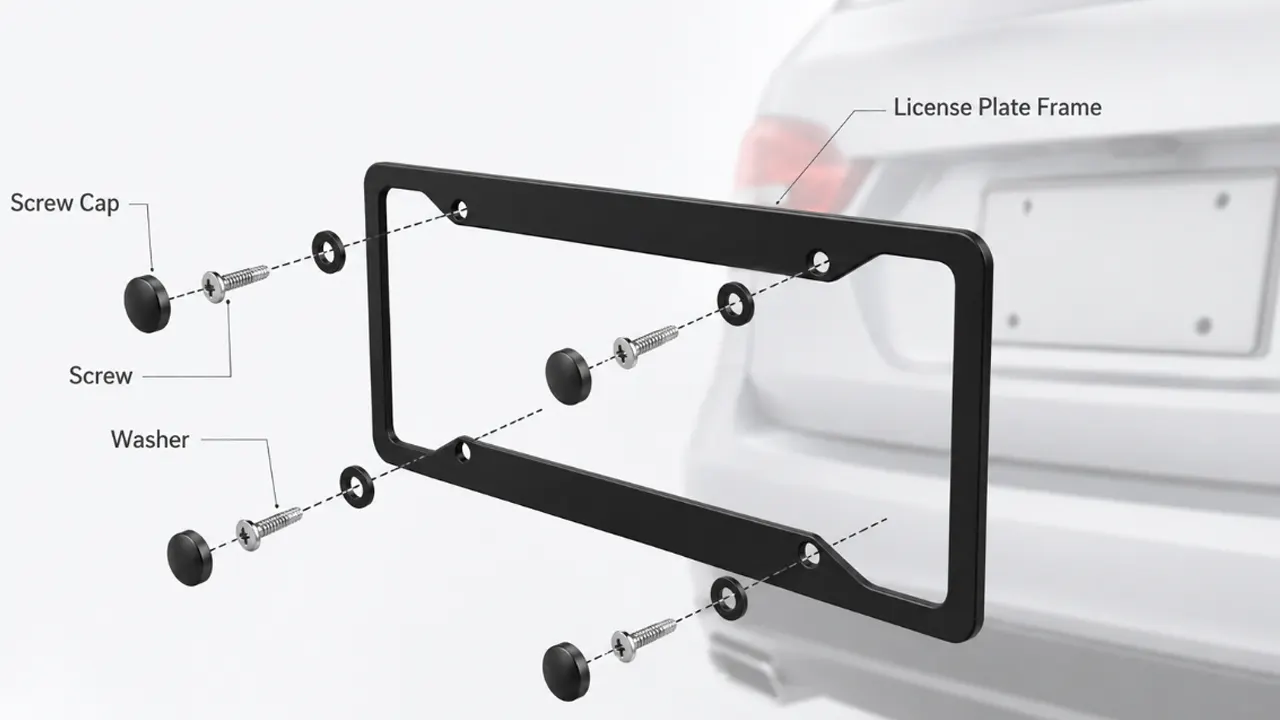
A license plate frame is a border installed around the face or perimeter of a vehicle’s license plate. Depending on its design, it can provide styling, dealer or fleet branding, local edge support, spacing, or rattle control. It usually shares the plate’s fasteners, but it does not replace a required vehicle bracket and should never cover information that must remain visible.
A frame is not the same as a mounting bracket or a cover. That distinction affects fit, installation, legal visibility, and what the accessory can realistically do.
License plate frame vs holder, bracket, cover, and hardware
| Part | What it is | Primary function | Main risk to check |
|---|---|---|---|
| License plate frame | A visible border around the plate face or edges | Appearance, branding, spacing, edge support, or rattle management | The border, artwork, or caps obscure required plate details |
| Holder or bracket | A structural interface between the plate and vehicle | Provides mounting points on a bumper, grille, hatch, or body panel | Wrong vehicle interface, unsafe drilling, blocked sensors, or weak attachment |
| Cover or shield | A transparent, tinted, reflective, or other layer over the plate face | Attempts to shield the plate surface or change its appearance | Reduced visibility, altered reflectivity, impaired electronic reading, or legal restrictions |
| Hardware kit | Screws, bolts, nuts, washers, caps, clips, pads, or spacers | Connects and positions the plate, frame, bracket, and vehicle | Wrong pitch, diameter, length, material, thread engagement, or layer order |
Retail listings sometimes use frame, holder, bracket, and cover as if they mean the same thing. Judge the construction instead of the product name. A part that carries the mounting load functions as a bracket or holder. Material placed over the readable face functions as a cover. A perimeter trim piece is a frame.
What is a license plate frame used for?
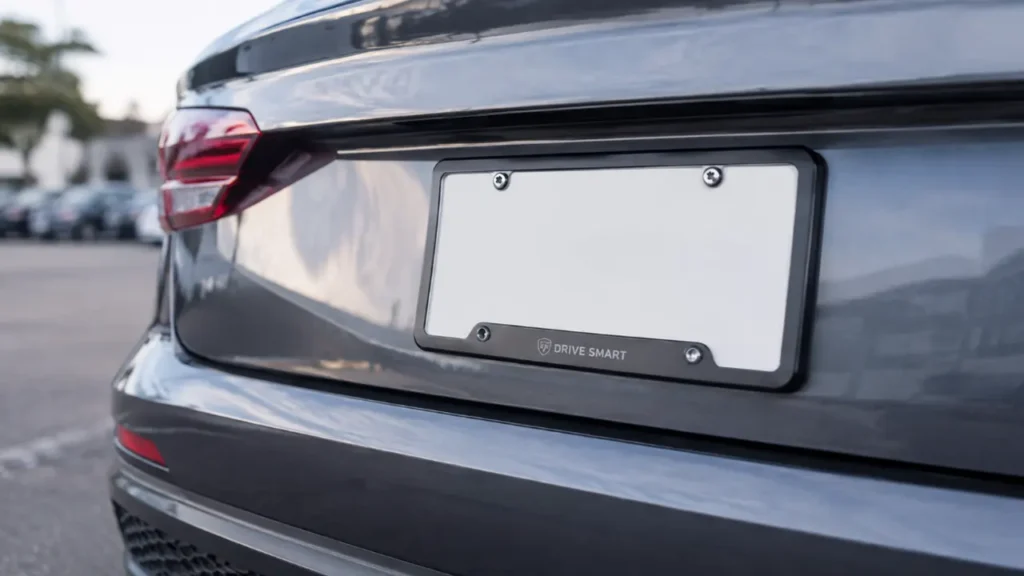
Finished appearance. A frame can cover the raw perimeter of an issued plate and visually connect it with the vehicle trim. Border width, profile, color, gloss, texture, corner shape, screw caps, and the vehicle recess determine the installed result. A frame that looks balanced on a loose plate may appear crowded beside a camera, lamp, handle, or narrow recess.
Dealer, brand, fleet, or promotional identity. The upper or lower border can carry a dealer name, fleet identifier, club name, slogan, website, or graphic. Branding may be printed, engraved, etched, laser marked, molded, embossed, debossed, filled, or attached as a separate emblem, depending on the product construction.
Local edge support and spacing. Some frames add stiffness around the plate perimeter or help maintain separation from a bracket or body panel. The effect depends on section depth, material stiffness, hole pattern, fastener stack, lower tabs, and pads. A decorative frame should not be expected to straighten a damaged plate or replace a missing bracket.
Rattle and contact control. A compatible frame can work with thin pads, molded tabs, clips, or a shaped backing surface to limit vibration. The frame alone does not guarantee a quiet installation. Loose hardware, a warped plate, an unsupported lower edge, or an incompatible recess can still create noise.
A complete accessory kit. Dealer, retail, fleet, and OEM programs often treat the frame, screws, caps, washers, pads, instructions, and packaging as one product. Installation quality depends on every item in that bill of materials. A well-finished frame paired with incompatible screws is not a complete system.
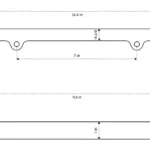
For commercial artwork, the usable branding area is smaller than the full border. Screw heads, caps, corner radii, manufacturing tolerances, and the required visible opening reduce the safe space. Approve the artwork on a dimensioned drawing and a production-representative sample.
What a license plate frame does not automatically do
- It does not guarantee legal display. The opening and installed position must keep required plate information visible under the current rules for the jurisdiction.
- It does not make the plate theft-proof. Security depends on fastener access, head design, driver availability, rear access, and the vehicle-side anchors.
- It does not fit every vehicle. Plate formats may be standardized, but recesses, brackets, cameras, sensors, lights, hole patterns, and screw threads vary.
- It does not make a material rust-proof. The base material, finish, cut edges, hardware, damage, deposits, road salt, and trapped moisture affect corrosion behavior.
- It does not replace a structural bracket. A vehicle without an approved plate mount needs the correct bracket or vehicle-specific installation procedure first.
- It does not protect the entire plate face. A perimeter frame may support or shield parts of the edge, but the printed and reflective face remains exposed.
Common license plate frame materials
| Material | Common design reason | What a buyer should specify |
|---|---|---|
| Aluminum | Low mass, formed metal appearance, colored finishes, or printed graphics | Alloy, temper, thickness, formed section, surface preparation, finish, edge coverage, artwork, and hardware interface |
| Stainless steel | High stiffness at equal geometry and polished or brushed metal appearance | Grade, thickness, surface finish and direction, edge condition, fabrication cleanliness, cosmetic limits, and packaging protection |
| Zinc alloy | Detailed die-cast shapes, raised branding, and substantial decorative feel | Alloy, casting quality, polishing, plating or coating system, coverage, porosity limits, corrosion criteria, weight, and packaging |
| Plastic | Low weight, molded color, integrated tabs, cap features, or economical volume production | Exact resin, additives, recycled-content limits, color, UV and temperature needs, warpage, mounting stress, finish, and change control |
Appearance words do not identify construction. Chrome usually describes a reflective finish, not the substrate. Black may mean anodized aluminum, coated stainless steel, painted zinc alloy, or molded plastic. A carbon-fiber look may be a printed or molded pattern rather than a structural carbon-fiber composite.
Compare license plate frame product categories by material, intended market, and construction before requesting samples.
How to choose a license plate frame that fits
- Identify the plate format. A standard full-size North American plate is nominally 12 × 6 inches (305 × 152 mm), but motorcycles and other markets can use different sizes and proportions.
- Measure the visible opening. The opening must show the plate number, issuing jurisdiction, registration decals, and any other information that local rules require.
- Check the outside dimensions. The frame must clear the bumper or hatch recess, lamp, camera, handle, sensors, tow equipment, and ventilation openings.
- Compare hole centers and vehicle anchors. Frame and plate holes must align with the actual vehicle mounting points. Four holes in a frame do not prove that four threaded anchors exist.
- Confirm the hardware. Screw pitch, diameter, length, head, washers, caps, nuts, and thread engagement must suit the vehicle interface.
- Inspect contact surfaces. Edges, pads, clips, and fastener heads should not scratch the plate or body panel, trap excessive debris, or block drainage.
- Check the installed viewing area. Judge the completed assembly on the vehicle, not only as loose parts on a table.
Use the license plate frame size guide as a starting point, then verify the issued plate and target vehicle. Avoid universal-fit claims unless a clearly defined vehicle and plate range has been checked.
Are license plate frames legal?
A frame may be permitted when the plate remains securely mounted, visible, legible, and readable by applicable systems, but laws vary by jurisdiction and change over time. The AAMVA policy position amended in 2025 recommends that plates remain completely unobstructed and clearly visible to people and technological systems from at least 75 feet.
California Vehicle Code §5201, amended effective January 1, 2026, requires plates to be securely fastened, clearly visible, and legible. It also prohibits a frame or border that obstructs or impairs electronic reading or recognition. That is a current California example, not a rule for every state. Check the law where the vehicle is registered and used. If a frame overlaps required information or interferes with recognition, choose a larger opening or remove it.
How a license plate frame is installed
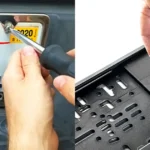
Most frames share the plate’s existing fasteners. One common front-to-back sequence is screw head, cap base or washer, frame, plate, optional thin pad, vehicle bracket, and vehicle insert, but the correct stack depends on the frame and vehicle.
- Support the plate and remove the existing fasteners.
- Clean the plate, bracket, hardware, and contact surface.
- Place the plate into or behind the frame as the product design requires.
- Align the assembly with the vehicle’s existing mounting points.
- Start every compatible screw by hand before using a tool.
- Tighten evenly until secure without bowing the frame or stripping an insert.
- Check plate visibility, the lamp, cameras, sensors, caps, movement, and rattle before driving.
Do not drill a bumper merely because the frame has extra holes. A vehicle with no existing mount needs a manufacturer-approved procedure or a compatible bracket. Wiring, radar, parking sensors, air ducts, reinforcement, and painted surfaces may sit behind the proposed location.
What commercial buyers should define
| RFQ field | Decision-ready information |
|---|---|
| Market and fit | Country, plate format, vehicle interface, outside size, opening, hole pattern, recess, light, camera, sensor, and visible-area requirements |
| Construction | Exact material designation, thickness, formed profile, edge condition, finished weight, and tolerances |
| Finish and artwork | Surface preparation, finish system, color, gloss, texture, logo method, artwork revision, registration, edge coverage, and cosmetic limits |
| Hardware | Screws, caps, washers, nuts, clips, pads, isolation features, intended layer order, and installation tool |
| Validation | Fit, visibility, finish rub, corrosion interfaces, adhesion, abrasion, weathering, vibration, wash, cap retention, and packaging tests with written acceptance criteria |
| Commercial inputs | Tooling assumptions, sample stages, order quantities, individual pack-out, carton limits, inspection plan, destination, and landed-cost basis |
The signed sample should represent the intended production material, tooling, finish, artwork, hardware, and packaging. A generic sample proves only a broad capability. For a controlled dealer, fleet, retail, or OEM program, use the custom license plate frame service and provide the plate format, mounting drawing, finish target, artwork, quantity, and packaging requirements.
Frequently asked questions
Do you need a license plate frame?
Usually not for the plate to perform its legal identification function. The vehicle still needs the plate to be mounted as required. A frame is an optional accessory unless it is integrated into a specific holder or bracket system.
Does a license plate frame protect the plate?
It may support or shield parts of the perimeter and can help control contact in a compatible assembly. It does not protect the full plate face. A poorly fitted frame can trap grit, rub the finish, retain moisture, or obscure information.
What is the difference between a frame and a cover?
A frame is primarily a border around the plate. A cover places material over the readable face. Covers can affect visibility, reflectivity, image capture, and legality, so they require separate evaluation.
Will any license plate frame fit my car?
No. Standard plate dimensions help, but vehicle recesses, mounting points, cameras, sensors, lamps, brackets, screw threads, and required visible areas vary. Compare the frame drawing with the actual plate and vehicle.
Can a frame stop a plate from rattling?
It can help when its stiffness, pads, tabs, hardware, and mounting surface work as a system. Rattle can persist when fasteners are loose, the lower edge is unsupported, the plate is warped, or the recess is incompatible.
Can a company name or logo go on a license plate frame?
Yes, when the artwork fits the usable border and does not obscure required plate information. Define the logo method, color, position, screw and cap clearance, finish requirements, and cosmetic standard before production.