
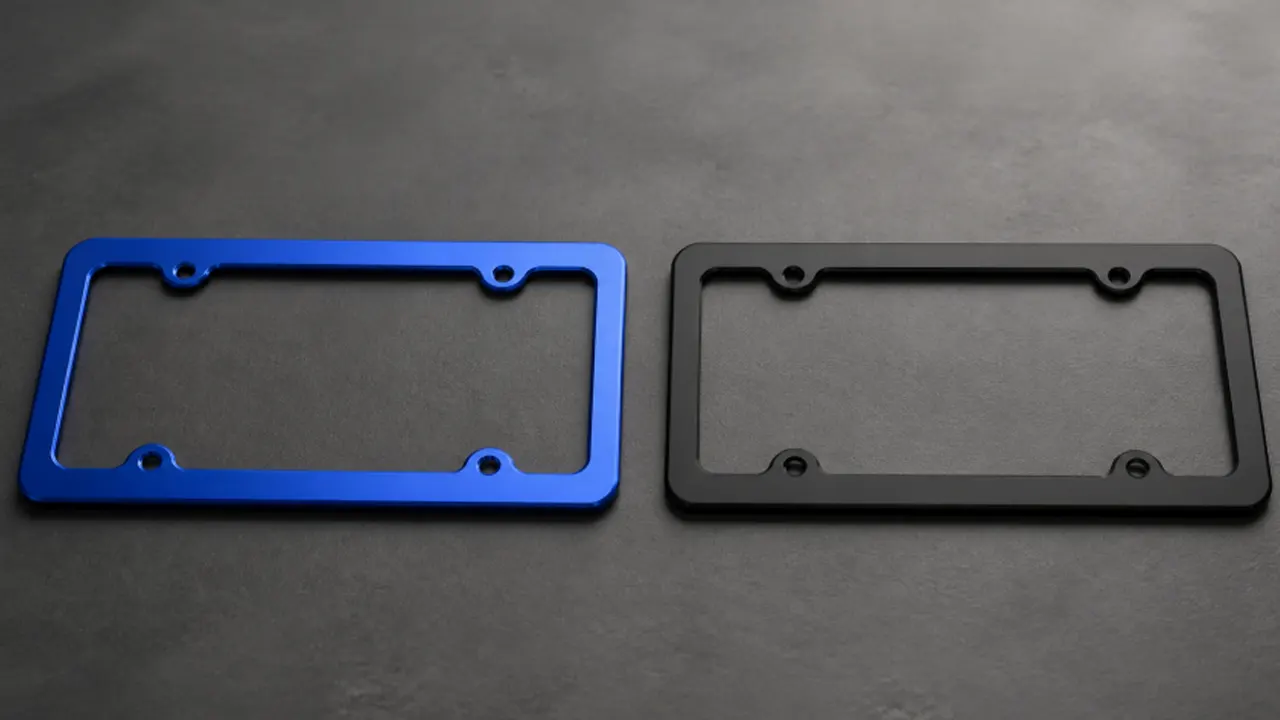
Choose anodizing when you want the aluminum to keep a metallic character and an integral oxide finish. Choose powder coating when you need a wider range of solid colors, gloss levels, textures, or strong coverage over the metal. Neither finish is automatically better for every license plate frame.
The decision becomes much easier when you compare the failure mode you can accept. An anodized surface cannot peel like an applied polymer film, but its appearance depends on the alloy, pretreatment, oxide thickness, coloring, and sealing. Powder coating can create a tough, visually uniform barrier, but its adhesion and outdoor performance depend on cleaning, pretreatment, powder chemistry, film build, and cure.
How the Two Finishes Are Made
Anodizing converts the aluminum surface. The frame is placed in an electrolytic process that grows an aluminum oxide layer from the substrate. The Aluminum Anodizers Council describes the coating as integral with the underlying aluminum rather than a paint or plating layer applied on top. The porous oxide may be colored and then sealed.
Powder coating adds a polymer film. A dry powder made from resin, pigments, curatives, and additives is commonly sprayed electrostatically onto a grounded part. Heat then melts, flows, and cures the powder into a continuous coating. The Powder Coating Institute notes that available powder systems cover a broad range of colors, textures, and performance levels.
Anodized vs Powder-Coated Aluminum at a Glance
| Decision factor | Anodized aluminum | Powder-coated aluminum |
|---|---|---|
| Relationship to substrate | Oxide layer grows from and is integral with the aluminum surface. | Polymer coating is applied over the prepared aluminum. |
| Visual character | Retains more of the metallic grain, reflectivity, and substrate texture. | Creates a more opaque, uniform color and can add smooth or textured effects. |
| Color range | Clear, black, bronze, and other colors are possible, but the result depends on process and alloy. | Broad palette with many gloss and texture options, subject to powder availability and batch controls. |
| Peeling and chipping | Does not peel or flake as an applied paint film can; deep abrasion can still damage the oxide and change appearance. | Can chip, peel, or lose adhesion if impact, pretreatment, film build, or cure is unfavorable. |
| Dimensional effect | Coating grows partly into and partly above the original surface; thickness still needs control on close fits. | Usually adds a more substantial film that can affect holes, slots, recesses, and cap fit. |
| Surface defects | Can reveal alloy variation, extrusion or machining marks, scratches, and uneven pretreatment. | May hide minor visual variation, but it cannot correct burrs, poor geometry, oil, or deep surface damage. |
| Outdoor appearance | Depends on anodic thickness, coloring method, seal quality, alloy, and exposure. | Depends on resin chemistry, pigments, pretreatment, cure, film build, and exposure. |
| Branding compatibility | Works well when a metallic base and controlled laser marking or printing are desired. | Useful for opaque brand colors, textures, and contrast, with marking method validated on the cured film. |
| Repair after damage | Localized cosmetic touch-up rarely matches the original anodized appearance exactly. | Touch-up paint may cover a chip but can differ in color, gloss, adhesion, and weathering. |
Durability Depends on the Complete Finish Specification
A label such as “black anodized” or “black powder coated” tells you too little to predict field performance. You need to know how the finish is made and how it will be inspected.
For anodizing, define the alloy, mechanical surface preparation, chemical pretreatment, anodizing type or finish designation, required coating thickness or mass where applicable, coloring method, seal requirement, and accepted appearance range. The AAC emphasizes that alloy, temper, gloss, surface structure, and coloring process can all affect the final look.
For powder coating, define the aluminum pretreatment, powder chemistry, color reference, gloss, texture, dry-film requirements, cure window, masked areas, and outdoor exposure expectation. The Powder Coating Institute identifies surface cleanliness, appropriate pretreatment, and proper melt and cure as central to adhesion.
What Road Exposure Does to Each Finish
A license plate frame sits in a harsh but uneven location. It receives rain, humidity, road grit, detergent, brush contact, pressure washing, insects, and sometimes deicing salt. The bottom edge and space behind the plate may stay wet longer than the front face.
Anodized finish under abrasion. The oxide surface is hard, but a deep scratch or repeated rubbing can create a visible line because the damaged area reflects light differently. Dark dyed anodizing may make that contrast more noticeable. Seal quality and coloring method also affect how the surface ages.
Powder coat under impact. A correctly pretreated and cured powder film can resist everyday handling well. A hard impact at an edge or screw hole can still chip the film. If adhesion is poor, moisture can travel beneath a damaged area and the defect can grow.
Both finishes at the mounting holes. Screw heads, washers, caps, and tools concentrate load around a small area. Excess torque can crush or crack a coating, mark anodizing, distort a thin border, or create a path for rubbing. Test the intended hardware rather than approving a finish coupon alone.
Both finishes behind the plate. Drainage, trapped debris, and dissimilar hardware can affect the assembly. Finish selection does not remove the need for sensible geometry and a clean installation.
Color and Brand Matching
Powder coating usually gives you more freedom when a program requires a solid corporate color, defined gloss, or textured appearance. Even then, “match our logo blue” is not a production specification. Use a physical or controlled digital color reference, set an acceptable tolerance, and approve the result on the real aluminum substrate.
Anodizing is attractive when you want the frame to look like finished metal rather than painted metal. The visible color can vary with alloy, surface preparation, oxide structure, dye or electrolytic coloring, and viewing angle. A flat color chip may not predict the appearance of a stamped or machined frame.
For both processes, approve multiple pieces from a representative run. One perfect sample cannot define the range you will receive across several racks, coating batches, or repeat orders.
Geometry and Manufacturing Sequence Matter
Most cutting, stamping, drilling, deburring, and forming should be planned before the final finish. Machining after anodizing or powder coating can expose unfinished aluminum at the cut. Bending after finishing can change the surface at the bend or damage the coating.
Review these frame details before release:
- Mounting slots and countersinks. Confirm coating build, driver access, washer contact, and screw-head seating.
- Inner opening and legal visibility. Finish thickness should not turn a compliant drawing into an opening that touches characters or stickers.
- Edges and corners. Sharp edges are harder to finish and easier to damage during handling.
- Cap and insert fit. Powder build can tighten recesses; anodic growth can also matter where tolerances are close.
- Electrical contact or grounding areas. If any downstream process requires bare metal contact, specify masking deliberately.
- Logo process. Validate laser marking, screen printing, UV printing, pad printing, decals, or applied emblems on the exact finished surface.
The current aluminum license plate frame page shows the broader product category. Finish availability and specifications should still be confirmed for the exact model and order.
Common Failure Modes and Their Likely Causes
| Observed problem | Possible anodizing causes | Possible powder-coating causes |
|---|---|---|
| Color variation | Alloy or temper variation, surface-prep difference, bath conditions, color process, seal, or thickness variation. | Powder batch, application thickness, cure, substrate color, gloss, texture, or contamination. |
| Marks at screw holes | Tool contact, high torque, hard washer edge, poor recess design, or surface abrasion. | Film crushing, chipping, incomplete edge coverage, oversized head, or high torque. |
| Patchy gloss | Uneven pretreatment, etching, oxide, dye, seal, or prior surface condition. | Film-build variation, poor flow, cure variation, contamination, or spray application issues. |
| Peeling or lifting | Not a normal film-peeling mode; investigate any separate clear coat, print, adhesive, or contamination layer. | Poor cleaning or pretreatment, undercure, overcure, contamination, incompatible layers, or mechanical damage. |
| Early fading or chalking | Coloring method, dye lightfastness, seal, exposure, or an additional top layer. | Powder chemistry and pigment selection not matched to outdoor UV exposure. |
| White marks or corrosion products | Damage, poor sealing, aggressive chemicals, retained salts, or exposed aluminum at later cuts. | Film breach, poor edge coverage, trapped moisture, pretreatment failure, or exposed post-finish cuts. |
How to Approve the Finish Before Production
- Define the use environment. State the sales region, outdoor exposure, winter salt risk, wash conditions, and appearance life you intend to support.
- Lock the substrate and geometry. The same finish can look different on another alloy, temper, surface texture, or forming process.
- Write a process specification. Name the anodizing or powder system and the measurable requirements that matter to your claim.
- Approve representative samples. Review color, gloss, texture, coverage, edges, holes, reverse face, and logo quality under agreed lighting.
- Test the assembled product. Install the plate, frame, screws, washers, and caps. Check fit, torque sensitivity, rattling, and finish damage.
- Validate packaging. Run a packed-product rub and movement check with actual hardware and separators.
- Retain a master standard. Keep signed samples and inspection records so repeat orders are compared with the same reference.
Which Finish Should You Choose?
Choose anodizing for a refined metallic appearance and an integral surface. It suits projects where visible aluminum character, a thin controlled finish, and resistance to film peeling are priorities. Make sure the selected alloy and color process can hold the cosmetic range your brand expects.
Choose powder coating for color and texture flexibility. It suits private-label programs that need opaque corporate colors, matte or textured finishes, or consistent visual coverage. Specify an exterior-suitable powder system and the pretreatment and cure controls behind it.
Do not choose from a small product photo. Ask for the finish stack, measurable requirements, assembled samples, and a production approval process. If you are still comparing base materials, read our best license plate frame material article before locking the finish.
Frequently Asked Questions
Does anodized aluminum chip or peel?
The anodic oxide is integral with the aluminum and does not peel like an applied paint film. The surface can still be scratched, abraded, chemically attacked, or visually damaged, and any separate print or clear layer may have its own failure mode.
Is powder coating suitable for outdoor license plate frames?
Yes, when the powder chemistry, pigments, aluminum pretreatment, film build, and cure are selected and controlled for outdoor exposure. An indoor powder formulation should not be assumed to provide the same UV appearance.
Which finish offers more colors?
Powder coating generally offers the broader range of opaque colors, gloss levels, and textures. Anodizing can produce multiple colors while retaining metallic character, but the result is more dependent on alloy and process.
Which finish is more scratch-resistant?
There is no useful answer without the exact anodic specification or powder system and the type of abrasion. Anodic oxide is hard, while powder films can absorb some impact. Their visible damage modes are different, so test the contact your frame will actually receive.
Which finish is cheaper?
Cost depends on alloy, part geometry, finish specification, color, batch size, racking, masking, reject criteria, and local processing. Compare quotations against the same measurable requirements instead of assuming one process is always cheaper.
Can I laser a logo on both finishes?
Both may support laser marking, but the laser source, power, contrast mechanism, film thickness, and desired result differ. Approve the exact logo on the production finish before committing to a bulk order.
Build the Finish Into the Product Specification
For a wholesale or private-label program, send the plate format, frame drawing, aluminum alloy if specified, finish process, color and gloss reference, artwork, hardware, quantity, packaging, destination market, and validation requirements. Start with our custom license plate frame options, then contact us for a project review. We will confirm available processes for the exact model instead of treating “anodized” or “powder coated” as a complete specification.