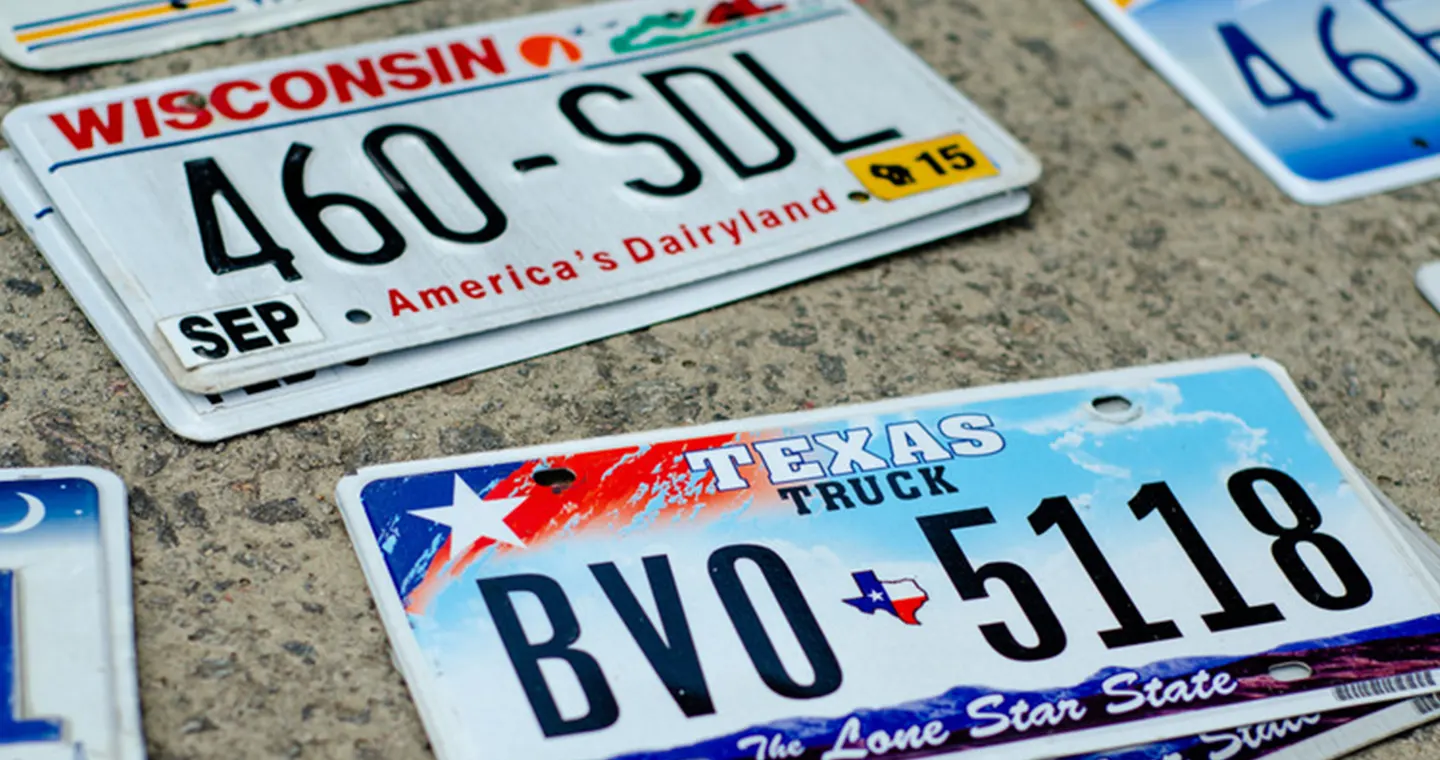
Do not bend, paint, cut, or recycle an old license plate until you know what the issuing state expects. In the United States, the right answer may be to return the plate, transfer it to another vehicle, leave it with the vehicle, deactivate it, or make it permanently unreadable before disposal.
If you need a quick answer, start with the state that issued the plate—not the state where you live now. Check its official motor vehicle agency, confirm whether the registration is still active, and keep any surrender or transfer receipt. Only then should you decide whether the plate can be recycled, stored as a keepsake, or discarded.
The Safe Decision Path
| Your situation | What to do first | What not to do yet |
|---|---|---|
| You sold or traded the vehicle | Check whether your state says the plate stays with the owner or the vehicle, then complete the sale or transfer notice. | Do not hand over an owner-retained plate or destroy a plate that must be surrendered. |
| You moved to another state | Register the vehicle in the new state, then follow the former state’s instructions for the old plate. | Do not cancel insurance until you know the required order. |
| You received replacement plates | Confirm that the old plate is invalid and whether the agency offers online deactivation or requires return. | Do not put an intact plate in household trash. |
| The vehicle was totaled or junked | Ask the insurer, dismantler, and issuing agency who must retain or surrender the plate. | Do not assume the junkyard will close the registration for you. |
| The plate is personalized, specialty, disability, or historic | Check the plate-specific retention, reassignment, or surrender procedure. | Do not drill, cut, or recycle it as an ordinary plate. |
Why There Is No Single Rule for Every State
License plates are issued under state law, and states treat them differently when a vehicle changes hands or a registration ends. That is why broad advice such as “always remove the plate” or “always return it to the DMV” can be wrong.
California says license plates generally remain with the vehicle when ownership changes. Personalized and certain special-interest plates follow separate retention and reassignment procedures. Indiana takes a different approach: its Bureau of Motor Vehicles says you should remove a plate from a vehicle you sold, but you do not have to surrender it; if you dispose of it, you should make it permanently unreadable and unusable.
South Carolina shows a third variation. If you receive a new plate, you may be able to decommission the old one online and recycle it rather than mail it back. However, an active plate from a sold vehicle generally must be surrendered when it is not being transferred. These examples are useful because they show the range of possible rules—not because they replace the instructions for your own plate.
The safest lookup method is simple: use the official motor vehicle agency for the state printed on the plate. If you are unsure which agency site is genuine, the U.S. government maintains a directory of state motor vehicle services.
Return or Surrender the Plate When Required
If the issuing agency requires surrender, follow its stated method. Depending on the state, you may be able to return the plate in person, by mail, through a drop box, or through an online process that deactivates it without a physical return.
Before mailing a plate, photograph the front and back and record the plate number, vehicle identification number, and registration details. Use a trackable mailing method if the agency recommends or accepts it. Save the confirmation, receipt, or delivery record with your sale, insurance, or registration paperwork.
That receipt is not just paperwork. It can be the evidence that the plate was no longer assigned to you if a registration, insurance, toll, or enforcement question appears later.
Check the Plate Before Canceling Insurance
The order of operations matters in some states. Maryland instructs vehicle owners to keep insurance active until the plates have been returned and a receipt has been obtained. New York likewise tells drivers to surrender their plates before liability coverage ends. Canceling insurance first can create an insurance lapse on a registration that the state still considers active.
If you are selling a car, moving, or taking a vehicle off the road, ask two separate questions: “What closes the registration?” and “When may I cancel the insurance?” Do not assume the dealer, buyer, insurer, or recycler completes both steps. Follow the issuing agency’s sequence and keep proof of each action.
Transfer or Keep the Plate When the State Allows It
Some states let you transfer an eligible plate to another vehicle. Personalized, specialty, military, disability, and historic plates may have their own transfer rules, forms, deadlines, and fees. If you want to keep one of these plates, say so before a dealer or buyer processes the transaction.
A plate that may be kept as a souvenir should no longer be active or assigned to a vehicle. Store it where it cannot be mistaken for a plate in current use, and never mount it on another vehicle unless the motor vehicle agency has formally transferred the registration.
An older plate may also have collectible value. Before you permanently mark, drill, or cut a vintage or unusual plate, confirm that the state does not require its return and check whether collectors recognize the series. A few minutes of research can prevent you from destroying something you would rather preserve.
How to Recycle or Dispose of an Old License Plate
Only recycle or discard a plate after the issuing agency says you may do so and the registration or plate assignment is no longer active. Most modern plates are metal, but local recycling programs do not all accept them through curbside collection. Ask a local scrap-metal facility, municipal recycling center, or household drop-off site whether it accepts license plates and how they want them prepared.
If the state tells you to make the plate unusable, follow that instruction rather than inventing your own method. Indiana, for example, says the plate should be permanently unreadable and unusable. Depending on official and local recycling guidance, that may mean clearly defacing the plate number, bending the plate, or cutting it so it cannot be mounted again. Wear gloves and eye protection around sharp aluminum edges, and never burn a plate or grind away coatings.
Do not place an intact, active-looking plate in the trash or a public recycling bin. Someone else could retrieve and misuse it. Also avoid posting a clear plate number online while the registration is active.
Remove the Frame, Fasteners, and Accessories First
Once you have confirmed that the plate may be removed, take off the frame before returning or recycling the plate. A frame is usually not part of the state-issued plate, and you may be able to reuse it on your next vehicle if its size, opening, and mounting holes fit.
Keep usable screws, washers, caps, and spacers together in a labeled bag. Replace anything rusty, distorted, or stripped rather than forcing it onto the next vehicle. If the hardware is stuck or the frame is close to the paint, use the careful sequence in how to remove a license plate frame without damaging the mounting area.
Do not mail the frame or decorative accessories with the plate unless the agency specifically requests them. Removing extra parts also makes it easier for a recycling facility to separate different materials.
Common Situations That Need Extra Care
You found a plate. Do not recycle, display, or try to return it to the apparent owner yourself. Contact local law enforcement or the issuing motor vehicle agency and follow their instructions.
Your plate was lost or stolen. Report it promptly using the issuing state’s procedure. A missing plate is not the same as an old plate you still possess, and the agency may require a police report or replacement application.
You are handling a deceased relative’s vehicle. Do not dispose of the plates until the estate or title transfer is resolved. The agency may need documents from the executor, administrator, or surviving owner.
The car was totaled. Confirm whether the insurer, salvage yard, or owner removes the plate. Keep the plate if state rules assign it to you, then complete surrender, transfer, or deactivation yourself.
You moved out of state. Registering the vehicle in the new state does not automatically prove that the former state’s plate has been surrendered or canceled. Check both agencies and coordinate the insurance dates.
Frequently Asked Questions
Do I have to return old license plates to the DMV?
Not always. Some states require return in specific situations, some let you deactivate or destroy the plate, and others say a general plate stays with the vehicle. Check the official rules of the state that issued the plate.
Can I throw an old license plate in the trash?
Do not throw away an intact plate before confirming that it is inactive and that the state allows disposal. If disposal is permitted, make it unusable in the manner the issuing agency recommends and follow local waste rules.
Can old license plates be recycled?
Often, yes, but acceptance varies by location. Confirm that the plate does not need to be returned, deactivate it if required, make it unusable if instructed, and ask a local metal recycler or municipal program how to prepare it.
Can I keep an old plate as a souvenir?
You can keep it only when the issuing state’s rules allow it and the plate is no longer active. Personalized, specialty, disability, and historic plates may have separate retention rules, so check before altering or displaying one.
The Practical Bottom Line
What to do with old license plates comes down to three checks: the issuing state’s rule, the plate’s current status, and the reason you stopped using it. Return or transfer the plate when required. If the state lets you keep or recycle it, make sure it is inactive and unusable before it leaves your control. Keep the confirmation, and remove your reusable frame and hardware only after the legal disposition is clear.
This information is general and was reviewed on September 18, 2026. Motor vehicle procedures can change, and plate-specific rules may differ. Confirm the current instructions with the agency that issued your plate.