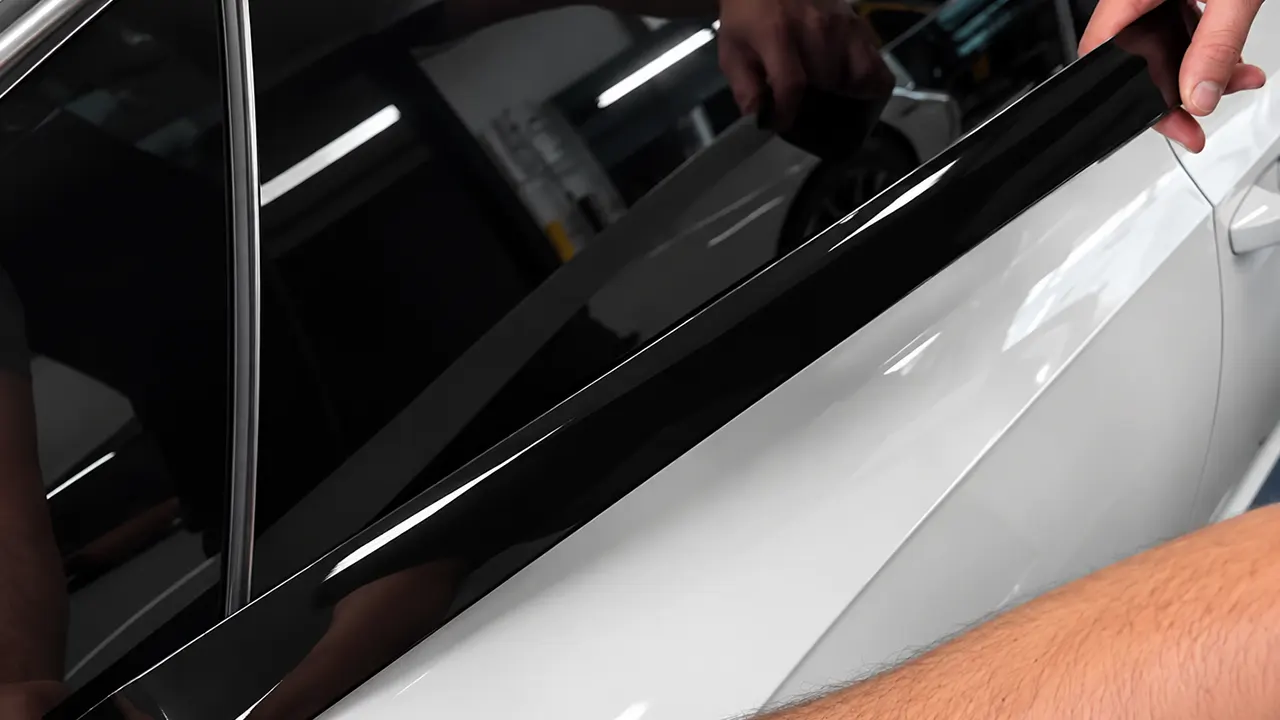
A car chrome delete changes bright exterior trim to a darker finish, usually black. Depending on the part and the result you want, that can involve covering it with suitable film, replacing it with a compatible dark component, or professionally refinishing it. The name does not mean you should strip plating off the car.
Choose the method around the condition and shape of the existing trim, the finish you want, and whether you may need to restore the original appearance. A neat black window surround and a poorly fitted black cover can look similar in a small photograph, but they are very different projects once you live with them.
What Counts as a Chrome Delete?
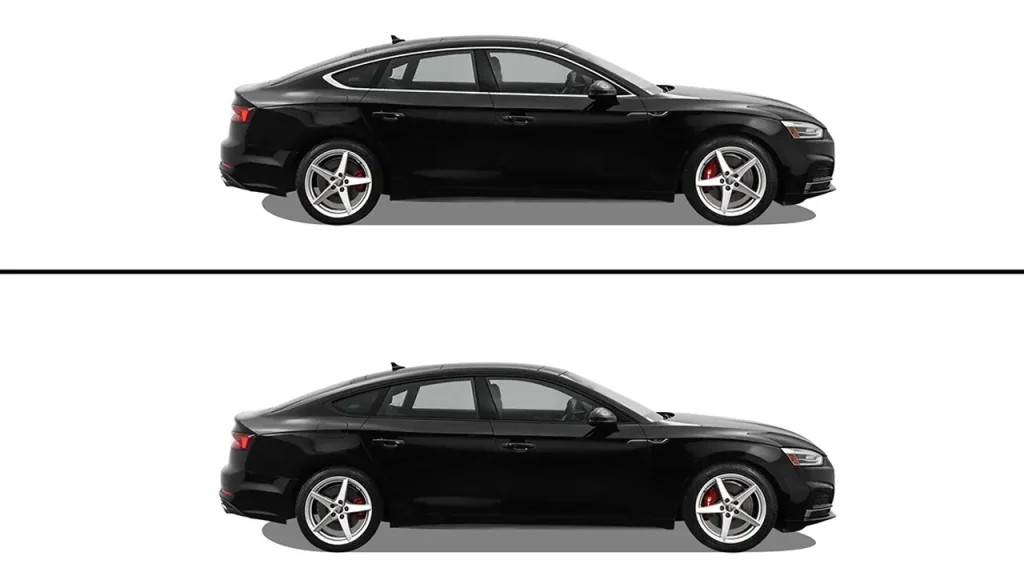
Owners commonly use the phrase for changing window surrounds, grille accents, badges, handles, mirror details, roof trim, or other bright pieces. The exact list depends on the vehicle. You can darken a few accents without treating every shiny surface as something that must disappear.
The bright appearance does not identify the material. A part may have a plated, painted, polished, coated, or film-covered surface. The underlying material and finish affect what can be applied, removed, or refinished safely.
Do not include functional lenses, reflectors, registration information, or sensor areas merely because they interrupt a black theme. A styling plan needs to work around the vehicle’s equipment, not turn it into decoration.
Treat hot or unusually exposed components as a separate question. A film intended for ordinary body trim should not be assumed suitable for an exhaust outlet or another location with a different heat exposure. Ask for an expressly suitable product or method instead of extending the window-trim specification to the whole car. The same caution applies to a piece that is repeatedly rubbed, flexed, or struck during use: identify that exposure before choosing the finish, and leave the part unchanged when a suitable treatment cannot be established.
It also helps to distinguish a chrome delete from a general color change. Darkening the bright trim is a focused project. A full vehicle wrap, new wheels, or a broad personalization scheme can be considered separately instead of being added automatically to the quotation.
Decide Which Pieces You Actually Want Darkened
Walk around the car in daylight and take photographs from the front, rear, and sides. Mark the bright pieces you want to change and leave uncertain ones unmarked. This creates a component list that an installer can discuss rather than a vague request to “black everything out.”
Notice how the remaining finishes relate to one another. Window trim, wheel finish, grille texture, and door handles may not need to match exactly. A small amount of bright metal can be an intentional contrast, particularly when other original details remain unchanged.
Look at the car from normal viewing distance. Some small pieces disappear visually once the major window or grille accents are darkened. Changing those extra pieces can add cost and risk without materially changing the overall appearance.
For a shared or leased car, involve the other relevant person before choosing the scope. An easily described component plan is also easier to reverse or adjust later than an undefined promise to transform the whole exterior.
Compare Film, Replacement Parts, and Refinishing
| Method | What changes | Main decision |
|---|---|---|
| Suitable wrap film | Covers the existing visible surface | Surface condition, shape, edge finish, care and removal |
| Compatible replacement trim | Swaps the original component for another | Exact fit, clips, equipment compatibility, original-part storage |
| Professional refinishing | Changes the finish of the selected part | Substrate, preparation, coating system, permanence |
| Add-on cover | Adds another layer over the original part | Fit, adhesive or clips, clearance, visual thickness |
None of these methods is automatically best for every piece. A vehicle might use one approach on window trim and another on a removable grille detail. The important point is that each part has a suitable method, not that the whole car uses one material.
Avoid choosing by the darkest sample alone. Compare what happens at edges, joints, corners, mounting features, and nearby moving parts. Those details often decide whether the finished job looks integrated or looks like something placed on top.
Wrap Film: Check the Existing Surface First
A suitable film can change the appearance while retaining the component beneath it, but that does not establish harmless removal from every surface. Existing paint, plating, repairs, contamination, and deterioration all matter. A small test or inspection cannot make an unstable finish sound.
Ask the installer to identify the surface and assess its condition before application. Pitting, loose coating, cracks, or damaged edges may remain visible through the film or make adhesion unreliable. Covering the damage can also make future inspection less straightforward.
The chosen film needs instructions appropriate to the intended application. Some professional wrap products include chrome-delete applications in their literature, but that does not mean every film suits every bright trim surface or every DIY installation.
For example, 3M’s 2080 product bulletin specifies application conditions and professional installation, and directs users to associated installation and removal information. Use the exact product’s current instructions rather than transferring heat settings, cleaning products, or removal claims from another film.
Replacement Trim: Preserve the Original Parts When Practical
A dark replacement piece can make sense when a compatible component is available and you want its molded shape rather than another layer over the original. Confirm the exact model year, body style, equipment, and attachment arrangement before ordering.
Similar-looking trim can hide different clips, brackets, lamps, cameras, or sensors. A part offered for one configuration should not be forced onto another because its visible outline is close. Ask for fit information that identifies the actual application.
Find out whether removal requires access behind a panel or replacement of one-time-use clips. A quotation for the visible trim alone may not include those parts or the work needed to install it properly. Check this before taking the car apart.
Keep sound original parts protected and labeled if you may restore the car later. Record where they came from and retain the fitting information. Preserving an original part is useful only if it does not get bent, scratched, or mixed with unidentified hardware during storage.
Paint and Other Refinished Surfaces Are a Different Commitment
Refinishing can change a part’s appearance without an added cover, but the preparation and coating system must suit the actual substrate. Metal, plated plastic, coated trim, and previously repaired surfaces do not all accept the same preparation.
Do not start by sanding through a bright finish because an online tutorial says paint needs a rough surface. You may remove a protective layer, create uneven edges, or damage a component that would have been better replaced. Have the part assessed and use a complete suitable system.
Ask whether the component will be removed, how nearby surfaces will be protected, and what finish result is realistic. A complex grille or textured detail may need a different approach from a smooth removable strip.
Restoring a refinished part can require another refinishing job or replacement rather than simply peeling something off. If future restoration is important, include that in the decision now. A lower initial price is not the only cost to compare.
Add-On Covers: Look Closely at the Edges
A black cover can appear convenient because it avoids replacing the original piece, but it adds thickness and introduces another attachment interface. Check how it seats, how its edges end, and whether it touches seals or moving parts.
Ask what holds the cover in place and what surface the attachment requires. A decorative cap with unspecified tape is not a complete fitting solution. The same caution applies to generic grille strips and handle overlays that look similar to model-specific parts.
Dry-fit where the instructions permit it. Look from the side as well as straight ahead. A bulky edge, visible gap, or rocking cover may be noticeable even when the color matches the rest of the car.
If a cover obstructs a camera, lamp, handle movement, or mirror function, do not trim the vehicle or disable a feature to accommodate it. Return to the fit information and select an appropriate part or another method.
Gloss, Satin, and Matte Black Do Not Look the Same
Choose a finish with the car present if possible. Gloss black can relate to existing glossy pillars or painted details; satin and matte can create a quieter contrast. The right effect depends on the surrounding surfaces rather than a rule that one finish always looks more premium.
Look at the sample in diffuse light and direct sunlight. Curvature, reflections, and the direction of a textured material can change the appearance. A black label on two products does not guarantee the same shade, gloss, or texture.
Ask whether different pieces will use the same film or finish system. If a replacement part and wrapped trim will sit beside each other, compare representative samples before committing. Deliberate contrast can work better than a near-match presented as identical.
Care requirements also differ. Do not assume a product intended to add gloss belongs on a matte surface. Keep the exact finish-care information so the appearance you chose does not get altered during routine cleaning.
Window Surrounds and Grilles Need Careful Access Planning
Long narrow trim can contain sharp curves, joints, rubber seals, and edges that are difficult to reach. Discuss how those areas will be handled before approving the job. A smooth middle section is only one part of the finished result.
Ask whether any trim must be removed and what the vehicle procedure requires. Do not pull at a strip simply to make film application easier without understanding its retention. A broken clip or distorted molding can turn a cosmetic job into a parts replacement.
For grilles, check airflow, functional openings, and equipment behind the visible surface. Blacking out an appearance detail is not permission to cover an intake or a sensor area. The installer should follow the requirements for the exact component and vehicle.
Agree how much original bright finish may remain visible at seams or difficult edges. A clear expectation before work is more useful than assuming every recess can be covered invisibly without disassembly.
Badges, Handles, and Mirrors Have Their Own Limits
A badge may be attached with adhesive, pins, clips, or a combination. Some emblems also share a location with vehicle equipment. Identify the attachment and function before removing, covering, or replacing it.
Removing an adhesive badge is not the same as applying film to a badge that stays in place. If removal is part of the plan, the precautions for dealer stickers and badges help distinguish adhesive pieces from mechanically attached ones. Do not assume every bright emblem can simply be pulled off.
Handles and mirrors move and are touched frequently. Check access, keyless-entry features where present, lighting, cameras, and folding movement. A cover that clears the component when stationary may interfere when it is operated.
Keep any badge arrangement and replacement decision consistent with your ownership obligations and applicable requirements. The purpose is an appearance change, not hiding the identity of a required component or modifying a safety function.
A Black License Plate Frame Can Finish the Look
If the car already has a bright plate surround, changing the removable frame may be a straightforward part of the appearance plan. There is no need to wrap or paint an unsuitable existing frame merely to keep it in the project.
Compare the frame opening, mounting arrangement, border width, and clearance around the camera and plate lamp. Required information and stickers need to remain visible under the applicable rules. A black finish does not settle fit or plate-display requirements.
Black license plate frames come in different constructions and appearances, so check the exact model rather than assuming all black frames have the same material or coating. Match the gloss or texture intentionally; it does not have to be identical to every black part on the car.
Use a frame as the small accessory it is. It does not replace a bracket, repair old bumper holes, or establish that the whole vehicle has received a professional chrome-delete service. The broader project and the frame selection remain separate decisions.
What Determines the Cost of a Chrome Delete?
The scope matters more than a generic vehicle label. Count the pieces, identify their shape and condition, and note what must be removed or replaced. A narrow window strip with difficult corners may require more careful work than a larger simple surface.
The method changes the quotation too. Film, replacement components, refinishing, and add-on covers involve different material and labor. Include preparation, clips, disassembly, reassembly, inspection, and any relevant vehicle-specific checks.
Discuss existing damage before comparing prices. A quote based on sound original trim is not comparable with one that includes correcting damaged finish or replacing a broken molding. Ask what is excluded and what happens if a hidden problem appears during removal.
There is no reliable universal price or completion time for every car and scope. Request an itemized estimate for your component list and location. Avoid treating a price from a different car, country, or year as the expected cost for yours.
Use a Clear Brief When Comparing Installers
Send photographs of each intended area, the vehicle details, existing finish condition, and the desired appearance. State whether the car has been repainted or repaired where you know that history. Mention any existing film, coating, or aftermarket trim.
Ask which parts they propose to cover, replace, or refinish, and why. Request the product identification and relevant care information. A description such as “premium black wrap” is less useful than knowing the actual material and the intended application.
Agree the finish, scope, edge treatment, and handling of original parts. Ask about possible disassembly and what happens if clips break or underlying damage is discovered. Keep those decisions with the accepted quotation.
If you plan to restore the car later, ask about removal before installation. Get the limits in writing where practical. An honest explanation of uncertainty is more useful than a promise that every future removal will be fast and harmless.
Inspect the Finished Work Before Taking It Home
Look at the car in daylight from several angles. Check corners, overlaps, joints, edge termination, and any transition between different methods. Ask the installer about an unexpected visible line rather than trying to press or trim it yourself.
Operate doors, windows, handles, mirrors, and the trunk or tailgate as relevant. Check seals and clearance. Verify nearby lights and camera views while parked, and have any new warning investigated.
Compare the work with the agreed component list. A piece left unchanged may be intentional because of a functional limit, but that should match the discussion. Do not judge the job only by whether the largest shiny area is now black.
Collect the product and care record, original parts where agreed, and any follow-up inspection instructions. Ask what changes would justify contacting the installer, such as lifting edges, trapped contamination, or unexpected contact with another part.
Clean and Maintain the Actual Finish
Use the chosen product’s care instructions rather than a universal blackout-trim routine. Keep cleaning tools clean and avoid aggressive rubbing of film edges. A cleaner suitable for a wheel or bare metal may not suit the wrapped or refinished component.
3M’s 2080 literature explains that performance depends on factors including substrate condition, application, exposure, and maintenance. It also gives specific cleaning and removal directions. Those conditions are a reason to retain product information, not a basis for assigning the same lifespan to every chrome-delete project.
Check the work during ordinary washing. Look for lifting, damage at touched edges, contact marks, or contamination trapped near a joint. Report a developing problem rather than adding random adhesive or applying more heat.
Do not treat a protective coating as an automatic upgrade. Film and coating compatibility must be established for the specific system. Ask the installer before applying a new product that changes the surface or its care requirements.
Plan for Removal or Restoration
A removable appearance treatment can still need professional work to come off. Age, exposure, surface condition, and the exact material affect the process. Do not assume an instruction for one film applies to another or that a short video proves the condition of the surface underneath.
For replacement parts, inspect stored originals before planning restoration. Check clips and attachment parts as well as the visible finish. If the original was damaged during removal or storage, simply refitting it may not be an option.
Refinished components may need a new coating process or replacement to regain the original look. Decide whether that future expense fits your ownership plan. For a leased vehicle, check the agreement and restoration requirements before starting the original work.
If the plan is still uncertain, begin with a smaller scope or a suitable removable frame rather than committing every trim piece at once. Living with a partial change can answer the style question before you take on a much larger project.
Frequently Asked Questions
Does chrome delete remove the chrome plating?
Not necessarily. Film and covers leave the underlying surface in place; replacement changes the component. Refinishing is another method. Identify which process is proposed instead of assuming the term describes chemical stripping.
Can you do only the window trim?
Yes, a partial appearance plan can focus on selected pieces. Confirm the shape, condition, attachment, and intended finish for those pieces. There is no requirement to darken every bright part to make the change worthwhile.
Will chrome delete increase resale value?
Do not assume so. Preferences, finish quality, vehicle condition, and restoration requirements vary. Choose the work because it suits your use and appearance goals, not because someone promises a resale premium.
Should you wrap over damaged or peeling trim?
Have it assessed first. A loose or deteriorating surface may not provide a suitable base, and the damage can remain visible. The appropriate answer may be repair or replacement rather than another covering layer.
Is chrome delete the same as changing to a black plate frame?
No. A frame is one removable accessory around the plate. It can coordinate with darker trim, but changing it does not perform or replace work on the car’s window surrounds, grille, handles, or other components.