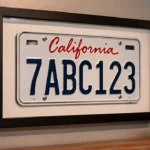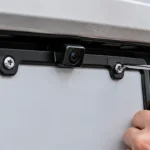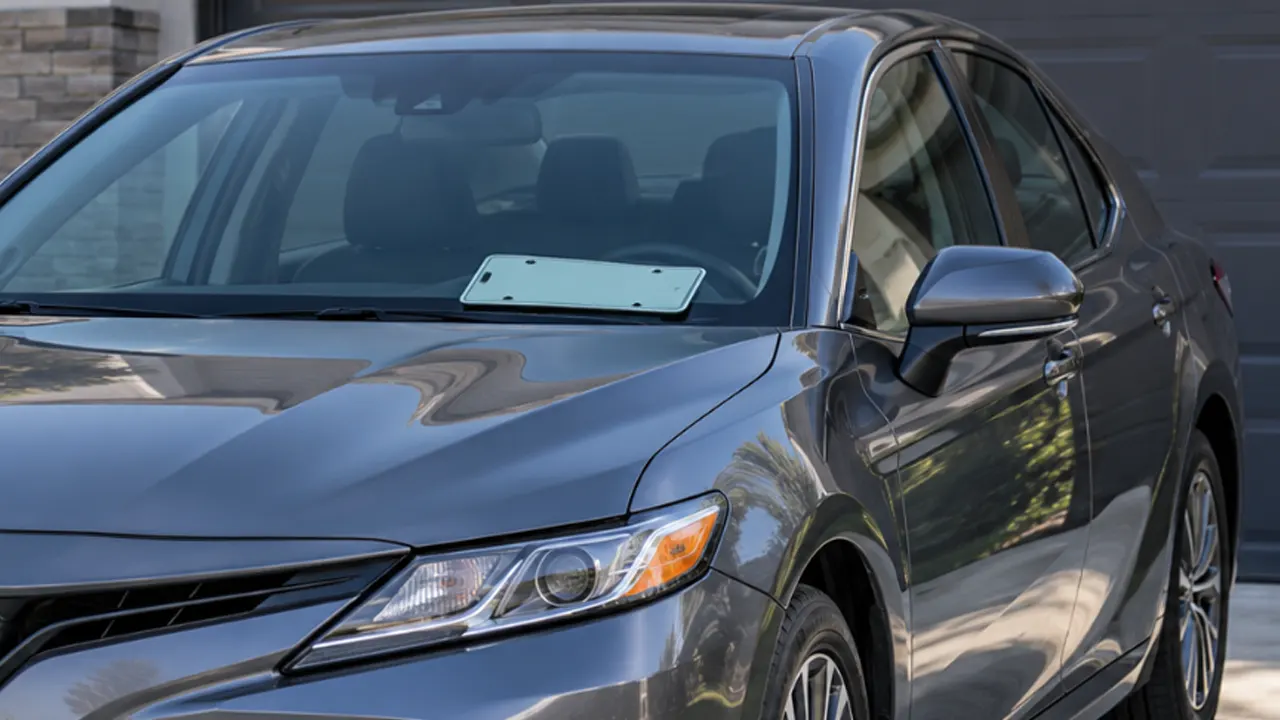
If your permanent front license plate must be mounted outside the vehicle, no: placing it behind the windshield does not meet that requirement. A readable number is only part of the question. The plate also has to be in the required position and attached in the required way.
Temporary permits and registration stickers are different items. Some have window-display instructions, but those instructions don’t authorize moving a permanent metal plate into the same spot. Start with the item you were issued, then the rules for your vehicle and registration.
Why a Readable Plate Can Still Be Improperly Displayed
A plate can be easy to read while a car is parked and still be in the wrong location. Seeing it through glass from a few feet away doesn’t answer whether it belongs at the exterior front, whether it is securely fastened, or whether required information remains unobstructed.
Think of these as separate conditions: location, attachment, orientation, and readability. A suction-cup holder might address movement without satisfying location. A tilted plate might face an approaching observer while failing an orientation requirement. Improving one condition doesn’t cancel another.
That distinction also explains why someone else’s car isn’t a reliable example. It may have a different registration class, a temporary permit, or an installation that simply hasn’t been challenged. Base your decision on the requirement for your own vehicle, not on how long another driver says they have used a dashboard display.
There isn’t one nationwide answer covering every plate and permit. Where the rule requires an exterior mount, use one; where an actual exception applies, follow its conditions.
What Official Rules and Guidance Show
Oregon: Dashboard Display Is Specifically Addressed
Oregon Revised Statutes section 803.540(1)(b) requires front and rear display when two plates are required; subsection (1)(c) also requires plain view and easy readability. Oregon DMV’s Summer 2024 Dealer Details bulletin, pages 4–5, specifically explains that a plate on the dashboard does not meet the display requirement.
The practical conclusion is clear for the ordinary two-plate situation addressed by that guidance: moving the front plate inside isn’t a substitute for mounting it at the front. Vehicle-class exceptions and authorized permits need separate treatment. The bulletin’s publication date is 2024; reviewing it in 2026 does not make it a newly issued law.
Texas: Plate Count and Placement Both Matter
Texas Transportation Code section 504.943(a) addresses two assigned plates and compliance with the department’s placement rules, subject to the section’s exceptions. Texas DPS’s General Vehicle & Driving guidance describes exterior front and rear locations with secure fastening. For a vehicle governed by that exterior-position requirement, a plate inside the windshield is not in the specified location.
Use the statute and applicable placement rule together. The DPS explanation is agency guidance dated September 30, 2020, not a new 2026 enactment. A registration sticker in the windshield and a permanent plate mounted outside are different parts of the registration system.
These examples establish a useful distinction, not a complete list of state permissions. To resolve whether your registration requires a front plate in the first place, check the applicable vehicle class and front plate requirements by state.
Permanent Plates, Temporary Permits, and Windshield Stickers
The words plate, tag, permit, and registration sticker are often used loosely. Before deciding where something belongs, read its name and the issuing instructions. A document validating registration is not automatically the same thing as the plate identifying the vehicle.
| Item | What controls its display | Practical distinction |
|---|---|---|
| Permanent metal plate | Plate-placement rules for the registration and vehicle class | Window visibility alone does not establish compliance |
| Temporary plate or operating permit | Instructions for that specific permit | There is no universal window position for all temporary documents |
| Registration sticker or certificate | The issuer’s validation and display instructions | A windshield location does not relocate a separate metal plate |
| Dealer or transport authorization | Its authorized use, dates, and display conditions | A dealer’s arrangement is not automatically available for private use |
For a temporary permit, confirm its vehicle details, dates, and location before fitting it. Keep the full document readable and follow any instructions about attachment, protective coverings, or replacement. Avoid cropping or altering it to make it fit a preferred spot.
If the paperwork is unclear, identify the exact document when asking the issuer. “Where does this temporary operating permit go?” is more useful than “Can my tag go in the window?” When permanent documents arrive, follow the transition instructions rather than leaving an expired temporary item beside them.
What If Your Vehicle Doesn’t Need a Front Plate?
A rear-only requirement means the assigned plate stays in the prescribed rear position. It doesn’t mean you should move that plate to the dashboard or create a front copy.
Confirm the vehicle’s actual registration class before relying on a rear-only arrangement. Motorcycles, trailers, collector vehicles, and ordinary passenger cars can be treated differently within the same jurisdiction. A state’s general reputation as a one-plate or two-plate state is only a starting point.
A souvenir plate or decorative sign has no registration authority. If you want to display one, consider the separate rules about obstructing the driver’s view and the vehicle maker’s restrictions on objects in that area. Keep decorative choices separate from the assigned plate’s required location.
What to Do When the Car Has No Front Bracket
A missing bracket is first an installation problem. Find out whether a suitable original-equipment holder or documented aftermarket mounting arrangement is available. A vehicle sold without a fitted bracket may simply have been supplied for another market or previously used under different requirements.
If someone tells you the car is exempt, ask for the specific rule and the conditions that make it eligible. Vehicle design, registration class, and any required authorization matter more than a verbal assurance that the bumper has no holes.
For example, Texas HB 1607 from the 2025 regular session proposed a windshield-insignia arrangement. Its legislative history shows that it was left pending in committee, not enacted. An online description of that proposal is not permission to replace a required front plate with a windshield display.
When discussing installation with a dealer, explain whether you want to avoid drilling or retain an existing frame. Ask which mount fits the vehicle, whether it affects other equipment, and whether it can be fitted before collection. Arrange the installation or a genuinely authorized temporary alternative before relying on the car for road use.
If the Plate or Bracket Is Damaged
A broken holder doesn’t create an automatic grace period for dashboard display. Secure any loose components, recover the plate only when it is safe, and arrange the appropriate repair. If the plate is missing or badly damaged, follow the issuing authority’s replacement process.
Keep a wired camera or light supported while working near the mount. Don’t leave the plate hanging from a cable, and don’t use a larger screw to disguise a stripped or cracked mounting point. The bracket and the vehicle-side attachment may need separate repairs.
If the vehicle must be moved before the work is complete, ask the authority what temporary operating option applies. A repair booking, photograph, copy of the number, or parts receipt isn’t itself authorization for a different display.
A frame can tidy the edge of a sound plate, but it can’t restore damaged characters, reflective material, or torn mounting holes. Resolve the plate’s condition before choosing accessories.
Keep Loose Plates Out of the Driver’s Area
Keep a loose metal plate off the dashboard. It shouldn’t slide toward the driver, interfere with the view through the glass, or sit where the vehicle instructions prohibit objects near controls or safety equipment. A cabin-accessory holder isn’t necessarily designed for a plate’s shape, dimensions, or weight.
If you are carrying an unmounted plate, protect its edges and secure it with other carried items in a suitable part of the vehicle. Follow any instructions requiring you to retain or produce it. Carrying a plate for that purpose is different from using the dashboard as its official display position.
Use a Suitable Exterior Mount—and Keep the Frame in Its Proper Role
Start with a bracket that matches the vehicle’s attachment points and plate format. It should hold the plate in the required position without forcing it against the bumper or interfering with a grille, sensor, camera, handle, or other equipment.
If avoiding new holes is your priority, assess documented front plate mounting options without drilling. Grille mounts and tow-eye arrangements still need vehicle-specific checks; a no-drill description doesn’t establish that the location or attachment is suitable.
When comparing front license plate holders, focus on the attachment and installed position before color or styling. Account for the actual plate size, hole positions, surrounding recess, and clearance behind the screws. Longer screws aren’t automatically a better solution when you add another layer.
License plate frames have a different job from mounting brackets. A bracket attaches the assembly to the vehicle; a frame surrounds the plate’s edge. A decorative frame doesn’t make a dashboard display compliant or replace a missing vehicle attachment.
Once the mount is right, choose a frame that matches your plate without hiding required text or validation areas. Inspect the complete assembly, including screw caps, logos, camera bars, and illumination where relevant. A narrow border can still interfere with a particular plate design.
Finish with a simple installed check: the plate is secure, its required information is visible, and nearby equipment operates without contact. If a door or hatch moves near the mount, inspect the clearance through its normal travel. Stop there rather than treating a location question as a reason to replace every accessory.
How to Resolve an Unusual Registration or Travel Situation
For a vehicle-specific answer, provide the registration jurisdiction, vehicle class, plate or permit type, and proposed mounting location. Ask which provision governs that arrangement and whether an exception requires an application or other documentation.
Describe the actual problem: a missing bracket, a damaged plate, an imported vehicle, or a temporary document. That makes it easier to get an answer you can use. Keep the date and context of any instructions, particularly when the document is valid only for a limited period.
For travel, distinguish registration obligations from destination operating or equipment rules. Don’t assume either that every visitor must adopt local plates or that registration elsewhere removes every local obligation. Outside the United States, use the relevant national or regional registration authority rather than applying these US examples automatically.
If you have received a citation, follow its response deadline and obtain advice appropriate to that jurisdiction. A general explanation of mounting options cannot predict a fine, dismissal, or defense in an individual case.
Frequently Asked Questions
Can I put a rear plate in the back window instead?
Don’t infer a rear-window option from a discussion about front plates. Rear placement, attachment, and illumination can have their own requirements. Use the prescribed rear mounting position unless a specific authorization applicable to your vehicle says otherwise.
Can I display a printed copy while waiting for a replacement?
A copy doesn’t become an assigned plate or permit simply because the number is correct. Contact the issuer about the replacement and any authorized interim document. Follow the instructions for what it actually issues.
What if the dealer handed me the front plate loose?
In Texas, Transportation Code section 503.063(c) addresses certain passenger cars and light trucks without a factory front attachment that permits fitting a plate without drilling. It directs the dealer to fit the rear plate and hand the remaining plate to the buyer unmounted. That provision concerns the dealer’s handover responsibility; it does not authorize windshield display. Resolve the separate operating and placement requirements before using the vehicle.
Can I cover the plate to reduce windshield glare?
A cover doesn’t solve a required-location problem and may raise separate visibility restrictions. Address the mounting position rather than adding material over the plate. If the concern is a temporary document, follow its issuer’s instructions about any protective covering.