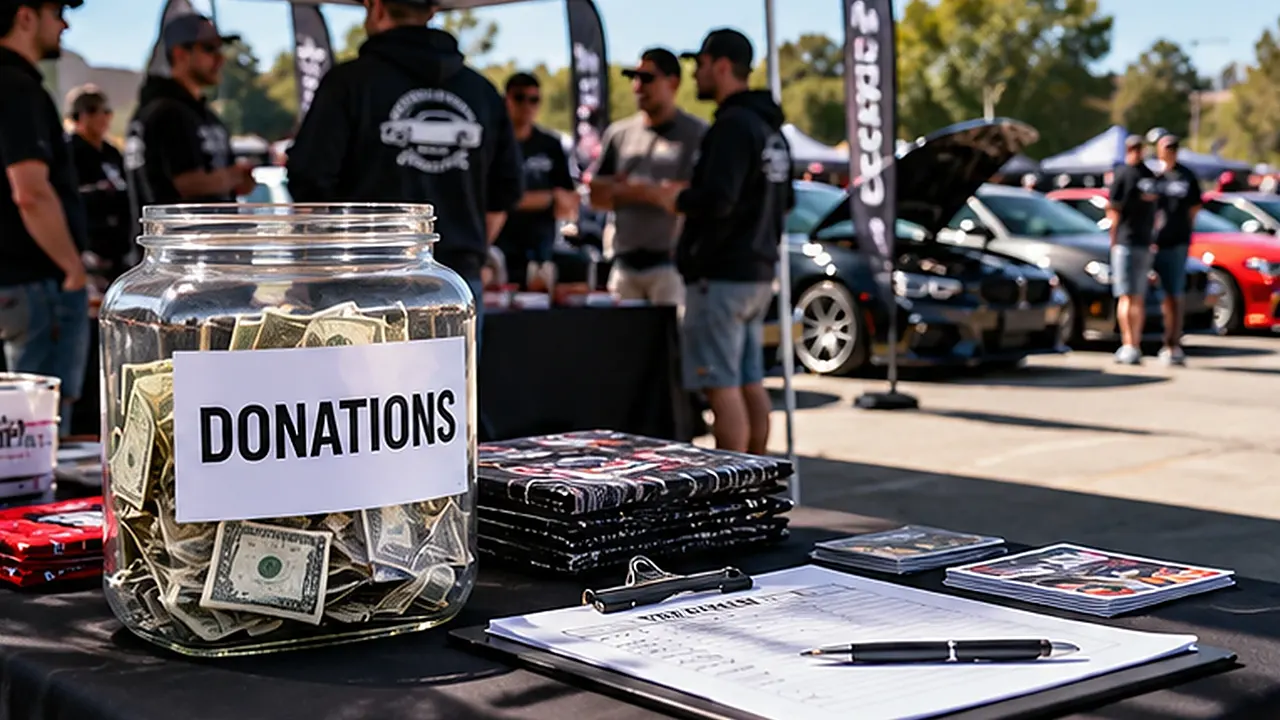
Practical car club fundraising ideas include a small car meet, local sponsorship, a hosted car wash, a merchandise preorder, and a donation drive tied to a specific goal. Choose the method that fits your volunteers and audience, then calculate what remains after expenses. The biggest event is not always the most useful fundraiser.
Decide whose money you are raising before you advertise. Funding club equipment or next year’s meet is different from collecting for a named charity. State the purpose clearly, agree on who receives the funds, and avoid presenting ordinary club revenue as a charitable donation.
Choose a Fundraiser Your Club Can Deliver
Start with a concrete goal: a stated contribution to a beneficiary, replacement equipment, or a funded event. Then count the people who will actually do the work. A large mailing list is not the same as a team available for setup, payments, parking, and cleanup.
List your existing advantages. You might have a reliable venue, members who can take photographs, a business willing to sponsor an award, or a group that regularly buys club merchandise. Build around those resources before paying to create new ones.
| Your starting point | A useful option to test | The main commitment |
|---|---|---|
| Few volunteers, an engaged membership | A time-limited donation appeal or simple preorder | Clear communication, records, and follow-through |
| A willing local business | A sponsored gathering or hosted activity | Written responsibilities and delivery of sponsor benefits |
| An established show team and venue | A benefit show with several income sources | Permissions, insurance, staffing, and a weather plan |
| Members with a specific skill | A workshop or booked service session | Suitable facilities, equipment, and participant limits |
| Uncertain product demand | A small preorder with an explicit minimum | A realistic production plan and refund arrangements |
The options are not ranked by guaranteed profitability. A familiar small event can work better for your club than an ambitious show requiring equipment, staff, and permissions you don’t yet have. Test demand with a specific proposed date, format, and price instead of asking whether people like the idea in principle.
18 Car Club Fundraising Ideas
1. Fund One Specific Club Need
Replacing the club’s worn event shelter is an easier request to understand than “support our future activities.” Show members the need, the target, and the proposed purchase. Give the appeal a closing date and explain what happens if the total falls short or goes over. Keep it separate from compulsory dues. A voluntary support drive can suit a small club whose members already understand the benefit and would rather contribute directly than help organize another event.
2. Give a Local Sponsor a Useful Role
A local business may find a modest, well-defined partnership easier to consider than a general request for money. A café could host the morning gathering; a detailing business might support an award or a demonstration. Start with a role that makes sense for both the business and the event.
Describe what the sponsor receives in plain terms: where its name appears, whether it has a display space, and who handles the artwork. You can promise an agreed placement. You cannot promise sales or an audience size you have not established.
Put the amount, deadlines, responsibilities, and cancellation terms in writing. Then give one volunteer the job of delivering those benefits. A missed logo or an unused display space is easy to avoid when someone knows it is their responsibility.
3. Build a Benefit Show Around an Existing Team
A show is a substantial project. It makes more sense when you already have people who can manage the venue, parking, registration, and awards. If those roles are still empty, begin with a smaller gathering and build the team first.
Work out the cost of opening the gates before choosing the entry fee: venue, insurance, sanitation, signs, payment costs, staffing, and awards. Entry fees may cover some costs while sponsorship or direct contributions support the goal. Make the actual arrangement clear to participants.
Vehicle movement, pedestrian areas, capacity, and arrival times need an agreed plan with the venue. Publish postponement and refund terms before registration. Those practical decisions can matter more to the result than an ambitious list of entertainment.
4. Use a Small Cars-and-Coffee Meet as a First Test
You do not need a judged show to bring members together. An agreed morning slot at a suitable venue can give you a manageable first fundraiser, with a clearly explained event fee or voluntary contribution. Set the parking capacity with the host and decide how overflow will be handled. If the café is contributing part of its sales, record which transactions count and how the total will be confirmed. Avoid advertising a share of “all sales” when the business has agreed to something narrower.
5. Partner With an Established Car Wash
Ask an operator whether it can host a defined promotion: eligible customers buy a wash, identify the club offer, and an agreed amount supports the fundraiser. The important detail is how those sales will be tracked. Settle the dates, contribution, and reporting before you tell members about it.
A volunteer wash is a different operation, with products, staffing, vehicle handling, and drainage to organize. EPA guidance identifies wash water as a pollution source. Confirm suitable runoff management and local requirements before choosing a parking lot simply because it is available.
6. Sell Booked Places at a Detailing Day
A bounded service is easier to deliver than an open invitation to “bring any car for a full detail.” Work with a suitable provider to define the package, appointment length, and number of cars. An interior clean might suit one team; another may offer a different service within its equipment and competence. State the exclusions so owners know what they are buying. Agree on products, vehicle handling, damage responsibilities, and weather arrangements with the provider, then stop taking bookings when the available places are filled.
7. Offer Stationary Car Photography Sessions
Members put a lot of thought into their cars. A well-organized photo session gives them something personal to take away and gives a photographer a defined contribution to the fundraiser.
Choose an approved stationary location, book time slots, and specify the number of edited images and delivery schedule. Ask customers whether their names or registration details may appear in public examples. A private gallery or direct delivery can be part of the offer.
Keep the session away from moving traffic and check the location’s photography permissions. Rolling photographs require a different plan; there is no need to add that complexity to a straightforward parked-car session.
8. Arrange a Small Garage or Collection Visit
A restorer explaining an unfinished project can be just as interesting to members as a polished display. If a host is willing, agree on a limited visit with a clear start, finish, and group size. Let the host decide which areas and photographs are acceptable. Explain what the ticket includes, plan parking and access, and keep the private location out of promotion until the owner has approved it. The attraction is the access and conversation, so give the host enough time to make those worthwhile.
9. Organize a Parts Swap With Bookable Seller Spaces
A swap meet can suit members who have useful parts or automobilia they no longer need. Charge an agreed fee for a defined seller space where the venue permits it. Give sellers the allowed categories, setup time, and removal deadline before they book.
Keep the club’s space bookings separate from the deals made between private buyers and sellers. Explain the club’s role and check the event and sales requirements that apply. Include cleanup and disposal in the budget; unsold boxes should not become the next volunteer’s problem.
10. Auction a Short List of Useful Donated Items
A clear service voucher or a well-described collectible can be more attractive than a large assortment of uncertain donations. Record exactly what each item includes, its condition, expiry date, collection arrangements, and any restrictions. Ask the donor to approve the description and use of its name.
Set the bidding and payment terms before opening, and have two people check the winning bids. An auction has its own legal and tax questions, so arrange those checks with the organizer or beneficiary. Keep the handover simple: the winning bidder should know whom to contact and what happens next.
11. Take Preorders for a Club License Plate Frame
A club frame gives supporters a visible connection with the group. A short name across the lower strip, perhaps with an original emblem, can be enough. Members should be able to picture the actual design on their own vehicle rather than judge an unrelated catalog photograph.
Offer a specific version and a clear price. Gather plate-format and mounting information, since a member’s motorcycle or overseas-registered car may need a different frame. Keep the required plate information and lighting clear when assessing the installed design.
Preorders help you decide how many to buy, but the money still belongs to an order you must fulfill. State the closing date, threshold, expected schedule, and refund arrangements. Calculate the contribution after the complete delivered cost, not from the product price alone.
12. Keep an Apparel Sale to One Strong Design
A club shirt does not need six garment styles and ten colors to be appealing. One design tied to the group or occasion can make the first sale easier to manage. Choose the actual garment, share its measurement chart, and collect paid size choices before the order closes. Allow for sorting and errors when setting the price. Tell buyers how the sale supports the club or beneficiary without calling the entire purchase price a charitable gift.
13. Offer a Small Item for Supporters Who Skip the Shirt
A decal or compact key tag gives people another way to participate without choosing a clothing size. Keep the artwork short and readable, and explain the intended use of the exact product. Individual postage can consume much of a small selling price, so an organized collection point at a regular meet may make more sense. Record payments and handovers, and do not promise that a decorative decal suits every paint or glass surface.
14. Make a Calendar From Approved Member Photographs
Choose a theme members can contribute to: local trips, restoration stages, or cars at different club events. Invite submissions with clear image-quality requirements and permission for the planned use. Have owners approve names and descriptions before printing.
A calendar needs to arrive while it is still useful. Proof the dates and cropping early, then use paid demand to set the quantity. Order extra copies only with a plan for them; dated stock is harder to sell after the main collection day.
15. Collect the Club’s Stories in a Yearbook
A yearbook gives you room for the details a calendar cannot hold: an owner’s restoration decisions, an old event photograph, or the story behind a club tradition. Name an editor and set a submission deadline so the project has an end. Obtain rights for the writing and images, check technical statements, and sell a defined digital or printed edition. A digital version avoids physical inventory, but editing and delivery still take work. Copied manuals and photographs found online do not become reusable club material simply by being collected in one place.
16. Teach One Practical Skill in a Workshop
Choose a topic an instructor can teach well in the available time: preparing a car for a static display, taking better vehicle photographs, or understanding the intended uses of car-care products. A precise subject makes the offer easier to understand and the class easier to run.
Agree on equipment, facilities, supervision, and participant limits with the instructor and venue. Describe what people will leave knowing, and show how the fee supports the fundraiser after the agreed costs. Keep the demonstration within the instructor’s competence.
17. Plan a Scenic Drive With a Clear Destination
A route ending at an agreed café, viewpoint, or hosted stop can give a drive a purpose beyond simply following a convoy. Provide the route and schedule so participants can make their own safe progress without feeling pressure to keep up.
This is not a competitive driving event. Confirm the relevant permissions, parking, insurance, participant information, and weather arrangements. Keep the fundraiser contribution separate from each driver’s travel and food expenses. Moving vehicles and a changing location need more coordination than a static meet.
18. Arrange a Capped Matching Contribution
A supporter or business may agree to match eligible gifts during a defined period. Make the cap part of the headline rather than a detail hidden later. The written agreement should identify the eligible payments, maximum match, deadline, and payment date. Report progress from confirmed receipts, not expressions of interest. When the appeal closes, reconcile what qualifies, collect the agreed contribution, and explain the result to supporters. A clear, limited commitment is easier to honor than a vague promise that every payment will be doubled.
Calculate Net Proceeds Before Choosing a Price
Net fundraising proceeds are the money collected minus the expenses charged to the fundraiser. List product purchases, samples or setup, freight, packing, payment fees, venue costs, refunds, and any other agreed expenses. Keep donated goods and sponsor commitments visible without counting an unreceived promise as cash.
For merchandise, distinguish a frame from a pair and an individual item from a bundle. A selling price has little meaning if one quote includes two pieces and another includes one. State whether postage is included or paid separately.
The following is a hypothetical frame-sale calculation, not an XCLPF quotation, market price, or earnings forecast. It assumes 100 individual frames are bought, 80 are sold for $15 each, collection is local, and all listed costs are paid from the sale.
| Example line | Illustrative amount |
|---|---|
| Revenue: 80 frames × $15 | $1,200 |
| Product purchase: 100 frames × $4 | $400 |
| Inbound freight | $100 |
| Artwork and sample costs | $60 |
| Packing supplies | $40 |
| Total payment fees assumed for the example | $36 |
| Total cash expenses | $636 |
| Cash remaining for the stated goal | $564 |
The 20 unsold frames are stock, not cash available for the beneficiary. This calculation charges the whole batch to the fundraiser rather than hiding the cost of unsold units. Extra postage, taxes, refunds, replacements, or event costs would change the result.
Run a lower-sales scenario as well. Ask whether you can still cover the committed order and other expenses if fewer supporters buy. Preorders help reveal demand, but they do not remove supplier charges, cancellation risk, or the need to handle refunds.
Match your advertising to the actual arrangement. If you promise a fixed amount from each sale, record that obligation separately. If you say net proceeds will support a cause, define which expenses are deducted. Don’t use “all money raised” when you mean the balance after costs.
Make a Frame Fundraiser Easy to Order and Fulfill
Make it easy for a member to answer three questions: Will this fit my vehicle? What will I receive? When and where can I collect it? A clear offer saves the organizer from answering the same messages individually.
For custom license plate frames, begin with the club artwork, relevant plate formats, mounting information, quantities, and destination. Get the costs and sample arrangements for that exact design. Another organization’s advertised minimum or schedule does not establish yours.
Use the sample to settle the visible details together: the lettering at actual size, the finish beside the artwork, the edges, and the mounting. Then inspect it on representative vehicles for the opening, required plate visibility, lighting, and nearby equipment. Several formats may need several versions, even with the same club identity.
Once the version is agreed, give members an accurate proof or photograph and meaningful fit information. Keep an order record with their selection, payment, delivery choice, and collection status. You only need the personal information required to complete those jobs.
Plan the handover before the shipment arrives. For example, a club could offer collection at one regular meet and a separately priced postal option for members who cannot attend. Label the orders in advance, set a collection deadline, and give people one contact for damaged or incorrect items. That is much easier than sorting an unlabelled box while everyone waits.
Plan the Work Before Opening Registration
Give each essential job an owner: venue liaison, finances, sponsor communication, participant information, product orders, and day-of coordination where needed. One person can cover several jobs in a small club, but every task still needs a named decision-maker.
For an event, confirm the venue agreement, expected capacity, permissions, insurance, accessibility, sanitation, traffic arrangements, and weather response. Ask the venue and relevant local authorities what the specific activity needs. A previous meet at the same address does not automatically settle a different event.
Work backward from the date. Allow for artwork, approvals, sample review, production, transportation, and local distribution without inventing a standard lead time. Don’t sell a delivery promise based only on the day the supplier expects to finish production.
Prepare one clear registration or order description. It should say who is organizing, what the participant receives, where the money goes, the price, the date, and the cancellation terms. Make the contact route easy to find.
Keep optional giveaways within the budget. Car show giveaway planning can help with a separate distribution task, but a free item still uses money or donated resources. Don’t let an expanding gift bag quietly consume the intended contribution.
Handle Donations and Results Transparently
For a charity project, agree with the beneficiary on the use of its name, collection method, expense treatment, and transfer of funds before promotion. Use the appropriate organization account and payment route rather than casually mixing the fundraiser with a volunteer’s spending.
Don’t promise tax deductibility yourself. The IRS treats payments made partly as a contribution and partly for goods or services differently from a simple cash gift, with disclosure rules that may apply. Have the beneficiary or its tax adviser decide how receipts and donor statements should be handled.
Keep sales, sponsorship, direct gifts, expenses, and refunds distinguishable in the records. If you collect cash, use two people for the count and record the handover. Limit access to the payment account and member information to the people who need it.
After closing, report the gross receipts, agreed expenses, net proceeds, and the amount transferred or retained for the stated goal. Explain any remaining stock or unresolved obligations. A brief, accurate report is more useful than a large headline total with no explanation.
Review volunteer hours and complaints alongside money. A project that raised a useful amount but exhausted the same two members may need a different format next time. Save supplier records and practical notes so the next organizer does not have to start from scratch.
Frequently Asked Questions
What should a very small car club try first?
Choose one manageable offer with an existing audience: a goal-specific support drive, a small preorder, or a sponsor-backed gathering. Keep the first test small enough that the available volunteers can handle payment, communication, and follow-through.
Should we add a raffle?
Check the applicable state and local rules, the organizer’s eligibility, and any permissions before advertising one. A raffle is not an automatic extra for a fundraiser, and calling it a donation does not settle those questions.
What if a preorder does not reach the minimum?
Follow the terms you gave buyers. Refund, extend, or revise the project only through a clear process that respects their choices. Don’t silently substitute a different product or retain money for an abandoned plan.
Can we fund club operations and a charity together?
You can plan a split, but agree on it with the beneficiary and state it accurately before collecting money. Record the amounts separately. Avoid vague wording that leads supporters to believe the entire payment goes to charity.
How do we choose the next fundraiser?
Compare the net result, volunteer workload, fulfillment issues, and participant feedback with the original goal. Repeat a format because it suited your club, rather than because another organizer reported a large gross total.
Choose one idea, write down the full cost, and confirm who will deliver it. A clearly explained fundraiser that you finish well gives members a stronger reason to support the next one.