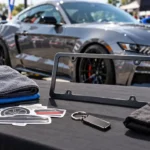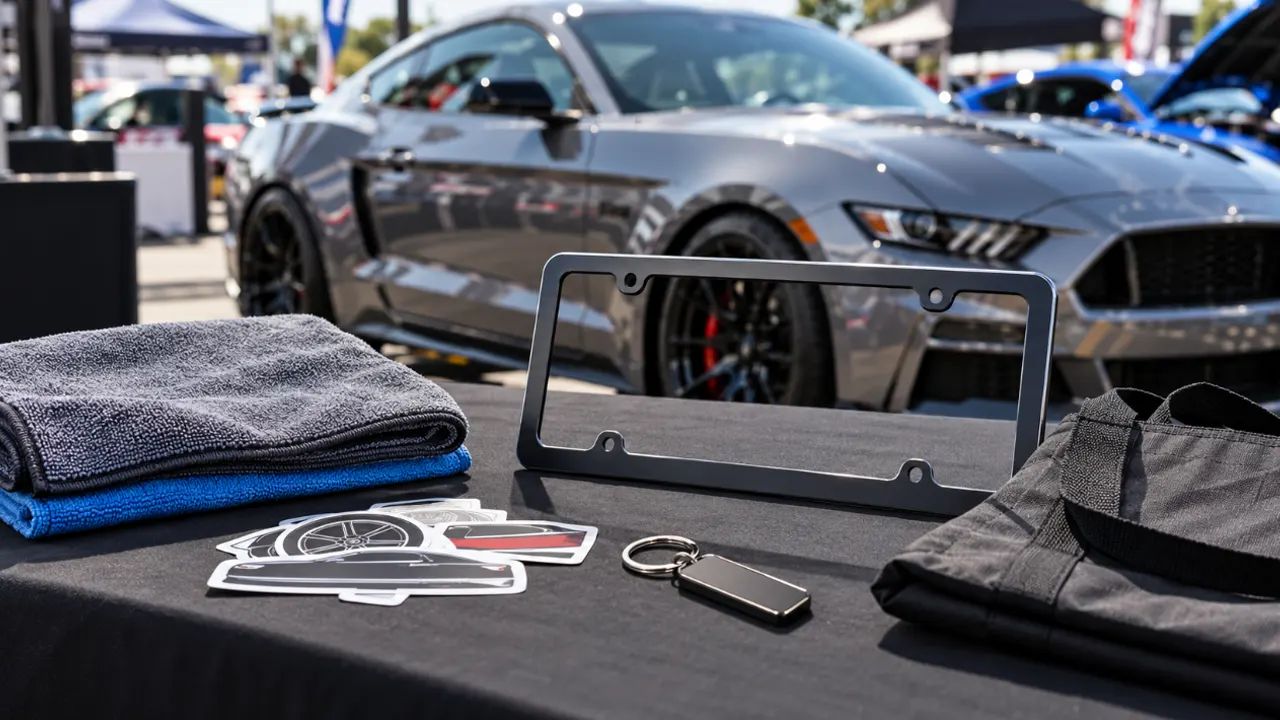
Good car show giveaway ideas match the person receiving them and the way the show works. Small cleaning cloths, restrained key tags, original stickers, useful bags, and correctly selected license plate frames can all suit an automotive event. The right choice depends on whether you are welcoming registered vehicle owners, thanking volunteers, or meeting visitors who will carry the item around the venue.
Plan the handover before ordering the merchandise. A useful object with a readable identity and a clear distribution method is easier to manage than a large collection of unrelated swag.
Here, a giveaway means a modest item handed to an intended recipient. A raffle prize, sweepstakes, competition, or vehicle giveaway is a different activity with separate rules and planning needs. Do not treat buying promotional stock as permission to run a contest.
Separate Drivers, Visitors, Volunteers, and Trade Guests
A registered vehicle owner may appreciate a show memento that relates to their car. A visitor who arrived by public transport may prefer something small and light. A volunteer might value a clearly identified thank-you gift that does not become another job to carry during a shift.
Trade guests also have different needs. Someone attending several meetings may not want a bulky souvenir, especially if they are flying home. A useful small item with a concise contact route can be more practical than a large bundle assembled to look impressive on the booth table.
Write down these groups and decide whether they need the same item. You can offer a shared low-burden giveaway while reserving a more specific item for registered participants or invited partners. Make the distinction clear rather than letting staff improvise inconsistent rules.
If families attend, plan age-appropriate options separately. Do not assume a small automotive trinket is suitable for children because it is colorful. Keep adult merchandise with small parts or unfamiliar product requirements out of an indiscriminate children’s giveaway pile.
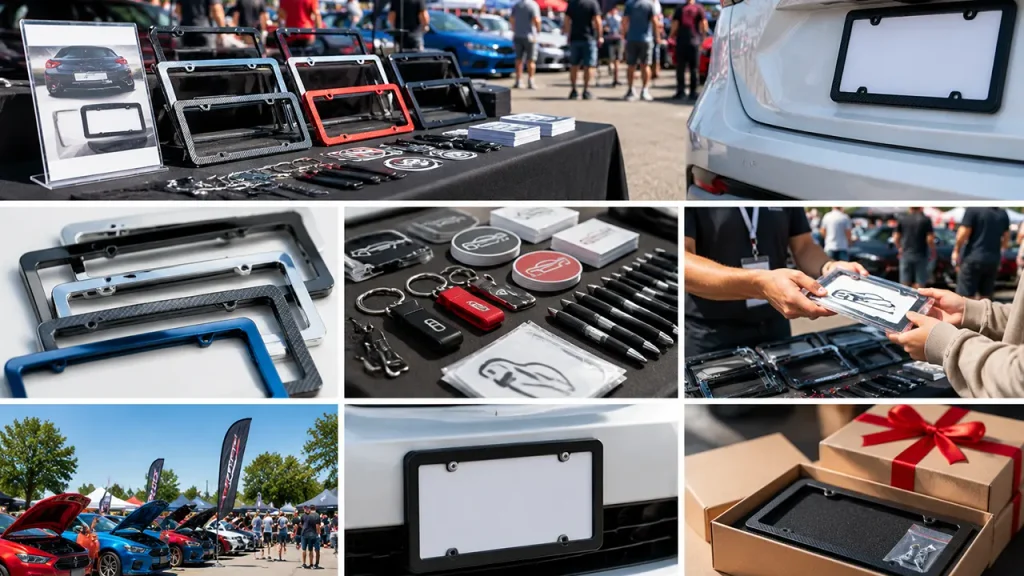
A Practical Shortlist of Car Show Swag
| Item | Useful audience or occasion | Main planning check |
|---|---|---|
| Protected cleaning cloth | Visitors and owners interested in care | Intended cleaning surface and clean distribution |
| Compact key tag | General visitors or registration packs | Size, edge finish, readable message |
| Original sticker | Enthusiasts who choose where to apply it | Artwork rights, intended surface, removal guidance |
| License plate frame | Owners with a compatible plate who want one | Format, opening, mount, permission |
| Flat tote or carry bag | Visitors already collecting materials | Carrying comfort, useful size, packaging burden |
| Event memento | Registered participants or volunteers | Date, name, stock quantity, storage |
This is a selection menu, not a recommendation to order every category. One main giveaway and a clearly justified secondary item can be easier to handle than a bag containing many small pieces. Keep the recipient’s next hour in mind: they may still be walking, taking photographs, or carrying a child’s belongings.
Cleaning Cloths Fit the Setting When They Arrive Clean
A cloth can connect naturally with a car show, but specify what it is intended to clean. A cloth supplied for glasses or screens should not automatically be promoted as a paint-care product. The fabric, edge, decoration, and care instructions all deserve a check.
Protect the usable surface from dusty tables, exposed cartons, and repeated handling. Packaging does not need to be elaborate; it needs to keep the item in the condition you intend. If you pair it with another product, keep liquids or fragranced pieces from transferring residue.
Keep the message modest. A business or event identity can be sufficient, with any detailed contact information on a small accompanying card. Do not cover the entire useful surface with an elaborate print simply because the supplier can reproduce it.
Avoid encouraging visitors to wipe dusty display cars without the owner’s permission. A care-related giveaway is still a gift, not an invitation to touch someone else’s vehicle. Staff can describe the intended use without making promises about universal scratch prevention.
Key Tags and Small Keepsakes Work Best Without Extra Bulk
A compact key tag can be easy to distribute and carry. Handle a sample with an ordinary key set before choosing it. Large hard pieces, weak joints, or sharp edges can make an attractive-looking item inconvenient to use.
Choose a message that remains readable at the finished size. An event name and year may be enough for a participant keepsake. A sponsor may prefer a simple identity and short web address. Trying to fit every sponsor’s full contact details onto a tiny piece usually weakens the result.
Consider whether the item needs to be date-specific. A dated memento can feel appropriate for registered owners, while an evergreen design may be more useful for general visitor stock that could remain after the show. That is a practical inventory decision, not a reason to remove the event’s identity altogether.
Keep personalized or named keepsakes separate from general stock. Label them for the correct recipient and agree how uncollected items will be handled. A name mistake is much easier to prevent before production than to correct at a crowded registration desk.
Stickers Need Original Artwork and Clear Boundaries
Stickers can be a small optional giveaway for visitors who enjoy collecting automotive graphics. Use original or properly licensed artwork, and obtain permission for partner logos. An event theme does not create a right to reproduce a vehicle manufacturer’s badge or another artist’s illustration.
Explain the intended surface when it matters. A sticker for a toolbox is not automatically suitable for painted bodywork, glass, protective film, or interior trim. Ask the supplier for application and removal information for the actual material rather than repeating a universal “no residue” claim.
Never apply a promotional sticker to an attendee’s vehicle without permission. Do not put merchandise on display cars as an informal distribution method, even if you think the owner will appreciate it. Some owners will reasonably want nothing touching the finish.
Offer the sticker as a choice and package it so edges are not bent before the visitor receives it. A backing card can carry the detailed information that would make the main graphic too busy. Keep any QR code off the decorative design if it makes both less usable.
License Plate Frames Suit Opt-In Owner Giveaways
Promotional license plate frames can connect the event identity with a vehicle, but they need a more selective handover than a loose sticker. The recipient must want the frame and have a suitable plate and mounting arrangement.
For a local registration pack, identify the plate formats likely to attend and decide what you can support. Cars, motorcycles, imported vehicles, and different registration jurisdictions may not share the same geometry. A single market label does not establish universal compatibility.
Check the frame opening, border, holes, and vehicle clearance. Required characters, jurisdiction information, stickers, and illumination must remain visible under the applicable rules. Use the frame size measurements to organize the fit checks rather than assuming every plate with similar outer dimensions uses the same surround.
Do not offer casual on-site installation unless you have planned competent fitting, permission, suitable hardware, and a safe area. Handing over an optional frame with clear fit information may be more appropriate. A decorative frame should not be sold to the recipient as a replacement for a mounting bracket or guaranteed protection against impact.
Bags Help Only When They Solve a Carrying Problem
A lightweight bag can be useful when attendees are already collecting printed material or small items. Check the size, handle comfort, closure if present, and the way the bag packs into your cartons. A bag that looks good hanging empty may be awkward once loaded.
Use a realistic sample load. Consider a folded program, a few small gifts, and the other materials visitors are likely to carry. Do not turn the bag into an excuse to add more objects simply because there is space left.
Keep the design readable without covering every side in competing messages. If several sponsors need recognition, agree the artwork hierarchy before proofing. A recipient should still be able to recognize the event identity at ordinary viewing distance.
If most visitors travel light and there is little to collect, a bag may be unnecessary. Avoid ordering one only because it is a familiar promotional category. Ask what problem it solves at this particular show and whether the same purpose could be met with less material and fewer packing steps.
Make the Giveaway Easy to Recognize and Remember
Choose one primary message for each item. The event identity, sponsor identity, and next action do not all need equal space on every surface. Decide which matters most to the recipient and place supporting information where it can remain readable.
View the artwork at actual size and, if possible, on a decorated sample. Tiny text can look convincing when enlarged on a screen. A curved key tag, narrow frame rail, and fabric bag each need their own layout rather than the same artwork file scaled without thought.
Test a QR code on the finished material if you use one. Check contrast, size, curvature, glare, and the destination. Keep the linked information useful after the event, or explain clearly when a specific offer ends. Do not use a code merely to make a simple memento look more technical.
Approve names, dates, spelling, and partner logos in one version-controlled proof. Ask a person who was not involved in designing it to read the essential details. They may spot a confusing abbreviation or missing word that the design team has stopped noticing.
Estimate Quantities by Recipient Group
Start with the number of intended recipients, not the largest attendance figure in the event proposal. Registered drivers, general visitors, staff, sponsors, and invited guests may overlap. Avoid counting the same person in several groups unless your distribution plan intentionally includes several items.
Use a written planning example. Suppose a small show has 180 registered vehicles and you want one participant memento per registration. The base requirement is 180, not the total number of people expected through the gate. Add clearly identified staff, sponsor, display, or replacement needs separately.
For optional frames, do not assume all 180 owners will accept the same format. Collect an appropriate preference during registration if practical, or make the giveaway first-come within clearly stated suitable options. A frame for the wrong plate is not useful stock simply because it was distributed.
Your allowance for late changes should reflect what you actually know about the event. There is no universal extra-stock percentage that suits every show. Separate flexible general merchandise from date-specific or personalized pieces so you can manage uncertainty without over-ordering every item.
Budget for the Whole Handover
Include product cost, artwork and decoration charges, samples, freight, applicable import costs, packaging, assembly, storage, and delivery to the venue. If staff need to sort several formats or build bags, account for that time as well.
Compare quotations on the same basis. One may include individual protection and printed instructions while another covers loose undecorated items. Ask what the final packed product looks like and where responsibility for assembly sits before choosing the lowest unit figure.
Keep the event deadline visible in the purchasing plan. Work backward through receiving, inspection, assembly, transport, sample review, artwork approval, and production. Confirm the actual supplier’s terms rather than copying a lead time from another product or an old order.
A smaller quantity of a suitable item can be a better operational choice than a large quantity that needs extra storage or disposal. That is a planning tradeoff, not a guaranteed marketing return. Record the reason for the choice so the next event can learn from it.
Inspect and Pack Stock Before It Reaches the Venue
Open the delivery early enough to deal with a problem, not during the registration queue. Compare the received items with the approved proof and order: design, spelling, format, quantity, and packed contents. Set aside damaged or incorrect pieces rather than mixing them with stock that staff can distribute.
Check packaging in the way it will actually travel. Loose metal hardware should not rub against decorated frames, cloths should stay clean, and flat graphics should not arrive folded under heavy cartons. If several items share a bag, pack one complete example and carry it before assembling the rest. That can reveal awkward corners, excessive weight, or instructions that become hidden underneath everything else.
Label transport cartons by distribution point and item type. Put registration stock with the people handling registration, not at a distant sponsor stand that opens later. Keep a small display sample separate so staff do not repeatedly unpack merchandise intended for visitors.
Take the packing information and supplier contact route to the event. If a shortage or defect appears, one named person should record the issue and decide what to distribute instead. Avoid making inconsistent substitutions at different tables without telling the people running the show.
Give Staff a Simple Distribution Method
Decide where each item is handed over and who is eligible. Participant merchandise may belong at registration; visitor stock may suit a staffed stand. Volunteer gifts are often easier to distribute through the volunteer coordinator than from an unattended public pile.
Use clear labels for plate formats, named items, and any limited quantities. Staff should not have to open every packet to distinguish products. Keep the item information and fitting limits available so they can answer a basic question without improvising a promise.
Plan queues and replenishment. A complex giveaway can block a narrow stand entrance or distract staff from the conversations you intended to support. Prepare manageable amounts for the table and keep remaining stock secure, clean, and protected behind the scenes.
Be transparent if a gift is reserved for a specific group. Do not let unexplained restrictions look like arbitrary favoritism. If the event uses one-per-registration distribution, make that policy visible before visitors spend time waiting for an item they cannot receive.
Check Venue Rules Before Planning Distribution
Event rules can control where and how you distribute promotional items. For example, the SEMA exhibitor FAQ says giveaways are subject to its show rules and management approval. Treat that as a named event’s requirement, not a universal policy for all car shows.
Ask your own organizer about approved distribution areas, packaging restrictions, food or drink, noise, and activities that might block aisles. Confirm sponsor or exhibitor rights before promising a roaming handout team or placing stock beyond your allocated space.
Keep prize promotions separate. A draw, paid raffle, purchase-linked promotion, or competition may involve additional legal, organizer, age, and disclosure requirements. Get appropriate advice for the jurisdiction and format rather than copying rules from an unrelated event.
If you collect contact details, explain what you need and how they will be used. Do not assume accepting a free item establishes permission for every future marketing channel. Keep the handover understandable for attendees and manageable for the staff who need to follow the process.
Reduce Waste With a Plan for Leftovers
Ask how much event-specific information must be printed on the item itself. A timeless base design with an event card may let you reuse suitable remaining stock, while a dated collectible may be worth making in a more carefully controlled quantity.
Use packaging for a clear purpose: protecting the finish, keeping a cloth clean, holding components together, or carrying instructions. Avoid several layers added only to make a modest giveaway look more expensive. A single product with a clear use can be easier to distribute than an overfilled goodie bag.
PPAI’s sustainability resources encourage attention to product life, sourcing, and packaging. Use that as a prompt to ask specific questions about the selected item. Do not label the entire giveaway “green” merely because one component or bag contains a material described as recycled.
Decide what happens to leftovers before the show. Suitable evergreen items may support another relevant event; personalized or dated items need a different plan. Store remaining stock by item and artwork version so the next organizer can identify it without opening every carton.
Learn From What Attendees Actually Chose
Track quantities received, distributed, damaged, refused, and left over. Keep the categories simple enough that staff can record them during a busy event. Do not interpret an empty box as proof that the giveaway created valuable business relationships.
Ask a few practical questions afterward. Was the item easy to carry? Did anyone struggle to identify its purpose? Were the frame formats right for the audience? Did a queue or packaging problem make distribution harder than expected?
If a link or code was used, record the responses without confusing scans, inquiries, and sales. Each is a different result. Avoid inventing an impression count or return on investment based solely on how many pieces left the stand.
Use the findings to change one or two decisions for the next show. That might mean offering a choice, simplifying the message, reducing a date-specific quantity, or replacing a bulky item. Keep the useful observations rather than repeating the same order because the artwork is already available.
Frequently Asked Questions
What is a good giveaway for a small car club event?
Start with a modest item that relates to the participants, such as an original sticker, compact keepsake, or protected cloth. A frame can work as an optional format-specific gift. Keep the quantity tied to the people you intend to welcome.
Should every visitor receive a full goodie bag?
Not necessarily. A choice of one suitable item may be easier to carry and distribute. Reserve multi-item packs for a clear purpose, such as registered participants, and avoid adding unrelated pieces just to make the bag feel full.
Can sponsors share one giveaway?
Yes, if they agree on artwork rights, identity hierarchy, cost, quantities, and responsibility for the finished item. Approve a single final proof rather than allowing several partners to submit conflicting last-minute versions.
Is merchandise more important than the stand layout?
They solve different problems. A useful gift does not compensate for a confusing or blocked stand. The practical car show display planning ideas address layout, signs, and vehicle presentation separately from the merchandise decision.
What should you send when planning branded frames?
Send the plate formats, opening and mounting requirements, intended recipients, original artwork, quantity by format, destination, and event timing. Custom frame choices become easier to narrow down when the distribution and fit decisions are already clear.