
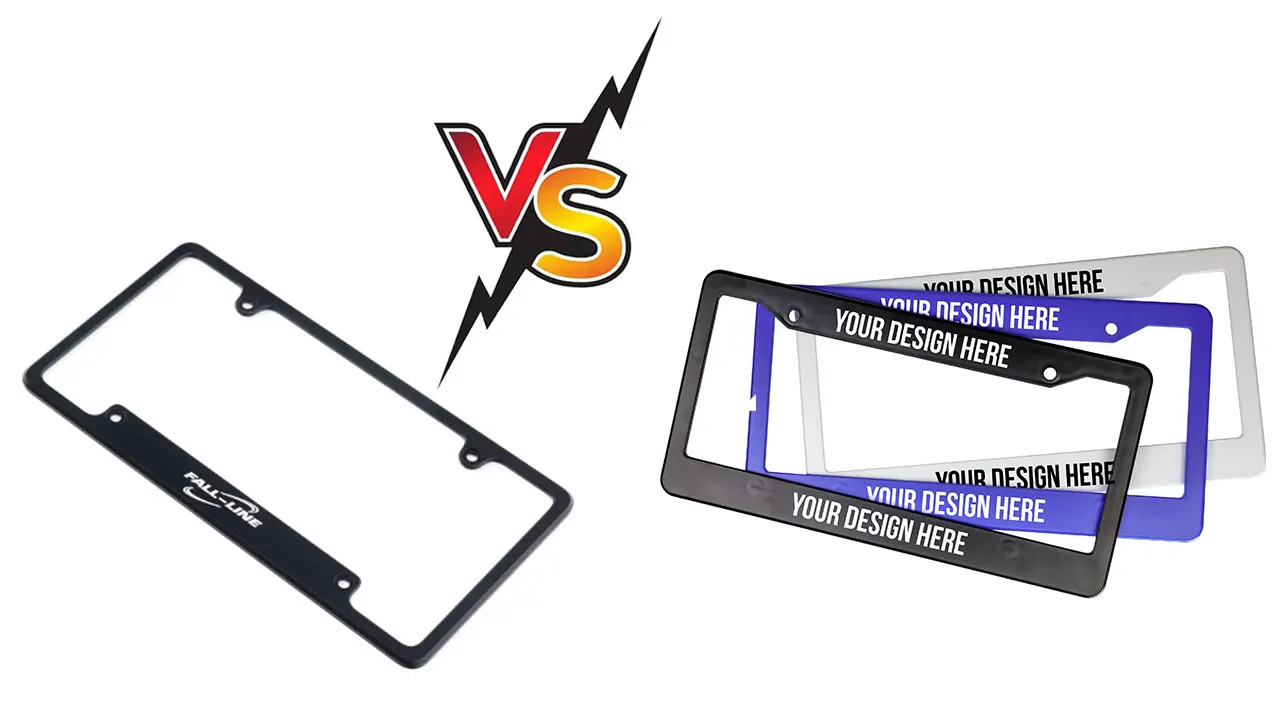
Choose aluminum when a thin metal profile, machined or formed appearance, and metal-specific finishes are central to the product. Choose molded plastic when the design needs integrated clips, tabs, ribs, raised branding, color molded through the part, or a cost structure built around repeat injection-molded volume. Neither material is automatically more durable or cheaper as a finished frame.
The word aluminum does not identify the alloy, temper, gauge, forming route, or finish. Plastic is even broader: ABS, PP, PC, PS, and modified grades behave differently. Your decision should compare two complete frame specifications, not a metal label with a generic plastic label.
Aluminum vs Plastic at a Glance
| Decision Factor | Aluminum Frame | Plastic Frame |
|---|---|---|
| Visual direction | Natural metal, brushed, polished, anodized, coated, printed, or engraved | Molded color, texture, paint, plating, print, foil, or raised details |
| Geometry | Stamping, cutting, forming, machining, or assembled profiles | Ribs, clips, bosses, recesses, and complex shapes molded together |
| Rigidity | Depends on alloy, temper, section, gauge, and formed profile | Depends on resin grade, wall section, ribs, fillers, and temperature |
| Mass | Light for a metal, but finished mass depends on section and hardware | Often low, but resin density and geometry vary |
| Corrosion or weathering risk | Oxidation, pitting, coating damage, galvanic contact, or staining can occur | Fading, chalking, embrittlement, creep, or warpage can occur |
| Tooling logic | Tooling depends on forming, machining, and profile complexity | Injection mold investment can support integrated repeat geometry |
| Best fit | Metal-positioned accessory, slim profile, engraving, anodized or brushed look | Dealer programs, molded branding, clip-on holders, color and structural integration |
Start With Construction, Not Material Reputation
A thin, flat aluminum frame can bend more easily than a well-ribbed plastic frame. A weak plastic frame can also crack around mounting holes while a properly formed aluminum section stays stable. Material properties matter, but the frame’s cross-section, corners, holes, fastener load, plate support, and contact with the vehicle determine how those properties appear in use.
Ask for a section drawing or a physical sample. Compare the border width, wall or sheet thickness, ribs, formed returns, mounting-hole reinforcement, lower support, edge finish, and whether the frame carries the plate or only surrounds it. Two products with the same outer dimensions may perform very differently.
When Aluminum Is the Better Starting Point
Aluminum suits a program that needs an authentic metal surface without the mass of a comparable steel design. It can be stamped or formed for volume production, machined for a heavier premium style, and finished by brushing, polishing, anodizing, coating, printing, or laser marking. Those options are not interchangeable. An engraved anodized surface, a painted stamped frame, and a polished machined frame have different cost and appearance controls.
Specify the alloy and temper because alloying changes strength, workability, corrosion behavior, and finish response. The Aluminum Association notes that aluminum properties change with alloying elements; the alloy name is therefore part of the engineering specification, not a paperwork detail. If anodizing is used, include finish type, color range, coating requirement, sealing, gloss, and a physical limit sample. Color can shift with alloy, temper, surface preparation, and process conditions.
Aluminum does not form red iron rust, but it is not immune to corrosion. Cut edges, damaged coatings, road salts, trapped moisture, and contact with dissimilar fasteners can affect the surface. Confirm the whole assembly, including screws, caps, washers, and any backing plate.
When Plastic Is the Better Starting Point
Plastic earns its advantage through molding freedom. Clips, flexible tabs, drainage paths, recessed logo panels, screw bosses, ribs, and decorative geometry can be formed in one tool. This can reduce secondary assembly and help keep a complex shape consistent across a long production run.
Do not accept plastic as the material line on a drawing. Name the resin family and production grade, color or masterbatch, fillers or modifiers, UV-stabilization requirement, and permitted regrind. ABS may suit a rigid, appearance-led frame; PP may suit a design that needs more flex or integral clips. Those are starting tendencies, not blanket guarantees. A filled or impact-modified grade can reverse a simple comparison.
Decoration also has to match the resin and surface. PP often needs controlled pretreatment for reliable ink or coating adhesion. Mold texture, release agents, contamination, aging after molding, and paint or plating chemistry can all change the result. Approve the finished molded and decorated part, not a resin plaque.
Cost Depends on the Program Architecture
A plastic frame is not always the low-cost answer, and aluminum is not always premium-priced. The comparison changes with tooling, annual quantity, number of SKUs, artwork changes, secondary finishing, assembly, packaging, scrap, and freight. A molded plastic frame can have a high initial tool cost but efficient repeat production. A simple formed aluminum frame may need less complex tooling, while a machined or multi-finish aluminum design can carry much more processing.
Ask suppliers to separate one-time and recurring costs. One-time items may include mold or die development, fixtures, color matching, artwork setup, testing, and packaging development. Recurring costs include material, conversion, finish, decoration, assembly, inspection, packaging, and freight. Compare the same specification and forecast rather than two unrelated catalog products.
Test the Risks You Actually Expect
| Risk | Useful Check | Buyer Decision |
|---|---|---|
| Bending or permanent set | Defined fixture or assembly load at stated temperature | Confirm section and mounting support |
| Cracking at holes or clips | Installation trials with actual hardware and repeated assembly where relevant | Review radius, wall, boss, and fastener torque |
| Finish loss | Adhesion, abrasion, cleaning-chemical, and weathering methods | Approve the full finish stack |
| Color variation | Physical master, lighting, gloss, and lot tolerance | Control molded, anodized, painted, or printed color |
| Vehicle contact | Fit test on the target bracket or vehicle interface | Add spacing, soft contact points, or drainage if needed |
| Plate obstruction | Overlay the visible opening on target-market plate layouts | Adjust border and branding area before tooling |
A Practical Selection Rule
Use aluminum when customers must immediately read the product as metal, the design benefits from a slim formed or machined profile, and your finish can be specified and protected. Use plastic when the frame needs molded functions, many color or shape options, integrated branding zones, or a cost-efficient repeat platform after tooling. If both are viable, prototype both at the intended section and finish before choosing.
Xingchang’s aluminum license plate frame page and plastic license plate frame page show the available program directions. For a wider material screen, use the license plate frame material comparison.
What to Include in Your RFQ
Provide the target plate format and vehicle interface, outer dimensions, visible opening, mounting-hole layout, expected annual volume, number of colors or designs, finish, branding method, packaging, target market, and intended environment. For aluminum, add alloy, temper, section or gauge, edge condition, and finish specification. For plastic, add resin grade, color system, additive requirements, allowed regrind, wall and rib design, and decoration pretreatment.
Keep the approved sample, drawing revision, color master, finish standard, and test plan under one product revision. If the supplier changes alloy, resin, masterbatch, coating, ink, fastener, or tool, the change should trigger review against the affected criteria.
Frequently Asked Questions
Is aluminum always stronger than plastic?
No. Strength and stiffness in the finished frame depend on the aluminum alloy and section or the plastic grade and molded geometry. Compare the actual parts under relevant mounting and temperature conditions.
Which material is better for custom dealership frames?
Plastic often supports integrated raised text, color, and repeat molded volume. Aluminum can support a more explicitly metallic product with engraving, printing, or applied branding. The right choice follows the brand position, quantity, and approved decoration.
Will an aluminum license plate frame rust?
Aluminum does not produce iron rust, but it can oxidize or corrode. Alloy, finish, cut edges, salt exposure, water traps, and dissimilar-metal contact all matter.
Will a plastic frame fade?
It can. Resin grade, pigments, stabilizers, surface decoration, exposure, and cleaning determine color retention. Ask for weathering evidence tied to the exact formulation and acceptance criteria.
Which material is lighter?
Both can produce lightweight frames. Finished mass depends on density, section, wall thickness, ribs, decorative parts, and hardware. Request actual part weight from the approved design.
Can the same artwork be used on aluminum and plastic?
The graphic file may transfer, but the print process, primer, color appearance, edge clearance, and adhesion test may need to change. Approve each material separately.