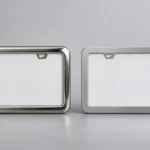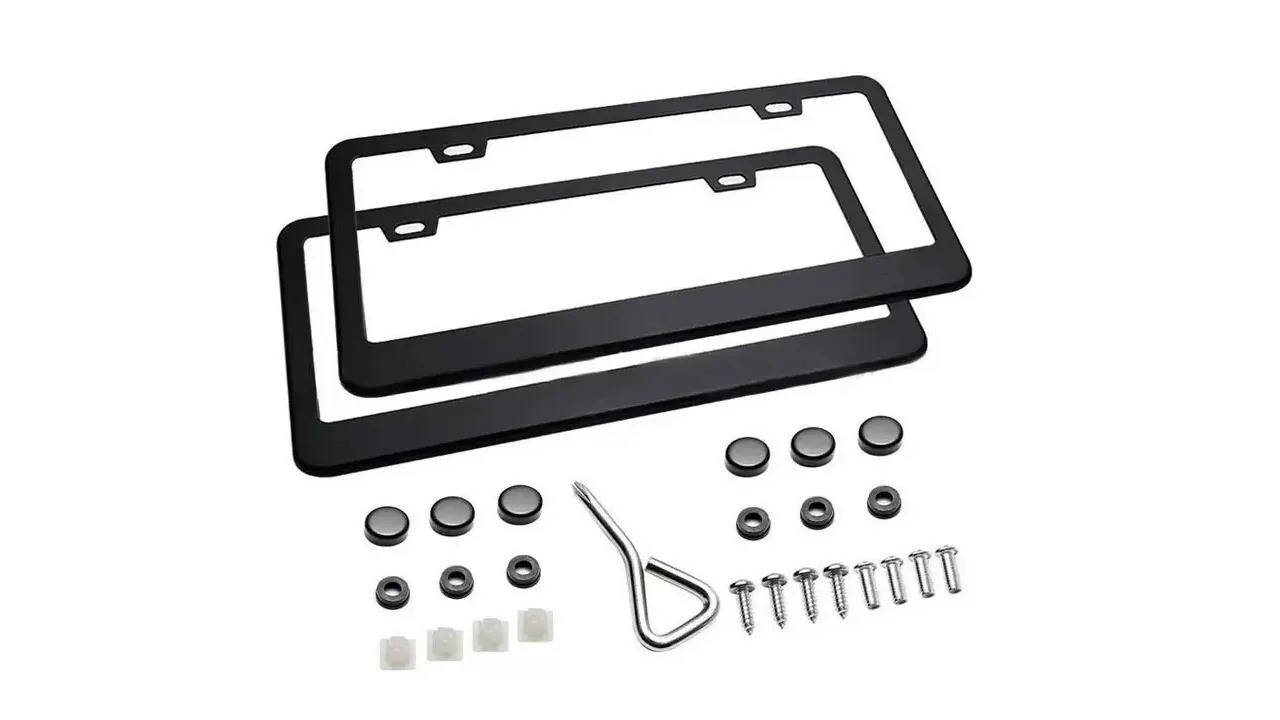
The best license plate frame is not simply the heaviest, most expensive, or most decorative option. It is the frame that fits your plate and vehicle mount, leaves every required identifier visible, survives the intended environment, and arrives with hardware and a finish that match your quality target.
For most buyers, a slim aluminum frame is the strongest all-around choice when low weight, finish flexibility, and custom graphics matter. Stainless steel is usually better when you want a rigid, premium metal appearance. Molded plastic works well for cost-sensitive programs and complex integrated features, provided the resin, UV performance, and fastening design are specified. The right answer changes with the application, so use the comparisons below instead of relying on a generic “best overall” label.
Best License Plate Frame by Use Case
| Use case | Good starting choice | Why it fits | What to verify |
|---|---|---|---|
| Custom retail or branded program | Aluminum | Low weight and broad finishing and printing options | Alloy, thickness, edge quality, coating adhesion, and artwork clearance |
| Premium, slim metal appearance | Stainless steel | Rigid feel and a polished or brushed visual finish | Steel grade, formed edges, surface consistency, and corrosion performance of the complete assembly |
| High-volume promotional or dealer program | Molded plastic | Economical at volume and suitable for molded details or integrated tabs | Resin specification, UV/weathering target, screw-area strength, warpage, and color consistency |
| Detailed cast decoration | Zinc-alloy construction | Supports thicker shapes, relief details, and plated finishes | Weight, plating system, edge clearance, and corrosion at damaged areas |
| Rattle and paint-contact control | Frame plus isolating pads or a soft-contact design | Reduces direct metal-to-vehicle contact and plate movement | Drainage, retention, heat aging, and whether the added material covers plate information |
These are starting points, not universal rankings. Material names alone do not tell you the alloy or grade, thickness, forming quality, coating system, fastener material, or production consistency. Those details often decide whether two visually similar frames perform very differently.
Start with Plate Visibility, Not Style
A frame that hides the plate number, jurisdiction name, registration decal, or other required information is a poor choice even if it looks attractive. State rules differ, and enforcement can also consider whether a camera or toll reader can recognize the plate. The American Association of Motor Vehicle Administrators recommends that plates remain completely unobstructed and visible to both people and technology from at least 75 feet. That policy is guidance rather than a state statute, but it is a useful conservative design target.
Before ordering, place the actual frame over an actual plate design from the target market. Check the top and bottom messages, both corners, the alphanumeric field, and any registration stickers. Repeat the check with screw caps, decorative inserts, and all production artwork installed. A drawing that shows only the outer frame dimensions cannot prove that the finished product leaves the information zones clear.
If you are still defining the opening and mounting pattern, use the license plate frame size guide before comparing materials.
Confirm the Plate and Vehicle Mount
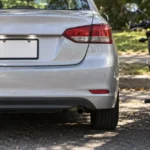
AAMVA’s 2025 license plate standard describes the common North American passenger plate as 12 by 6 inches and lists standardized bolt-hole locations. That does not make every vehicle installation identical. Bumper recesses, factory brackets, screw sizes, backup cameras, sensors, liftgates, and curved mounting surfaces can change the usable space around the plate.
Two-hole and four-hole mounting
A two-hole vehicle mount supports the frame at the top. The lower edge may move or tap the vehicle unless the frame, plate, bracket, or pads control it. Four usable mounting points provide more restraint, but only when the bumper or bracket actually has matching threaded locations. Extra holes in the frame do not create attachment points in the vehicle.
Check the complete stack-up
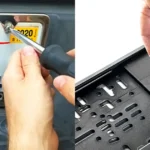
Fit the plate, frame, backing bracket, washers, screw caps, and fasteners together. Confirm screw engagement without bottoming out, cap clearance, plate flatness, camera visibility, and liftgate movement. For a bulk program, approve the complete installation set rather than the frame in isolation.
Choose the Material Around the Real Exposure
Aluminum license plate frames
Aluminum is a practical choice when you need low weight, a slim profile, and multiple decorative options. The base metal does not form red rust, but that does not mean every aluminum frame is automatically corrosion-proof. Cut edges, fastener contact, pretreatment, paint or anodizing quality, and exposure to salt all affect the finished product.
Compare the available aluminum license plate frame options when custom color, printed graphics, or a lightweight metal construction is central to your program.
Stainless steel license plate frames
Stainless steel suits a buyer who wants rigidity and a clean metal appearance. Grade matters, especially in coastal or road-salt environments, and the complete frame still needs attention at formed edges, fastener contacts, welds, and decorative coatings. “Stainless” is not a substitute for an agreed material grade and exposure test.
Review stainless steel license plate frames when a polished, brushed, or durable slim-metal presentation is the priority.
Plastic license plate frames
Plastic can be the best commercial answer for a high-volume, cost-controlled product or a design with molded clips and dimensional branding. Performance depends on the specified resin and formulation. Ask how the material, pigment, UV package, wall thickness, ribbing, and screw bosses are controlled. Thin corners and poorly supported screw areas are common places for cracking or distortion.
Use the plastic license plate frame range to compare molded constructions for dealer, promotional, and retail programs.
Finish Quality Is a System, Not a Color Name
“Black,” “chrome,” and “brushed” describe appearance, not durability. A useful specification identifies the substrate, surface preparation, decorative layer, topcoat where applicable, target gloss or texture, acceptable color range, and the test method used to approve the finish.
Examine the inner opening, outside edge, screw holes, formed corners, and back surface. These areas reveal burrs, thin coating, handling marks, and exposed metal more readily than the broad front face. If the frame includes printed or laser-marked artwork, verify registration, abrasion resistance, contrast, and the distance from the legal visibility opening.
Hardware, Rattle, and Vehicle-Surface Protection
Good hardware should match the vehicle’s thread or insert, provide sufficient engagement, and resist the intended environment. A corrosion-resistant frame paired with unsuitable steel screws can still produce staining or seized fasteners. Do not assume a “universal” screw will fit every bumper, bracket, or threaded insert.
Rattle usually comes from movement between the plate, frame, bracket, and vehicle. The fix may be four-point fastening, correctly placed foam pads, a backing bracket, or better dimensional control. Pads must stay outside required plate information, tolerate heat and water, and avoid trapping debris against painted surfaces.
A Practical Quality Checklist for Bulk Buyers
| Checkpoint | What to approve before production |
|---|---|
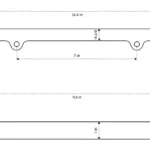
| Dimensions | Outer size, clear opening, bar width, hole locations, flatness, and corner radii on a controlled drawing |
| Visibility | Physical overlay on representative plate designs with all stickers, caps, and artwork present |
| Material | Named alloy, steel grade, or resin rather than only “metal,” “stainless,” or “plastic” |
| Finish | Approved sample, color and gloss range, adhesion requirement, corrosion or weathering method, and acceptance threshold |
| Installation | Vehicle/bracket compatibility, screw specification, cap fit, tool access, and installed movement |
| Appearance | Limits for scratches, burrs, dents, plating defects, print misalignment, sink marks, and warpage |
| Packaging | Surface protection, hardware segregation, barcode and labeling accuracy, carton quantity, and transit test expectation |
Ask for measurable pass/fail criteria. “Weather resistant” and “high quality” are not inspection standards. A supplier and buyer can only make consistent decisions when the drawing, approved sample, test method, sampling level, and defect limits are clear.
Common Failure Modes and How to Prevent Them
| Failure | Likely cause | Prevention |
|---|---|---|
| Plate text or decal is covered | Opening was designed from a nominal plate outline only | Overlay the finished frame on each target plate family and preserve conservative clearance |
| Frame rattles | Only two top screws, excessive clearance, or no lower restraint | Validate the installed stack-up and add suitable support without covering the plate |
| Coating chips near holes | Burrs, poor pretreatment, excessive screw load, or cap interference | Control edge finishing, coating process, hardware geometry, and installation torque |
| Rust stains appear | Incompatible or low-grade fasteners, exposed steel, or plating damage | Specify the complete material and fastener system and test the assembly |
| Plastic corners crack | Thin wall, stress concentration, cold installation, or over-tightening | Review wall and boss design, material performance, and installation instructions |
| Artwork looks inconsistent | No controlled artwork file, color tolerance, or registration limit | Approve production-ready artwork and measurable print criteria |
How to Specify a Custom License Plate Frame
Send the target plate market, vehicle or bracket information, mounting-hole requirement, preferred material, finish, artwork, packaging, annual volume, and required testing with your request. Identify which dimensions are critical and which decorative elements can change. If the product will be sold across several states, prioritize a slim opening and have counsel or the responsible market team review the final design against current state rules.
Our custom license plate frame page shows the main customization paths. Compare the complete product range before choosing a construction.
Frequently Asked Questions
What is the best material for a license plate frame?
There is no single best material for every program. Aluminum is a strong general-purpose choice for low weight and custom finishes. Stainless steel suits a rigid premium-metal look. Molded plastic is useful for high-volume, cost-sensitive, or integrated designs. Compare the named grade or resin, finished construction, exposure target, and quality controls—not only the material category.
Are metal license plate frames better than plastic?
Metal usually provides greater rigidity and a different visual feel, while plastic can reduce cost and support molded features. Either can fail if its thickness, grade, finish, screw areas, or tolerances are poorly specified. The better frame is the one validated for your environment and installation.
Will a universal frame fit every vehicle?
No. A frame may fit the common 12-by-6-inch plate but still conflict with a bumper recess, bracket, camera, sensor, liftgate, or nonstandard fastener. Check both the plate and the vehicle-side mount.
How do I know whether a license plate frame is legal?
Check the current law in the state where the vehicle will be operated. As a conservative rule, keep the plate number, jurisdiction name, registration stickers, and every other official identifier fully visible to people and electronic readers. A product listing or “street legal” label is not a substitute for the applicable statute.
What should a retailer or distributor request from a manufacturer?
Request a controlled drawing, named material, finish specification, approved sample, visibility overlay, installation hardware details, test methods with acceptance limits, packaging specification, and pre-shipment inspection criteria.
Make the Decision from the Installed Product
Choose the frame only after you have checked the installed assembly: legal opening, mounting fit, material and finish specification, fasteners, movement, surface protection, and packaging. That process is more reliable than buying by appearance or by an unsupported “best overall” claim.
If you are sourcing a custom retail, dealership, promotional, or private-label program, send your plate market, drawing, artwork, material target, and expected quantity for a manufacturing review.