Camouflage car accessories can be as small as a patterned frame or as noticeable as a tailgate graphic. Start by choosing the colors and amount of coverage you want. A coordinated detail can give a car, truck, or SUV an outdoor-inspired appearance without putting the same pattern on every surface.
The print describes the look. It does not tell you whether a seat cover fits, a mat stays clear of the pedals, or a film will suit the paint. Compare the accessory for its actual job, then decide whether the camouflage design belongs on your vehicle.
Choose the Pattern by Color and Scale
Put a sample beside a photograph of the car before ordering a set. The pattern’s lightest and darkest colors will connect it with the body, wheels, and existing trim. A green-and-brown print can feel quite different from a gray geometric design even when both are described as camo.
| Pattern direction | What to compare | Where it may work visually |
|---|---|---|
| Woodland-inspired | Green, brown, dark shapes, and the amount of contrast | An earth-tone accent beside plain trim |
| Digital | Pixel size and the spacing of the color blocks | A geometric detail on a simple vehicle outline |
| Urban | Black, gray, white, and the balance of light areas | A restrained accent on a neutral-colored car |
| Desert-inspired | Sand, tan, brown, and surrounding paint color | A warm palette on a truck or SUV |
| Pink or other colored camo | The accent color and its relationship to the rest of the car | A personal detail with neutral supporting pieces |
These labels describe broad visual directions rather than a single standardized print. Two products called digital camo may have different colors, repeat sizes, and levels of detail. Compare the actual artwork, not just the category name.
Scale matters especially on small items. A large pattern may leave only one patch of color visible on a narrow frame. A much smaller repeat can become visually busy across an entire seat. Ask to see the design at its final size whenever the listing only shows an enlarged swatch.
Choose one part of the car to lead. If the tailgate graphic is the main feature, the frame can be plain or use a quieter version of the palette. If the rest of the vehicle is understated, a small patterned frame may be enough on its own.
Small Exterior Details Before a Larger Wrap
A Camouflage License Plate Frame
A frame is a manageable place to introduce the pattern because its area is limited. Look at it with the plate installed rather than treating the isolated artwork as the finished design. The numbers and required registration information should remain the clear center of attention.
Compare camouflage frame designs by their actual opening, mounting arrangement, finish, and pattern scale. Keep lights, cameras, sensors, and the vehicle recess in the fit check. A decorative border is different from a plate cover or a replacement plate.
A short original name or mark can work with a pattern, but it needs space. Fine lettering laid over several high-contrast color patches may be hard to read. A quiet strip behind the text or a simpler print may give a better result than adding more decoration.
A Tailgate Graphic for a Pickup
A tailgate gives a graphic more visual room than a frame. Decide whether it will occupy a defined panel, follow an existing line, or sit as a smaller accent. Compare it from the rear and from a three-quarter angle; the pattern should still make sense beside the truck’s original badges and lights.
The exact tailgate version matters. Handles, cameras, moving sections, materials, and finishes can change where a graphic belongs. Have a suitable installer assess the surface and proposed film rather than stretching a generic design across every interruption.
Localized Vinyl Accents
A small film treatment on an appropriate body area lets you test a direction without committing to a full wrap. Keep the pattern’s orientation consistent, especially where a design crosses a panel gap. A narrow strip can look deliberate when it follows a clear body line; a patch placed only to use the remaining film may look accidental. Choose the material and placement with the installer, including care and eventual removal. A decorative film is not automatically paint-protection film.
An Exterior Spare-Tire Cover
For a vehicle with a suitable exposed spare, a patterned cover can become a strong rear feature. Start with the actual tire and mounting configuration, including any rear camera or other equipment. The cover’s size and retention matter as much as its artwork.
Check how the design is oriented once fitted. A print that looks centered on a flat product image can sit differently over the tire shape. Choose a product with suitable instructions for the vehicle and intended outdoor use; the camo appearance does not establish its weather performance.
Small Decals and Other Trim Details
A small original decal can repeat one color or shape without copying a large graphic. Keep it away from required glass sightlines, lights, cameras, and identification. Use the product’s intended surface and removal instructions.
For badges, mirror pieces, or valve caps, treat the fitting as a separate decision. A decorative cap still needs to suit the relevant valve and service conditions, while a mirror cover must leave indicators, cameras, and movement working as intended. It is reasonable to leave a small factory detail plain when the patterned version adds little.
Interior Accessories: Compare the Useful Part First
Seat Covers
Seat covers change a large part of the cabin’s appearance. A patterned center with plain surrounding material can feel less busy than covering every visible surface. Compare the print with the seat shape, the existing door trim, and the rear seats, not just the front pair in the listing.
Fit needs to be documented for the exact seating arrangement and equipment. Follow the vehicle manufacturer’s guidance for seat-mounted airbags, occupant sensors, controls, head restraints, and access. A generic claim about airbag compatibility is not enough to resolve those details. If the information is missing, keep the original seats and choose a different place for the pattern.
Floor Mats
A mat can introduce color lower in the cabin while leaving the seats visually quiet. Its shape, retention, and clearance are the deciding factors. Use an appropriate mat for the driver’s footwell, follow the vehicle instructions, and do not stack decorative mats over an existing set. Check the installed position and pedal clearance before driving. A matching print does not make an unsuitable mat acceptable.
Steering-Wheel Covers and Dashboard Covers
These are common shopping categories, but they involve areas the driver uses or needs to keep clear. A steering-wheel cover changes the grip and fit; a dashboard cover may interact with vents, displays, sensors, or airbag areas. Follow the vehicle and accessory instructions for the exact product rather than choosing on diameter or appearance alone.
You do not need either item to make a camo theme coherent. A frame, correctly fitted mat, or organizer may give you the color connection you wanted while keeping those surfaces in their original form.
A Cargo Organizer
A patterned organizer can fit an outdoor-themed cabin when it also solves a storage problem. Decide what it will hold and how it stays secure in the intended vehicle location. Compare compartment size, access, attachment, and cleaning before the print. A neat design is useful only if the organizer can be used without blocking equipment or becoming loose cargo.
A Parking Sunshade or Small Cup-Holder Insert
A sunshade gives you a larger design while the vehicle is parked. Check the glass shape and the product’s intended use, then remove and stow it before driving. The print need not match the exterior exactly because it is being used in a different scene.
A small removable cup-holder insert can repeat the palette inside. Measure the actual holder and make sure the insert does not interfere with the drink’s seating or any relevant mechanism. Keep cleaning and removal easy; small decorative items should not create a difficult daily routine.
Build a Different Combination for Each Vehicle
A gray daily-driver sedan. Try a low-contrast gray frame and keep the rest of the exterior plain. Inside, one small patterned item can carry the same dark tone without making the cabin feel like a matching catalog set. If the seats and dashboard already have strong textures, leave them visible.
A useful test is to photograph the car from the rear before and after adding the proposed detail. If the pattern becomes the only thing you notice, reduce its contrast or choose a smaller area. The goal can be a personal accent rather than a complete change of identity.
A tan pickup. A warm earth-tone graphic can connect with the paint, while plain dark trim gives the pattern a boundary. Decide whether the tailgate or frame is the main feature. Using a dense print at both positions may add activity without improving the combination.
Think about the truck’s normal use too. Frequent loading, washing, or equipment movement changes where a decorative treatment is practical. Discuss contact areas with the installer and choose products intended for the actual job; a graphic does not establish impact or scratch protection.
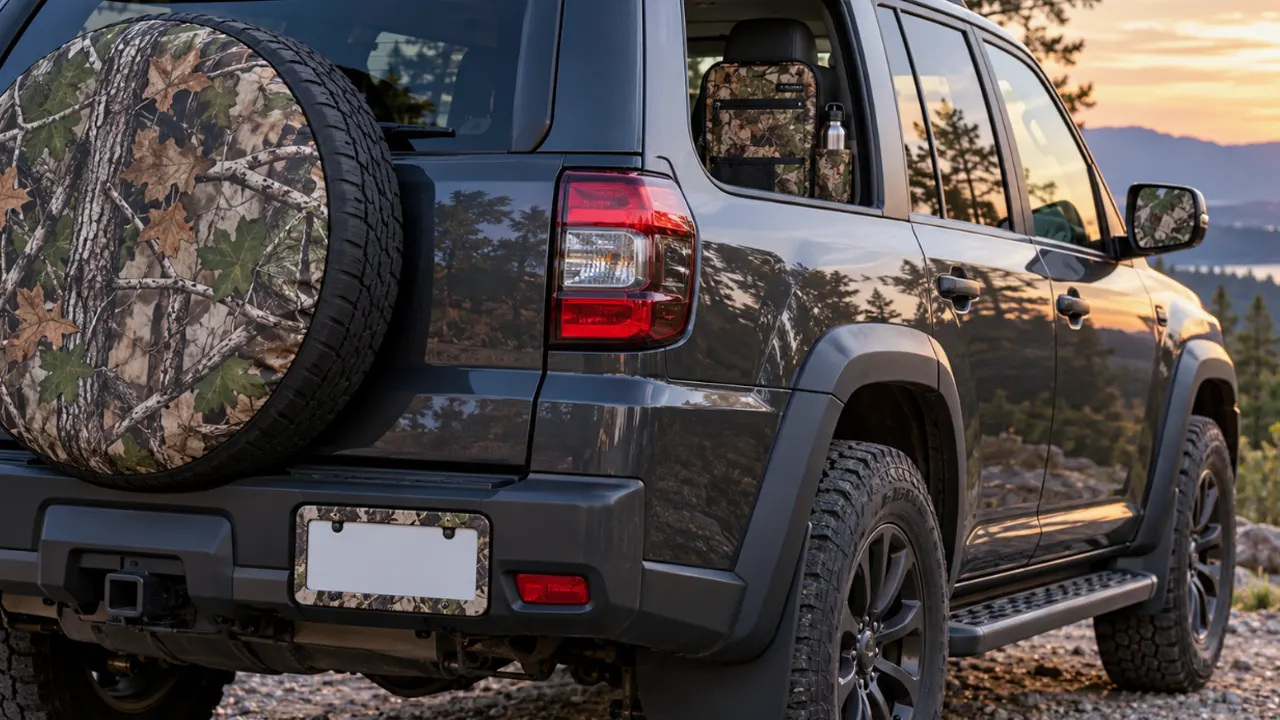
A dark SUV with an external spare. The tire cover can carry the main design, with a much quieter frame beside it. In the cabin, a secure cargo organizer may make more sense than several covers around the driver. Preserve the camera’s view and the vehicle’s operating clearances.
These are hypothetical styling combinations, not tested packages or customer examples. Start from photographs and the equipment on your exact vehicle. The fit and mounting checks for exterior accessories help separate a visual idea from a part that can actually be installed.
Matching Does Not Have to Mean Identical
Two prints can share a palette without sharing the same artwork. You might repeat the charcoal in a digital frame with a plain charcoal organizer. That is often easier to combine than trying to make several differently sized patterns look exactly alike.
Compare the lightest color as carefully as the accent color. A bright white area on an urban print can become more noticeable than the gray you intended to match. A muted beige can relate to the cabin differently from a yellow-toned tan.
Put physical samples together when the match matters. Screen brightness, product photography, gloss, and material texture can change the apparent color. A textile and a printed hard part will not necessarily look identical even when their artwork started from the same file.
Keep the pattern’s repeat in mind. A seat, tailgate, and frame may each need the design arranged at a different scale. A coordinated set should look considered at those sizes rather than show the same crop enlarged or squeezed to fit.
Leave some original surfaces plain. The eye needs a place to rest, and factory trim can help connect the new detail with the rest of the car. You can add another item later if the first combination still feels incomplete.
What a Useful Product Listing Should Tell You
Look for the exact product, its intended location, actual dimensions where relevant, the fitting method, and photographs that show the whole item. A design swatch is not a substitute for an installed view. For vehicle-specific goods, check the body style, equipment, and mounting information as well as the model name.
Material descriptions need to describe the object, not just the print. A fabric cover, coated metal frame, molded plastic item, and vinyl graphic have different care and fitting needs. Camouflage does not mean waterproof, abrasion-resistant, or suited to off-road use.
For exterior durability claims, ask what was tested on the exact product and under what conditions. Avoid treating a vivid sample photograph as evidence that the colors will never change. Edges, fasteners, exposure, and maintenance can affect the finished item.
Check the contents before comparing prices. A frame may be supplied singly or as a pair; a set may omit hardware or include items you cannot use. Include installation, shipping, and any removal cost in the comparison rather than buying the largest bundle for its piece count.
Read return and customization terms before ordering. A product that looks close to the right size may still be wrong for the vehicle, and personalized versions can have different practical return arrangements. Get unresolved fit information from the seller while the decision is still reversible.
Use Original Artwork for a Custom Camo Detail
A general woodland or pixel-style idea is different from copying a recognizable proprietary pattern. Use artwork you own or have permission to reproduce. Finding the same print on another seller’s product does not establish a right to make new merchandise from it.
For a frame, start with the outline and usable print area. Place the pattern so its character is visible along the narrow borders and keep important text away from screw heads and changes in surface shape. Review the whole frame rather than approving one attractive corner.
A suitable full-color process may reproduce more complex artwork, while simpler limited-color designs can lead to a different method. The available process depends on the frame and surface. Ask to see the proposed design on the actual model before assuming that every file will produce the same result.
If several people want the same original design, agree on one approved version and gather the required plate formats. That keeps the artwork coordinated without pretending the mounting is identical across all vehicles. For wider planning, car personalization choices can help you decide which changes belong together.
There is no need to turn a small style decision into a wholesale project. Choose the supplier and ordering arrangement that suit the quantity you actually need, and confirm what customization is available.
Keep the Finish Easy to Live With
Plan care before installation. Keep the exact instructions for the film, print, textile, or finish, and use products suited to that surface. An aggressive cleaner that works on a wheel may be unsuitable for a printed frame or graphic.
For vinyl, ask about the paint’s condition and the removal method as well as the appearance. Repaired or deteriorating finishes deserve assessment. A removable product still needs correct installation, exposure, and removal; it is not a promise that every surface will be unaffected.
Check accessible edges and attachments during normal cleaning. Lifted film, a loose cover, or damaged hardware should be dealt with using the relevant guidance rather than hidden beneath another decorative layer. Keep the plate readable when cleaning around the frame.
If you use the vehicle for work or frequent outdoor trips, make the decorating plan fit that routine. A pattern can express an outdoor interest while the underlying product still needs separate evidence for its practical durability.
When the Accessory Is a Gift
Find out whether the recipient likes the pattern or simply enjoys outdoor activities. Those are not the same preference. Someone may love camping and still want plain trim on the car. A photograph of a style they have chosen is a better clue than a general interest in trucks.
For fitted products, get the relevant vehicle and equipment information before buying. Do not make an uncertain seat cover or steering-wheel cover part of the surprise. A compact item with a clear intended use, or a choice of approved frame designs, can leave the owner involved in the final decision.
Keep the message and artwork comfortable for the recipient. A nickname or club mark may be welcome; a large public joke may not be. Include the care instructions and practical return information with the gift so the owner can use it without reconstructing the order.
Frequently Asked Questions
Should the pattern continue around the frame corners?
That depends on the design and printing layout. A repeated abstract pattern can tolerate a change at a corner, while a large recognizable shape may look awkward when cropped. Inspect the corners in an actual product photo or layout proof rather than judging only the straight bottom strip.
Can a camouflage graphic cover a chipped or rusty area?
Decoration is not a repair for the surface underneath. Loose paint, corrosion, or a damaged finish needs appropriate assessment before you attach adhesive material. If you only want the visual theme, use a separate accessory instead of trying to make a graphic conceal an unresolved surface problem.
Why does the same color look different in two listings?
Lighting, screens, surface texture, and the product’s base color can all affect the appearance in a photo. Compare physical samples beside the vehicle when a close color match matters. A shared pattern name is not a promise that products from different ranges will look identical.
Can I add camouflage accessories to a leased truck?
Check the lease terms and any return-condition requirements before changing trim or applying graphics. Keep original parts and installation details. A small removable item is easier to assess than a larger modification, but the agreement and the actual attachment method still matter.