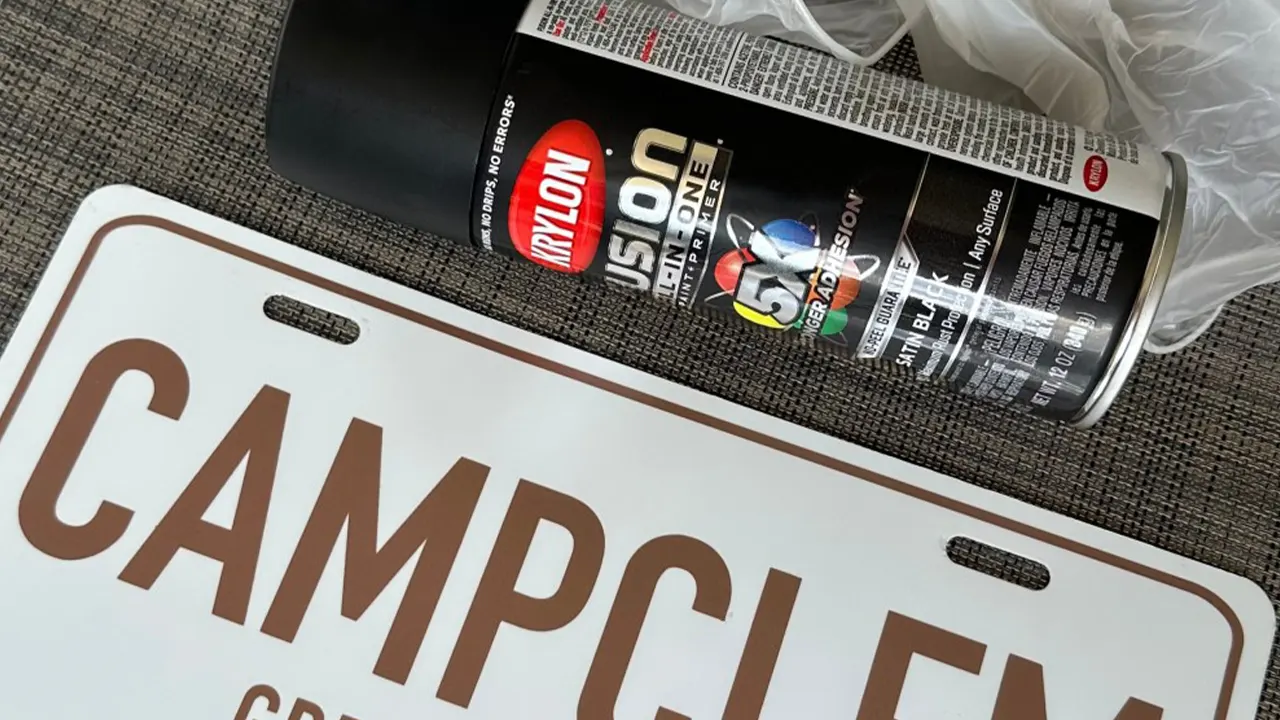
You should not paint an official, state-issued license plate unless the issuing authority expressly allows the change. Paint can alter the plate’s original colors, reduce reflectivity, soften the edges of letters and numbers, cover a validation sticker, or make the plate harder to identify. If the plate is faded, peeling, rusty, or damaged, replacement is usually the safer route than repainting it.
A license plate frame is different. It is a separate accessory, so changing the frame’s color can provide the look you want without modifying the government-issued plate. The finished frame still needs to leave all required plate information visible and comply with local rules.
Short answer: Do not repaint an active road plate based on a general DIY tutorial. Check the agency that issued it. For a cosmetic change, customize the removable frame or use an officially offered plate design.
Why Painting a License Plate Is Not Like Painting Ordinary Metal
A modern plate is an identification credential, not just a stamped aluminum panel. Its background, characters, state name, registration stickers, security details, and reflective surface work together. Even a careful cosmetic coat can change how the plate appears in daylight, under headlights, or in a camera image.
The base metal and the visible face are also separate layers. Many plates use reflective sheeting, printed graphics, coatings, and embossed or flat characters. Paint that bonds to bare metal may react differently on reflective film. Sanding for adhesion can permanently remove the designed surface before the first coat is applied.
Florida law provides a clear example of the concern. It prohibits altering the original appearance or color of the plate and addresses material that interferes with legibility, visibility, or detectability. North Carolina law likewise addresses altered and repainted registration plates. These are state examples, not a single national rule, but they show why “the number is still visible” may not be the only test.
Official Plate, Novelty Plate, and Frame: Three Different Objects
| Item | What it is | Approach to paint |
|---|---|---|
| Active official plate | Government-issued vehicle identification | Do not alter unless the issuing authority permits it |
| Retired or collectible plate | Inactive plate kept legally for display | Preserve or restore only after confirming it no longer must be returned |
| Novelty or decorative plate | Non-registration decor | Can be a craft surface, but must not be presented as a valid road plate |
| License plate frame | Separate border or mounting accessory | Can be colored or finished if fit and visibility remain compliant |
Before altering an old plate, confirm its status. Some states require plates to be surrendered after a registration ends, while others let the owner retain them. The safe decision path for returning, keeping, or disposing of old license plates should come before any display project.
What Can Go Wrong When You Paint an Active Plate?
You can reduce reflectivity
The bright nighttime response comes from a retroreflective surface designed to return light toward its source. Ordinary paint is not a substitute. A clear coat can also change optical behavior, add glare, yellow over time, or create an uneven response around characters.
You can change required colors and markings
The background color, character color, state name, slogan, graphic, and sticker area may all be part of the approved design. Matching the original color by eye does not restore the plate to its official specification.
You can make characters less legible
Paint builds at the edges of embossed characters and can fill narrow spaces. Masking can leave halos or ragged borders. From a few feet away the number may appear normal, while at night or from an angle one character blends into another.
You can damage the underlying film
Solvents, sanding, heat, and aggressive degreasers can wrinkle, soften, stain, or delaminate reflective sheeting. Once the film lifts, water and dirt can work under the edge.
You can create a legal and inspection problem
A plate may be considered altered even when the owner intended only to make it look newer. A traffic officer, inspection station, toll system, parking camera, or motor-vehicle agency may not treat a home repaint as equivalent to an issued plate.
Can You Touch Up a Small Chip?
A small chip is still part of the official plate surface. Do not assume a paint pen is harmless. If the damage reaches a character, state name, reflective background, sticker area, or security feature, contact the issuing agency and ask whether the plate should be replaced.
If the chip is only on a removable frame, take the frame off before repair. That keeps overspray, sanding dust, and solvent away from the plate and vehicle paint. Inspect the frame material and existing finish because plastic, powder-coated metal, chrome plating, and painted aluminum require different preparation.
What If the Plate Is Faded or Peeling?
Fading and peeling are not good reasons to repaint an active plate. They are signs that the issued surface may no longer perform as intended. Photograph the condition, note the plate number and registration details, and contact the motor-vehicle agency for its damaged or illegible plate procedure.
Do not sand away loose reflective film while you wait. Keep the plate clean with mild methods, avoid pulling at peeling edges, and follow any temporary instructions the agency provides. The careful steps in cleaning a license plate without damaging it are more appropriate than surface restoration.
Can You Paint Over Rust?
If an active plate appears rusty, first determine whether the corrosion is actually on the plate. Many modern plates are aluminum and do not form the red rust associated with ordinary steel. Brown staining often comes from steel screws, a backing bracket, or a frame.
Remove the plate only when you can reinstall it correctly, then inspect the back, fasteners, and carrier. Replace corroded hardware with the proper size and thread. If the plate itself is a steel plate with coating loss or severe corrosion, ask the issuing agency about replacement. Covering corrosion with paint can hide weakening and does not restore official markings.
Can You Use Clear Coat on a License Plate?
Do not apply a generic clear coat to an official plate without written approval from the issuing authority. A coating that looks transparent indoors can change glare, reflectivity, color, camera readability, and adhesion. It can also trap contamination or make a future replacement inspection more difficult.
The same caution applies to spray waxes, tinted films, lens products, and protective covers. “Clear” describes how something looks to you, not how it behaves under headlights, infrared illumination, weather, or an automated camera.
Can You Paint a Retired License Plate for Wall Display?
If the plate is legally yours to keep, no longer active, and not required for surrender, you can consider it a display object. Decide first whether restoration improves or harms its value. Collectors often prefer honest age, original paint, and documented wear over a bright home repaint.
For a common decorative plate with little collector value, a restoration project can be reasonable. Record the original appearance, clean gently, and label the back as restored so it is not later misrepresented as original. Do not recreate current registration stickers or use the finished piece on a road vehicle.
For a rare, historic, low-number, porcelain, unusual material, or early plate, consult a knowledgeable collector or conservator before cleaning or painting. Removing oxidation and patina can erase manufacturing details and reduce value.
How to Get a Different Look Without Painting the Plate
Choose an official specialty or personalized plate
Many motor-vehicle agencies offer approved designs supporting organizations, causes, universities, military service, occupations, or regional themes. Availability and eligibility vary. Because the design is issued through the official process, it avoids the uncertainty of modifying a standard plate yourself.
Use a colored license plate frame
A frame can introduce black, silver, red, blue, or another accent while leaving the issued surface untouched. Match the frame opening to the actual plate, especially where a sticker or state name sits close to the edge. The comparison between powder-coated and painted license plate frames explains how the finish choices differ on the accessory rather than the plate.
Add graphics to the frame instead of the plate
A printed, engraved, or raised-letter frame can carry a short name, club message, website, or design. Keep the wording modest so the border does not crowd the plate. If the decision is between processes, compare laser engraving and printing on a license plate frame.
Change the backing or bracket
A black backing plate or properly fitted bracket can clean up the area around the official plate without covering its face. Confirm outside dimensions, hole spacing, camera clearance, and any local restrictions before installation.
Can You Paint the License Plate Frame?
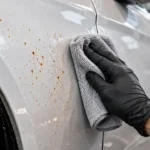
Usually the frame is the better surface to customize, but material and preparation still matter. Remove it from the vehicle and separate it from the plate. Clean off wax, road film, and corrosion using a product compatible with the material. Mask mounting surfaces and any area that must remain dimensionally accurate.
Plastic frames need a coating system compatible with the specific resin and existing finish. A coating that works on ABS may not bond the same way to PP without suitable pretreatment. Metal frames may have anodizing, plating, powder coat, or another finish that affects adhesion. Test in a hidden spot when the coating maker recommends it.
Allow the finish to cure completely before reassembly. Soft paint can stick to the plate, transfer color, or trap moisture. Do not use coating thickness to force a loose frame to fit; repair the mounting joint instead.
Painting a Frame Without Scratching the Vehicle
- Photograph the installed plate and note the screw and spacer order.
- Remove the frame on a clean surface using the correct driver.
- Keep the official plate away from sanding, primer, paint, and solvent.
- Inspect the frame for cracks, corrosion, or peeling plating before refinishing.
- Use a coating system intended for the substrate and environment.
- Cure it according to the coating instructions rather than reinstalling when merely dry to the touch.
- Reassemble with clean washers or spacers so the new finish does not rub the vehicle.
- Tighten evenly and confirm the frame leaves every required marking visible.
If the frame is warped, deeply corroded, or made from flaking chrome-look plastic, replacement may give a better result than refinishing. Surface preparation cannot repair a failed substrate.
What Not to Put on an Active License Plate
- Ordinary spray paint or automotive touch-up paint
- Tinted clear coat or reflective spray
- Vinyl wrap covering the issued design
- Markers over letters, numbers, or worn graphics
- Home-made registration stickers
- Abrasive polish intended to remove the top layer
- Solvents chosen without checking compatibility
- A cover or film assumed to be legal because it is transparent
If a product claims to “restore” plates, look for explicit approval from your issuing authority rather than relying on marketing language. The safest restoration for an active plate is often an official replacement.
When Replacement Is the Right Answer
Contact the issuing agency when characters are difficult to read, reflective film is peeling, the plate is badly bent, mounting holes are torn, corrosion is extensive, a sticker area is damaged, or the color has deteriorated. Ask about forms, fees, the old plate, the remaining plate in a two-plate set, and whether the number will change.
Do not discard or keep using the old plate until the agency explains what to do with it. If a new number is issued, remember to update toll, parking, garage, and access accounts.
Frequently Asked Questions
Is it illegal to paint a license plate?
Rules vary by jurisdiction, but states may prohibit altering the original appearance, colors, legibility, or reflective surface. Do not paint an active plate without checking the authority that issued it.
Can I repaint the raised letters only?
That still alters the official plate and can change character edges, color, and reflectivity. Ask for replacement if the lettering is worn.
Can I paint the background but leave the number visible?
The background is part of the approved design and often includes reflective material and required graphics. Keeping the number uncovered does not necessarily make the alteration acceptable.
Can I use reflective paint?
Generic reflective paint does not reproduce the issued plate’s controlled film, color, markings, or optical behavior. It can make the plate less consistent and should not be treated as a repair.
Can I paint a novelty plate?
Yes, as a decorative craft object, provided it is not presented as an official registration plate or used on the road in place of one.
Can I restore an antique plate?
Only after confirming you may legally keep it and considering collector value. Original finish can be more desirable than a repaint, especially on rare plates.
Can I paint a plastic license plate frame?
Yes, when the coating system is compatible with the actual plastic and existing surface. Remove it from the vehicle, prepare it correctly, and let it cure before reinstalling.
What should I do with a faded active plate?
Photograph it and contact the issuing motor-vehicle agency for a damaged or illegible plate replacement. Avoid sanding, repainting, or clear-coating it.
The Bottom Line
Painting an active license plate can change the very features that make it an official, readable, reflective identifier. Even a neat repaint may conflict with a state rule or make the plate perform differently at night. When the issued surface is damaged, replace it through the proper agency.
If the goal is color or personality, leave the official plate alone and work with the separate frame, approved backing, or an official specialty design. You get a reversible visual change without turning a simple appearance update into a registration problem.
Keep the original plate easy to inspect whenever you change the surrounding hardware. After reinstalling a refinished or replacement frame, step back and read the plate in daylight, then repeat the check with the lamps on. Make sure no fresh coating has transferred to the plate, no border covers a sticker or jurisdiction name, and the fasteners hold the assembly flat without bowing it. Recheck after the first wash and several drives. If the new frame finish softens, chips, or rubs the reflective face, remove it and correct the accessory rather than trying to protect the plate with another coating.
Technical Sources
- Florida Senate — Florida Statutes § 320.061, Alteration of license plates
- North Carolina General Assembly — G.S. 20-63, Registration plates
Legal information reviewed September 21, 2026. Plate alteration and replacement rules vary and can change. Confirm the current requirements with the agency that issued your plate.