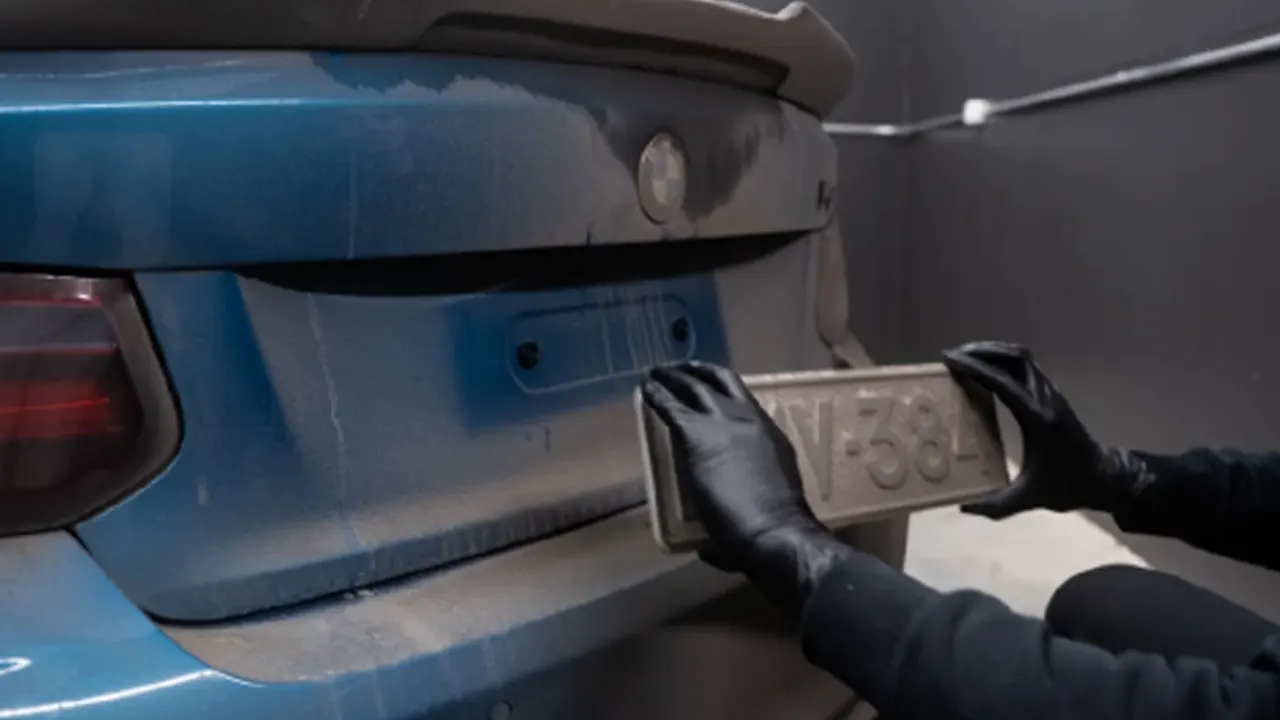
To clean a license plate safely, rinse away loose dirt first, wash it with mild automotive soap and water using a soft microfiber cloth, rinse again, and dry it completely. Let water and soap loosen the grime; don’t try to scrub it away with pressure. Abrasive pads, stiff brushes, metal polish, and harsh solvents can scratch printed graphics or damage the reflective surface that makes the plate visible at night.
You normally don’t need to remove the plate for a routine wash. Take it off only when dirt is trapped behind it, rust staining appears around the hardware, the frame needs a deeper clean, or you need to inspect the mounting holes. If the plate is peeling, cracked, badly bent, or already losing its printed surface, clean it gently and ask the issuing motor vehicle agency about replacement rather than trying to restore it with polish or paint.
Check the Plate Before You Start
A thirty-second inspection changes how you should clean. Look at the plate in daylight and check the face, edges, characters, registration stickers, mounting holes, screws, and frame.
Routine dirt is usually safe to wash. A lifted film edge, bubbling surface, flaking ink, cracked plastic, exposed metal, or loose registration sticker needs much lighter handling. Water or a brush forced under a damaged layer can turn a small defect into a larger peel.
Also identify what you are touching. Many modern plates have an aluminum base covered by retroreflective sheeting and printed or roll-coated details. Others may be painted metal, plastic, or a different jurisdiction-approved construction. Treat the visible face like a sensitive automotive finish unless your issuing agency or plate manufacturer says otherwise.
What You Need to Clean a License Plate
Most plates need only a small, clean set of tools:
- Clean water from a hose, pump sprayer, or bucket
- pH-neutral automotive shampoo or another mild detergent approved for vehicle surfaces
- A clean microfiber wash cloth or soft wash mitt
- A second microfiber towel for drying
- A soft detailing brush for intact embossed characters, edges, and screw recesses
- A clean bucket that has not been used for wheel or engine-bay chemicals
- A hand screwdriver that correctly fits the fasteners, if removal is necessary
- An automotive-surface-safe bug remover for stubborn insect residue, used only as directed
Keep the plate cloth separate from wheel towels. Brake dust and embedded grit can turn an otherwise soft microfiber cloth into an abrasive one. If the cloth falls on the ground, replace it before touching the plate again.
How to Clean a License Plate Step by Step
1. Let the surface cool
Work in shade when possible. A hot plate or bumper makes water and cleaner evaporate quickly, which reduces lubrication and can leave soap spots. If the vehicle has just been driven in strong sun, wait until the plate feels cool enough to touch comfortably.
2. Rinse away loose dirt
Start with plenty of clean water. Rinse from the top down and give mud, sand, road salt, and loose insect remains time to flow off. Pay attention to the lower edge, embossed characters, screw heads, and the narrow gap between the plate and frame.
Never begin by wiping a dry, dirty plate. The visible dust may contain mineral particles that scratch the reflective film when dragged across it. If the plate is caked with dried mud, wet it, wait a minute, and rinse again before making contact.
3. Wash with mild soap
Mix the automotive shampoo according to its label. More soap is not automatically better; an overly concentrated solution may be harder to rinse and can leave residue around edges and stickers.
Saturate the microfiber cloth or wash mitt, then wipe the broad areas with light, straight passes. Let the solution stay wet long enough to soften normal road film, but don’t allow it to dry. Reload the cloth frequently rather than continuing to move dirty suds over the surface.
4. Clean around letters, edges, and screws
For intact embossed letters and recessed corners, use a soft detailing brush with plenty of soapy water. Move gently around the shape instead of forcing bristles under a film edge or registration sticker. Flat digitally printed plates should need even less agitation.
Work around screw heads from several angles. If a decorative cap spins, lifts, or feels loose, stop brushing it. Remove and inspect the assembly later rather than losing a small part during rinsing.
5. Rinse thoroughly
Flush away soap from the face, lower edge, mounting holes, and the gap behind the frame. Remaining detergent can dry into streaks and attract more dust. If suds continue to emerge from behind the plate, use a gentle stream until the runoff is clear.
6. Dry the plate and hardware
Blot or lightly wipe with a clean microfiber towel. Dry the screw recesses, bottom edge, and frame corners, where water tends to remain. Compressed air is unnecessary for normal care and can drive water under damaged film or stickers.
When you are finished, view the plate from several steps away. Check that every character and registration mark is readable and that no cloth fiber is caught under a lifted edge.
Should You Remove the License Plate Before Cleaning?
For weekly or monthly washing, leave the plate installed. Removing it every time creates more chances to strip a screw, crack a plastic anchor, scratch the bumper, or misplace a washer.
Removal makes sense when:
- Mud, sand, leaves, or road salt are trapped behind the plate or frame.
- Rust-colored water runs from a screw or bracket.
- The plate rattles, shifts, or sits unevenly.
- You need to inspect paint contact, mounting holes, spacers, or a backing pad.
- A silicone holder or wraparound frame has a dirty inner channel.
- You are replacing corroded or mismatched hardware.
Wash the visible area first, then place a clean towel below the plate before loosening anything. Support the assembly with one hand so it cannot swing into the paint. Use a hand tool that fully fits the screw head and keep the screws, washers, caps, and spacers in order.
If the screws are seized or the heads are already damaged, don’t force them during a cleaning job. The correct approach depends on the failure: use the dedicated steps for seized plate-frame screws or stripped screw heads before the bumper or bracket is damaged.
How to Clean Behind the Plate and Frame
Once the assembly is off, separate the parts on a clean towel. Don’t slide the plate across the frame or bumper. Rinse the rear of the plate, the frame, and the vehicle recess separately so hidden grit cannot migrate onto a finished surface.
- Rinse loose debris from the rear face and mounting recess.
- Wash the plate with mild soap and a soft cloth. Use the vehicle maker’s approved method on painted bumper or trunk surfaces.
- Inspect the plate holes for cracks, elongation, sharp burrs, or flaking material.
- Check the bracket, anchors, pads, washers, and screws for corrosion or movement.
- Rinse every part and dry the holes, channels, seams, and lower edges completely.
- Replace failed hardware with parts that match the original thread, length, head size, and mounting design.
- Reassemble evenly and confirm that the plate does not bow, rattle, or rub the vehicle.
The frame removal and reinstallation sequence gives more detail on supporting the plate, preserving the hardware order, and tightening the assembly without distortion.
How to Clean a License Plate Frame Without Mixing Up the Surfaces
The plate and frame should not automatically receive the same cleaner. A mild soap-and-water wash is the safest starting point for both, but stronger products depend on the frame’s actual material and finish.
| Frame surface | Safe starting method | Main risk |
|---|---|---|
| Aluminum | Mild automotive soap, soft microfiber, thorough rinse and dry | Abrasive polish or strong acid/alkali can alter anodizing, paint, or another finish |
| Stainless steel | Gentle wash; wipe a brushed finish in the grain direction | Steel wool, chlorine-containing cleaner, or random polish can scratch or contaminate the surface |
| Chrome-plated or chrome-look | Rinse first, wash lightly, and dry around pits and edges | Abrasive chrome polish or acidic wheel cleaner can worsen thin or damaged decorative layers |
| Rigid plastic | Mild soap and a soft cloth; use only plastic-safe specialty cleaner | Aggressive solvent, heat, or coarse scrubbing can haze, soften, or scratch the surface |
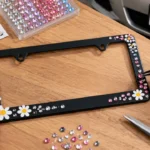
| Rhinestone, emblem, or raised decoration | Rinse and use a soft brush around secure details; pat dry | Soaking a damaged adhesive joint or levering under an ornament can loosen it |
Material names alone do not identify the surface coating. A metal frame may be painted, powder coated, anodized, plated, polished, brushed, printed, or clear coated. If you need a finish-by-finish method, use the more detailed license plate frame cleaning instructions rather than testing a stronger chemical on the installed assembly.
How to Remove Common Contaminants
Bugs
Rehydrate insect residue before wiping. Lay a warm, wet microfiber cloth over the spot for a few minutes, then rinse and wash normally. If residue remains, use an automotive bug remover whose label permits use on the relevant painted, plastic, or reflective surface. Apply it only for the stated dwell time and rinse completely.
Don’t use a razor blade, fingernail, kitchen scrubber, or dry paper towel. The hard residue may come off, but the reflective face can be left with scratches that catch dirt and scatter light.
Road salt
Salt is best removed with plenty of water before it concentrates in seams. Rinse the front, lower edge, screw recesses, and any space behind the frame. In winter, a gentle rinse soon after salty driving is more useful than waiting for a heavy seasonal buildup.
Rust-colored runoff often starts at carbon-steel hardware. White or gray deposits may come from aluminum or zinc corrosion. Cleaning the stain without addressing the source will only make it return.
Tree sap and sticky residue
Start with a long wet soak and mild shampoo. Fresh residue may release without a solvent. If it does not, choose an automotive adhesive or sap remover that is explicitly compatible with the surface, test a small inconspicuous area, and keep it away from registration-sticker edges. Use the minimum contact time and rinse afterward.
Do not assume that a product safe on painted bodywork is safe on every plate. Reflective sheeting, printed graphics, foils, sticker adhesives, and old clear layers can respond differently.
Tar, oil, and heavy road film
Wash the loose dirt away first so you can see what remains. Some reflective-sheet manufacturers allow cautious use of particular mild solvents on specific products, but that is not permission to use any tar remover on any plate. Follow the instructions for the exact sheeting or use the issuing agency’s advice. When the plate construction is unknown, a professional detailer can test a safer method without aggressive scraping.
Bird droppings
Wet the deposit until it softens, then lift it with a soaked microfiber cloth and wash the area. Don’t grind dried material into the surface. Clean it sooner rather than later, especially in warm weather, because prolonged contact can stain or attack exposed coatings.
Can You Use WD-40, Alcohol, or Household Cleaners?
Start with mild automotive soap, not a multipurpose solvent. WD-40 and similar penetrating or water-displacing products can leave an oily film, migrate toward stickers or adhesives, and behave differently on printed graphics and protective layers. They are not the first choice for routine plate cleaning.
Isopropyl alcohol is useful for some automotive preparation jobs, but concentration, contact time, and surface construction matter. Applying it broadly to an unknown reflective plate can affect ink, adhesive edges, or an aged top layer. The same caution applies to acetone, paint thinner, brake cleaner, gasoline, citrus degreaser, and adhesive remover.
Household dish soap is also inconsistent. A small amount may clean a bare metal object, but formulations vary and can remove wax or leave the nearby vehicle finish less protected. A pH-neutral automotive shampoo gives you a more predictable starting point for the plate and the surrounding paint.
Can You Pressure Wash a License Plate?
A normal low-pressure rinse from a sensible distance is safer than a close high-pressure jet. Do not aim a pressure-washer nozzle directly at a registration sticker, sheeting edge, bubbling area, chipped character, loose emblem, decorative cap, or gap between the plate and bumper.
If you use a pressure washer during the vehicle wash, follow the vehicle and equipment instructions, use a wide fan pattern, and keep the nozzle moving. The exact safe distance and pressure depend on the machine, nozzle, surface condition, and plate construction, so a universal number would be misleading. An already damaged surface deserves hand washing only.
How to Clean Rust Around License Plate Screws
First determine whether you are seeing loose surface staining or active corrosion of the hardware. Rinse and wash the stain gently. If it returns from the same screw, remove the assembly when safe and inspect the screw, washer, threaded insert, bracket, and plate hole.
Replace a badly corroded fastener rather than polishing it while installed. Match the original thread and usable length; a screw can look correct and still bottom out before it clamps the plate. Do not enlarge a vehicle mounting hole or force a different thread just to finish the cleaning job.
When the replacement is installed, use compatible washers or spacers so the hardware sits flat and does not cut into the plate face. If vibration has been loosening the assembly, the loose-screw troubleshooting steps help distinguish thread problems from a flexible bracket or incorrect fastener stack.
How Often Should You Clean a License Plate?
Clean it when it becomes visibly dirty and whenever you wash the vehicle. Exposure matters more than a fixed calendar.
| Driving condition | Useful routine | Extra check |
|---|---|---|
| Normal paved-road use | Wash with the vehicle when dust or road film is visible | Check screws, stickers, and readability during drying |
| Winter road salt | Rinse soon after salty driving and wash regularly | Inspect lower edges, screw recesses, and trapped deposits behind the frame |
| Coastal or humid exposure | Remove salt film before it builds up | Look for fastener corrosion and staining at metal contact points |
| Mud, gravel, or off-road driving | Pre-rinse thoroughly before any cloth touches the surface | Check behind the assembly for grit and bracket movement |
| Heavy insect season | Soften and remove residue before it hardens | Inspect the front plate more often because it takes the direct impact |
A clean plate can still be damaged, so use each wash as an inspection. Look for peeling, blistering, fading, cracking, bent corners, elongated holes, and lost reflectivity.
What Not to Use on a License Plate
Avoid steel wool, scouring pads, stiff wire brushes, melamine cleaning sponges, dry scraping, razor blades, aggressive rubbing compound, unapproved metal polish, concentrated acid or alkaline cleaner, and close-range high-pressure spray. Do not repaint characters, sand the reflective face, or apply a clear coating to make a damaged plate look new.
Some products can be appropriate on a known bare-metal component but still be wrong for an official plate with reflective film, printing, or stickers. The plate is not a test panel. If a cleaner’s label does not cover the surface and you cannot identify the construction, stay with soap and water.
Common Cleaning Mistakes
Using the wheel sponge. It may contain brake dust or grit that scratches the plate and frame.
Polishing dull reflectivity. Dullness can come from sheeting degradation rather than removable oxidation. Abrasive polish removes more of the surface and cannot rebuild the optical layer.
Waxing over stickers and film edges. Wax or sealant can collect at edges, change appearance, and complicate later sticker work. Do not apply a protective product unless the issuing authority or material manufacturer permits it.
Soaking the whole assembly in solvent. The plate, frame, adhesive-backed decoration, caps, and vehicle bracket may all use different materials. A chemical that cleans one part can damage another.
Overtightening after removal. A plate should be secure, not distorted. Uneven torque can bow the frame, crack plastic anchors, or pull a screw through an enlarged hole.
Cleaning around loose hardware without fixing it. Dirt is not always the cause of a rattle. Reinstall the correct fastener stack before driving.
When Cleaning Is Not Enough
Cleaning removes contamination. It does not repair the functional layers of a damaged plate. Contact the issuing motor vehicle agency when you find:
- Peeling, blistering, bubbling, or delamination of the reflective surface
- Characters or the jurisdiction name that remain hard to read after washing
- Serious fading, discoloration, or loss of nighttime reflectivity
- A plate that is badly bent, cracked, torn, or cut
- Mounting holes that are split or too damaged to hold the plate securely
- Corrosion that has weakened the plate rather than merely stained it
- A damaged or illegible registration sticker
Replacement rules and fees differ by jurisdiction. California, for example, instructs owners to replace plates or stickers that are lost, stolen, damaged, or made illegible. Other states have their own definitions and processes. Don’t paint over, laminate, tape, or otherwise alter an official plate unless the issuing authority specifically permits the repair.
Frequently Asked Questions
Can I wash a license plate with dish soap?
A pH-neutral automotive shampoo is the more predictable choice because it is intended for vehicle surfaces. Dish soaps vary and may strip wax from the surrounding paint. If you have only dish soap, check the label and the vehicle finish instructions before using it.
Can I use rubbing alcohol on a license plate?
Not as a universal cleaner. Alcohol concentration, dwell time, printing, reflective film, stickers, and age all matter. Use it only when the plate or material guidance permits it, apply it to a cloth rather than flooding the surface, and test cautiously.
Can I use a pressure washer?
A distant, wide, low-pressure rinse may be acceptable on an intact plate. Avoid close jets and any area with peeling film, loose stickers, damaged graphics, or a lifted edge. Hand washing is safer when the surface is already compromised.
How do I clean behind a license plate frame?
Wash the front first, support the assembly, remove the correct fasteners by hand, and separate the parts on a clean towel. Rinse and wash each piece, inspect the holes and hardware, dry everything completely, then reinstall with the original order and compatible hardware.
How do I remove dried bugs?
Soften them with warm water and a wet microfiber cloth before washing. Use an automotive-safe bug remover only if normal soap does not release the residue. Do not scrape with a hard object.
How do I remove road salt?
Flush it away with plenty of clean water, including the lower edge and screw recesses, then wash and rinse normally. If salt is trapped behind the frame, remove the assembly for a deeper rinse and complete drying.
How do I clean a chrome-plated frame?
Rinse loose grit, use mild automotive soap and a soft microfiber cloth, then dry the seams and edges. Avoid acidic wheel cleaner and abrasive chrome polish unless the frame maker confirms that the exact plating can tolerate it.
How often should I clean the plate?
Clean it when it is visibly dirty and as part of normal vehicle washing. Rinse more often after road salt, coastal spray, mud, gravel roads, or heavy insect exposure. Inspect it during every wash rather than relying on one fixed interval.
Can I polish a faded or cloudy plate?
Don’t assume the cloudiness is removable oxidation. It may be scratched, chemically etched, delaminated, or losing reflectivity. Polishing removes material and can make the plate less readable. Ask the issuing agency about replacement when gentle washing does not restore a clear surface.
Should I remove old registration stickers while cleaning?
Only follow the sticker rules of the issuing jurisdiction. Some states require current stickers in a specific position and may direct you to place a new sticker over an old one. Do not use heat, a blade, or solvent on an official sticker without checking the agency’s instructions.