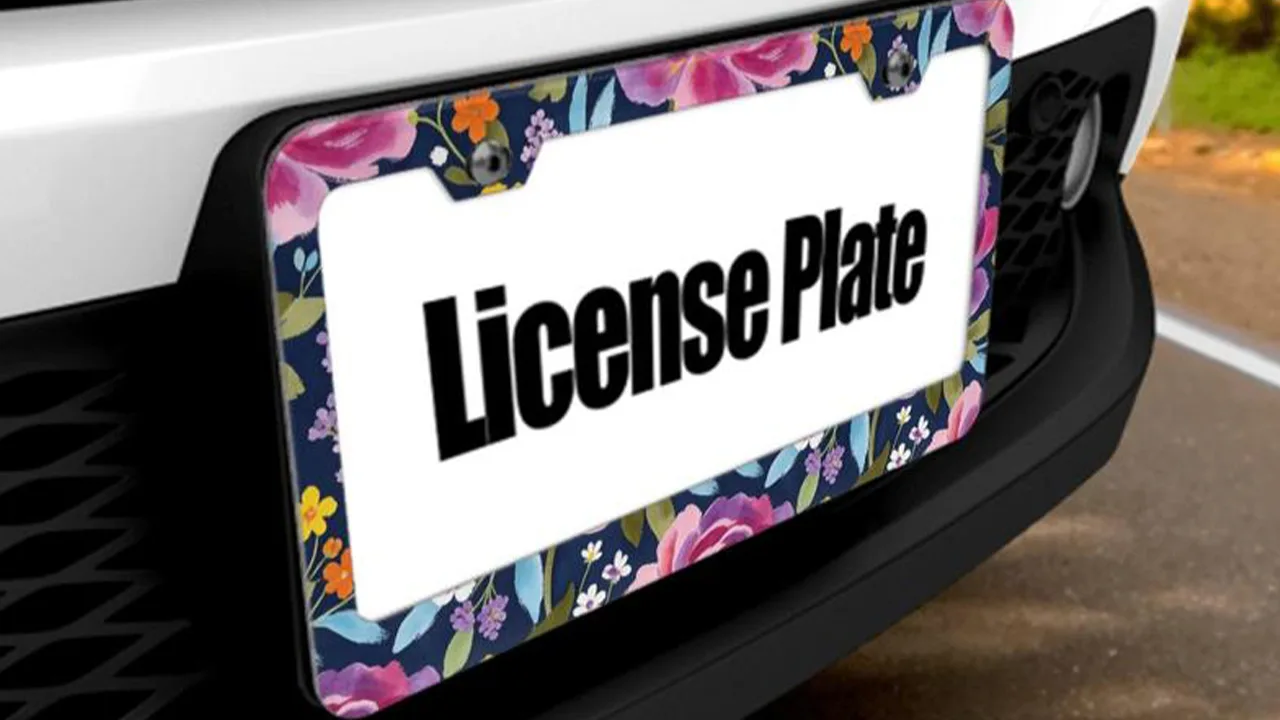
A license plate frame can be used in Maine only if the plate remains properly displayed and every number, letter, and word is plainly visible and legible. Maine’s statute does not need to name each style of frame: a border that covers “Maine,” part of the registration sequence, or other plate wording conflicts with the visibility requirement.
The straightforward setup is a slim frame that stays outside all printed information. If the border touches a word or character, choose a different frame rather than deciding that the covered detail is unimportant.
What Maine law says
Title 29-A, § 452 requires registration plates to be displayed horizontally and properly. It then states that the plates—including their numbers, letters, and words—must always be plainly visible and legible.
That wording is unusually helpful. It closes the common “the serial number is still readable” argument because the rule expressly includes words as well as numbers and letters. On a standard plate, the state name is a word. On specialty plates, additional official wording may also sit near an edge.
Are license plate frames illegal in Maine?
No blanket ban appears in § 452. A frame is acceptable only to the extent that it does not interfere with proper display, visibility, or legibility. The law evaluates the installed plate, so the same frame may work on one design and cover wording on another.
Watch for these trouble spots:
- a top rail overlapping “Maine”;
- a bottom rail covering official plate wording;
- decorative corners touching letters or numbers;
- fastener caps sitting over characters;
- a tinted, cloudy, or reflective panel over the face; and
- a loose frame allowing the plate to tilt or move.
Does Maine require front and rear plates?
Maine generally requires one plate at the front and one at the rear. The statute lists exceptions: trailers and semitrailers use a rear plate; motorcycles do not use a front plate; manufacturer, dealer, and transporter plates may be attached only at the rear; and a truck tractor plate may be attached only at the front.
If your vehicle requires two plates, inspect both. A narrow frame on the rear does not correct an obstructive frame on the front, and winter buildup can affect the two locations differently.
Why the state name matters
Maine’s text does not limit legibility to the alphanumeric registration number. It specifically covers “numbers, letters and words.” A frame that hides part of the state name therefore creates a direct problem under the ordinary wording of the statute.
Raised-letter frames deserve extra attention. The opening may look wide at the center but become much narrower where the raised message sits. Measure the top and bottom rail intrusion rather than relying on a product image.
Frames, covers, and winter grime
An open frame surrounds the edge; a cover adds material over the face. Maine’s visibility rule applies to what you can actually see, so tint, glare, scratches, salt film, or condensation can matter even when the underlying characters are not physically overlapped.
Maine winters add a practical concern. A deep lower border can collect snow and slush. Clean both plates and the gaps around the frames, then make sure all words and characters remain legible. A frame that was unobstructive when installed can still contribute to a visibility problem if it holds debris against the plate.
How to check a Maine plate frame
- Clean the plate and frame. Judge the actual surface, not a layer of road film.
- Check every printed word. Include “Maine” and any official wording on a specialty design.
- Check every number and letter. No border or cap should touch the registration sequence.
- Stand back. Confirm that the plate remains plainly legible at a normal viewing distance.
- Repeat at night. Remove a cover or finish that creates glare or reduces contrast.
- Inspect both mounting positions. When two plates are required, both need a compliant fit.
If the frame sits close to printed areas, compare its usable opening size with the actual plate rather than assuming that the outside dimensions guarantee clearance.
What about novelty and dealer frames?
The same rule applies. A dealer name, slogan, or decorative theme can appear on the border, but it cannot come at the expense of the plate’s numbers, letters, or words. A design sold in Maine is not automatically compliant on every Maine plate.
Answers to common questions
Can a frame cover part of “Maine”?
No. Section 452 says the words on a registration plate must always be plainly visible and legible.
Can the frame cover a bottom slogan?
Do not cover official wording. The statutory test includes words, not only the registration number.
Are clear plate covers legal?
A cover that adds glare, haze, tint, scratches, condensation, or dirt can make the plate less plainly visible and legible. An open edge frame avoids placing another layer over the face.
Can you mount a front plate in the windshield?
Maine requires plates to be properly attached in the positions set out in § 452. A windshield display should not be used as a substitute for the required front mounting unless a specific rule applicable to the vehicle authorizes it.
The Maine rule in one sentence
Keep every number, letter, and word on the plate plainly visible and legible. That standard allows a well-fitted slim frame and rejects a border that hides official information, even when the main number is still easy to read.
This information reflects the Maine statute reviewed on September 24, 2026. It is general information, not legal advice.