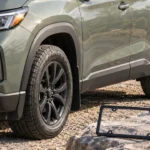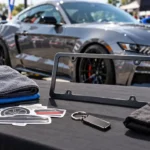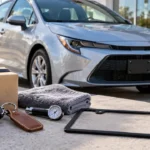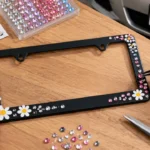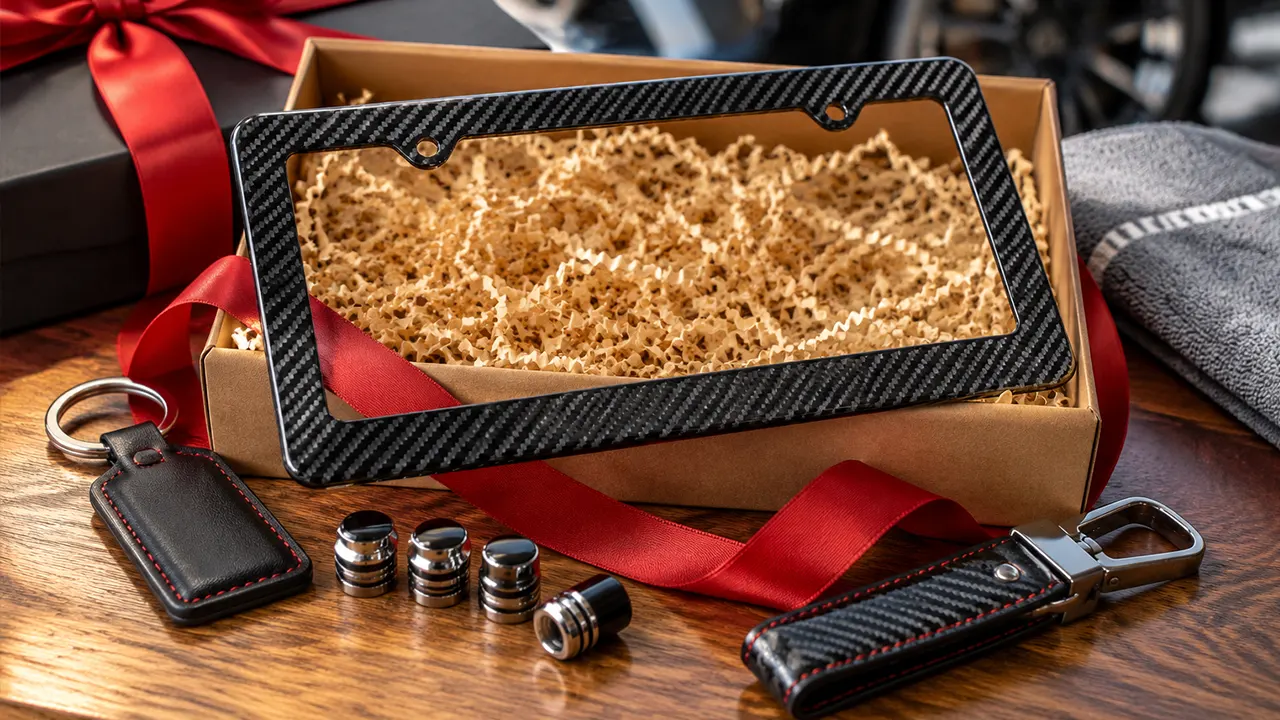
The most useful personalized car gifts start with something specific: the recipient’s own vehicle, a favorite road, a name, a milestone, or an original design they would enjoy seeing. Choose where the gift will live before deciding how to customize it. A photo print belongs on a wall, a small keepsake travels with its owner, and a custom license plate frame needs to fit the actual plate and vehicle.
Personalization does not have to mean printing a name on every available surface. One accurate detail can make a simple gift feel considered. The aim is to choose a format that suits the person and give the maker clear information, so the finished result looks right and can be used.
Choose the Meaning Before Choosing the Product
Think about what you want the gift to recognize. It might celebrate a first car, a restored family vehicle, a memorable trip, a club connection, or a person’s love of driving. Each of those stories suggests different imagery and wording.
For a first car, a photograph and date may be enough. For a restoration, a before-and-after album can say more than a generic slogan. For someone who prefers a restrained car, a plain frame with a short personal detail may suit them better than a large graphic.
Separate your own taste from the recipient’s. A bright design that makes an impressive gift-box reveal may not belong on a car they have carefully kept understated. Notice the colors, finishes, and wording they already choose.
If you cannot identify a meaningful detail, ask about a favorite vehicle or journey. You do not need to reveal the exact gift to confirm which model, photograph, or memory matters.
Decide Where the Gift Will Be Used
A gift for the garage, desk, key collection, or vehicle has different requirements. Choosing the location early helps you avoid ordering a beautiful item that the recipient has nowhere to put.
Wall art needs the right size and image quality. A notebook or photo album needs a comfortable layout. A key-related item needs manageable dimensions and a suitable attachment. A vehicle-mounted accessory needs a physical fit check as well as design approval.
For anything used inside a car, consider its intended location and the vehicle’s instructions. Do not assume a customized object should hang from a mirror or sit near controls simply because it is sold as a car gift. A keepsake can be displayed at home instead.
For an exterior accessory, check the relevant dimensions, attachment, and care requirements. Personalization changes appearance; it does not prove compatibility or make an unsuitable location appropriate.
| Gift format | Personal detail that works | What to confirm |
|---|---|---|
| Car portrait or photo print | The recipient’s exact car and a meaningful caption | Image rights, vehicle details, print size, crop |
| Travel map or route artwork | A completed trip or favorite region | Accurate route, privacy, spelling |
| Photo album or restoration book | Progress images and confirmed milestones | Image sequence, captions, permissions |
| Small keepsake or key tag | Initials, date, short original phrase | Size, attachment, readable text |
| Garage sign or document binder | Build name, family history, project identity | Space, wording, display method |
| Custom plate frame | Short text or original graphic | Plate opening, holes, mounting, lighting, visible information |
Personalized Car Portraits and Photo Prints
A portrait of the recipient’s actual car can be more meaningful than a generic illustration of the same brand. Confirm the generation, body style, color, wheel design, and modifications that should appear. Enthusiasts often notice these details immediately.
Choose a reference photograph that clearly shows the relevant shape. A dark, distant image may hide features the artist needs. If you want several views combined, explain which details belong to the real car rather than expecting the artist to infer them.
Decide whether the result should be realistic, simplified, or expressive. A clean line drawing and a detailed painted-style portrait are different gifts. Ask to see examples of the maker’s actual work so you understand the style being commissioned.
Confirm the final dimensions, orientation, background, caption, and framing arrangement. A digital artwork order may not include a physical print or frame. Check exactly what will arrive.
Review the proof for the car as well as the wording. The correct name beneath an illustration of the wrong model does not make the gift accurate. Approve the image at a useful viewing size before production.
Route Maps and Road-Trip Keepsakes
A custom map can recognize a memorable journey without adding anything to the car itself. Use the route actually taken, a favorite region, or a few meaningful stops rather than a decorative line that only loosely resembles the trip.
Check place names and dates. If the recipient changed the route, decide whether the artwork should show the plan or the completed journey. A short caption can explain that choice.
Think about privacy before marking a home address or frequently used private location. A regional starting point may tell the story without identifying a precise property. Ask the maker not to use personal information in public examples if that matters to the recipient.
Keep the map readable. Too many labels, photographs, and slogans can make the important places difficult to see. A restrained design with one meaningful title often gives the route more room.
For a trip you shared, include a short note about a particular stop or moment. That makes the gift personal without requiring every memory to fit on the printed artwork.
Photo Albums and Restoration Books
A car’s history can be told through a small sequence of photographs: the day it arrived, a difficult repair, a completed stage, and a favorite drive. An album gives you room for that story without compressing it into one sign.
Arrange images in a clear order and use confirmed captions. If you are not sure what a repair involved, ask the owner rather than inventing a technical explanation. A simple accurate caption is better than an impressive but wrong one.
Check who appears in photographs and whether they are comfortable being included. Keep private addresses, payment records, registration documents, and unrelated personal material out of the design.
Use copies or scans rather than placing irreplaceable originals into a production process without an agreed handling arrangement. Keep your own organized copies of the selected files and captions.
Leave room for the recipient’s version of the story. A project may still be in progress, and its owner may prefer “the rebuild so far” to a book that announces it is complete.
Small Keepsakes and Personalized Garage Items
An engraved key tag, small original illustration, document binder, or garage sign can suit someone who likes personal details but does not want the vehicle modified. Match the item to how they use and store it.
For a small tag, keep wording brief and readable. Initials, a date, or a short original phrase may work better than a long message reduced to tiny lettering. Check the finished size rather than judging only a large online preview.
A garage sign should fit the available space and have an appropriate mounting method. Do not assume a heavy plaque can be hung where the recipient currently displays a lightweight print.
A personalized service binder can be useful for a restoration or long-term ownership project. Put the design on the cover and leave the internal organization flexible. The owner can decide which records to keep inside.
Avoid adding a business or club logo merely because it looks professional. Use original artwork or material you are authorized to reproduce, and confirm the exact wording with the relevant person when the gift represents a group.
Custom License Plate Frames as a Personalized Gift
A license plate frame offers a visible but relatively small personalization area. A name, short message, club identity, or original graphic can suit that space when the recipient wants it on the vehicle.
Choose the physical frame before finalizing the artwork. Its opening, border widths, mounting points, and usable decoration area determine where text can go. A design that works on a wide lower border may not fit a narrow frame.
Compare the actual plate format with the frame. Check the country or jurisdiction, vehicle category, hole layout, recess, and plate lamp. A car frame and a motorcycle frame are not interchangeable simply because both can carry custom text.
Custom license plate frames are one option when those details are known. The plate frame size guide helps identify the dimensions to compare before approving a design.
Keep required plate information visible. Do not enlarge a logo into the opening or move the plate to make a design fit. The vehicle’s bracket still needs to hold the assembly correctly, and the fasteners must suit the complete plate-and-frame thickness.
If the gift is meant to replace dealer advertising, confirm that the recipient actually wants visible wording. A plain border with one small original detail can be more appropriate than a full-width slogan.
A Personalized Frame Is Different From a Personalized Plate
A frame surrounds the official plate. A decorative plate or display plaque may replace or cover its face. These products have different purposes, even when listings group them together.
Do not order a decorative plate expecting it to act as a legally issued personalized registration plate. Official personalized registrations come through the relevant issuing authority and its approval process.
For a gift intended for a garage wall or static display, label its purpose clearly and let the recipient decide how to use it. A show setting does not automatically make a substitute plate suitable for public-road driving.
If you want a personalized look on a road vehicle, a correctly fitted frame can leave the official face exposed. It still needs to preserve required information and lighting rather than treating the decoration as the priority over identification.
Match the Customization Method to the Artwork
Different gift materials and designs support different decoration methods. Printing may suit color graphics or photographs; engraving may suit a suitable material and a simpler mark; raised or molded lettering creates another appearance.
None is universally best. Ask which method is available for the exact item, what detail it can reproduce, and what care the finished surface needs. A method used on a metal key tag does not automatically work the same way on a plastic frame.
For a photo gift, look at examples of tonal detail and cropping. For simple lettering, inspect small characters and spacing. If the maker provides a sample image, confirm that it represents the chosen method rather than another product.
Avoid assuming that the decoration method guarantees outdoor durability, scratch resistance, or permanent color. Those outcomes depend on the complete material and finish system, its use, and any verified product information.
Choose the look you want, then confirm the method and limitations with the maker. Do not force a complex image into a process that cannot reproduce it clearly.
Prepare Photographs the Maker Can Use
Send the original image file when you have it, rather than a screenshot from a message or social-media preview. Repeated resizing and compression can remove detail before the designer begins.
Check that the subject is sharp enough for the intended size and that important parts are not hidden. A car portrait may need visible wheels, roof shape, and body lines. A print should have enough room around the car for the final crop.
Tell the maker what to keep or remove. If a background should be simplified, a person omitted, or a plate number obscured, put that instruction in writing. Do not assume those changes are part of a basic printing order.
The U.S. Copyright Office explains that owning a copy of a photograph does not necessarily mean owning its copyright. Use your own work or obtain the appropriate permission for someone else’s image. Being the owner of the photographed car does not by itself settle image rights.
Keep one clear folder or selection of files for the order. Multiple versions with similar names make it easier to use an outdated image by mistake.
Prepare Text and Original Graphics
Write the final text exactly as it should appear, including capitalization, punctuation, and any special characters. Place it in the order form or a separate clearly labeled message instead of hiding it inside a reference photograph.
For logos or simple artwork, an editable vector file can help preserve clean shapes when the size changes. Photographs are normally raster images built from pixels. Adobe’s documentation explains that distinction, but the maker’s accepted formats and production requirements still determine what you should submit.
Ask about acceptable files before converting anything. A PDF can contain either useful vector artwork or a low-resolution image; changing the filename or saving a screenshot as PDF does not create new detail.
If text must be outlined or a font supplied, let the designer explain what is needed. Do not assume the recipient’s preferred font is available or licensed for every use.
Original artwork can be as simple as a short phrase and a small motif. If you are unsure about logo rights or the quality of a file, resolve that before the final proof rather than asking the maker to copy a web image.
Review a Proof at the Actual Size
A proof is your chance to catch mistakes before the item is produced. Check names, dates, vehicle identity, spelling, line breaks, alignment, and the selected color direction.
Look at it at a size comparable to the finished item. Tiny lettering can look excellent when enlarged on a screen and become difficult to read on a narrow frame border or small tag.
For a plate frame, compare the proof with the actual opening and mounting holes. Make sure the design stays in its permitted area and does not rely on hiding required information.
Ask what the proof represents. It may show layout rather than an exact physical color or surface texture. If color matching or a particular finish matters, discuss how those details will be assessed for the chosen product.
Send one clear approval or consolidated set of corrections. Contradictory messages from several people can result in the wrong version being produced. Keep a copy of the approved proof with the order.
Plan Timing and Delivery Around the Whole Process
Ask about artwork preparation, proof review, production, dispatch, and transit separately. A production estimate does not necessarily include all the time needed for a custom gift to reach the recipient.
Do not rely on a generic “fast customization” statement for an important date. Confirm when the order information must be complete and when approval is required. Additional revisions can affect the schedule.
Check whether the order is a digital file, physical product, or both. For a print, confirm whether framing is included. For a vehicle accessory, find out whether hardware or installation is part of the purchase.
Read the seller’s current revision, cancellation, return, and defect policies. Personalized items can have different terms, but do not assume every problem is excluded from a remedy simply because the design is custom.
If timing is tight, give a well-presented design concept or note explaining the forthcoming gift. That is better than rushing an inaccurate order whose spelling, artwork, or fit has not been checked.
Personalize for the Recipient and Occasion
For a first-car celebration, use the correct vehicle and a detail the owner likes. A photograph, date, or short phrase can recognize the occasion without turning the gift into a record of private purchase information.
For an anniversary or family milestone, focus on a shared journey or long-owned car. A route print or small photo book may be more meaningful than printing a full message on the vehicle itself.
For a restoration owner, recognize the work at the stage it has reached. A project binder or progress album can be used now, while a finished-build plaque may be better saved for a milestone the owner chooses.
For a club member, use approved artwork and wording. Confirm whether the gift represents the organization or simply the individual’s interest in it. Do not add official-looking claims or permissions that have not been given.
For someone you do not know well, keep personalization modest. An accurate illustration of a favorite car may be easier to enjoy than a nickname or joke they would not choose to display.
When to Keep Part of the Choice With the Recipient
If the gift will be fitted to a car, approval of the physical item can matter as much as the design. Let the owner confirm fit and decide when to install it. Do not alter someone else’s vehicle as part of a surprise.
A design voucher or contribution can work when the recipient is particular about finishes or wording. Make it specific: mention the frame, artwork, or photo book you want to help them create.
For a group gift, choose one person to gather final text and communicate with the maker. Have the recipient confirm any public business or club details even if other design elements remain a surprise.
If you want broader inspiration before settling on a custom format, the ideas for car enthusiasts can help identify the person’s main interest. Personalization adds meaning to a suitable gift; it cannot make an unsuitable item useful.
Frequently Asked Questions
What information should I send for a personalized car gift?
Send the exact text, a clear description of the product and size, usable image or artwork files, and any necessary vehicle measurements. Keep the final version easy to identify.
Is a photo of the recipient’s car enough for a portrait?
It may be, depending on image quality and the intended style. Confirm vehicle details, hidden features, the crop, and any background changes before approving production.
Can I use a photograph taken by someone else?
Check the rights and obtain appropriate permission. Owning the car or a copy of the image does not automatically give you the right to reproduce the photograph.
What is a good personalized gift without knowing the car’s measurements?
Consider a portrait, route print, photo album, or garage keepsake. A mounted accessory such as a plate frame needs additional fit information.
Should I put a long message on a license plate frame?
Keep the wording within the usable decoration area at a readable size. Short text usually fits that space more comfortably, while a longer message may suit a card or print.
Does a design proof show the exact finished color?
Not necessarily. A digital proof may confirm layout but not precisely reproduce the physical material, finish, or print color. Ask how the chosen product’s appearance will be confirmed.