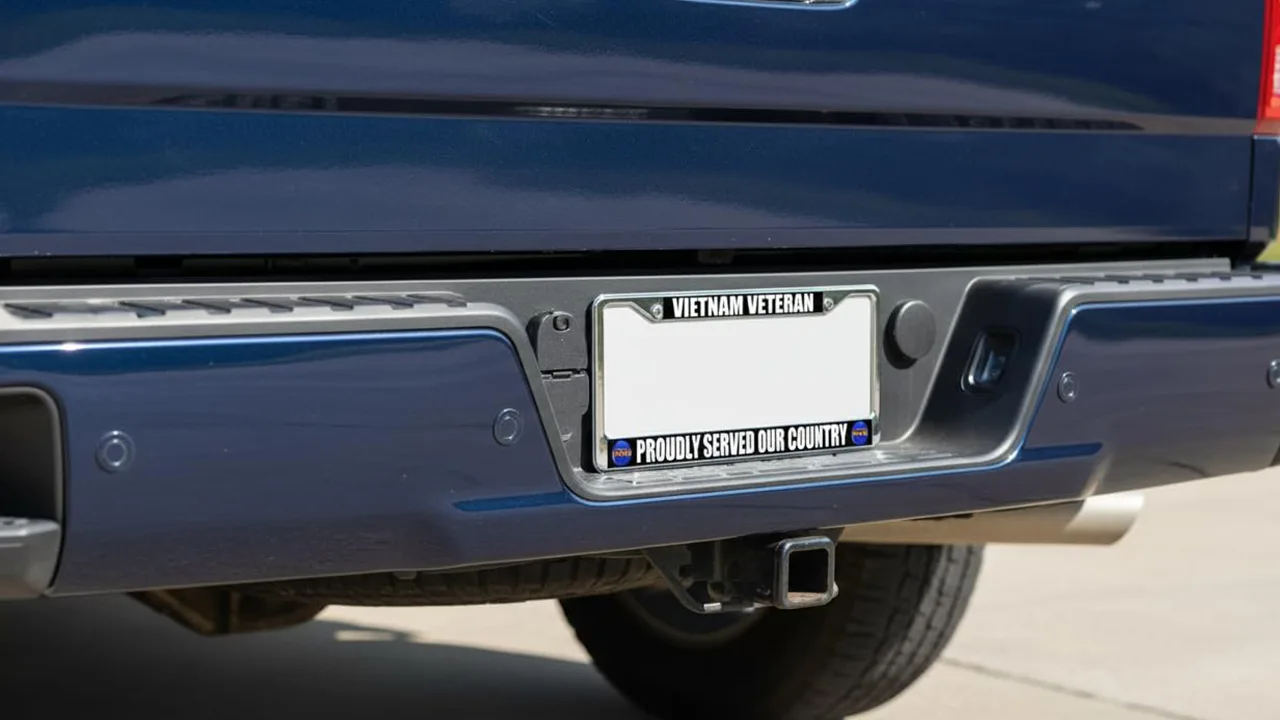
A normal license plate frame is not automatically prohibited in Alaska. The practical rule is that your plate must be securely mounted, positioned correctly, and kept in a condition that is clearly legible. If the frame hides part of the plate or makes the registration difficult to read, the installation can fall outside that rule even though the statute does not list decorative frames by name.
In everyday terms: choose a narrow frame, leave the plate number and identifying information unobstructed, and check the result from several steps behind the vehicle—not only from a few inches away.
What Alaska law actually requires
Alaska Statutes section 28.10.171 says a registration plate must be securely fastened to the vehicle, with its upper edge horizontal, and maintained in a location and condition that makes it clearly legible. The bottom edge generally must be at least 12 inches above the ground.
The law is written around the condition and display of the plate rather than around a list of approved accessories. That matters because a frame can be acceptable on one plate design and obstructive on another. A thick top rail, for example, may overlap a state name or small plate wording even when it leaves the large registration number untouched.
Are license plate frames legal in Alaska?
Alaska’s plate-display statute does not create a blanket ban on ordinary edge frames. A frame is the safer choice when it sits outside the important printed areas and does not interfere with legibility, mounting, or the plate’s horizontal position.
A frame becomes risky when it:
- covers any part of the registration number;
- overlaps the state name, registration tab, or other identifying wording;
- pushes the plate into a tilted or partly hidden position;
- creates glare or a dark border that makes the plate harder to read;
- causes the plate to hang, swing, or vibrate; or
- traps enough snow, ice, or road grime to obscure the plate.
The safest reading of “clearly legible” is simple: do not treat the large characters as the only information that matters. Leave the whole face of the plate visible.
Frame, cover, and shield are not the same thing
A frame normally follows the outer edge of the plate. A cover or shield places material over the plate face. That difference is worth noticing because even a clear cover can add reflections, haze, scratches, or moisture that reduce readability in headlights or winter weather.
If you are comparing the two accessories, the practical distinction between a license plate frame and a plate cover is more useful than the product label on the package. Look at what the accessory actually does once installed.
Where the plate must be mounted
For a vehicle issued one plate, Alaska generally requires it on the rear. Vehicles issued two plates must display them at the front and rear. The plate should be securely fastened, with the top edge horizontal, rather than propped in a rear window or tied to the vehicle where it can swing.
Some vehicle categories follow different placement rules, so the registration issued for your particular vehicle remains important. Do not assume a passenger-car setup applies unchanged to a commercial vehicle, motorcycle, trailer, or another special class.
A quick five-minute frame check
- Clean the plate first. Dirt around a frame edge can make a legal-looking installation difficult to read.
- Check every edge. Confirm that no rail touches printed characters, the state name, or the registration tab.
- Step back. Read the complete plate from behind the vehicle in normal daylight.
- Check at night. Make sure glare, a smoked accessory, or a failing plate light does not hide details.
- Hold the frame gently. If the assembly moves or rattles, tighten the correct fasteners without bending the plate.
A frame opening that appears generous in a product photo may still be too small for a particular plate design. Measuring the visible opening before installation is more reliable than relying on broad compatibility language. Our explanation of license plate frame opening size shows which dimensions to compare.
What about snow and road grime?
Alaska conditions make maintenance part of the legal question. A frame may not cover the plate on the day you install it, yet a deep lower rail can collect slush that later hides characters. Brush away snow and ice before driving, rinse road film when conditions allow, and inspect the narrow gap behind the frame.
Be gentle with reflective surfaces and registration tabs. Metal scrapers, harsh abrasives, and aggressive solvents can cause permanent damage that cleaning will not solve.
Can you use a custom or dealer frame?
Yes, provided the installed frame still leaves the plate clearly legible and meets the mounting rules. The words printed on the frame do not create the main issue; its border width, opening, finish, and final position do. A slim frame is usually easier to place around specialty plates whose wording sits close to an edge.
Frequently asked questions
Can an Alaska frame cover the word “Alaska” if the number is visible?
That is not a good installation. The statute requires the plate to be clearly legible as displayed, not merely the largest characters. Leaving the state name and all other identifying information visible is the lower-risk approach.
Are tinted plate covers legal in Alaska?
A tinted, smoked, reflective, or dirty cover can make a plate harder to read and conflict with the clear-legibility requirement. An uncovered plate with a narrow, non-obstructive edge frame is the more conservative setup.
Does Alaska require a front plate?
It depends on the plate set and vehicle category. If two plates are issued, the vehicle generally displays one at the front and one at the rear. If one plate is issued, it generally belongs at the rear. Check the registration and current Alaska DMV instructions for the specific vehicle.
What should you do if the frame hides part of the plate?
Remove it, switch to a slimmer frame, or reinstall it so the plate sits centered. Do not trim, drill, or alter an official plate to accommodate an accessory.
The practical takeaway
Alaska does not make an ordinary license plate frame illegal simply because it is a frame. The deciding issue is the finished installation: secure, horizontal, properly positioned, and clearly legible. When in doubt, leave more of the plate exposed rather than trying to use every millimeter of the border.
State rules and enforcement practices can change. This information reflects the official sources reviewed on September 24, 2026 and is general information, not legal advice.