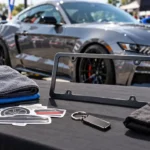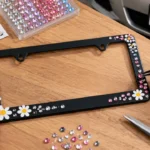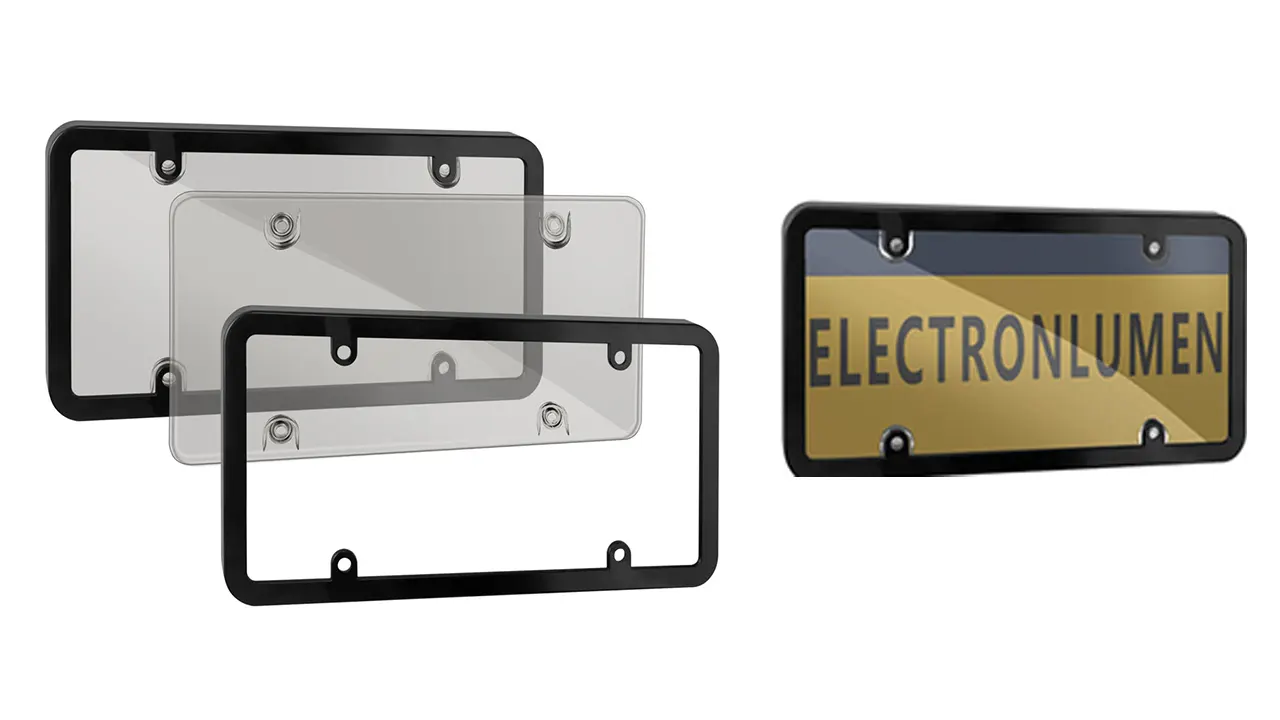
A license plate frame is an open-face border around the plate. A license plate cover is a clear, tinted, textured, or reflective layer placed over the plate face. That extra layer changes visibility, glare, cleaning, drainage, camera readability, and legal exposure.
If you’re choosing products for retail or dealer distribution, the distinction needs to be clear in the title, packaging, images, and compliance review. Calling a shield a “frame” does not change what it does once installed.
The practical difference
| Question | Frame | Cover |
|---|---|---|
| Does it sit over the plate face? | Normally no; the center stays open | Yes |
| Main design area | Border around the plate | Transparent or tinted face layer |
| Common risks | Border overlaps text or stickers | Tint, glare, haze, scratches, moisture, or optical distortion |
| Typical branding method | Printing, engraving, raised text, finish, or badge on the border | Limited because the viewing area must remain readable |
| Legal review | Check obstruction and installed visibility | Check rules that specifically address covers, coatings, shields, or interference |
A clear cover is still a cover
Transparency at arm’s length does not settle the issue. A clear layer can reflect headlights, collect scratches, fog with moisture, discolor, or change readability at an angle. Some laws address interference with detection or recording, not only whether a person can read the plate while standing behind the car.
Florida’s current statute, for example, defines an obscuring device around interference with legibility, angular visibility, detectability, or recording of primary plate features. Other jurisdictions use different wording and exceptions. Check the law where the vehicle is registered and where the product will be sold; don’t rely on a nationwide marketing claim.
A frame can also create an obstruction problem
An open center reduces the optical issues associated with a cover, but the border can still hide the state name, plate number, validation sticker, or another required feature. Wide screw caps and an off-center installation can create the same problem even when the nominal opening looked acceptable.
For a frame program, inspect the visible opening against actual target plates and check the assembly after tightening. The license plate frame size guide helps organize the plate and opening measurements.
Compare the products in real conditions
| Check | Why it matters |
|---|---|
| Daylight and low-angle light | Shows glare, reflections, tint, and shadow from the border |
| Wet and dirty condition | Reveals drainage paths, trapped moisture, and cleaning access |
| New and abraded surface | A cover that starts clear may become hazy after use or cleaning |
| Centered and worst-case shifted position | Shows whether screw clearance lets a border move over plate details |
| Camera and human viewing angles | Checks readability from more than one straight-on position |
These checks are useful product-development inputs, but they are not a substitute for jurisdiction-specific legal review or an approved test method.
Packaging and product naming need care
If the product includes both a border and a transparent shield, show both pieces in the bill of materials and installation instructions. Avoid images that make a tinted cover look clearer than it is. State the material and light-transmission or optical properties only when you have current test evidence.
Claims such as “camera proof,” “anti-photo,” or “a nationwide compliance claim” create obvious risk. Even softer language like “protects without affecting readability” needs evidence under the conditions that matter. For many mainstream dealer and brand programs, an open-face frame is the simpler product to explain and review.
What to ask before sourcing
- Is the center completely open, or is there a sheet over the plate?
- Is that sheet clear, tinted, colored, reflective, textured, or coated?
- Which plate features must remain visible in each target jurisdiction?
- How does water leave the assembly, and can dirt be cleaned without removing it?
- What happens after abrasion, UV exposure, chemicals, heat, and cold under defined tests?
- Does the installed stack affect screw engagement, camera view, or vehicle clearance?
- Do the packaging claims accurately describe a frame, cover, or combined kit?
For open-border products, compare structures on the custom license plate frames page and keep the target plate layout in the design review.
Frequently asked questions
Is a clear license plate cover the same as a frame?
No. A clear cover places material over the plate face; a frame normally leaves the center open. The installed function matters more than the seller’s name.
Are license plate covers legal?
The answer depends on the jurisdiction and the product. Some rules address tint, shields, coatings, obstruction, angular visibility, or electronic readability. Check the current official rule for the vehicle’s registration location.
Can a frame be illegal too?
Yes, a frame can create a problem if it obscures required plate information or interferes with readability. Check the opening, caps, alignment, and installed position.
Which is easier for a dealer-branded program?
An open-face frame usually provides a straightforward branding area without adding a layer over the plate. It still needs a visibility and fit review.
Specify what crosses the line of sight
The cleanest way to separate these products is to ask one question: does any material sit over the readable plate face? If yes, treat it as a cover or shield for design and legal review. Send the target markets, plate samples, product section, optical details, hardware, and packaging claims before approving a program.