North Dakota’s frame question starts with a basic rule: for most motor vehicles, the state requires two plates—one on the front and one on the rear—and each must be conspicuously displayed and securely fastened. The assigned number and state name must be clearly visible. A frame is a problem if it makes those details difficult to see or read, but the state code’s more distinctive practical detail is that plates must also be kept clear of mud, ice, and snow as far as reasonably possible.
Are license plate frames legal in North Dakota?
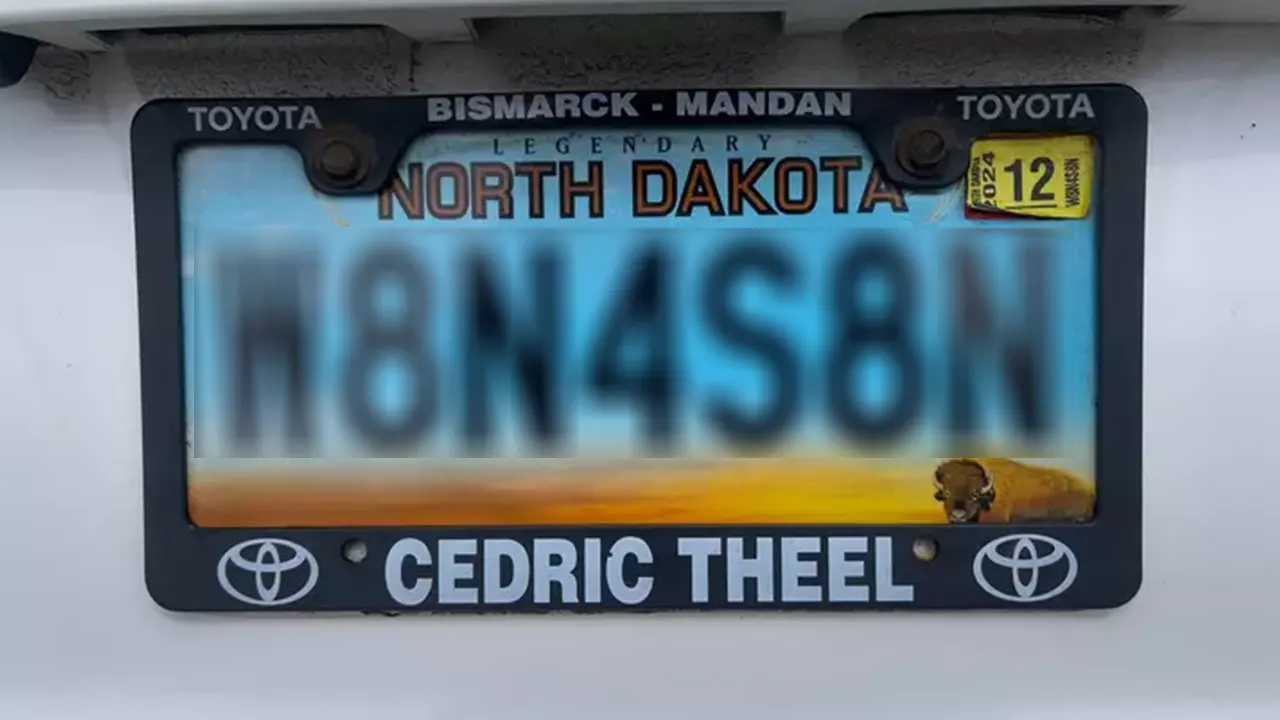
North Dakota Century Code §39-04-11 focuses on how the plate is displayed. It does not name a particular frame style. A plain border that leaves the plate information visible and does not interfere with secure mounting is different from a wide frame, oversized cap, or cover that overlaps required information. The safe test is the installed result: can someone clearly see the assigned number and the state name, and is the plate still firmly attached?
Do not treat “the number is mostly readable” as a reason to cover other printed information. Leave the entire plate face and current registration tab visible whenever possible. That avoids arguments over whether an edge overlap interferes with the required display.
Does North Dakota require two plates?
Generally, yes. Ordinary motor vehicles display one plate at the front and one at the rear. The statute sets different rules for certain vehicles: motorcycles and trailers carry their plate at the rear, and plates on those vehicles may be displayed vertically. House trailers are also identified as rear-plate vehicles. Certain apportioned vehicles, truck tractors, and semitrailers have their own placement rules.
Because these exceptions depend on vehicle type and registration status, do not assume a one-plate setup is allowed just because another vehicle on the road uses it. If you are installing a frame on a car, plan around both plates unless a specific statutory exception applies.
How should a North Dakota plate be positioned?
For a standard motor vehicle, the plates must be displayed horizontally and upright, with one at the front and one at the rear. Each plate must be securely fastened. The bottom edge must sit at least 12 inches above the level surface on which the vehicle stands. The plate should be mounted where it clearly shows the assigned number and the state name.
North Dakota’s code also says the plate should be kept free of mud, ice, and snow as far as reasonably possible so it stays clearly visible. That matters in winter: snow packed into a frame’s lower edge can hide characters even when the frame itself is narrow. Check the plate after driving through slush or heavy snow, and clear buildup without scraping the plate face or damaging its finish.
What about registration tabs and stickers?
When the state issues an annual tab or sticker in lieu of a new plate, the current one must be displayed in the area designated for it. The statute also says outdated evidence of registration or licensing should be removed. A frame or fastener should not cover the designated tab area, and old stickers should not stack up until the current one is hard to distinguish.
If you have a specialty plate or a replacement plate with a different layout, inspect that exact design rather than relying on a photo of the standard plate. The registration tab location is part of the installation check, not an afterthought.
How to check a frame before driving
Set the plate in the frame before mounting it to the vehicle. Check that the border does not cover a letter, number, state name, or registration tab. Then fasten the assembly at the vehicle’s mounting points and look at it straight-on and from the sides. The plate should not swing, tilt, or disappear behind a bumper edge.
Take another look after the first drive, especially in winter. Confirm the screws are still snug and clear packed ice, dirt, or road debris from around the characters and tab. A frame that looks unobstructed in a warm garage can collect snow along its lower lip on the road.
Choosing a frame for a North Dakota plate
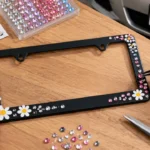
A narrow, open-border frame leaves more of the plate face exposed, but “slim” alone does not prove fit or compliance. Compare the inner opening and mounting holes with your actual plate, tab location, and vehicle recess. The frame size and opening measurements are useful starting points; also check the hardware after installation so a screw head does not crowd a corner or sticker.
If you are browsing U.S.-format license plate frames, use the specific plate design and installation location as your reference. A generic frame photo cannot show whether a real plate’s registration tab will clear the border.
North Dakota installation checklist
- For an ordinary motor vehicle, display one plate at the front and one at the rear.
- Mount each plate horizontally and upright, unless a vehicle-specific rule allows another orientation.
- Fasten the plate securely and keep its bottom edge at least 12 inches above the ground.
- Leave the assigned number, state name, and current registration tab visible.
- After snow, slush, or mud exposure, clear material that makes the plate hard to read.
Frequently asked questions
Can I use a frame that partly covers the state name?
The statute calls for a visible display that clearly shows the number and state name. The low-risk choice is a frame that leaves the full state name visible, rather than relying on a partial-visibility interpretation.
Can I display only a rear plate on my car?
North Dakota generally requires two plates on motor vehicles. Rear-only display applies to specified vehicle types such as motorcycles and trailers, with other exceptions addressed in the statute.
Do I need to clear snow from my plate?
Yes. The code says plates should be kept free and clear of mud, ice, and snow as far as reasonably possible so they remain clearly visible.