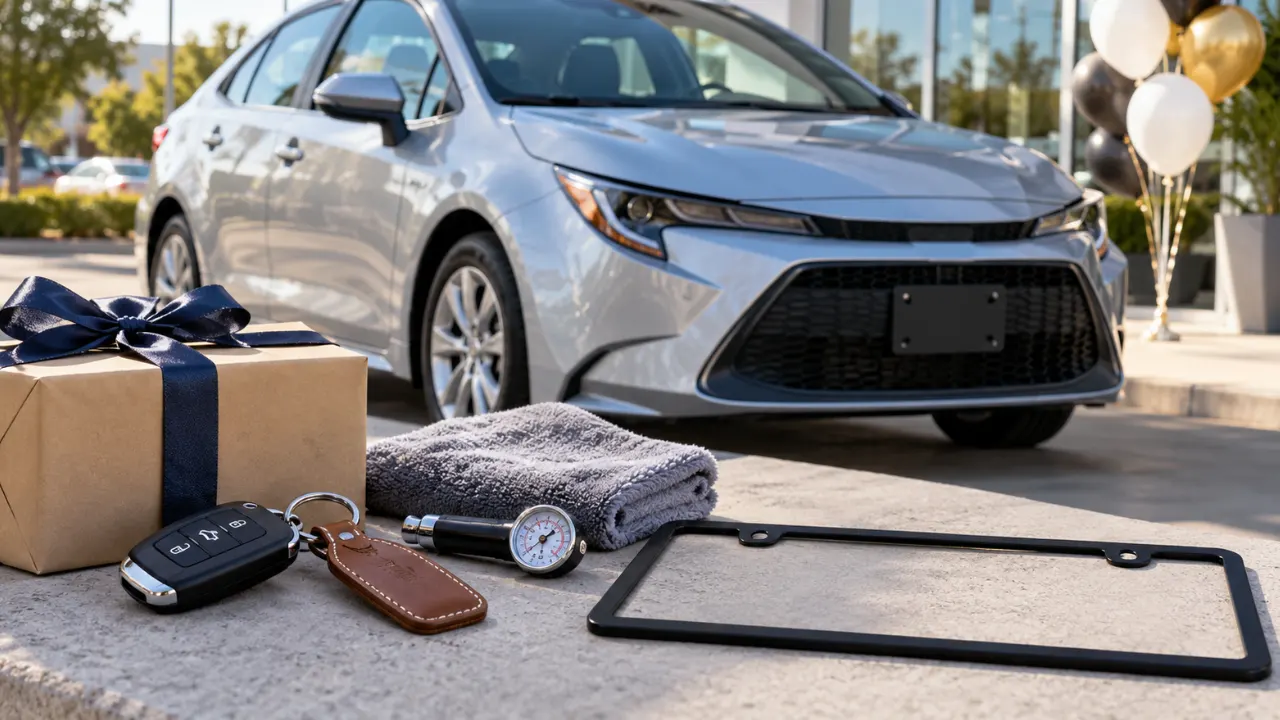
Good first car gift ideas make the first weeks of ownership easier and still leave room for a little celebration. A useful document organizer, a modest cleaning kit, help with a maintenance appointment, or a carefully chosen personal keepsake can mean more than a bag full of unfamiliar gadgets.
If you know the exact vehicle, suitable mats or a personalized license plate frame may also work. If you do not, choose a gift that does not depend on fit—or give the driver a choice. The aim is to support their new independence, not turn the car into a project they did not ask for.
A first car can belong to a teenager, an adult who has just learned to drive, or someone buying their first vehicle after years of sharing. Start with that person’s situation rather than assuming every new owner needs the same things.
Ask Three Small Questions Before You Buy
Find out what the car is, how the owner will use it, and what they already have. You do not need a long questionnaire. A photograph of the vehicle, its model year, and a casual conversation about the first week can prevent many awkward purchases.
Ownership and driving experience are separate. An experienced driver buying a first personal car may value help organizing service records, while a newly licensed driver may appreciate patient practice and a simple explanation of the manual. A gift should not imply that either person is incapable.
Think about parking and storage too. Someone in an apartment may have no place to use a large wash kit. A city commuter may prefer a small practical item over a bulky trunk organizer. An owner with a very small car may already be deciding what not to carry.
Ask family members what they are giving. Two near-identical emergency kits can add clutter while leaving a more useful need unmet. Coordinating a few thoughtful gifts is better than making the recipient sort and return duplicates during an already busy week.
Choose by How Much You Know About the Car
| What you know | Sensible gift direction | What to avoid guessing |
|---|---|---|
| Only that it is their first car | Keepsake, useful contribution, shared shopping trip | Vehicle-specific accessories |
| Model and year, but not equipment | Document storage, suitable basic care items | Exact mats, electronic integrations, mounting hardware |
| Exact vehicle and owner preferences | Compatible practical accessories or frame | Permission to install without asking |
| Their main difficulty with ownership | Help with that specific task | A generic bundle unrelated to the problem |
This approach also works when the gift is meant to be a surprise. Keep the surprise in the message or presentation, not in an irreversible change to the vehicle. A card offering a chosen accessory can still feel personal without gambling on fit.
A Document Organizer That Makes Ownership Less Confusing
A simple wallet or folder can help a new owner keep relevant paperwork in order. Choose one that fits the documents they actually need to carry and the storage space available. A very large organizer can become an inconvenient extra object rather than a useful home for the essentials.
Make clear that not every ownership document belongs permanently in the vehicle. Follow local requirements for carried documents, and keep sensitive originals and financial records securely where appropriate. An organizer is a storage tool, not a reason to gather every private record into the glovebox.
You can add an optional service-record section or a digital reminder setup. Let the owner control the account and notification choices. Avoid setting up a complicated subscription or sharing their information with a service without agreement.
A personal note can make this practical gift warmer: congratulate them on the car and offer help with the first service-record entry if they want it. Keep the tone supportive. The gift works best when it removes a small source of uncertainty rather than becoming a lecture about responsibility.
A Tire Gauge, With Help Finding the Right Information
A tire-pressure gauge can be a useful small gift, especially when the owner knows where to find the vehicle’s specified pressures and how to use the gauge correctly. Choose a readable instrument with instructions and a range appropriate to the vehicle, not one selected only because it has extra functions.
Offer to find the tire-information placard and relevant manual instructions together while the vehicle is parked. Do not write one generic pressure on the gift card. The correct information depends on the vehicle and its stated conditions; the tire sidewall marking is not a substitute for the vehicle’s recommended setting.
If you add an inflator, check power requirements, connection type, storage, and the maker’s limitations. A device should not be presented as a cure for a damaged tire or a reason to keep driving on an unsafe one. The owner needs to know when to seek help.
Avoid turning the handover into an improvised roadside lesson. Practice with appropriate equipment in a safe, stationary setting, and use the instructions. For a new owner, knowing how to find reliable information is often as valuable as the object itself.
Roadside Basics That the Owner Can Recognize and Use
A roadside gift should be understandable, appropriate to the local climate, and stored securely. Useful possibilities include a flashlight, a suitable first-aid kit, gloves for ordinary handling, and weather-related supplies. Check what the vehicle and owner already have before assembling another kit.
NHTSA’s winter guidance includes emergency supplies and preparation for the conditions in which you travel. Use that as a prompt to think locally, not as a reason to put winter equipment in every car worldwide. Heat, cold, trip length, and access to assistance change what is useful.
Avoid complicated rescue tools or electrical equipment chosen only for their appearance in a bundle. A jump starter or inflator needs vehicle compatibility, instructions, and an owner who understands its intended use. Do not include unfamiliar safety-critical equipment without the support needed to use it appropriately.
Keep the kit accessible without letting loose items move around the cabin. Explain that equipment does not make a dangerous roadside position safe. Calling for suitable assistance can be the right response; a first car gift should never pressure someone into attempting a repair they are not comfortable or equipped to perform.
A Small Cleaning Kit That Suits Where They Park
Start with the owner’s situation. Someone with access to a suitable washing area may enjoy mild car-wash products and clean cloths. Someone who parks on the street might prefer a voucher for a reputable wash or a compact interior-care kit instead.
Choose products for identified surfaces and keep the kit simple. Glass, upholstery, touchscreens, painted surfaces, and decorative trim do not all need the same cleaner. Avoid presenting a strong all-purpose chemical as safe for everything inside and outside the car.
Include clear labels and keep products in their original containers. Do not decant unidentified liquids into attractive gift bottles. Add a small storage bag only if it keeps the contents secure without encouraging the owner to leave unsuitable chemicals in excessive heat.
A short note about the intended use of each item is more helpful than several extra bottles. If plate care is part of the kit, the sequence for cleaning a license plate without damaging its surface keeps the focus on mild cleaning and inspection rather than aggressive polishing of reflective material.
Mats and Storage Accessories: Ask Before Choosing the Exact Part
Floor mats can be a useful gift when they are designed for the exact vehicle and installed using the proper retention system. Color and material are secondary to fit. Do not buy a generic decorative mat and assume trimming or stacking will make it suitable for the driver’s position.
If you are unsure of the year, body style, or interior configuration, give a contribution toward the correct set and choose it together. The same approach makes sense for cargo liners, console inserts, and seat accessories. A photograph of a similar vehicle is not enough to confirm every detail.
For storage accessories, check how doors, lids, seats, and controls move. An organizer should not obstruct a buckle, pedal area, seat track, or control. Keeping the receipt is useful, but choosing a design with clear fit information is better than relying on a return after installation.
A new driver may not yet know which storage problems they have. Waiting a few weeks can produce a better gift choice than filling the cabin on the first day. Offer the idea now and let actual use identify the accessory that would help.
A License Plate Frame Can Be a Small Personal Keepsake
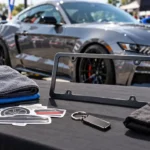
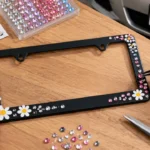
A frame can add a nickname, original design, short message, or simple finish without altering the official registration plate. It is a modest option for a first-car celebration, especially when the owner already likes the idea of personalizing the exterior.
Ask about the style first. A sentimental phrase chosen by a family member may not be what the driver wants visible on the car. Keep the text respectful and avoid adding private information such as an address or a complete birth date to an exterior accessory.
Fit still comes before personalization. Check the plate dimensions, opening, mounting points, vehicle recess, and clearance around cameras and lamps. Keep all information required by the applicable rules visible. A frame should not be presented as universally legal or as protection against significant impacts.
Custom license plate frame options make the most sense after those checks. If the car has not arrived yet, give the design as a card or proof and confirm the physical frame later. That preserves the surprise without guessing about the mount.
Keepsakes That Do Not Have to Live on the Car
A framed photograph of the actual car, a small original illustration, or a handwritten memory of the first journey can mark the occasion without creating a fit problem. Use an image and design you have permission to reproduce, particularly if you commission artwork from a photographer’s picture.
The details that make a keepsake personal are often modest: the car’s color, the date of collection, or a location meaningful to the owner. Check those details before ordering. Avoid copying a full registration number into an unnecessary public display or online gift listing.
A small key accessory can also work if it does not make the key set cumbersome. Test the size beside a modern remote rather than judging it on its own. A heavy or sharp object may be inconvenient even if the personalization looks attractive.
If the recipient prefers private keepsakes, keep the personalization off the exterior. The personalized car gift ideas cover other ways to match the message to the person rather than assuming every gift needs to be mounted on the vehicle.
Help With Ownership Costs Without Taking Over
A contribution toward a planned service, a useful wash appointment, or an agreed roadside-assistance membership can relieve a practical burden. Ask what would help rather than choosing a service that duplicates existing cover or creates an ongoing obligation.
For memberships or vouchers, check eligibility, geographic coverage, expiration, transferability, renewal terms, and any conditions the owner needs to understand. Do not promise that assistance covers every situation. Let the recipient decide whether a recurring service suits their plans.
Keep the presentation straightforward. You can explain what you are offering and let the owner book a suitable time with a provider they trust. Paying for a particular appointment should not become permission to access their account, approve extra work, or make maintenance decisions on their behalf.
For a used first car, an agreed professional inspection or maintenance contribution may be more helpful than cosmetic accessories. For a new car with included maintenance, the same gift may duplicate something already available. The vehicle’s actual arrangements matter more than the gift category.
Give Time and Practical Support, Too
Offer a calm session going through the owner’s manual, basic controls, service information, and the location of essential equipment. Keep it to what the owner wants help with. A long demonstration of every feature can be overwhelming when they are still getting used to the car.
For someone newly licensed, an appropriate professional driving lesson or refresher session can be a thoughtful option if they welcome it. Match the provider and lesson to the driver’s needs and local licensing requirements. Do not frame it as a criticism disguised as a present.
If the recipient is a teen, NHTSA emphasizes seat-belt use, avoiding distraction and impairment, observing speed limits, and managing passenger-related risks. Gifts should support those priorities rather than reward risky driving or encourage phone interaction behind the wheel.
New adult drivers deserve the same respect and practical support without being treated like teenagers. Offer company for a familiarization trip where appropriate, help planning a route while parked, or time to practice an unfamiliar parking situation under suitable conditions. Let the driver set the pace.
Build One Purposeful Bundle, Not a Box of Random Gadgets
A first-week organization gift could include a document wallet, a simple record folder, and a note offering help arranging the first planned service. Each element belongs to the same task. There is no need to add an unrelated scented ornament to make the package look fuller.
A compact care gift might contain clearly identified cleaning supplies for the intended surfaces and a suitable place to store them. A milestone gift could pair a photograph with an optional frame design to choose after the car arrives. These are example combinations, not required shopping lists.
Keep presentation easy to unpack. Small hardware or accessories should remain labeled and separated from surfaces they might scratch. If a component has instructions, include them with the item rather than discarding them to improve the appearance of the gift box.
Consider how the owner will get everything home. Someone collecting a small car with a passenger and luggage may not have room for a large box. A card offering a later shared shopping trip can be more considerate than handing over a bulky accessory at the dealership.
Skip Gifts That Add Risk, Expense, or Unwanted Commitments
Avoid performance parts, electrical modifications, large wheels, or unfamiliar lighting systems as surprise first-car gifts. These choices can involve technical fit, installation, legal, insurance, and maintenance questions that belong to the owner, not the gift giver.
Be cautious with strong fragrances and decorative items around controls, mirrors, or airbag areas. An item being sold as a car accessory does not establish that it belongs in every installation position. Respect the vehicle’s instructions and the driver’s comfort.
Do not gift a tracking or connected device without discussing how it works and who controls the data. A present should not become undisclosed monitoring. Similarly, do not enroll the owner in a recurring service and leave them to discover the renewal later.
Gift packaging should not imply capabilities the product lacks. A decorative frame does not make a plate impact-proof, a cleaning kit does not repair damaged paint, and a roadside bag does not replace assistance. Clear expectations make a modest gift more useful and easier to appreciate.
Make the Handover Feel Like a Celebration
Congratulate the owner on the milestone before explaining the practical details. Ask whether they would like help setting up or fitting the gift, and be comfortable with “later” or “not on the car.” That choice is part of their new ownership.
Keep receipts, instructions, and warranty information accessible. For a personalized item, check the spelling and fit before final production where possible. If the gift requires a decision, make the invitation specific: choosing a frame finish together is easier than telling the recipient to work out an entire customization project.
After a little ordinary use, ask whether the gift helped. If an organizer takes up too much room or a frame does not suit the plate, exchange it rather than encouraging a makeshift installation. A gift can be thoughtful even when the first version needs changing.
The most useful next step may be small: arrange the agreed lesson, help find the correct mat, or print the photograph. You do not need to supply everything a new owner might ever need on the day they get the keys.
Frequently Asked Questions
What is a good first car gift if the car has not been chosen?
Choose a keepsake, a flexible contribution, or an invitation to shop together once the vehicle is confirmed. Avoid pre-ordering model-specific accessories or customized frames before the plate and mounting details are known.
Is cash too impersonal for a first car gift?
It does not have to be. Explain the purpose warmly and let the owner decide how to use the contribution. A handwritten note can mark the milestone without forcing them to accept an accessory they would not choose.
Should a gift for a teen driver be different from one for an adult?
The occasion and interests may differ, but both deserve suitable products, privacy, and a say in vehicle changes. For teens, coordinate with the responsible parent or guardian and keep the gift consistent with their driving arrangements.
What if the owner already received an emergency kit?
Ask what is still useful rather than buying another one. Help organizing the existing equipment, a suitable lesson, or a personal keepsake may add more value than duplicate supplies.
What if their first car is electric?
Ask about the owner’s charging arrangements before buying electrical equipment. A charging credit may help if it suits the networks they use and the account terms, while an unfamiliar adapter may be entirely unsuitable. Do not guess connector compatibility or buy home-installation equipment as a surprise. A clearly labeled pouch for equipment the owner already has, a useful ownership contribution, or a non-electrical keepsake can celebrate the car without creating a new installation project. Any home electrical work should be discussed with the owner and handled through an appropriately qualified professional.
How much should you spend?
Choose a comfortable amount and focus on one useful purpose. There is no required budget. A small well-chosen gift with clear instructions and genuine personal meaning can be more welcome than expensive equipment that brings installation work or ongoing costs.