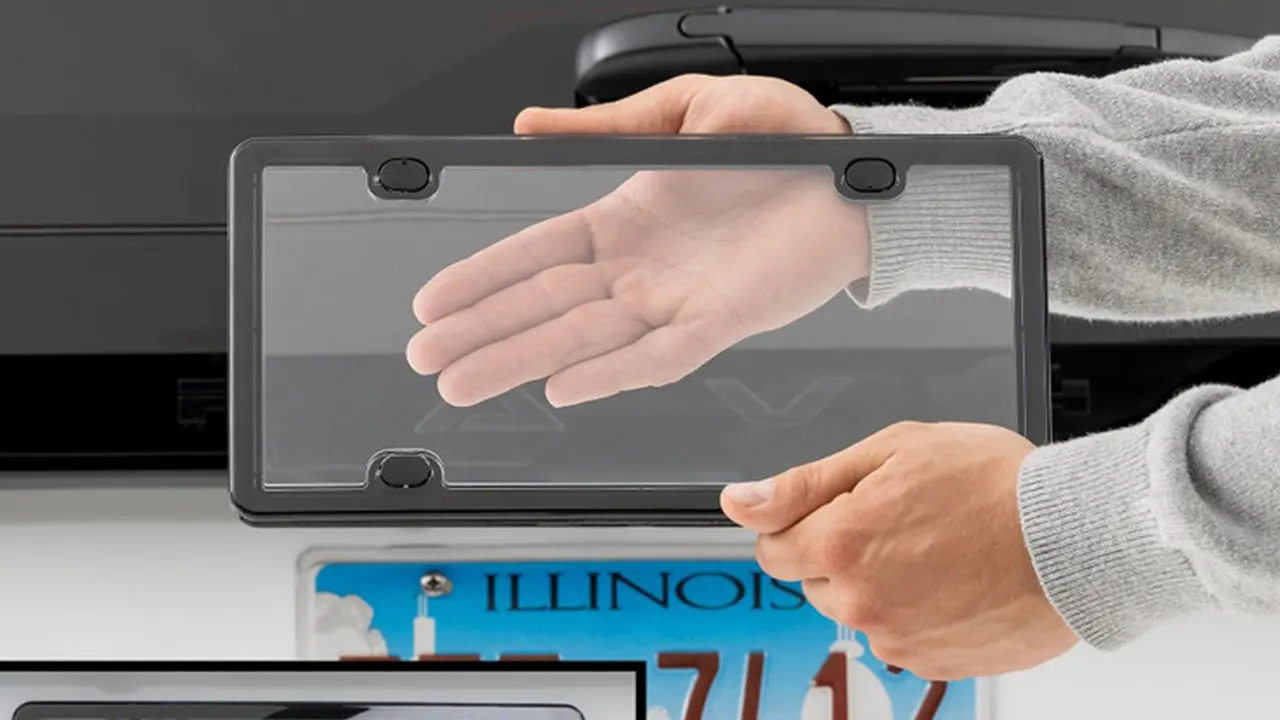
There isn’t one license plate cover that’s best everywhere. If your vehicle is driven on public roads, start by checking the rules where it’s registered—and any other places you drive. In some jurisdictions, even a clear cover is prohibited; in others, a cover is allowed only if it stays flat, clear, clean, untinted, and non-reflective. When the rule is unclear, leaving the plate face uncovered is the safer choice.
Then ask what you actually need: protection for a plate that gets scuffed, a cleaner look, or simply a border around the plate. Those needs point to different products. A cover lies over the readable face; a license plate frame surrounds the edge and leaves the center open. A frame can change the look and hold the plate at its mounting points, but it is not a shield over the printed surface.
First, make sure you mean the right product
Retail listings use “cover,” “shield,” “protector,” and “frame” loosely. Look at the installed product, not just its name or product photo.
| Product type | What sits in front of the plate? | What to keep in mind |
|---|---|---|
| Clear plate cover or shield | A transparent sheet over the plate face | May offer a physical barrier, but clarity alone does not establish legality or guarantee glare-free reading. |
| Tinted, smoked, colored, or reflective cover | A layer that changes light or plate appearance | Higher visibility and legal risk; avoid for road use unless current official rules explicitly allow the exact product. |
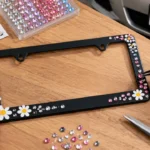
| Open-face license plate frame | A border around the plate, with the center exposed | Does not cover the plate face, but a wide or misaligned border can still hide required details. |
| Frame-and-cover kit | A border plus a separate face shield | Assess the face shield as a cover; adding a frame does not remove the cover’s visibility or legal issues. |
| Show, storage, or off-road display shield | Varies | Rules for public-road driving may still apply if the vehicle is driven with it installed. Remove it before road use unless the rules permit it. |
If a listing promises to blur a plate, defeat a camera, or make a registration number harder to capture, skip it. That is not ordinary plate protection, and installing a device to conceal identification or interfere with enforcement can create serious legal problems. Avoid camera-blocking or concealment products for public-road use.
Check the rules before comparing materials or prices
“Clear” is a description of appearance, not a universal legal approval. Plate rules are set by different national, state, provincial, and territorial authorities, and they don’t all treat covers the same way. Here are a few examples—not a complete legal survey:
| Jurisdiction | What the current official rule says | Practical takeaway |
|---|---|---|
| Illinois, United States | Illinois Vehicle Code §3-413 prohibits operating a vehicle equipped with a registration plate or digital registration plate cover. | Do not assume a transparent cover is acceptable just because it looks clear. |
| Ontario, Canada | The Highway Traffic Act requires the entire plate to remain plainly visible and free from obstruction; it also addresses devices that prevent accurate red-light-camera photography or electronic toll identification. | A cover that seems readable to you may still raise an obstruction or camera-readability issue. |
| United Kingdom | Rules for displayed registration marks require compliant reflective plates; Regulation 11 prohibits treatment that makes characters less distinguishable or impairs a true photographic image. | Do not assume a clear overlay is acceptable. Check the current DVLA guidance and regulations before fitting one. |
| Queensland, Australia | Queensland’s guidance says a fitted cover must be clear, clean, untinted, flat across the plate, and non-reflective; the frame must also leave clear space around plate details. | Even where covers are permitted subject to conditions, the exact fit and surface still matter. |
The useful lesson is not that one of these rules applies everywhere. It’s that a seller’s “street legal” label cannot replace the rule for your location. For a U.S.-focused look at tinted and smoked covers, see the current state-law overview of tinted license plate covers. If you’re buying for more than one market, check each jurisdiction separately instead of assuming one design works globally.
Choose by what you want the cover to do
You want protection from occasional contact or road debris. A face shield may take a scuff that would otherwise reach the plate, but it also becomes the outer surface exposed to dirt, cleaning, and weather. If it scratches, clouds, or picks up glare, the plate can become harder to read even when it started out clear. Check the product’s material and replacement guidance, and don’t treat a general “unbreakable” or “UV proof” phrase as a test result.
You want a more finished look. An open-face frame may be the simpler option because it adds a border without placing another layer over the plate. Check the opening against the actual plate, including jurisdiction text, registration decals, and any other required markings. A frame that fits one market’s plate can still cover a different plate’s details.
You want privacy or a darker appearance. A tinted or reflective cover works against the basic need for a clearly visible registration plate and may be restricted even if the digits remain readable straight-on. Don’t choose it for road use based on appearance in a product image; the view can change with angle, lighting, weather, and cameras.
You need a shield for a display or vehicle that stays off public roads. You can compare visual finish and physical fit more freely, but keep road use separate from display use. If the vehicle may be driven, remove the shield unless the local rules permit it and the installed product meets them.
What to inspect on a clear cover
A clear panel can still change how a plate looks. Before installation, hold it over the plate and check it straight-on and from the sides. Repeat in daylight, under a garage light, and at night with nearby headlights if you can do so safely. Look for reflections, optical waviness, tint, or a raised curve that changes the viewing angle. A product photo cannot show how the surface behaves on your vehicle.
Check the cover while it is dry and clean, then think about how you’ll keep it that way. Dust or water between the plate and shield can be harder to reach than dirt on an exposed plate. If the design has no practical way to remove the cover for cleaning, or the seller gives no clear care instructions, that’s a real tradeoff—not a minor detail.
Also inspect the edges and fasteners. A cover should not flex into the plate, rattle against the bodywork, or require you to bend the plate to make it sit flat. Tightening screws harder can crack a rigid panel or distort the assembly; use the hardware and installation method supplied for that product.
Flat panels, domed shields, and frame-and-cover kits
A flat panel sits close to the plate and usually creates the least bulky appearance, but its edge must still clear the plate’s raised characters, corner radius, and mounting hardware. A domed or bubble-style shield stands farther away from the surface. That extra clearance can matter when a plate has embossed lettering, but the curved profile also changes the angle at which light passes through it. Do not assume that a dome is clearer or safer just because it avoids contact with raised characters.
An integrated frame-and-cover kit combines a border with a face shield. Treat it as two products working together: the frame controls edge overlap and retention, while the clear panel changes the optical surface in front of the plate. Check both independently. The frame can hide a registration decal even if the shield is perfectly transparent, and a well-fitting frame cannot correct glare or distortion from the shield.
Removable display covers are another category. A magnetic or hinged cover may be useful for stationary display or controlled use, but a feature designed to hide, rotate, darken, or obscure a plate should not be treated as an ordinary road-use protector. Do not use concealment features on a public road.
Clear does not mean optically neutral
Transparency is only one part of visibility. A panel can look clear while it is lying on a table and still produce reflections, glare, haze, or slight visual distortion after it is mounted at an angle. Headlights, overhead lights, a curved bumper, and the plate’s reflective background can all change what you see. A phone photo taken straight on is not a reliable test by itself.
Check the cover over the actual plate, not against a blank wall. View it from the driver’s standing position, from a lower angle, and from either side. Look for double edges around letters, wavy reflections, rainbow-like color, or a bright hotspot that moves when you shift position. If possible, check it outside in daylight and again under a fixed garage light. Never stand in traffic or use a moving vehicle to test night visibility; inspect the stationary vehicle safely.
Pay attention to the whole plate, not just the main registration characters. State or regional names, small validation marks, embossed areas, and date stickers may be closer to the border than you expect. A cover can make some regions harder to read even when the large letters remain visible. If the product changes contrast or creates a reflection over any required detail, remove it rather than trying to correct the problem with a different angle or a tighter screw.
How to read material and coating claims
Listings may describe a shield as acrylic, polycarbonate, UV resistant, scratch resistant, or unbreakable. Those words can help you ask better questions, but they do not tell you how the finished cover performs in your climate or how long it will remain clear. Material family, thickness, forming method, coating, tint, and storage conditions all affect the finished part. Do not compare products by one adjective alone.
If a seller claims UV protection or resistance to yellowing, ask what is actually being claimed: a UV-absorbing material, a surface coating, or a test result on a particular sample. A generic phrase is not a lifespan promise. The same applies to scratch resistance. A surface that tolerates light cleaning may still mark if it is wiped dry with grit trapped between the cloth and the panel. A cracked or abraded cover can become a visibility problem even if the base material was initially transparent.
For a simple personal purchase, look for clear product information about the exact material, care instructions, included gasket or hardware, and replacement availability. For a regulated or resale program, request the complete specification and supporting test records for the exact model. Do not infer performance from a product image, a material name, or a claim that the item fits most vehicles.
Fit the cover to the plate and the vehicle together
Before ordering, measure the plate’s outside width and height, but also check its corner shape, embossed depth, hole spacing, and the position of any required stickers. Compare those details with the cover’s usable inner area and the distance between its fastener holes. The outside dimensions alone do not tell you how much of the plate will remain visible.
Next, look at the bumper or trunk recess. Some plates sit on a flat surface; others sit in a shallow pocket, curve with the body, or share space with a camera, light, trim piece, or sensor. A cover that fits the plate on a workbench may touch the vehicle, rock on a curved surface, or sit at an angle when installed. If the mounting area is not flat, check whether the cover can be installed without forcing it or bending the plate.
Test the complete stack before tightening: vehicle surface, spacer or gasket if the design uses one, plate, cover, frame if present, washers, and fasteners. Confirm that each screw engages normally, the plate remains supported, and no edge is pinched. Do not stack extra frames or washers just to make an incompatible cover sit still. If the supplied hardware does not match the vehicle’s mounting points, identify the correct hardware before installation rather than forcing a screw or drilling the plate.
After installation, check the rear plate lamp and any nearby camera or sensor view. A cover should not intrude into the lamp’s light path or project into the field of view of an adjacent camera. If you cannot confirm clearance, remove it or ask the vehicle manufacturer or a qualified installer about that specific mounting location.
Condensation, trapped grit, and drainage
A shield creates a second surface to maintain and a narrow space where dust, water, road salt, or residue can collect. A small gap at the top may let water enter; a tight seal may make it harder for moisture to escape. The way a particular design behaves depends on its shape and installation, so do not assume every covered plate will fog or that every gasket prevents moisture.
After rain, a car wash, or a temperature change, inspect the panel for fogging or water spots. If moisture persists between the plate and cover, remove the assembly when it is safe to do so, clean and dry the surfaces, then inspect the gasket and fit. Do not seal the edge with household adhesive unless the manufacturer specifies it; adhesive can trap water, complicate removal, or leave residue on the plate and vehicle.
Road grit is another practical issue. If particles sit between a rigid cover and the plate, vibration can rub them against the plate surface. That is why a cover should be removable for inspection and cleaning. If you cannot clean behind it without damaging the plate, or if the panel sits directly against raised characters, an open-face frame or an uncovered plate may be a better choice.
Cleaning and replacement matter as much as the first-day look
Before cleaning, rinse away loose dust and grit. Use clean water, a mild automotive wash solution, and a soft microfiber cloth; dry with a separate clean cloth. Do not wipe a dusty panel dry, scrape it with a blade, or use a coarse pad. Avoid strong solvents unless the cover maker confirms they are suitable, because solvents can cloud some plastics or affect a surface coating.
Clean the outside often enough that road film does not become the layer you are looking through. When cleaning the plate itself, inspect behind the cover and around the fasteners for trapped dirt, moisture, corrosion, or a loose edge. If the cover must be removed for cleaning, support the plate while removing the screws so it does not fall or get bent. Reinstall only if the panel and hardware remain in good condition.
Replace or stop using a cover that is cracked, deeply scratched, yellowed, cloudy, warped, or loose. A cosmetic defect on the shield matters if it scatters light or makes plate details harder to distinguish. Do not polish a damaged panel aggressively in an effort to restore it; an improvised abrasive can make the surface worse. Check the exact local rule before fitting a replacement, since the fact that the old cover was previously installed does not prove it is permitted.
When an open-face frame is the more sensible choice
If your goal is a cleaner outline, a colored border, or a branded look, a frame may solve the problem without placing another optical surface over the plate. A frame leaves the center exposed, so it does not shield the printed face from direct contact, road debris, or weather. Its job is different. Choose one with an opening that keeps the required characters and decals visible, and match it to the plate format and mounting points.
For vehicles that rattle or have a plate rubbing the body, first identify where the movement comes from. The cause could be loose fasteners, an uneven mounting surface, a worn bumper insert, or a frame that does not fit. A clear panel is not automatically an anti-rattle solution. A suitable gasket or spacer may help in some installations, but it should be compatible with the vehicle and must not cover information or hold water against the finish.
When deciding between a clear cover and a frame, compare what you are trying to prevent. A face shield may take some direct contact but adds cleaning and visibility tradeoffs. An open frame changes the border and may support the plate edges, but it leaves the plate face exposed. If the local rule is uncertain, keeping the plate uncovered and using no cover is the least ambiguous road-use option.
A quick check before you buy
Before checkout, answer these questions: Is a face cover allowed where the vehicle is registered and driven? Does the product stay clear and non-reflective under the lighting conditions you actually encounter? Does its usable opening clear the characters, region name, and decals on your plate? Do the mounting holes and overall shape match the vehicle? Can you remove and clean it without bending the plate? Are the material and care claims specific enough for the way you plan to use it?
If any answer is unclear, pause instead of relying on the word universal. Ask the seller for a dimensioned drawing, a close-up of the mounted product, and written care guidance. If your primary goal is style rather than face protection, compare an open-face frame instead. If your goal is to make a plate harder to photograph or identify, do not buy the product for road use.
Match the cover to your plate, not a “universal” label
Plate formats vary by country and can vary within a country by vehicle type or plate option. A cover sized for a common U.S. plate may not fit a long European plate, a motorcycle plate, or an Australian slimline plate. Even two plates with similar outside dimensions can differ in corner radius, mounting-hole position, border shape, or the location of stickers and jurisdiction text.
Measure your plate’s outside width and height, note its corner shape, and mark where the mounting holes and required details sit. Then compare those measurements with the cover’s usable opening and hole layout—not only its overall outside dimensions. If the shield overlaps the registration characters, state or region name, validation decal, or another required mark, it’s the wrong fit.
Before tightening anything, test-fit the full stack of plate, shield, frame, washers, and screws. Confirm that the plate lies flat, the fasteners engage correctly, and the product does not cover the plate lamp, camera, or nearby sensors. For an open-face frame, the same check matters: the edge border must leave all required plate information visible. A nominal size or “fits most” label is only a starting point.
How to make a sensible final choice
Use this order and you’ll avoid paying for the wrong kind of protection:
- Confirm road-use rules. Check the official guidance or statute for where the vehicle is registered. If you cannot confirm that a cover is allowed, leave the plate face uncovered.
- Name the problem you’re solving. A full-face shield, a decorative open-face frame, and a removable display cover do different jobs. Don’t buy one expecting another’s result.
- Check visibility, not just transparency. Look for a clean, untinted, non-reflective surface where covers are allowed, and inspect it from more than one angle and in more than one lighting condition.
- Measure the actual plate and mounting points. Match the opening, outside dimensions, corners, holes, decals, and vehicle recess.
- Think about cleaning and replacement. Decide how you’ll remove trapped dirt and what you’ll do if the face becomes scratched, hazy, or loose.
- Ignore evasion claims. Products marketed to defeat cameras or conceal plate details are not a sensible road-use choice.
For many drivers, the right answer is a clearly visible uncovered plate, with an open-face license plate frame designed around the relevant plate format if they want a border or a different look. That won’t shield the plate’s printed face from direct impact, but it avoids placing a transparent panel over the characters. If a cover is permitted where you drive and you have a specific protection need, choose only after checking the exact product and fit.
Frequently asked questions
Can a clear license plate cover be legal where I drive?
Sometimes. The rule depends on where the vehicle is registered and driven. Some places restrict or prohibit a clear cover; others set visibility conditions. Check the current official rule for your location before installing one. Clear and legal are not interchangeable.
Is a license plate frame the same as a plate cover?
No. A frame borders the plate and normally leaves its center open. A cover places a layer over the plate face. A combined frame-and-cover kit includes both, so the face shield still needs its own legal and visibility check.
What is better for road use: a clear cover or an open-face frame?
There’s no global answer, but an open-face frame avoids the optical layer over the plate. It still must not block required details. If your local rules do not clearly permit a face cover, don’t fit one.
Do clear covers protect plates from fading?
They may reduce direct contact with some dirt or scuffs, but don’t assume a cover prevents fading. The result depends on the cover material, its condition, exposure, and the plate itself. A scratched or cloudy shield can also make the plate less legible.
Can one cover fit license plates in every country?
Don’t count on it. Plate width, height, corner shape, hole position, stickers, and mounting surfaces vary. Measure your own plate and compare the usable opening and hardware layout before you buy.
Can a clear cover create glare at night?
It can. Surface shape, mounting angle, dirt, scratches, and nearby headlights may create reflections even when the panel looks clear in daylight. Inspect the installed cover from several angles in safe, stationary conditions, and remove it if it interferes with visibility or conflicts with local rules.