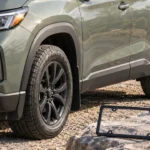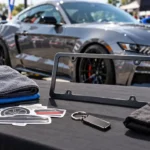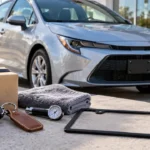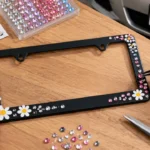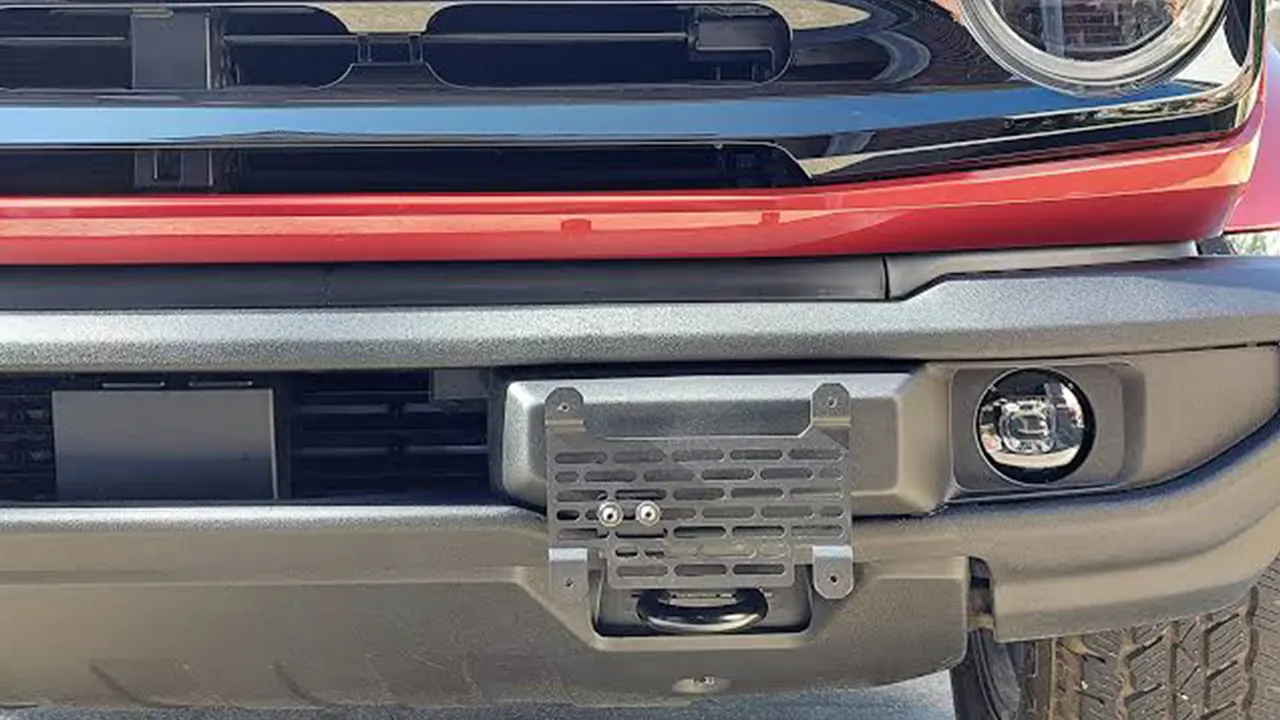
If you want a front plate without drilling into the bumper, the best no-drill license plate bracket is usually the vehicle-specific option that uses an existing factory point or a purpose-designed attachment—not a “universal” mount that merely looks close. Check your exact model year, bumper or grille layout, plate position, and nearby sensors before choosing. A bracket holds the plate; an optional license plate frame sits around the plate’s edge. They are separate parts, and a frame cannot make a poorly fitting bracket secure.
There is no single mount that works best on every car. A tow-hook receiver may be a tidy solution on one vehicle and impossible on another. Adhesive can avoid holes but depends on a compatible surface and careful placement. A grille clamp can be reversible but may load a plastic grille in a way it was never designed to handle. Start with the car, not the product listing.
What “No-Drill” Actually Means
“No-drill” means the installation does not require you to make new holes in the vehicle’s visible bodywork. It does not necessarily mean tool-free, universal, temporary, or damage-proof. Some systems use factory threads and screws; others attach to a tow-eye socket, grille structure, removable trim, or adhesive pad. You may still need basic hand tools, and removing an adhesive mount can still affect a wrap, paint protection film, or finish if the surface or adhesive is unsuitable.
It also helps to separate the names used in listings. A bracket or holder connects a plate to the vehicle. A frame is a border around the plate, usually secured by the same fasteners. A relocator changes where the plate sits. Some products combine two functions, but don’t assume that from the word “frame” in a listing. Look at the installed assembly and the vehicle-side attachment.
For a quick overview of the mounting approaches, Xingchang’s existing front plate no-drill installation options explain the basic methods. This comparison focuses on how to decide which type deserves a closer look for your own car.
Start With Your Vehicle’s Existing Mounting Points
Before shopping, look at the front bumper and the owner’s manual. Many vehicles have hidden threaded inserts, molded dimples, a removable blanking cap, or a factory bracket location even when no bracket is installed. If the automaker provides a mounting position, a compatible OEM or vehicle-specific bracket that uses those existing points is often the least improvised route. It tends to preserve the intended plate position and avoids relying on a surface that was never meant to carry the plate.
Don’t drill into a dimple just because it looks like a guide. Confirm that the vehicle maker intended it for a plate bracket and check what lies behind the bumper cover. A bumper cover is not the same thing as the structural bumper beam. A fastener that is too long, a hole in the wrong location, or a screw driven into an unknown area can damage hidden components or leave an exposed opening.
Also check if the factory plate holder is actually removable. Some cars have a dealer-installed piece that can be replaced; some use integrated trim; others have no front plate provision. A listing that says “fits [make]” may cover only certain years, trims, bumper packages, or regional versions. A facelift can change the grille and sensor placement while the vehicle name stays the same.
Compare the Main No-Drill Mount Types
| Mount type | Often worth considering when | What to verify |
|---|---|---|
| Factory-point bracket | Your vehicle has factory holes, inserts, or an OEM plate location | Model year, trim, bracket pattern, screw type, and plate position |
| Tow-hook mount | The bumper has a threaded recovery socket designed for an accessory | Socket thread, orientation, clearance, plate angle, sensor and tow-access needs |
| Vehicle-specific grille mount | A tested bracket is shaped for your grille and attachment points | Exact grille generation, shutter movement, airflow, radar/camera clearance |
| Clamp-on grille mount | The grille has a suitable structural member the clamp is designed to grip | Contact area, clamp pressure, vibration, edge protection, and movement |
| Adhesive mount | The maker approves the adhesive for that surface and location | Paint or wrap compatibility, temperature, cleaning, cure time, and removal |
| License plate relocation kit | The original location conflicts with a special bumper or styling need | New location legality, plate angle, wiring/sensor clearance, and added leverage |
Think of this table as a shortlist, not a ranking. The right choice depends on the attachment points your vehicle actually has. If a product’s compatibility notes skip the model year or mounting method, treat “universal” as a prompt to ask more questions, not proof of fit.
Factory-Point Brackets: Usually the First Place to Look
When the vehicle has a factory mounting provision, a bracket that uses it is often the simplest option to evaluate. The location, fastener direction, and plate height are already defined by the vehicle. It may also avoid blocking the grille and may preserve clearance around cameras or parking sensors better than a bracket placed by eye. Those are advantages of using the intended point, not a guarantee that every accessory will be compatible.
Check whether the bracket is for the same bumper and model year. Compare the outline and mounting holes with the vehicle-side provisions, and verify that the screws engage the specified inserts rather than bottoming out or forcing a thread. The plate should lie flat without being bent into position. If the bracket requires you to pull the bumper skin inward to line up the holes, stop and recheck the part number.
This option may not be fully removable without leaving the factory attachment points exposed, but it generally avoids creating new ones. For a leased vehicle, that distinction matters. Review the lease terms and ask the dealer before installing anything that may leave marks or require replacement trim at return.
Tow-Hook Mounts: Removable, but Not Universal
A tow-hook mount screws into the vehicle’s recovery-point socket, usually behind a small bumper cover. It appeals to drivers who want to avoid the painted bumper and may want to remove the plate for a show or track day. The mount can be offset to one side, which may keep the center of the grille open. But the setup is only sensible if the car is designed with a compatible socket and the bracket’s thread and geometry match.
Check the tow-eye thread specification from the vehicle maker or a reliable vehicle-specific source. Do not infer it from the make alone. Similar models can use different threads, and forcing a mismatched mount can damage the socket. Confirm how the bracket locks in position; a mount that can rotate may leave the plate crooked after vibration or a light bump.
Think through the consequences of using the recovery point. The bracket may need to come off if you need to attach the factory tow eye. Its position may affect parking sensors or the view of a front camera, depending on where the car’s sensors sit. Check whether the plate sticks out far enough to meet a curb, parking stop, or steep driveway before the bumper does. The bracket’s arm adds leverage, so a small impact can transmit force to the socket or plate.
Because the plate sits off center, the result may look different from the original equipment location. That’s a style choice, but placement still has to satisfy the rules where the vehicle is registered and driven. Don’t rely on an online photo of another model as proof that the same position is acceptable for your car.
Grille Brackets and Clamp-On Mounts
A grille bracket can work well when its shape and attachment method are designed for the exact grille. Some are model-specific; others use a clamp or strap around grille bars. A properly matched bracket can hold the plate without drilling the bumper, but the grille itself is not automatically a strong mounting structure. Plastic slats can flex, crack, or deform if a clamp concentrates force on a narrow area.
Check for active grille shutters behind the openings. They may move as the car manages airflow, and a bracket or plate can interfere with that movement. Also consider cooling airflow to the radiator or other heat exchangers. The plate’s size and placement matter; a bracket that leaves a large part of the grille covered may not be appropriate for that location even if it physically attaches.
Before installing a clamp-on bracket, identify which members are structural enough for the clamp and whether the manufacturer specifies protective pads or a torque limit. Avoid tightening until the grille bends. A plate that appears firm while parked can move under wind load, road vibration, or a car wash. After installation, check that the plate does not rock and that the clamp’s edges do not rub through a coating or cut into plastic.
Be cautious with improvised cable ties, generic hose clamps, or adhesive-backed pads used in place of a proper mount. They may be useful as temporary trail-side fixes in some contexts, but they don’t automatically provide reliable long-term retention on a road vehicle. If the bracket can shift or detach, choose a different attachment method.
Adhesive Brackets: Surface Preparation Is Part of the Fit
Adhesive mounts avoid drilling, but “strong adhesive” is not a complete fit specification. Adhesion depends on the adhesive type, the mounting surface, its temperature and cleanliness, and how much flat contact the bracket gets. A curved bumper may need a bracket shaped to that curve. A textured, waxed, repaired, wrapped, or recently repainted surface may not behave like smooth factory paint.
Use only the surface preparation and installation method specified for that exact mount and vehicle. As one model-specific example, Tesla’s Model Y DIY instructions describe a bumper-shaped front bracket attached with adhesive and emphasize a clean, dry surface and warm conditions; the procedure also treats alignment as important because repositioning may not be possible after adhesion. That is guidance for that vehicle and bracket, not a universal adhesive recipe.
Before sticking anything down, do a dry alignment check. Confirm the plate is centered where intended, the bracket does not cover a camera, and all edges contact the surface. Look at the placement from directly in front and from both sides. If the bracket sits on a body crease or only touches at a few points, the adhesive bond may not match the design assumptions.
Think about removal before installation. Adhesive residue may need a safe removal method, and peeling can affect paint protection film, vinyl wraps, or refinished paint. Ask the vehicle maker or installer about finish compatibility. Don’t use a random solvent on automotive paint without confirming that it is safe for the coating. For a leased car, getting permission before adhering an accessory is a good idea.
How to Check Fit Before You Buy
Fitment should be checked at both ends: the bracket to the vehicle and the plate to the bracket. A product may fit the bumper but have holes that don’t align with the plate. Another may hold the plate but position it too close to a sensor, curve, tow-eye cover, or grille opening. Confirm these items before placing an order:
- Vehicle identity: exact make, model, model year, trim, and bumper or grille version. Include regional differences where relevant.
- Vehicle attachment: factory inserts, tow socket, grille member, adhesive contact area, or another documented mounting feature.
- Plate size and orientation: country, plate type, and whether it is a standard passenger plate, motorcycle plate, or another format.
- Plate fasteners: hole count, center spacing, slot range, screw thread, length, washers, and clearance behind the bracket.
- Sensor zone: front camera, parking sensor, radar, radar-transparent areas, active shutters, lights, and airflow paths.
- Clearance: ground clearance, parking stops, steep ramps, tow-eye access, and whether the plate can contact a curb.
- Rules: required front-plate placement, visible information, angle, height, and any restrictions on accessories in the location.
If the manufacturer provides a fitment diagram, compare it with the vehicle rather than judging from a product photo. Ask the seller to confirm the exact model-year variant in writing if the listing is ambiguous. Photos can help identify bumper styling, but they do not confirm thread pitch, sensor location, or the material of the attachment point.
For plate-side dimensions, use a verified plate measurement and compare it with the bracket’s mounting area. Our license plate frame size guide helps distinguish common regional plate formats. Remember that plate format and vehicle bracket compatibility are two different checks.
How Position Affects Cameras, Sensors, and Airflow
Modern front bumpers may contain parking sensors, cameras, radar units, or active airflow components. They don’t all work the same way, and their locations can change between model years. A plate can obscure a camera’s view, sit in a sensor’s detection zone, reflect light toward a camera, or block part of a grille. A bracket can also create a new obstruction if it moves the plate away from the stock position.
Don’t treat “sensor compatible” as a universal claim. Look for vehicle-specific information and follow the vehicle maker’s instructions. If the owner’s manual or the bracket manufacturer says not to cover a certain area, take that seriously. After installation, check for dashboard warnings, sensor behavior, camera view, and any change in driver-assistance alerts. If a warning appears or the system behaves differently, remove the accessory and consult the vehicle maker or qualified installer.
Do not run a road test to see whether a questionable bracket might fall off. First inspect all fasteners, contact points, and clearances while parked. If the mount remains loose, shifts by hand, or flexes at the attachment, it is not ready for driving.
How to Evaluate Retention and Durability
A bracket’s material label alone won’t tell you whether it will stay put. Geometry, thickness, fastener engagement, attachment area, and vibration all matter. A lightweight bracket can be stable if it is well supported; a thick bracket can still move if it is attached through a weak clamp or a mismatched thread.
Look for a clear attachment explanation rather than claims such as “heavy duty” or “race proven.” Ask what vehicle point the mount uses, whether it is meant to be removable, what hardware is included, and whether the maker identifies the compatible model years. If the product is vehicle-specific, the listing should say more than just the vehicle make.
Inspect the bracket after installation and again after the first few drives. Look for movement, loosening, cracked grille material, adhesive lifting, rubbing, or contact with nearby trim. Don’t over-tighten to compensate for a poor fit: excessive force can strip threads, crush plastic, or bend the plate. Follow the supplied installation instructions and use specified fasteners.
A front license plate frame may be added around the plate if the bracket and fasteners accommodate it. Check overall stack thickness, screw length, and clearances. A frame should not be used as a spacer to hide a mismatch or shouldered screw problem. It can also reduce the visible opening around the plate, so confirm that required text, stickers, and numbers remain visible. For a frame that suits the plate format, start with the appropriate regional category rather than a generic “universal” listing.
Choosing a Bracket for a Leased or Wrapped Car
If the car is leased, wrapped, or protected with paint film, minimizing permanent changes is understandable. But “removable” is not the same as “risk-free.” Factory-point mounts may be reversible but can leave holes or exposed inserts. Adhesives can lift film or leave residue. Tow-hook mounts can be removed but may leave the tow-eye cover off while in use. Grille clamps can mark a finish or stress plastic if they are not designed for that grille.
Before installing, review your lease requirements, check the vehicle maker’s instructions, and ask the dealer or wrap installer about the chosen mounting method. Save the original hardware and trim pieces. Photograph the front of the car before installation so you can compare condition later. If the installation is not clearly approved, a dealer-installed factory bracket or a compliant alternative may be the lower-risk choice.
When a “Universal” No-Drill Bracket Is a Bad Bet
Universal can mean that a bracket has slots or adjustable arms. It does not mean the product has been validated for every fascia, grille, bumper sensor, tow hook, or plate size. Be skeptical if the seller does not state how the bracket attaches or if the same photo is used for several unrelated vehicles without fitment notes.
A mount is a poor choice when it depends on bending the plate to meet the bracket, uses a screw that bottoms out before clamping, blocks a sensor, covers an air opening, or presses hard against a fragile grille. It is also a poor choice when you cannot identify what the clamp grips or what surface the adhesive is approved for. In each case, the lower price or quick installation is not worth an uncertain attachment.
If the vehicle has no suitable no-drill point, that may be the answer. Check whether the jurisdiction requires a front plate, whether an approved alternate position is allowed, and whether a factory accessory exists. If drilling is the only supported installation, have it done according to vehicle-specific instructions rather than improvising a hidden location.
Quick Decision Guide
- If factory mounting points exist, start with a bracket designed to use them.
- If your vehicle has a front tow-eye socket and you want a removable mount, verify the thread, angle, clearance, and sensor position before choosing a tow-hook bracket.
- If the grille is the intended mounting area, choose a model-specific design or a clamp explicitly designed for that grille structure.
- If you are considering adhesive, confirm surface compatibility, fit the curve, temperature, alignment, and removal method.
- If a listing is vague about fit, holes, or sensor clearance, keep looking or ask for confirmation.
The most useful “best” pick is not the one with the most universal claims. It is the one that matches the vehicle’s designed attachment point, holds the plate without distorting it, clears sensors and moving parts, and can be installed and removed without guesswork.
Frequently Asked Questions
What is the best no-drill license plate bracket?
It depends on the vehicle. A factory-point bracket is a strong place to start if the car provides mounting points. A tow-hook, grille, or adhesive mount can work when it is specifically compatible with the vehicle and the attachment surface. Verify exact model year, trim, plate fit, and sensor clearance before buying.
Are no-drill front plate brackets universal?
No single mounting design works on every vehicle. “Universal” products may use adjustable slots, but the bumper, grille, tow socket, plate format, and sensor positions vary. Confirm the vehicle-side attachment and plate-side hole pattern separately.
Can a no-drill license plate bracket damage paint?
It can, depending on its contact points and installation. Adhesives may affect paint protection film or a wrap; clamps can rub; a plate or bracket can vibrate against the bumper. Use only a compatible mount, keep grit out of contact areas, and inspect for movement.
Can I put a license plate frame on a no-drill bracket?
Often, if the bracket and fasteners are designed to accommodate the combined plate-and-frame thickness. Check screw length and plate visibility. A frame is a border around the plate, not the bracket that attaches it to the car.
Will a front bracket interfere with parking sensors?
It might. Sensor and camera placement varies by vehicle, so check vehicle-specific instructions and the bracket’s exact location. If you see a warning or changed sensor behavior after installation, remove the bracket and contact the vehicle maker or installer.
Are adhesive plate brackets safe for all bumpers?
No. Adhesive compatibility depends on the bracket, surface, temperature, preparation, and contact area. Use the procedure provided for the exact mount and do not assume that smooth-looking paint, a wrap, or a repaired panel will bond the same way.
Can I use a tow-hook mount and still tow the car?
The mount may need to be removed to access the recovery socket. Keep the factory tow eye accessible and follow the vehicle maker’s recovery instructions. Never rely on the plate bracket as a recovery point.
What if my car has no no-drill mounting point?
Check the owner’s manual, dealer accessories, and local plate-placement rules. If no approved no-drill solution fits, do not improvise a clamp or adhesive location that could obstruct sensors or detach. A correctly installed factory-style bracket may be safer.