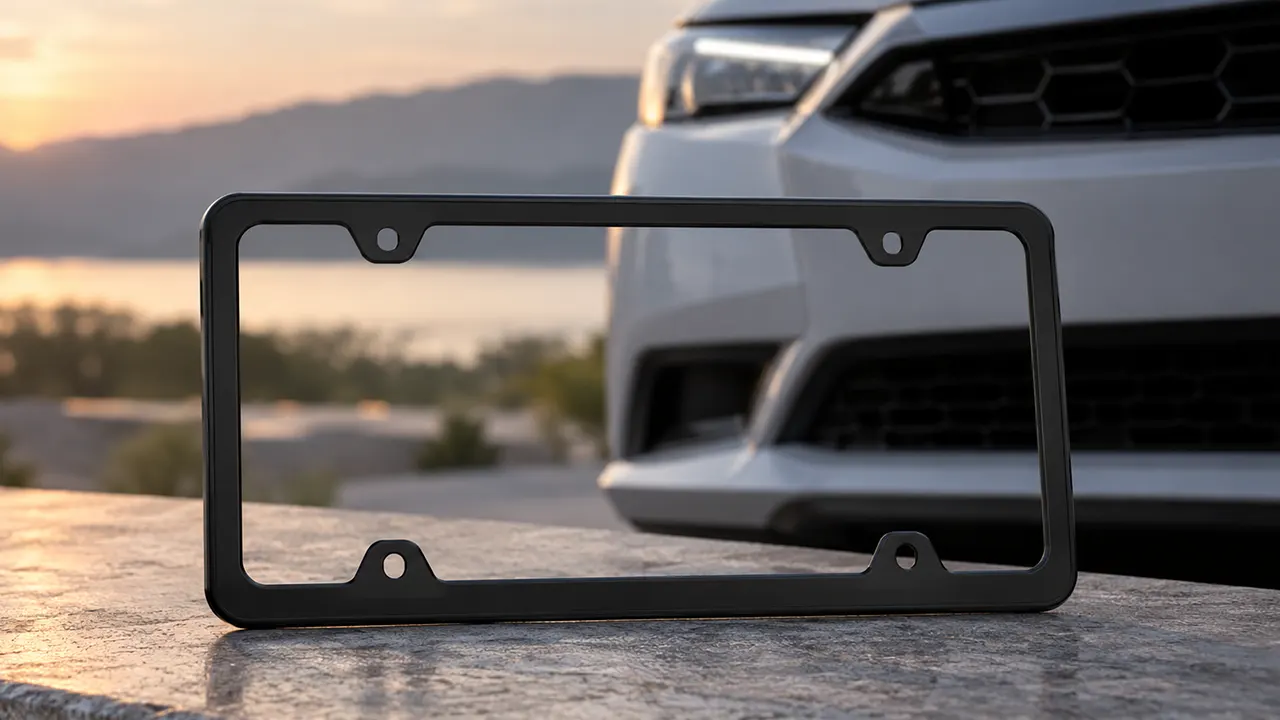
A black license plate frame is easy to pair with many vehicle colors, but not all black frames look or feel the same. The base may be aluminum, stainless steel, ABS plastic or another material; the surface may be matte, gloss, brushed, coated or plated. Fit and mounting matter just as much as color. The best choice is the one that works with your plate format and vehicle, keeps required information visible and has the finish you want.
There is no single best black frame for every driver or market. A low-profile frame may suit a clean appearance, while a wider border can create a stronger outline or offer more room for a logo. Before ordering, compare the frame dimensions, inner opening, hole pattern, edge quality and care guidance. Plate sizes and display requirements vary by region, so check the exact product rather than relying on a universal-fit label.
What Makes a Good Black License Plate Frame?
Start with fit, visibility, material, surface finish and mounting. The frame should sit correctly without bending the plate, and its edge should not cover characters, stickers or other required information. The finish should match your preferred look, but a photo can make matte appear glossy or shift the shade of black. Look at close-up images of the front, back, corners and screw holes.
Think about where the frame will be installed. A rear hatch may have a camera, handle or curved panel close to the plate. A front bracket can sit differently from a rear mounting area. Motorcycle, trailer and international plates may have different proportions or hole locations from passenger-car plates. Confirm compatibility by measurement, not by assuming that a black frame described for a vehicle category fits every model in that category.
Black Aluminum License Plate Frames
Black aluminum frames combine a metal base with a black finish, which may be matte, gloss, anodized or another surface treatment. They are often considered by people who want a crisp metal outline with a dark appearance. Compare the profile, corner shape, edge finish, opening and mounting pattern. Product details should identify the specific finish rather than relying on a broad phrase such as black metal.
Different processes create different shades and surface looks. An anodized finish is not the same thing as powder coating or paint, and the process can affect texture and color. Do not assume every black aluminum frame uses the same process or has the same resistance to fading or scratching. If the exact finish is important, ask for model-specific information and inspect a sample or current photograph.
Check the reverse side and edges. A frame that looks smooth from the front may have a sharp edge or a protrusion that contacts the plate or vehicle. Before installation, confirm that the frame sits flat and that its holes align with the bracket. Do not force it against a curved surface or overtighten screws to pull it into place.
Black Stainless Steel License Plate Frames
Black stainless frames pair a dark appearance with a steel body, but the exact construction, grade and surface treatment vary by product. Check whether the frame uses a coating, plating or another finish, and ask what care instructions apply. Do not infer corrosion performance from the word stainless alone; environment, finish and maintenance all matter.
Compare the visible profile with the plate and vehicle. Some stainless frames have a slim band; others have a more pronounced border or decorative details. Review the edge, corners and mounting holes, because metal frames need to sit cleanly and securely. If a black frame includes a logo or raised lettering, confirm that the additional design does not obstruct the plate or interfere with installation.
Black ABS Plastic License Plate Frames
Black ABS plastic frames can offer a straightforward dark appearance and molded shapes. Plastic frames may be smooth or textured, slim or more substantial, and the details depend on the model. Confirm the actual resin and intended use if those details matter. A generic ABS label does not establish exact flexibility, temperature behavior, UV performance or service life.
Consider the style of the surface. A smooth frame can look simple and clean; a textured face can add visual detail and may hide some everyday dust. Surface texture is not automatically more durable, and a smooth surface is not automatically easier to maintain. Ask which cleaning products are appropriate and avoid using solvents or abrasives without product guidance.
Check that the plastic body has no sharp edges, warping or molding defects near the holes and corners. Tighten fasteners evenly. Excessive force can distort plastic or crack it, while a loose installation can allow movement. If the frame does not match the mounting surface, choose a compatible design instead of bending or forcing it.
Matte Black vs. Gloss Black
Matte black has a subdued appearance and usually reflects less light than a gloss surface. It can coordinate with dark trim, textured accents or a low-key vehicle style. Gloss black reflects more light and can look sleek beside polished trim or shiny paint. It may show fingerprints, dust and fine marks more clearly under some lighting. Satin or semi-gloss finishes sit between those looks.
Finish names can be used differently by different sellers, so compare actual examples. Screens can shift color and sheen, especially under bright studio lighting. If exact matching matters, request a sample or photograph of the specific version. Consider the entire frame, including edges and any logo area, because some products have a different sheen on the front and sides.
Powder-Coated vs. Painted or Anodized Black
A black finish can be created through different processes, and product names are not interchangeable. Powder coating applies a dry coating that is cured; paint is a liquid coating; anodizing changes the surface layer of aluminum through an electrochemical process; plating deposits another material onto a surface. The finished appearance and care requirements depend on the process and the specific product.
Do not assume that one process is always best or that a process name alone proves a performance level. Ask what finish is used on the frame you are considering and whether there is model-specific information about cleaning, outdoor use or testing. If you need a precise shade or texture, look at a current sample. Avoid strong cleaners and abrasive pads unless the maker confirms they are suitable for that finish.
Slimline vs. Standard Black Frames
A slimline black frame shows a narrower border and keeps more of the plate visible. It can suit a minimalist appearance, but offers less room for decorative details or branding. A standard frame creates a more visible outline and may provide a broader band. Compare the actual opening and border width rather than assuming a slim frame is always more compatible or a standard frame is always more supportive.
Check the opening against the plate dimensions, including the location of characters, stickers and other required information. A frame that fits the outside dimensions may still overlap a detail near the edge. Verify local requirements if you are uncertain about allowable coverage. The best fit is one that stays clear of required information and does not interfere with the vehicle.
Two-Hole vs. Four-Hole Black Frames
Hole count describes a mounting arrangement, not a universal vehicle fit. Compare hole spacing with the actual plate, bracket or factory mounting points. Some vehicles use adapters, offset holes or a separate holder. Confirm fastener length and thread as well, especially when a frame adds thickness between the plate and mounting surface.
Do not drill new holes or modify the plate before checking vehicle guidance and local requirements. Use appropriate fasteners and tighten evenly without distorting the frame or plate. If a frame blocks a camera, lamp, sensor or handle, it is not the right profile for that setup even if the screw holes align.
Black Frames With Logos or Custom Text
Black creates a strong background for light-colored text, logos or small accents, but readability depends on contrast, scale and available space. A narrow frame may not support a long URL or detailed emblem. Choose one primary message and review it at actual size. Check spelling, margins and screw positions before approving custom artwork.
Decoration methods can include printing, engraving, raised lettering or molded details. They do not produce identical appearances, and some suit certain materials better than others. Ask how the design is made on the exact frame and request a proof or sample when color or surface effect matters. Make sure logos are authorized for use and that the final design leaves required plate details visible.
Black Frames for Cars, Trucks and Motorcycles
Passenger cars
For a daily car, compare the frame with the bumper or trunk trim and check clearance around cameras, sensors and plate lights. A slim black frame can blend into dark bodywork; a gloss design can echo polished accents. Make sure the frame does not rest against a curved panel at only a few points or cover a required part of the plate.
Trucks and utility vehicles
Truck plates may sit on a tailgate or bumper with nearby handles, cameras or protective trim. Check space around those features and confirm that the frame is compatible with any existing holder. If the vehicle is used on rough roads, do not assume a black frame is impact-proof. The bracket and fasteners need to support the plate appropriately.
Motorcycles, trailers and other formats
Motorcycle and trailer plates can have different sizes, corner shapes and mounting points from passenger-car plates. Measure the plate and mounting area. A frame advertised for cars may be too wide or have holes in the wrong places. Make sure the border leaves required text, stickers, lights and reflectors unobstructed under the rules where the vehicle is registered.
Black vs. Chrome vs. Carbon-Fiber-Look Frames
A black frame is versatile and can visually recede against dark trim. Chrome-look or polished finishes make a brighter accent and may draw the eye. Carbon-fiber-look patterns add visual texture but do not necessarily mean the frame contains real carbon fiber. Compare the base material separately from the finish. Choose the style that works with the vehicle rather than assuming one finish is more durable or universally attractive.
For a restrained appearance, matte black or a slim profile may work well. For contrast, gloss black or a bright metal finish may stand out more. A carbon-pattern surface can add a sporty look but may require more care if it uses a decorative film or coating. Check the frame’s exact materials, fit and care instructions before choosing by appearance alone.
How to Prevent Fading, Scratches and Corrosion
Care depends on the frame material and finish. Rinse away grit before wiping, then use mild soap, water and a soft cloth unless the manufacturer recommends another method. Avoid aggressive solvents, metal polish or abrasive pads on an unknown coating. If the frame is exposed to road salt, mud or coastal spray, clean and inspect it regularly, including around the screws and behind the plate when practical.
Fading and surface wear depend on the product, exposure and care. Do not assume a black finish is fade-proof or scratch-proof without evidence for that model. Keep a record of product details and follow any warranty or maintenance instructions. If a coating chips or the frame develops rough edges, address it before it marks the plate or bodywork.
To reduce rubbing, keep dirt from collecting between the frame and vehicle, install the frame without twisting it, and avoid overtightening. A flat, compatible fit matters more than adding improvised padding. If the plate moves or rattles, inspect the hardware and bracket rather than assuming the finish or frame material is the cause.
Quick Buying Checklist
- Confirm the frame body material and exact black finish.
- Measure the plate, inner opening, outer dimensions and mounting-hole spacing.
- Check the border against characters, stickers and other required details.
- Inspect front, back, corners, edges and screw access in product images or a sample.
- Verify fit around cameras, lights, sensors, handles or a factory holder.
- Review care instructions and local plate-display rules.
- For custom frames, approve logo placement, color and scale on a proof.
Frequently Asked Questions
What material is best for a black license plate frame?
There is no universal best. Compare the exact frame body, finish, profile, fit and mounting design with how you plan to use it.
Is matte black better than gloss black?
Matte is more subdued, while gloss is more reflective and visually prominent. Choose by appearance and care preference, and check the actual finish because sellers may use terms differently.
Do black frames fade in sunlight?
That depends on the finish, material, exposure and maintenance. Look for model-specific information instead of assuming every black coating has the same resistance.
Are powder-coated black frames better than painted frames?
Not automatically. The processes differ, but product quality and the specific coating matter. Ask what finish the exact model uses and follow its care instructions.
Will a black frame fit any license plate?
No. Plate dimensions, corner shapes and mounting points vary across regions and vehicle types. Compare the frame measurements with your plate and holder.
Can a black frame cover the edge of my plate?
Some frames overlap the plate border, but required characters and identifiers must remain visible. Check local rules and choose a frame with a suitable opening.
Can I put a logo on a black frame?
Many frames can be customized with a logo or short text. Confirm the available space and decoration process, then review a proof at actual size.
How do I clean a black license plate frame?
Rinse off grit and use mild soap, water and a soft cloth unless the manufacturer gives other instructions. Avoid harsh solvents and abrasives on unknown finishes.
Should I choose two-hole or four-hole mounting?
Choose the pattern that matches your plate, bracket or vehicle mounting points. The hole count alone does not guarantee fit.
Does a black frame prevent plate damage?
A frame may border the plate, but it cannot prevent every bend or impact. Proper mounting and a suitable bracket remain important.
Are carbon-fiber-look black frames made from real carbon fiber?
Not necessarily. The pattern may be printed or molded on plastic or metal. Check the exact body material in the product specification.
Choose the Black Finish That Fits Your Setup
The best black license plate frame balances appearance with fit, visibility and the details of its finish. Choose between aluminum, stainless steel or plastic based on the exact frame design, not assumptions about the material category. Compare matte and gloss in realistic lighting, measure the opening and mounting pattern, and confirm that the border leaves required information visible.
See our black license plate frames, aluminum license plate frames and size guide for related options. Finishes and fit vary by model, so check the product details for the specific frame you choose.
Black Frame Care by Finish
Cleaning starts with removing grit. Rinse the frame before wiping so dust and road particles are not dragged across the surface. For most routine cleaning, mild soap, water and a soft cloth are a sensible starting point unless the product instructions say otherwise. Dry the frame after rinsing, especially around screw heads and the plate edge where water or residue can remain.
A matte finish may show polished spots if rubbed aggressively, while a gloss finish can reveal fine marks under direct light. Textured surfaces may need a soft brush to reach shallow grooves. Do not use metal polish, abrasive pads or strong solvents on an unknown black coating. If the finish is plated, painted, coated or printed, its care needs can differ from the base material.
In winter or near the coast, inspect the plate and fasteners for salt and residue. Clean the back of the frame and the mounting area when you can do so safely. If hardware is rusting, determine whether the screws, bracket or vehicle surface need attention. Replacing the frame alone may not resolve corrosion in the mounting point.
How to Compare Product Listings
When shopping online, look beyond the headline and color swatch. Find the exact outer dimensions, inner opening, material, finish, hole spacing and intended plate format. A photo that shows the frame on a vehicle can help with style but may hide how much of the plate it overlaps. A rear view and a measurement drawing are often more useful for fit.
Read the listing carefully for differences between black finish options. Matte black, gloss black, powder-coated black and black anodized describe different appearances or processes. If a specification does not say what the black treatment is, ask before treating it as a product feature. Likewise, if you need a particular material or performance characteristic, request model-specific information rather than relying on general advertising language.
Check return terms when you cannot verify fit in advance. Keep the packaging and avoid modifying the frame before test fitting it. If you are choosing a custom frame, save the approved artwork and finish details with the product information so that a later replacement can match the intended version.
When a Black Frame Is Not the Right Fix
A frame is an appearance and plate-holding accessory; it is not a repair for a bent plate, stripped screw hole, broken bracket or damaged bumper. If the plate does not sit flat, diagnose the mounting issue before adding a frame. A thicker or more decorative design can make poor alignment more noticeable and may increase pressure on the plate.
If the frame blocks a camera, light, sensor, handle or required plate detail, choose another design or installation position where permitted. Do not trim away identifying information or rely on a seller’s general statement that a product is legal in all markets. Check local requirements for plate visibility and mounting, because rules and plate formats differ.