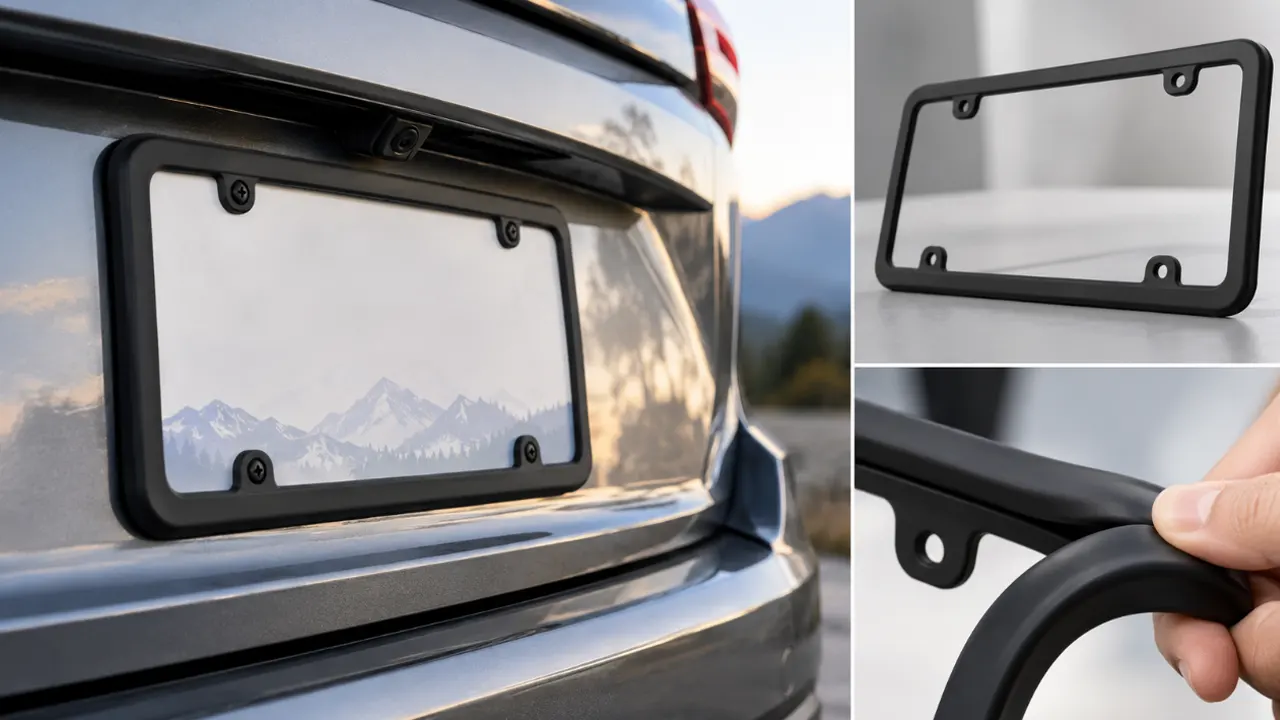
A silicone license plate frame is often chosen for its flexible feel, softer contact around the plate, and distinctive appearance. But the word silicone does not settle the most important questions: how the frame fits, how it mounts, whether water and dirt can drain, and how the material and finish behave on the particular model. The right choice depends on your plate, vehicle, climate and preference, not a single universal performance promise.
Silicone frames differ in their profile, thickness, opening, mounting design and coverage. Some wrap around much of the plate edge; others cover only the perimeter. Some include drainage features or flexible lips, while others are simpler. Product names are not standardized, so compare the actual dimensions and construction rather than assuming every silicone frame works the same way.
What Is a Silicone License Plate Frame?
A silicone license plate frame uses silicone-based material in the frame body or in a substantial flexible portion. Confirm the exact construction for the product you are considering. A soft-touch coating, rubber-like appearance or flexible insert does not by itself prove that the whole frame is silicone. If the material matters, ask what parts are made from it and whether there are rigid supports or other materials in the assembly.
Silicone is valued in many products for its flexibility, but a license plate frame is more than a material sample. Shape, thickness, openings, fastening and surface design all affect how it feels and fits. A flexible edge may sit differently from a rigid metal perimeter, and a thick wrap-style design can take up more space than a slim strip. Look at the frame on the plate or review measurements before buying.
Why Choose a Silicone Frame?
People often consider silicone when they want a softer material around the plate, a less metallic look, or a design that can flex during handling. Some owners like the way a flexible perimeter changes the appearance or reduces hard contact at the plate edge. Those are reasons to consider the style, not a guarantee that the frame prevents every rattle, scratch or vibration issue. Installation, compatibility and mounting hardware still matter.
Silicone can also be available in colors and shapes that are less common in conventional metal frames. Before deciding, check whether the color and surface match your expectations and whether the frame is easy to clean. A bright or textured product may look different after road dust accumulates. Ask whether the maker has care instructions and avoid assuming a soft material is automatically maintenance-free.
Full-Wrap vs. Edge-Wrap Silicone Frames
Full-wrap designs
A full-wrap frame surrounds more of the plate perimeter and may extend over the edges. This can create a substantial border and a more integrated appearance. The tradeoff is that the design may take up more space, add bulk around corners, or cover more of the plate margin. Confirm the inner opening and make sure characters, stickers and other required details remain visible. A full-wrap frame must match the plate dimensions closely enough to sit naturally.
When inspecting a wrap style, check the back and corners. Look for an even profile, smooth transitions and mounting openings that do not distort when the frame is fitted. If the frame has a lip that folds over the edge, make sure it does not pull the plate out of shape. Do not force a frame onto a plate that is too large or has a different corner shape.
Edge-wrap designs
An edge-wrap or partial-wrap design covers less of the plate surface while adding a flexible border. It may suit people who want a less bulky outline, but its actual protection and fit depend on the exact profile. Check whether the frame holds its shape around the corners and whether fasteners can be reached easily. A thinner-looking design is not automatically a better fit; it still needs to align with the plate and bracket.
Compare both styles against your vehicle and plate format. Regional plates can differ in height, width, corners, embossing and mounting location. A design that looks like a universal size may fit only a subset of formats. The safest approach is to compare manufacturer dimensions with the plate itself and confirm that the mounting arrangement will work.
Drainage and Water Management
Water and dirt can collect around a plate, behind a frame or near screws, especially when the vehicle is exposed to rain, road spray or washing. Drainage slots or openings can provide a path for water in some designs, but their usefulness depends on the installation angle, orientation and whether they remain unobstructed. A drainage hole does not make a frame waterproof or eliminate the need to clean behind it.
Check where any openings are located and whether the frame instructions specify an orientation. Do not rotate a design in a way that blocks drainage or puts an opening where water is trapped. Avoid adding sealant or padding that covers a designed path unless the manufacturer recommends it. If you often drive in wet, muddy or coastal conditions, inspect the plate area periodically and rinse away dirt and salt deposits.
Does Silicone Prevent Plate Rattling?
A flexible frame may change how the plate edge contacts a holder, but it is not a guaranteed cure for rattling. Noise can come from loose or incorrect screws, a worn bracket, a plate that does not sit flat, or a poor fit between components. Before replacing a frame, inspect the mounting points and make sure the plate is securely supported. A soft frame cannot compensate for damaged threads or a missing bracket.
If a frame includes a cushioning lip or contact surface, fit it as directed and check that it does not keep the fasteners from tightening correctly. Over-tightening can compress or distort parts. After installation, gently check for movement and recheck the hardware after a short period of driving. If noise remains, identify the source rather than adding extra material that might trap water or loosen the plate.
Silicone vs. Metal and Plastic Frames
| Frame type | What to compare | Questions to ask |
|---|---|---|
| Silicone | Flexibility, profile, thickness, drainage and exact fit | Which parts are silicone, and how should it be installed and cleaned? |
| Aluminum | Shape, edge finish, surface, mounting holes and opening | Does the finish and profile suit the vehicle and plate? |
| Stainless steel | Construction, surface finish, corners and fastener alignment | Are edges smooth and does the specific frame fit the plate? |
| Plastic | Resin disclosure, molding quality, color and wall shape | What plastic is used, and what care guidance applies? |
This is a practical comparison, not a universal ranking. A silicone frame may appeal if you prefer flexibility and a softer-looking perimeter. A metal option may suit a crisp outline or a particular finish. Plastic can offer different shapes and colors. Construction and model design matter more than the category label, so compare the exact products and intended plate format.
Does Silicone Scratch Paint?
A soft material may feel gentler than a hard edge, but no frame can guarantee that paint will never be marked. Dirt trapped between the frame and vehicle, a poor fit, vibration or pressure against a curved surface can contribute to rubbing. Clean the contact area before installation, inspect the back for defects and make sure the frame sits without being pulled or twisted.
If you are concerned about paint contact, follow the vehicle maker guidance and use only compatible pads or spacers. Do not add thick improvised padding that causes the frame to sit loose or blocks drainage. Keep the space clean and check the installation from time to time. Paint condition, panel shape and how the vehicle is used can all affect the result.
Is a Silicone License Plate Frame Waterproof?
Do not treat the word silicone as a complete waterproof rating for the assembled frame. Water may pass around fasteners, seams or gaps, and the way a frame sits can create places where moisture or grime collects. The plate area itself is exposed to outdoor conditions. Look for product-specific care or environmental information if you need to know how a frame is intended to be used.
After heavy rain, a wash or winter driving, check for trapped debris around the frame and screws. Rinse with clean water and dry the area if needed. If you find corrosion on hardware or staining on the plate, address the fasteners and mounting surface rather than assuming the frame material caused it. Avoid sealing edges without instructions because doing so can trap moisture.
Will a Silicone Frame Fade or Change in Hot and Cold Weather?
Color and flexibility over time depend on the formulation, pigments, design, exposure and care. Heat, cold, sunlight and cleaners can affect different products in different ways. Avoid making broad claims about color retention, temperature range or service life unless they are supported by a specific product specification. If conditions are demanding, request evidence for the exact model and follow its care guidance.
Cold can change how some flexible materials feel, while heat and sunlight can affect color or surface appearance. These are reasons to check product information, not grounds for assuming every silicone frame will behave alike. If the frame becomes unusually stiff, sticky, cracked or distorted, stop using it and contact the seller or manufacturer. Do not use a damaged frame that no longer holds the plate securely.
How to Install a Silicone License Plate Frame
Start by checking that the frame is the right size and that the fasteners match the vehicle or holder. Read the instructions for the specific frame, because wrap styles and hole positions differ. Clean the plate and mounting surface so grit is not trapped underneath. If the existing screws are corroded, stripped or too short, replace them with hardware suitable for the vehicle and frame rather than forcing them.
- Remove the plate if the design needs to wrap around its edges or if access is limited. Keep the existing hardware together and note the mounting order.
- Inspect the plate, holder and fastener holes. Stop if the plate is badly bent, the mounting points are damaged or the new frame does not align.
- Fit the frame around the plate as directed. Check the corners and opening; do not stretch or twist the frame to make an incompatible size work.
- Position the assembled plate and frame on the mounting surface. Align all intended holes before inserting screws.
- Tighten fasteners evenly by hand. Avoid overtightening, which can distort the plate or frame and may prevent a flexible edge from sitting correctly.
- Check that the plate is secure, all required information is visible, drainage openings are clear and nearby lights, sensors or cameras are unobstructed.
If the fasteners do not line up, do not immediately drill new holes or cut the frame. Recheck the plate format, holder and vehicle instructions. A different size or mounting style may be needed. After fitting, gently check for movement and inspect the setup again after driving. Local requirements for plate placement, visibility and fasteners can differ, so confirm the rules for your location.
How to Clean a Silicone License Plate Frame
For routine cleaning, rinse away grit and use mild soap, water and a soft cloth. A soft brush can help around textured details or the screw heads, but avoid scratching the plate or dragging dirt across the vehicle paint. Rinse thoroughly and dry the frame and contact area. If the plate is frequently exposed to road salt, mud or coastal spray, clean it more often and check behind the frame when practical.
Avoid aggressive solvents, abrasive pads and strong cleaners unless the maker confirms they are suitable. Silicone, decorative coatings, printed logos and nearby paint can respond differently to chemicals. If a stain does not come off with gentle cleaning, check product guidance before trying a stronger cleaner. Do not use a sharp object to scrape away residue.
How to Choose the Right Silicone Frame
Begin with measurements: plate width and height, corner shape, available opening, hole spacing and the space behind the plate. Confirm whether the frame is designed for your country’s format, a motorcycle plate or another specific use. Compare those measurements with the listed dimensions. A product described as universal still needs to fit the actual plate and mounting arrangement.
Next, consider the profile. A full-wrap design may create a more substantial edge; a partial or edge-wrap design may appear less bulky. Decide whether you want a plain border or a logo, which colors suit the vehicle, and whether the surface is smooth or textured. Check the back for drainage channels, contact points and any protrusions that might interfere with a bracket or panel.
Finally, look for useful information rather than vague superlatives. The product details should explain material, dimensions, mounting pattern, intended plate format and care. If claims about UV exposure, extreme temperatures or vibration matter to your decision, ask whether they are supported for that model. Consider return terms if you cannot verify fit before purchase.
Choosing for Different Driving Conditions
Everyday driving
For ordinary commuting, focus on a clean fit, easy cleaning and an appearance you will still like over time. A simple black or neutral color can blend in; a bright color can add a deliberate accent. Avoid choosing only by softness or style. The plate still needs stable support, and the frame should not block required markings.
Rain, winter roads and coastal areas
Wet and salty conditions can leave grime near the plate and fasteners. Choose a design that can be cleaned and inspected, and check whether drainage paths remain open after installation. Rinse off buildup instead of allowing it to sit behind the frame. Corrosion depends on the hardware, mounting surface and exposure, so inspect those parts too.
Motorcycles, RVs and trailers
These vehicles can use different plate sizes and mounting positions from passenger cars. Some locations are more exposed to spray, vibration or movement. Confirm the frame is sized for the plate and mounting bracket, and check that lights, reflectors and required information remain unobstructed. Do not assume a frame designed for a car transfers to another vehicle category without measurement.
Signs You Should Replace or Refit a Frame
Inspect the frame if it becomes loose, cracked, badly distorted or no longer holds the plate in position. A flexible edge that has pulled away, a mounting hole that has torn, or a frame that continually slips may need replacement. Also check whether the underlying screw or bracket is the actual problem. A new frame will not repair damaged vehicle threads or a bent holder.
If the frame covers information after installation, remove it and choose a different model. Do not trim away required plate characters or improvise a cut that leaves sharp edges. If you cannot confirm that a modification is permitted, check with the relevant registration authority or a qualified installer.
Frequently Asked Questions
Are silicone license plate frames durable?
Durability depends on the exact material formulation, profile, exposure, mounting and care. Check product-specific information rather than assuming every silicone frame has the same service life.
Do silicone frames stop rattling?
They may change how the plate edge contacts a holder, but they do not fix loose screws, worn brackets or damaged mounting points. Diagnose the source of the noise first.
Can a silicone frame scratch my car?
A soft material may reduce hard contact, but trapped grit, a poor fit or movement can still mark paint. Clean contact areas and make sure the frame sits correctly.
Does silicone absorb water?
The frame material and the assembled installation are different questions. Water can still enter around screws or collect behind a frame. Check drainage and clean the plate area periodically.
Will a silicone frame fit any license plate?
No. Plate dimensions, corner shape and hole spacing vary. Compare actual measurements and intended format before ordering.
Can I install it without removing the plate?
Some designs may fit in place, while wrap-around styles may be easier or require installation with the plate removed. Follow the instructions for that model and avoid forcing it.
How do I clean a silicone frame?
Rinse off dirt, wash gently with mild soap and water, then dry the frame and contact areas. Use stronger products only if the maker confirms compatibility.
Is silicone better than plastic or metal?
That depends on the style, fit and needs you care about. Compare the exact frame design, mounting, material details, surface and care guidance rather than treating one category as best for everyone.
Can I use a silicone frame in hot or cold climates?
Check the product’s stated use and evidence for the exact model. Material formulations and designs vary, so avoid assuming universal temperature performance from the word silicone.
Do I need a drainage hole?
Drainage can be useful in some installations, but the frame must be installed in the intended orientation and openings must remain clear. It does not remove the need to inspect and clean behind the plate.
Choose by Fit First
A silicone license plate frame may be a good fit if you like its flexible feel and its dimensions, opening and mounting pattern work with your plate. Compare wrap style, drainage, cleaning needs and appearance, then check the frame after installation. Material labels are a starting point; the particular design determines how it fits and functions.
For additional options, see our silicone license plate frames, plastic license plate frames and license plate frame size guide. Product details and supported formats vary, so confirm measurements for the frame you select.
Quick Fit Check Before Ordering
Before you buy, write down the plate width and height, corner shape, mounting-hole spacing and usable opening you need. Compare each measurement with the product drawing, and confirm whether the listed size describes the plate or the frame. Check the rear of the vehicle for a factory holder, camera, lighting or a curved surface that may affect installation. If anything is unclear, ask the seller for the exact model dimensions rather than relying on a photo or a universal-fit label. This short check can prevent a frame from arriving that is attractive but difficult to install. It also helps you compare silicone with metal or plastic options on practical fit instead of material claims alone.