If a bike rack blocks your license plate, do not assume that the rack itself makes the obstruction acceptable. Check the rack empty, folded, and fully loaded; confirm whether it also covers the plate light, tail lamps, turn signals, or rear camera; and read the current license-plate rule for the state where the vehicle is registered and operated. Depending on the jurisdiction and rack design, the practical answer may be a different rack position, an approved plate-relocation kit, an auxiliary plate system, or another rack style.
The law is not identical across the United States. Washington expressly addresses bicycle racks and cargo in its plate-display statute and allows some obstruction when stated installation and visibility conditions are met. Utah also names bicycle racks among cargo-carrying devices in an exception. Other states can require a clearer view or apply different conditions. That variation is why a universal “bike racks are exempt” answer is unreliable.
Before the next trip: Load the bicycles exactly as you will carry them, stand behind the vehicle and at both rear corners, check the plate and every rear lamp, then confirm the rule for your jurisdiction. A clear plate with an empty rack can become completely hidden after the first bicycle is installed.
First, Find Out What Is Actually Blocked
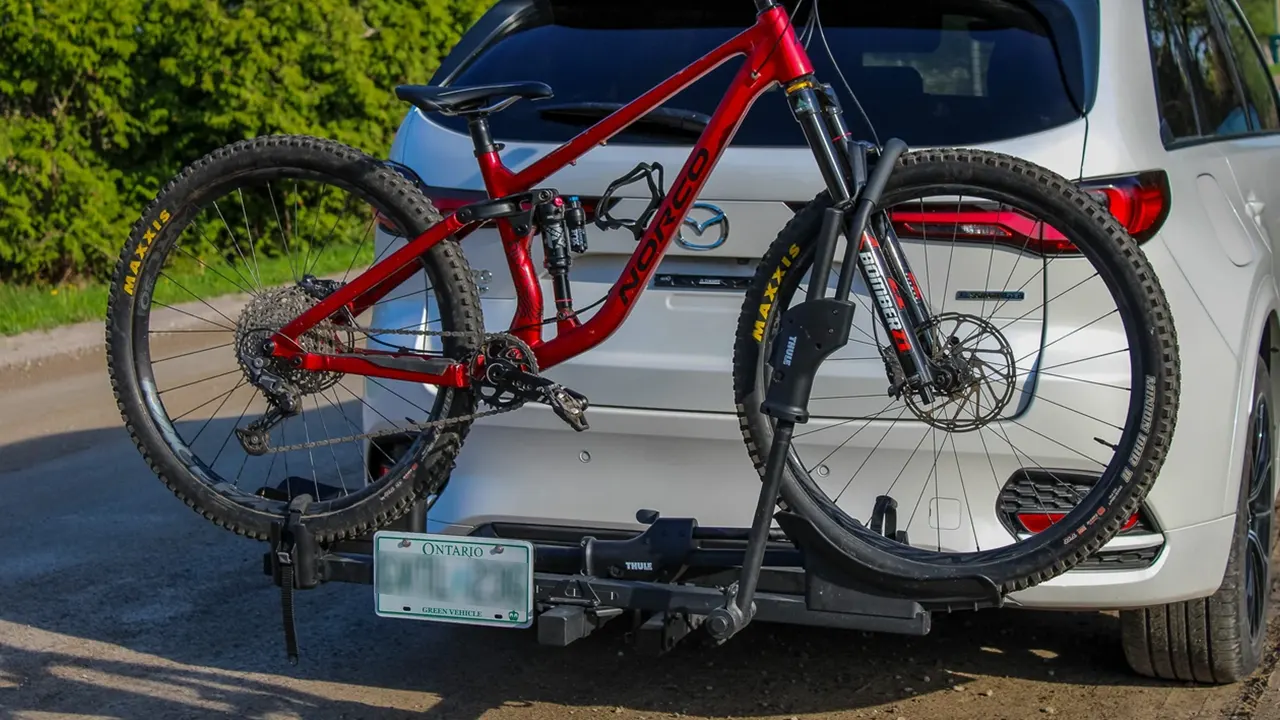
A hitch rack can sit directly in front of the plate. A trunk rack may leave the plate open but place bicycle wheels or frames across it. A platform rack can be clear when carrying bikes yet cover the plate when folded upright. Before changing anything, identify the obstruction in each operating position.
- Plate number: Can every letter and number be read without guessing?
- State name and validation sticker: Does the rack, wheel, strap, or frame cover information your state requires to remain visible?
- Plate light: Is the lamp blocked, moved too far away, or aimed at the rack instead of the plate?
- Tail, brake, and turn lamps: Can drivers behind you see them from both sides?
- Reflectors: Are required rear reflectors hidden by the rack or bicycles?
- Rear camera and sensors: Is the view unsafe or are parking alerts constantly triggered?
Take photographs from directly behind and from both rear quarters at normal standing height. Repeat after sunset with the vehicle lights on. The photographs will not decide legality, but they reveal shadows and obstructions that are easy to miss while standing beside the rack.
Check All Four Rack Conditions
A rack does not have one fixed profile. Test it in the conditions you actually use.
| Condition | What often changes | What to inspect |
|---|---|---|
| Empty and lowered | Trays or mast may cross the plate | Plate number, plate light, camera |
| Empty and folded | Platform may rise directly in front of the plate and lamps | Full rear view, lamp visibility, rack clearance |
| Partially loaded | One wheel or frame may sit over the plate | Bike orientation, straps, loose wheel movement |
| Fully loaded | Several bikes can cover plate and rear lighting | Both rear corners, night visibility, total width |
Do not test only the position shown in a product photograph. Bicycle geometry varies, and a small child’s bike may place a wheel in a different location from a full-size mountain bike. Fat tires, deep rims, fenders, baskets, and frame adapters can also change the sightline.
Why License Plate Visibility Matters
A rear plate is used for more than a traffic stop. It identifies the vehicle in parking facilities, toll systems, gated communities, collision investigations, and roadside emergencies. A hidden plate can also prevent a parking or access camera from matching the vehicle to a valid account.
Visibility rules typically address whether the plate is clearly legible and properly displayed, but the wording, exceptions, and enforcement method differ by state. Some statutes expressly discuss racks. Others use a broad rule against obscuring letters, numbers, stickers, or the issuing jurisdiction. The rack manufacturer’s compatibility chart normally addresses vehicle fit and load capacity, not every state’s plate law.
Do Bike Racks Have a Legal Exception?
Sometimes, but the details matter. Washington’s statute is a useful example. It names bicycle racks among devices that can obstruct a single plate, while also setting installation and parked-visibility conditions. Utah’s statute likewise identifies a bicycle rack installed according to manufacturer specifications or generally accepted practice among the devices covered by its exception.
Those examples do not create a national exception. A driver in another state should not rely on Washington or Utah language, and even within an exception the installation may need to satisfy specific conditions. Read the complete current provision rather than a social-media summary or a single sentence copied from it.
If you regularly travel across state lines, choose a setup that keeps the original plate plainly visible whenever possible. It is simpler than depending on a narrow exception whose wording changes at the border.
Do Not Make a Homemade Duplicate Plate
Printing the registration number on cardboard, acrylic, paper, or a novelty plate may feel like an easy fix, but an unofficial duplicate is not the state-issued plate. It can also create confusion about which display is valid. Do not move, copy, or reproduce the plate unless the issuing authority permits a specific solution.
Some jurisdictions offer an official auxiliary or bike-rack plate; others allow relocation of the actual rear plate with conditions; some expect the plate to remain on the vehicle. Ask the motor-vehicle agency which option applies to your registration. If an aftermarket light board has a plate area, that mounting space does not by itself authorize a copied plate.
Solution 1: Adjust the Rack or Bicycle Position
Start with the least invasive fix. Follow the rack manufacturer’s instructions and stay within its approved adjustment range. A tray position, wheel cradle, frame arm, or bike order may be adjustable without compromising retention.
- Place the bicycle with the largest frame or wheel where it creates the least obstruction.
- Use only manufacturer-approved wheel or frame adapters.
- Secure rotating wheels if the rack instructions call for it.
- Keep straps and loose ends away from the plate, lamps, exhaust, and road.
- Do not raise a bicycle or rack beyond the intended locking position.
Never sacrifice the rack’s structural engagement or bicycle security for a better plate view. If visibility and correct rack use cannot coexist, move to a different solution.
Solution 2: Remove or Lower the Empty Rack When Practical
Some platform racks block more of the plate when folded than when lowered. If the rack can be removed easily and you do not need it between trips, storing it prevents obstruction and reduces unnecessary exposure to weather and minor parking impacts.
Do not drive with the rack in an unlocked or partially deployed position just to reveal the plate. Use only the manufacturer’s defined transport positions. A rack that swings or changes position can become a serious road hazard.
Solution 3: Use an Approved Plate-Relocation System
A relocation system moves the actual issued plate to a visible position on or around the rack. It may include a carrier, light, wiring harness, and attachment hardware. Before buying one, confirm five things:
- Legal authority: Does your state allow the actual plate to be mounted on the rack or relocation carrier?
- Rack compatibility: Is the carrier intended for the exact rack model and transport position?
- Plate fit: Do the carrier, holes, and visible opening match your issued plate?
- Lighting: Does the system provide any required plate illumination without covering the characters?
- Connection: Can the wiring and hardware tolerate tilting, folding, rain, road spray, and repeated removal?
If the plate moves with a swing-away or tilt mechanism, provide enough protected wire length for the full motion without stretching, pinching, or rubbing. Use the connector and fuse arrangement specified by the equipment manufacturer or a qualified installer.
Solution 4: Use an Official Auxiliary Plate Where Available
An official auxiliary plate can remain visible while the original plate stays in its normal position. Availability, naming, fees, allowed uses, and display rules vary widely. Some countries and regions have a formal bike-rack plate program; many U.S. states do not.
Do not confuse an official auxiliary plate with a decorative replica sold online. Verify the issuing agency, the plate number, and the permitted display position before relying on it.
Solution 5: Choose a Different Rack Style
If plate visibility cannot be resolved cleanly, a different rack may be the best long-term answer.
Roof rack
A roof rack usually leaves the rear plate and lamps open. The tradeoffs are lifting height, total vehicle height, wind noise, garage clearance, and possible efficiency loss. It may not suit heavy bicycles or riders who cannot safely lift overhead.
Trunk or hatch rack
A trunk rack can avoid the hitch area, but bikes, straps, and support arms may still cross the plate or lamps. It also needs a vehicle-specific fit check to avoid paint, glass, spoiler, and hatch damage.
Hitch hanging rack
A hanging rack may place bicycle frames higher than a low platform rack, but wheels can still swing across the plate. Frame adapters and anti-sway features must be used as instructed.
Hitch platform rack
A platform rack makes loading and bicycle support convenient, yet its central mast and folded trays commonly occupy the plate area. Look for a rack with a compatible light-and-plate kit or a geometry that preserves the rear view on your vehicle.
Check the Plate Light After Any Change
The original plate lamp is aimed at the original plate location. Relocating the plate several inches outward, downward, or onto the rack can leave it dark even though the bulb still works. Inspect at night from behind the vehicle. The characters should be visible without a bright hotspot that washes out part of the number.
A relocation lamp needs a weather-resistant mounting and protected wiring. Keep the cable away from the exhaust, hitch pinch points, sharp tray edges, and the rack’s folding joint. If the rack disconnects from the car, use a suitable connector rather than repeatedly pulling on fixed wires.
Make Sure the Rack Does Not Hide Rear Lamps
A visible plate does not solve hidden brake lights. Load the rack, switch on the tail lamps, press the brake pedal, and operate both turn signals. Ask another person to observe from directly behind and from each rear quarter. If bicycles block the vehicle lamps, a compatible auxiliary light board or rack-light system may be needed.
Do not attach random lights without checking electrical load, connector pinout, vehicle lighting controls, and legal placement. Modern vehicles can monitor lamp circuits, and an incorrect connection may produce faults or unreliable operation.
What About the Rear Camera and Parking Sensors?
A rack can block the camera, trigger parking sensors, or make cross-traffic alerts less useful. These are driver-assistance limitations, not proof that the rack is unsafe or illegal, but you need to understand them before reversing.
Use the mirrors and a direct visual check. If the vehicle offers a trailer or rack mode that changes sensor behavior, follow the owner’s manual. Do not cover sensors with tape or move them casually; calibration and system behavior can be affected.
Can You Put a License Plate Frame on the Relocated Plate?
A frame can be used only if the jurisdiction allows it, the relocation carrier has room, and the border leaves required information visible. The frame does not solve a blocked-plate problem by itself. In fact, a thick border can reduce the visible area when the rack already crowds the plate.
Measure the carrier and the plate opening. A slim frame is often easier to fit around a relocation lamp or compact bracket, but “slim” is not a standardized clearance. The practical differences between slim and full-border license plate frames can help you compare the opening rather than relying on product names.
Use fasteners long enough for the plate, frame, carrier, washers, and any spacer, but not so long that they hit the rack or protrude dangerously. If the stack sits unevenly, review washer and spacer selection instead of forcing the frame flat.
A Five-Minute Pre-Drive Inspection
- Confirm the rack is locked in its approved transport position.
- Pull firmly on each bicycle at the points specified by the rack manufacturer.
- Check that wheels, pedals, and handlebars cannot swing into the vehicle or plate.
- Read the full plate from behind and from both rear corners.
- Test the plate lamp, tail lamps, brake lamps, and both turn signals.
- Inspect straps, cables, and electrical connectors for road clearance.
- Check the hitch pin, anti-rattle device, and safety mechanism.
- Remember the added vehicle length before backing or parking.
Repeat the inspection at fuel or rest stops on a long trip. Vibration can settle straps and change the angle of a wheel or handlebar.
Common Fixes That Create New Problems
Tilting the plate sharply upward
This may clear a rack bar from one viewpoint while making the plate unreadable from normal road height. Keep the face in a position allowed by local rules.
Hanging the plate with cable ties
Cable ties can loosen, degrade, or let the plate swing. A road plate needs a secure mounting method suited to the carrier and operating environment.
Covering the original plate and showing a printed copy
An unofficial duplicate is not a safe assumption. Use only a plate or auxiliary display authorized by the issuing jurisdiction.
Relocating the plate without lighting
A bright original lamp does not help if it no longer shines on the plate. Treat carrier and lighting as one system.
Moving the plate onto a folding part without checking the cable
The first tilt may pinch the wire or pull the connector apart. Cycle the mechanism slowly while watching every cable path before driving.
If You Have Already Received a Ticket
Read the exact statute or ordinance listed on the notice and follow the response deadline. Photograph the rack in the condition it was used, including loaded and folded positions, but do not alter evidence to recreate a different view. If the jurisdiction allows a correction process, keep receipts and photographs of the compliant change.
A retailer’s statement that a rack is road legal is not a substitute for the cited local requirement. For legal advice about a contested ticket, speak with a qualified professional in that jurisdiction.
Frequently Asked Questions
Is it illegal for a bike rack to block a license plate?
It depends on the jurisdiction and the circumstances. Some states name bicycle racks in an exception with conditions; others apply a broader visibility rule. Check the current law where the vehicle is registered and operated.
Does the rule change when the bike rack is empty?
It can. A folded empty rack may block more of the plate than a loaded rack, and a legal exception may have conditions tied to the installed device or cargo. Inspect and verify every transport position.
Can I move my license plate onto the bike rack?
Only if the issuing jurisdiction permits that display and the carrier satisfies its mounting, visibility, and lighting requirements. A compatible bracket alone does not grant permission.
Can I print a second license plate for the rack?
Do not use a homemade copy. Ask whether your motor-vehicle agency issues an auxiliary bike-rack plate or authorizes another specific display.
What if the rack blocks only the state name?
Some states explicitly require the jurisdiction name to remain visible; others focus on characters and stickers. “The number is visible” is not enough to answer every state’s rule.
Does a clear license plate cover solve the problem?
No. A cover cannot move the plate into view, and covers themselves may be restricted or prohibited. Solve the physical obstruction and follow the local plate-display rule.
Should I use a light board?
A compatible light board can restore rear lighting and provide a plate location, but you still need legal authority for the plate display, correct wiring, a secure mount, and visibility in every rack position.
Can a roof rack avoid the issue?
Usually it leaves the rear plate and lamps unobstructed, but it adds height and lifting considerations. Measure garage and overhead clearance before changing rack type.
The Bottom Line
When a bike rack blocks the license plate, inspect the complete loaded vehicle rather than the rack alone. Confirm plate visibility, state name and sticker clearance, illumination, rear lamps, wiring, and every folded or transport position. Then check the exact rule in the relevant jurisdiction.
Adjust the rack only within its instructions. If the obstruction remains, use a legally authorized relocation or auxiliary-plate solution, or choose a rack that preserves the rear view. A visible, secure setup is easier to live with than relying on a rule that may not apply where the next trip takes you.
Make the final check part of loading, not a one-time installation task. A different bicycle, a shifted wheel cradle, a newly added bag, or a rack folded after unloading can change the view in seconds. If more than one person uses the vehicle, show each driver how the rack locks, how the lighting connection works, and which sightlines must stay open. Keep the rack manual and any official auxiliary-plate approval with the vehicle records so the next setup is based on the same verified information.
Technical Sources
- Washington State Legislature — RCW 46.16A.200, License plates
- Utah State Legislature — Utah Code § 41-1a-404, Plate display provisions
Legal information reviewed September 21, 2026. Plate-display rules and statutory exceptions can change. Confirm the current requirements with the issuing agency and the jurisdictions where you drive.