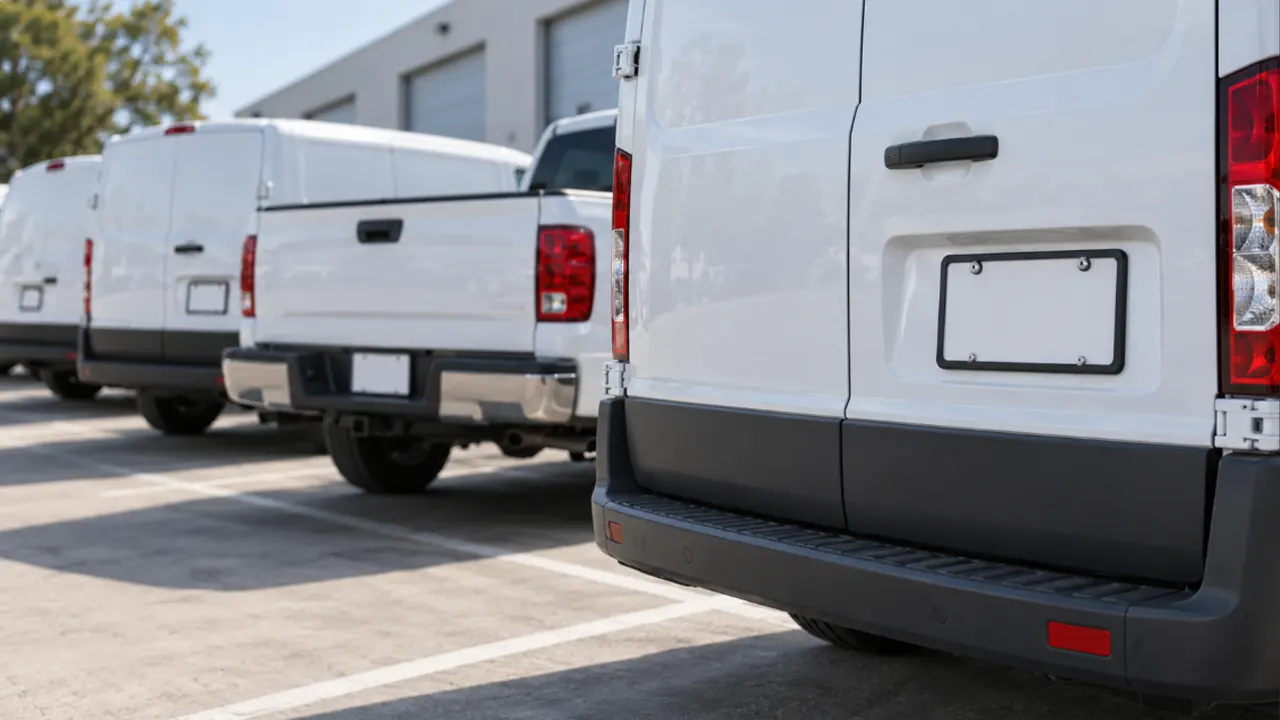
Choose license plate frames for a fleet by standardizing the decision, not necessarily the part. Build a fit matrix for the vehicles and jurisdictions you operate, protect every plate’s readable area, select materials for each service environment, and pilot the installation before placing a full order. A single frame can work across a uniform passenger fleet, but a mixed fleet may need two or three controlled configurations.
The goal is a repeatable installation that stays readable and secure without slowing vehicle delivery or creating avoidable maintenance. Branding can be part of the decision, but it comes after fit, visibility, hardware, and operating conditions.
Start With a Fleet and Plate Inventory
Export a list of active vehicles and group them by body type, model, model year, plate jurisdiction, plate type, and front or rear position. Add the existing mounting setup: factory recess, dealer bracket, fleet upfit, tail-light bracket, or trailer holder.
This inventory often reveals that “one fleet” contains several mounting families. Sedans and vans may accept the same frame; pickups with front brackets may need a different screw stack; trailers require a structural holder and lighting check; specialty vehicles may use smaller plates.
| Fit-matrix field | Why it matters |
| Vehicle and body configuration | Defines recess, curvature, camera, door, and bracket constraints |
| Plate jurisdiction and type | Defines dimensions, printed layout, stickers, and display conditions |
| Mounting hole pattern | Determines frame and fastener alignment |
| Front or rear position | Changes lighting, camera, airflow, and impact exposure |
| Service environment | Drives material, finish, cleaning, and inspection priorities |
| Replacement frequency | Helps set spare stock and service packaging |
Measure representative vehicles instead of relying only on database descriptions. The license plate frame size guide provides a consistent measurement sequence for the team.
Keep Compliance Decisions Local to the Plate and Jurisdiction
Fleet vehicles may cross state lines, but plate-display rules are not identical across the country. Use the registration jurisdiction and operating requirements to define which plate information must remain visible. Do not approve a wide-border design because it looks acceptable on one state’s layout.
Include the serial, state name, registration stickers, county or classification text where applicable, and the plate-light path in the review. A slim visible opening usually creates more tolerance across mixed plate designs. For multi-state fleets, retain the approved opening dimensions and an image or drawing of each plate family in the fit record.
Official fleet registration processes also vary by jurisdiction and vehicle class. Treat the frame as one controlled hardware item within that broader registration workflow—not as proof that a vehicle is compliant.
Decide Where Standardization Helps and Where It Does Not
Standardization lowers part count, simplifies technician instructions, and makes replacements easier. It becomes counterproductive when it forces poor fit or excessive adapters. A useful rule is to standardize within mounting families.
- Configuration A: passenger cars and crossovers with a common plate recess.
- Configuration B: vans and pickups with exposed brackets or different fastener depth.
- Configuration C: trailers and specialty equipment requiring holders, lighting, or smaller plates.
Document exceptions instead of letting installers improvise them. If a vehicle needs a bracket, note the approved bracket and keep it separate from the decorative frame specification. The distinction between a frame and a plate holder becomes operationally important when hundreds of units are involved.
Choose Material and Finish by Duty Cycle
There is no single best material for every fleet. Match the frame to route conditions, wash process, parking environment, desired appearance, and replacement strategy.
| Fleet condition | Useful priorities | Questions to ask |
| Urban sales or service cars | Consistent appearance, slim border, easy cleaning | Will automatic washing or curb contact affect the finish? |
| Delivery vans | Low profile, camera and door clearance, replaceable hardware | Does the frame interfere with rear doors or step equipment? |
| Construction or field vehicles | Impact-aware profile, mud access, firm fastening | Can grit be rinsed from behind the frame? |
| Coastal or winter routes | Corrosion-conscious material system and inspection | How do frame, screws, bracket, and road salt interact? |
| Rental or high-turnover vehicles | Fast, reversible installation and simple spare control | Can technicians change it without damaging inserts? |
Plastic keeps mass and cost low and avoids red rust, but resin, thickness, UV exposure, and screw design influence life. Aluminum is light and can support a clean finish, though it may bend and its surface still needs care. Stainless steel offers a firm metal frame, but grade, finish, fasteners, and contact conditions matter. Review the site’s comparisons of plastic, aluminum, and stainless steel frames before narrowing the sample set.
Design Branding Around Readability
Fleet branding works best when it is short and legible at normal viewing distance. A company name, concise service line, or web address may fit; several lines of small text usually do not. Place branding within a verified top or bottom band that does not cover any plate information across the intended jurisdictions.
Prepare vector artwork, define brand colors, and specify whether the appearance is printed, engraved, molded, or raised. Each method has different space and surface requirements. Do not approve artwork only on a large screen. Review a full-size physical sample on the vehicle.
If the program needs custom branding, use the custom frame design workflow to organize artwork, opening, material, finish, and sample decisions without turning the frame into a crowded advertisement.
Standardize the Hardware and Installer Method
A frame specification is incomplete without the mounting stack. Record approved screws, washers, spacers, nuts or inserts, screw caps, and any retention method for each vehicle family. Include allowable substitutions so a technician does not force an incorrect thread because the preferred screw is out of stock.
Create a short installation instruction with photos of the correct order. It should tell the installer to clean the contact area, support the plate, align the opening, tighten evenly, check the camera and lamp, and record exceptions. Avoid one torque value across unrelated plastic and metal mounts unless the vehicle or component manufacturer supports it.
For vehicles prone to vibration, incorporate the checks from the loose-screw prevention procedure into preventive maintenance rather than relying on installation day alone.
Run a Pilot Before Full-Fleet Rollout
Install production-representative samples on several vehicles from each mounting family. Include older and newer model years, front and rear locations, and at least one vehicle from a demanding route.
During the pilot, check:
- plate information and stickers remain visible;
- holes, slots, screws, and recess depth fit without force;
- backup camera and plate-light performance remain acceptable;
- trunk, liftgate, van doors, hitch equipment, and upfits clear the frame;
- automatic washing and routine cleaning do not loosen or trap the frame;
- technicians can install and remove it with normal service tools;
- branding is readable and consistent at full scale.
After a defined route interval, inspect for loose screws, cracked holes, finish wear, trapped grit, paint contact, and edge movement. Record the result by vehicle family. A pilot is useful only when the observations feed the approved-parts list.
Plan Packaging, Deployment, and Replacement Stock
For a distributed fleet, package each configuration with the correct hardware and a clear part identifier. Label by mounting family rather than asking a branch technician to infer compatibility from appearance. If branding changes by business unit or region, use distinct labels and artwork codes.
Set replacement stock based on vehicle count, route exposure, and observed damage—not a generic percentage. Store frames flat, separate finished surfaces where needed, and keep hardware in traceable kits. The practical principles used to pack metal license plate frames help prevent scratches before installation.
Build the Frame Into Routine Fleet Inspections
Add a quick plate-area check to preventive maintenance or vehicle condition reporting. The driver or technician should flag a loose plate, covered sticker, broken holder, failed light, obscuring dirt, or camera interference. The remedy may be cleaning or a new screw rather than a whole frame.
Track why replacements occur. If one configuration repeatedly cracks at the same hole or blocks a camera on one model year, update the fit matrix. That feedback is more valuable than treating every failure as random driver damage.
Fleet Selection Checklist
- Segment vehicles into real mounting families.
- Map plate jurisdictions, types, and readable areas.
- Measure representative vehicles and document exceptions.
- Choose material and finish by duty cycle.
- Design restrained branding within the verified opening.
- Specify the complete hardware stack and installation method.
- Pilot on several vehicles in each family.
- Label deployment kits and hold evidence-based spare stock.
- Inspect in service and revise the matrix from actual failures.
Frequently Asked Questions
Can one license plate frame fit an entire fleet?
It can fit a uniform fleet when plate layout, recess, holes, fasteners, cameras, and lights are genuinely consistent. Mixed fleets usually benefit from a small controlled set of configurations.
What is the best material for delivery vehicles?
There is no automatic winner. Low weight, door and camera clearance, wash exposure, route conditions, appearance, and replacement method should determine the sample you test.
How much branding should a fleet frame carry?
Use only what remains readable without narrowing the plate opening. A short company name or web address is usually easier to recognize and reproduce than multiple small messages.
Should a fleet order include hardware?
Yes, when verified hardware kits reduce installation variation. Keep vehicle-specific exceptions separate and do not assume one screw thread or length fits every mount.
How should multi-state fleets handle different plate layouts?
Retain jurisdiction-specific visible-opening checks in the fit matrix. Approve the frame only for plate families on which the state name, serial, stickers, and other required marks remain unobstructed.
When should the fleet replace a frame?
Replace it when cracks, sharp edges, distortion, finish failure, loose mounting, or obstruction cannot be corrected safely. If the supporting holder or vehicle insert is damaged, repair that component rather than repeatedly replacing the frame.