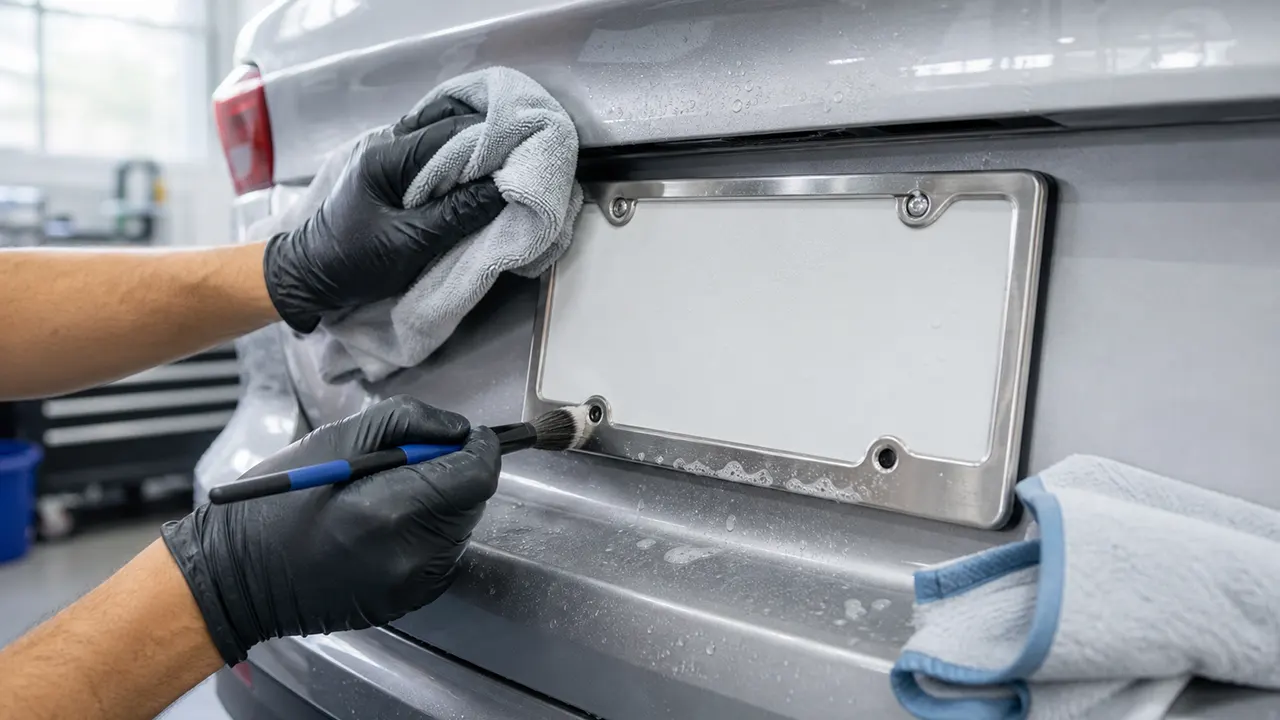
To clean a license plate frame safely, rinse off loose grit, wash it with water and a pH-neutral automotive shampoo, wipe with a clean soft microfiber cloth, rinse again, and dry the edges, screw recesses, and rear face. Avoid abrasive pads, household scouring powder, strong acid or alkaline wheel cleaner, and metal polish unless the frame manufacturer confirms that the exact finish can tolerate it.
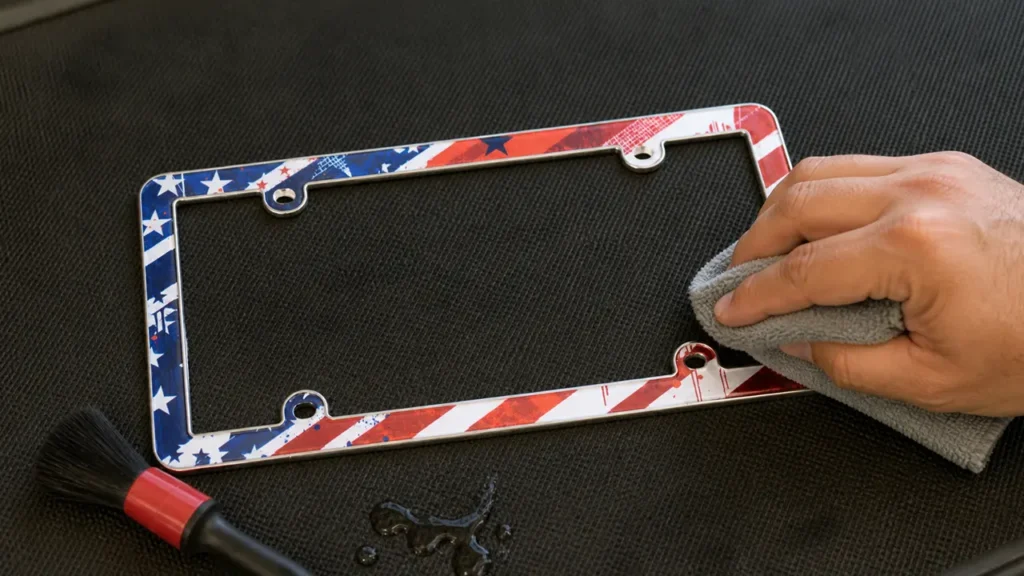
What You Need
- Clean water and a hose or low-pressure spray
- pH-neutral automotive shampoo
- Two or more clean microfiber cloths
- A soft detailing brush for seams and screw recesses
- A hand screwdriver that matches the fastener
- A clean towel to protect the bumper while removing the plate
- Finish-specific cleaner only when the manufacturer approves it
Do not use a pressure washer at close range on peeling film, loose emblems, damaged plating, registration stickers, or exposed composite edges. High pressure can turn a small defect into a lifted coating.
Routine Cleaning Without Removing the Frame
- Let hot surfaces cool and work out of direct sun.
- Rinse the plate and frame thoroughly so sand and road grit leave before you touch the surface.
- Apply diluted pH-neutral automotive shampoo with a clean microfiber cloth or wash mitt.
- Wipe in straight, light passes. Do not scrub a dry polished or gloss surface.
- Use a soft brush around screws, raised lettering, and recesses without forcing bristles under loose coatings.
- Rinse until no detergent remains.
- Dry with a second clean microfiber cloth, then blot water from holes, lower edges, caps, and emblems.
If dirt remains after a gentle wash, identify the finish before choosing a stronger product. Bug remover, tar remover, iron remover, polish, solvent, and wheel cleaner have different chemistries. A product that is safe on bare stainless steel may stain anodized aluminum, soften printed graphics, haze plastic, or attack clear coat.
Deep Cleaning: Remove the Assembly
Remove the frame when dirt is visible behind the plate, water drains slowly, rust staining appears around screws, a silicone channel feels gritty, or the frame has not been cleaned for a long time. Wash the area first so the plate does not grind dry debris into the paint during removal.
- Place a clean towel below the plate and support the assembly with one hand.
- Remove fasteners with the correct hand tool and keep each washer and cap in order.
- Separate the frame, plate, backing pad, and bracket without scraping them across the vehicle.
- Inspect for burrs, cracks, bent edges, loose emblems, coating lift, corrosion, and worn paint.
- Rinse and wash each removable part separately.
- Clean the vehicle recess with products approved for its paint or plastic.
- Dry all channels, edges, holes, hardware, and mounting points completely.
- Replace damaged pads or corroded hardware with verified compatible parts.
- Reinstall evenly by hand and confirm the frame does not move or block plate details.
Cleaning by Material and Finish
| Frame surface | Safe starting method | Avoid unless specifically approved |
|---|---|---|
| Polished stainless steel | Rinse, neutral shampoo, soft microfiber, dry with the grain-free surface protected | Steel wool, abrasive pads, chlorine bleach, random metal polish |
| Brushed stainless steel | Gentle wash; wipe along the brushing direction | Circular scrubbing that changes the grain, chloride-heavy cleaners |
| Anodized aluminum | Neutral shampoo, soft cloth, thorough rinse and dry | Strong acid or alkali, abrasive polish, unapproved degreaser |
| Painted or powder-coated metal | Automotive shampoo and soft microfiber | Solvent, compound, edge picking, aggressive pressure on chips |
| Chrome or decorative plating | Rinse first, mild wash, gentle drying around pits and seams | Abrasive chrome polish on thin or damaged plating, acidic wheel cleaner |
| Rigid plastic | Neutral shampoo, soft cloth, plastic-safe cleaner if needed | Petroleum solvent, harsh bug remover, abrasive pad, excessive heat |
| Silicone | Remove the plate, wash the channel, rinse and dry before reassembly | Sharp tools, strong solvent, stretching one corner excessively |
| Carbon composite or clear-coated carbon | Treat as an automotive clear-coated surface unless specified otherwise | Dry wiping, aggressive compound, solvent at trimmed edges |
| Printed or film decoration | Low-pressure rinse and gentle shampoo | Pressure at the film edge, polish, adhesive remover, hard brush |
How to Remove Water Spots
Start by washing normally and drying. Fresh mineral spots may lift with repeated contact from a damp microfiber cloth. If they remain, use only a water-spot product approved for the exact coating, plating, anodizing, plastic, or clear coat. Test a hidden area first and follow dwell-time instructions.
Do not use household vinegar as a universal solution. Its acidity may be acceptable on some surfaces and harmful to others, especially damaged anodizing, plated layers, printed graphics, and nearby natural stone or sensitive trim. The finish specification should decide the chemistry.
How to Handle Rust Stains and White Corrosion
Red-brown staining often comes from carbon-steel screws, a damaged plate edge, contaminated stainless steel, or another nearby steel component. White powder on aluminum or zinc surfaces indicates a different corrosion process. Cleaning the visible deposit without finding the source gives only a temporary cosmetic result.
Remove the assembly, identify the corroding component, inspect coating damage and trapped-water paths, and replace incompatible or failed hardware. Do not grind or chemically strip the state-issued plate. If the plate itself is damaged or illegible, follow the issuing authority’s replacement process.
Our rust-proof frame guide explains why frame body, finish, screws, plate, and drainage must be considered together.
Cleaning Around Rhinestones, Emblems, and Raised Letters
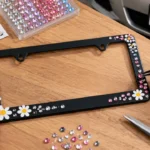
Rinse first, then use a soft brush with light pressure. Work around attachments rather than levering underneath them. Avoid soaking damaged adhesive joints with solvent. Pat dry and inspect for movement. If an emblem, stone, or cap is loose, remove the frame from service until the part is secured; decorative pieces should not detach on the road or enter a car wash.
How Often Should You Clean It?
Clean the visible surface whenever you wash the vehicle. Remove the assembly for a deeper inspection at least seasonally, and more often after winter salt, coastal exposure, mud, frequent automatic washes, or off-road use. Inspect immediately when you hear a rattle, see rust streaks, notice trapped water, or find a lifted edge.
Cleaning frequency should follow exposure rather than a fixed calendar. A garage-kept car in a dry climate and a daily-driven coastal vehicle do not need the same schedule.
Reinstallation Checklist
- The frame and plate are completely dry.
- Drains and low points are open.
- No burr, hard corner, or grit contacts the paint.
- Screws match the vehicle thread and do not bottom out.
- Washers and caps seat flat and do not spin loosely.
- The frame is not bowed by uneven tightening.
- Characters, jurisdiction name, colors, and registration tabs remain visible.
- The assembly clears the camera, lamp, handle, and sensors.
- The plate does not move when pressed at the lower corners.
For removal and reinstallation details, use our license plate frame installation guide. If you are selecting a finish for a commercial program, share the material, coating, target environment, wash chemicals, quantity, and appearance standard through the project inquiry form.
Frequently Asked Questions
Can I use dish soap on a license plate frame?
A pH-neutral automotive shampoo is the safer routine choice because it is designed for vehicle finishes. Dish detergents vary and may remove waxes or leave the surrounding paint unprotected.
Can I polish a metal license plate frame?
Only if you know it is a polishable bare or solid surface and the manufacturer permits the product. Polishing can cut through plating, anodizing, clear coat, printed graphics, or a brushed texture.
How do I clean behind a silicone frame?
Remove the screws, support the plate, slip it out of the channel, wash the silicone and plate separately, rinse the drainage openings, dry everything, and reinstall without twisting the lip over plate information.
Can I put the frame through an automatic car wash?
A secure, intact frame may tolerate normal washing, but loose caps, raised emblems, damaged film, cracked composite, and poorly seated silicone can catch or worsen. Inspect the assembly and follow both vehicle and frame care instructions.
Why does my clean frame still look cloudy?
The cause may be mineral deposits, micro-scratches, coating oxidation, chemical etching, plastic haze, or clear-coat failure. Stronger scrubbing can make irreversible damage worse; identify the finish and defect first.