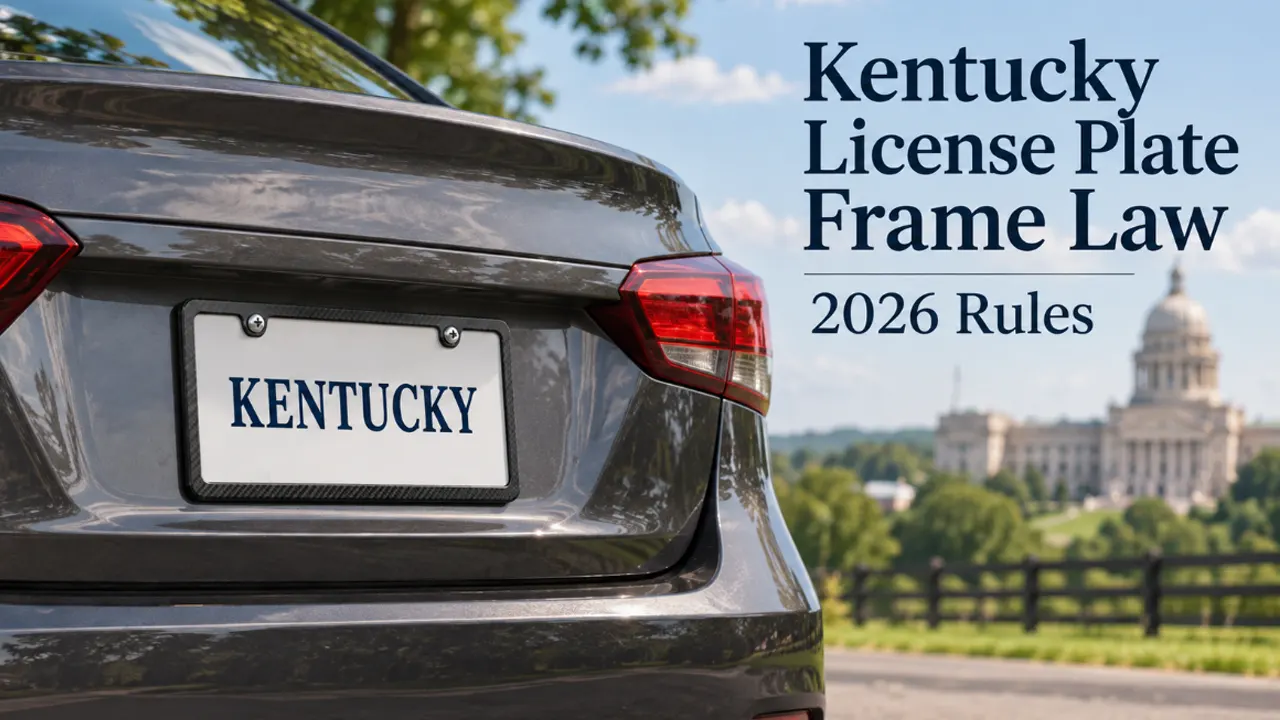
Kentucky does not ban every license plate frame. Its rule is direct: no rim, frame, or other covering around the plate may obscure or cover any lettering or decal on the plate. If a border crosses even part of official text or a registration decal, it is the wrong fit.
The current KRS 186.170 version took effect July 15, 2026. It also requires the plate to be conspicuously displayed, kept legible, and illuminated at the rear during the hours specified by Kentucky’s lighting law.
“Any lettering or decal” is broader than the plate number
A frame may leave all six or seven large registration characters open while hiding a word printed along the top or bottom. Kentucky’s wording does not limit the rule to the main serial. It protects any lettering or decal.
That means you should inspect the state name, slogan, plate-type text, and official registration decal as well as the number. Do not assume a small printed element is optional because it does not identify the vehicle by itself.
Where the fit usually fails
The lower rail is the first place to look. Frames with a dealership name, club slogan, or thick decorative block often use more vertical space there. Top rails can crowd the state name, and wide corner sections can clip a registration decal.
A shifted plate causes a second kind of failure. When the mounting holes have extra play, vibration can move the plate behind a side border. Tighten both fasteners evenly and use appropriate washers if the vehicle’s mounting surface needs support. The goal is a stable plate, not a screw tightened so hard that it bends the frame or plate.
Rear display and nighttime legibility
For most vehicles, Kentucky requires the registration plate to be displayed conspicuously at the rear. A semitrailer-tractor displays its plate at the front. The rear plate must be illuminated during the required lighting hours.
After installing a frame, check the plate lamp. A raised top edge can create a dark band, while a glossy cover can reflect light toward the viewer. The statute’s legibility and illumination duties apply to the finished installation, not just the bare plate.
An official-decal exception is not permission for a novelty sticker
KRS 186.170 contains a narrow provision for a vehicle owner who objects to a private corporation trademark incorporated into a Kentucky plate design. In that situation, official decals may be obtained through the county clerk to cover the trademark.
That is an official process. It does not authorize you to place a personal sticker over lettering, a registration decal, or another portion of the plate.
Does Kentucky set a maximum license plate frame width?
KRS 186.170 does not give a maximum border width in millimeters or inches. Kentucky uses a result-based rule: no part of the rim, frame, or covering may obscure or cover any lettering or decal.
That means the same nominal border width can work on one plate design and overlap another. Measure the clear opening against the actual plate face, then judge the installed frame. A width advertised as slim is useful only if every letter and decal still has visible clearance.
Check the opening before you buy
Mounting-hole compatibility tells you whether the screws line up; it does not tell you how much official information the border will cover. Measure the inner opening and compare it with the clear area your plate needs. The license plate frame opening-size method makes that distinction clear.
If a decorative rail comes too close to plate text, a slim border leaves more usable opening than a full frame. Still inspect the actual product, because “slim” is a style description rather than a legal certification.
FAQ
Are license plate frames legal in Kentucky?
Yes, provided the rim, frame, or covering does not obscure or cover any lettering or decal and the plate remains conspicuous and legible.
Can the frame cover part of Kentucky if the number is clear?
No. The statute protects any lettering, not only the serial characters.
Can the border touch the registration decal?
It should not obscure or cover any part of the decal. Leave visible clearance around it.
Does a clear plate cover count?
Kentucky includes other coverings around the plate in the same obstruction rule. A cover that reduces legibility can also conflict with the general plate requirements.
Does the July 2026 update change the frame rule?
The current statute is effective July 15, 2026 and retains the express rule against covering lettering or decals. Use the current official version when checking future amendments.
There is little room for guesswork in Kentucky: if the frame overlaps lettering or a decal, change it. A narrow, centered border with a clearly lit plate is the straightforward choice.
This information is educational and reflects the current Kentucky statute checked on September 14, 2026. It is not legal advice.