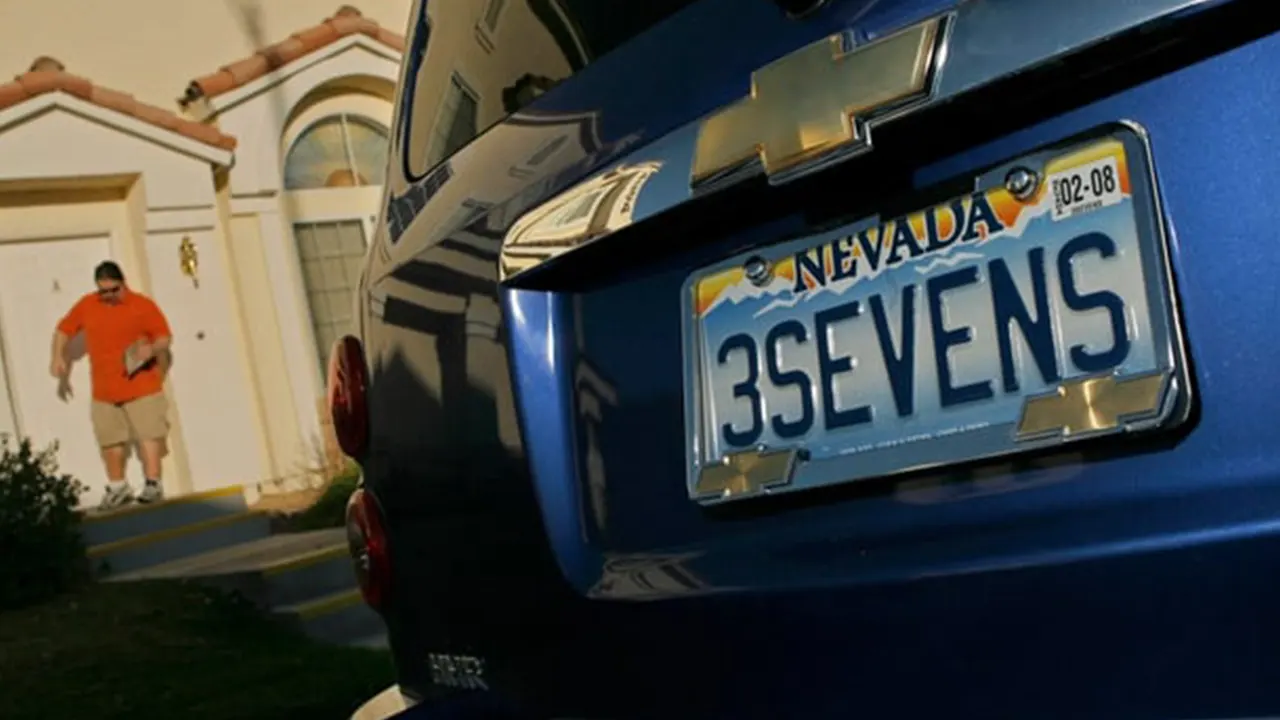
A license plate frame is not automatically illegal in Nevada. The state’s display law requires plates to be securely mounted, visible, and clearly legible, and the Nevada Supreme Court has held that an ordinary frame is not, by itself, “foreign material.” The practical line is whether the registration information required by law remains readily identifiable. That is not a blanket approval to cover plate numbers, registration details, or anything else a driver needs to read.
Are license plate frames legal in Nevada?
Generally, yes. Nevada’s Supreme Court addressed a traffic stop involving a dealer frame that partly covered the word “NEVADA.” In McCord v. State, the court held that a frame does not itself count as foreign material under NRS 482.275(4), and that the plate is clearly legible when its required identifying information remains readily identifiable. The court also explained that a frame covering optional wording, such as a plate slogan, is different from hiding information needed to identify the vehicle.
That case is useful, but it is not a product certification or a guarantee against a stop or citation in every circumstance. Keep the assigned registration number and required registration details easy to identify. If a frame, screw cap, or other hardware crosses a character, decal, or required mark, change the installation rather than relying on a close legal reading.
What information should remain visible?
Nevada law requires a plate to show the assigned registration number, the state name, and the applicable year or expiration information. The state’s case law focuses on whether required information remains readily identifiable, not whether every decorative phrase is completely unobstructed. Still, leaving all official printing visible is the simpler and safer design choice—especially because plate artwork and decal placement can differ.
Nevada DMV guidance places the registration decal in the upper-right corner of the rear plate. Check the plate actually installed on the vehicle: a frame may clear one design but intrude on the decal or other details on a specialty plate.
Does Nevada require front and rear plates?
For most cars and trucks, Nevada requires a plate at both the front and rear. There is a narrow exception when the vehicle was not manufactured with a front-plate bracket or another way to display and secure a front plate. In that case, the rear plate is still required and the second plate may be displayed at the owner’s option. Motorcycles, mopeds, and many other registered vehicles use a rear plate under the statute.
So a frame does not determine whether a front plate is required. Check the vehicle’s original equipment and the applicable exception. If a front plate is required, attach it to a suitable bracket rather than leaving it loose in the windshield.
How should the plate and frame be mounted?
Nevada requires a plate to be securely fastened so it does not swing, positioned at least 12 inches above the ground measured from the plate’s bottom edge, placed where it is clearly visible, and kept clean enough to remain legible. The state also prohibits displaying a plate loosely in a window or by another unsecured method.
Before tightening a frame, center it over the plate and check the full plate face from directly behind and from normal side angles. Confirm that the fasteners do not overlap the registration number or decal, and that the frame does not block the plate light. Tighten the screws evenly; overtightening can distort a thin plate or frame and make the edge sit unevenly.
Choosing a frame that leaves room for Nevada plate details
A narrow, open-border frame is a sensible starting point because it leaves more of the plate face exposed, but the name “slim” does not prove a particular frame clears every Nevada plate. Compare the frame opening and border width with the exact plate artwork and decal position. If you are checking fit as well as visibility, the site’s license plate frame size guide explains which opening and mounting measurements to compare.
For a frame style intended for U.S. plates, review the available U.S. license plate frame designs against the plate and vehicle before choosing one. A frame category or product photo cannot establish legal compliance for a specific installation.
Quick Nevada check before driving
- Confirm whether your vehicle needs one plate or front and rear plates.
- Make sure the plate is securely mounted, upright, and at the required height.
- Check that the registration number, state name, and registration information remain readily identifiable.
- Keep the rear registration decal visible and do not let a screw cap or bar cover it.
- Remove dirt or other material that makes the plate harder to read, and confirm the plate light works at night.
Frequently asked questions
Can a Nevada frame cover part of the state name?
The Nevada Supreme Court found that a frame partly covering “NEVADA” did not violate the display law in the case before it because required information remained readily identifiable. That does not mean every partial obstruction is safe. Keep the state name readable and verify the specific plate design.
Are clear license plate covers allowed in Nevada?
Nevada’s statute and DMV guidance focus on secure display, visibility, and legibility. The Supreme Court decision concerns a frame, not every kind of cover. A cover can add glare, haze, or reflections, so do not assume a transparent cover is treated the same way as an open frame.
Can I keep the front plate inside my windshield?
No. Nevada requires plates to be securely fastened to the vehicle; the statute specifically says a plate may not be displayed loosely in a window or by another unsecured method.