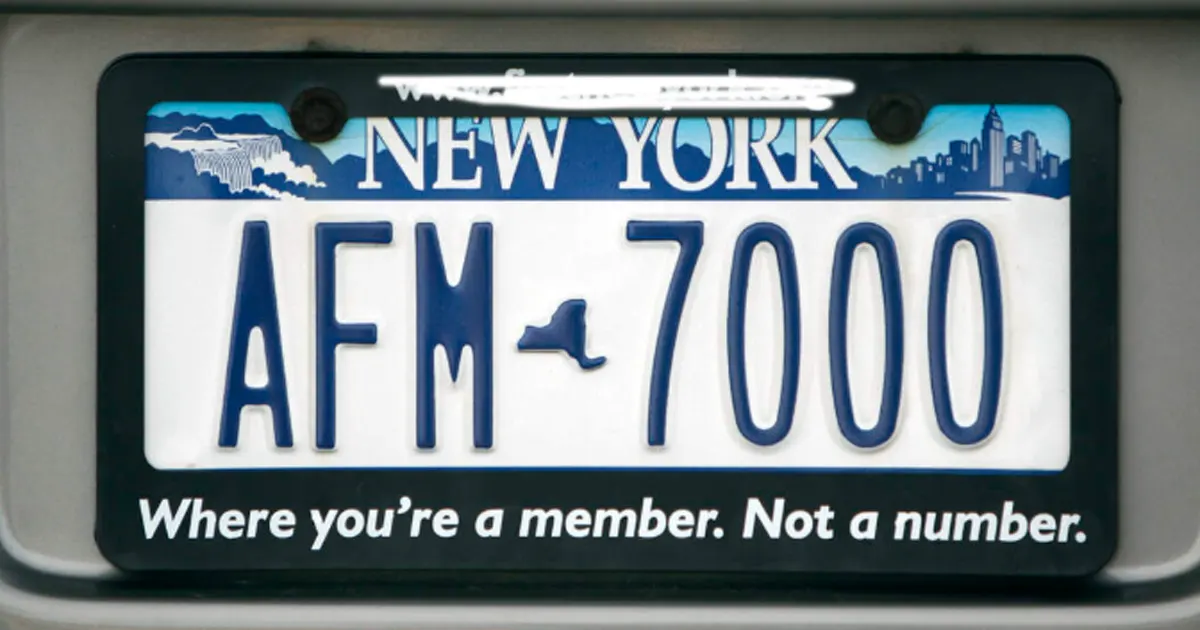
No. South Carolina law expressly allows a decal or frame on a license plate when it does not obscure any letters or numbers. That condition is the key: the frame may surround the plate, but it cannot cover or cut into the plate’s characters.
South Carolina Code §56-3-1240 also prohibits a tinted cover displayed over the plate. A frame and a cover are not treated as the same thing. For a straightforward 2026 setup, use an open-face frame, keep every letter and number fully exposed, mount the plate securely, and check the result on the vehicle.
Short answer: A license plate frame is allowed in South Carolina if it does not obscure any letters or numbers. A tinted plate cover is prohibited.
What South Carolina Code §56-3-1240 Says
The current statute contains both the general mounting rules and a specific frame exception. In practical terms:
- Most motor-vehicle plates must be attached to the outside rear of the vehicle and remain open to view, subject to the statute’s vehicle-specific exceptions.
- The plate must be fastened securely in a horizontal, upright position so it does not swing.
- A motorcycle with a qualifying vertical bracket may mount its plate vertically as the statute describes.
- A tinted cover may not be displayed over the plate.
- A decal or frame is not unlawful if it does not obscure any letters or numbers.
The frame sentence is unusually direct. You do not have to infer that every frame is banned just because the law controls objects placed around a plate. The statute gives frames a conditional allowance and then tells you exactly what defeats it: obscuring letters or numbers.
What “Does Not Obscure” Means for Your Frame
The safest reading is simple: no part of a letter or number should disappear behind the inner edge, decoration, screw cap, vehicle trim, or other attachment. Do not rely on being able to guess a partly covered character. If a top rail clips the upper curve of a number or a lower rail cuts through a letter, choose a slimmer frame.
Check the physical installation. A product photo or flat drawing cannot show whether the frame shifts on your mounting slots, bows after tightening, or sits behind a recessed bumper lip. The license plate frame opening is more relevant than the outside size because it determines how much of the actual plate remains visible.
Frame vs Cover: The Difference Matters
| Accessory | How it sits | South Carolina issue |
|---|---|---|
| Open license plate frame | Surrounds the outer edge | Allowed if it does not obscure letters or numbers |
| Tinted cover | Places tinted material over the plate face | Specifically prohibited by §56-3-1240(D) |
| Clear cover | Places transparent material over the plate face | Not the same as the statute’s frame allowance; glare, dirt, scratches, or distortion can still create visibility concerns |
| Decorative badge or monogram | Projects above or onto the plate area | Can conflict with the statute and must not cover characters |
A clear cover should not be assumed legal merely because the text specifically names tinted covers. Other language in the section restricts what may be displayed above or upon the plate, and a weathered clear cover can still make the plate harder to read. An open frame avoids that extra layer over the reflective plate surface.
Five Frame Designs and Their Risk
Slim Four-Sided Frame
This is usually the easiest design to keep clear of characters. It still needs an installed check, especially on specialty plates with different character placement. A comparison of slim and full frame borders can help when the plate has little edge clearance.
Wide Top or Bottom Rail
A wide rail offers more room for text, but it also reaches farther into the plate. If any character touches or disappears under the rail, the frame does not meet the statute’s condition. Shift the artwork to a narrower rail instead of sacrificing plate visibility.
Raised-Letter Frame
Raised text can stay legal when it remains on the frame and outside the character field. Look from left, right, above, and camera height because a projecting letter can overlap the plate from an angle even when it looks clear head-on.
Flexible Wraparound Frame
A soft lip can curl inward if the frame is stretched or installed on a plate it does not fit. Confirm the lip sits evenly around the perimeter and does not creep over a letter or number after driving.
Frame With Decorative Corners
Corner graphics may appear far from the registration number on one plate design but not another. Use the real issued plate for approval. Keep decorations within the frame body and away from all official characters.
Other Mounting Rules You Should Not Miss
Keep the Plate Secure and Upright
A compliant opening does not fix a loose installation. The general rule requires the plate to be fastened securely, horizontal, and upright so it does not swing. Replace missing fasteners and use appropriate washers or spacers if the mounting surface is uneven.
Motorcycle Vertical Mounting Has Its Own Conditions
When a motorcycle has a vertically mounted license plate bracket, §56-3-1240 allows a vertical orientation with the top fastened along the right vertical edge. The bottom of the plate must be at least 12 inches from the ground, in a clearly visible position, free from foreign material, and clearly legible. A frame must still leave its letters and numbers clear.
A Trailer Hitch Gets a Specific Allowance
The statute permits a trailer hitch to obscure no more than two inches of the plate. That narrow hitch rule should not be transferred to a frame. The frame provision uses a different standard: it may not obscure any letters or numbers.
A Quick Check Before You Drive
- Clean the plate and frame.
- Center the frame so the opening is even on all sides.
- Tighten the screws evenly without bowing the frame or plate.
- Confirm every letter and number is fully visible from directly behind.
- Check from both side angles and a lower camera-like height.
- Turn on the plate light at night and look for shadows or glare.
- Remove any tinted cover rather than treating it as part of the frame.
If the installation is borderline, removing the frame is the quickest way to eliminate the issue. For interstate travel, remember that another state may use different wording; the general explanation of when license plate frames become illegal gives you a broader checklist.
Frequently Asked Questions
Can a license plate frame cover part of a number in South Carolina?
No. The statute’s frame allowance applies only when the frame does not obscure any letters or numbers. If even part of a character is hidden, use a different frame or remove it.
Are tinted license plate covers legal in South Carolina?
No. Section 56-3-1240(D) specifically includes a tinted cover among the items that may not be displayed above or upon the plate.
Is a clear license plate cover legal?
The statute’s express allowance is for a frame or decal that does not obscure letters or numbers; it is not a blanket approval for clear covers. Because the section also restricts items displayed upon the plate, and a cover can create glare or distortion, an open frame is the more conservative choice.
Can the frame cover “South Carolina” if the plate number is visible?
The frame sentence specifically prohibits obscuring letters or numbers, and the state name is made of letters. Rather than trying to separate decorative and registration text, keep all lettering on the issued plate visible.
Does South Carolina require a front license plate frame?
The frame rule does not require a frame anywhere. Section 56-3-1240 generally addresses display of the issued plate at the outside rear, with stated exceptions for certain vehicle types. A frame is optional.
Bottom Line
South Carolina allows license plate frames in 2026, but only when they leave every letter and number unobscured. Use a secure open-face design, avoid tinted covers, and judge the frame after it is installed on the actual vehicle. If a character is clipped from any normal viewing angle, the frame is too wide.
This is general information, not legal advice. Check the official South Carolina Code for the latest text if your vehicle or plate has an unusual configuration.