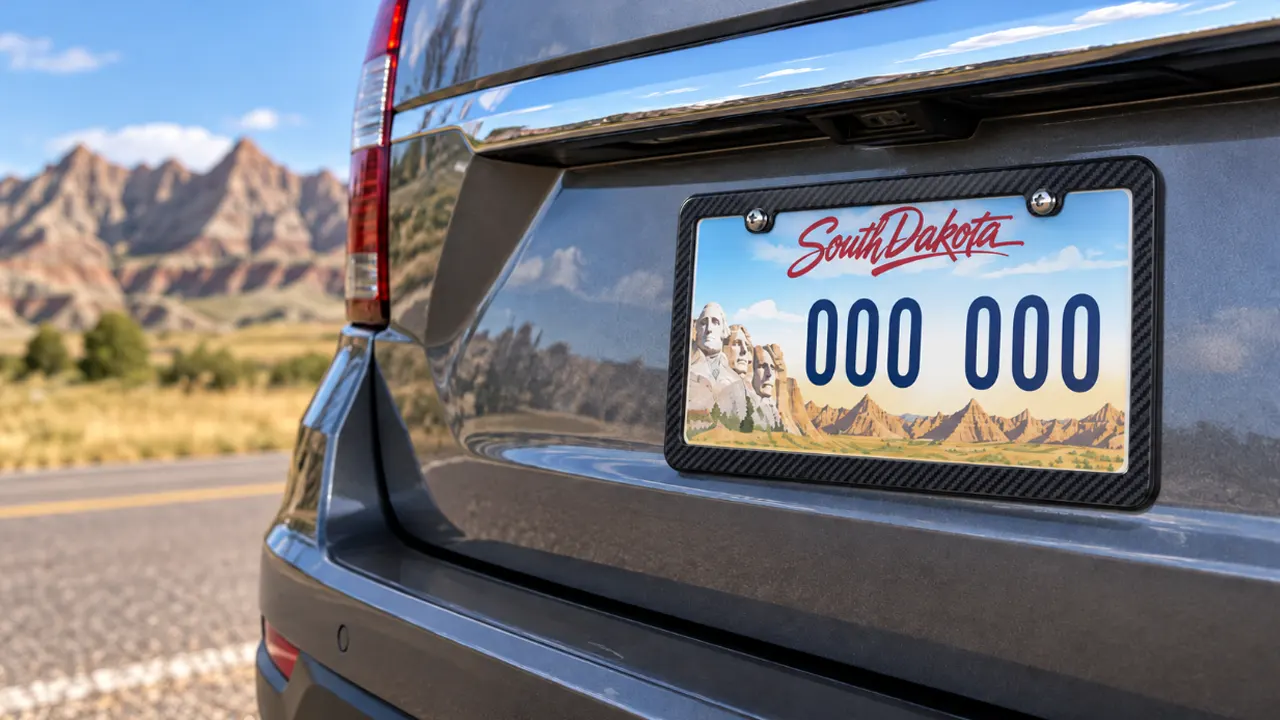
South Dakota’s main display statute, SDCL §32-5-98, does not mention license plate frames by name. It requires plates to be conspicuously displayed, horizontally and upright, securely fastened, and kept clear of mud, ice, or snow as far as reasonably possible so they remain clearly visible. That is not a blanket approval for every frame: the installed plate still needs to be easy to see.
What §32-5-98 requires
For vehicles covered by the statute, §32-5-98 sets requirements for the number and position of plates and says each plate must be securely fastened, horizontally and in an upright position. The section also requires plates to be kept reasonably clear of mud, ice, and snow so they remain clearly visible. Motorcycles are specifically described as needing one plate, mounted visibly and not upside down; other statutory exceptions may apply to particular vehicles.
The law does not use the words “license plate frame” or specify a frame-border width. It also does not give a list of every plate detail that a frame may cover. For that reason, it is more accurate to say that the statute imposes display and visibility requirements than to claim that every frame is automatically legal or illegal.
How to apply the rule to a frame
Choose and install a frame so it does not make the plate harder to see. Keep the assigned number and the rest of the official design clear, and make sure the frame does not tilt the plate, let it swing, or place a bar across the face. A frame that fits physically but hides part of the plate does not meet the practical goal of conspicuous display.
Check the plate after the screws are tightened. A frame can shift as the fasteners seat, and decorative caps can extend into the printed area. Stand behind the vehicle, then move to ordinary viewing angles on each side. If the plate’s characters or design disappear behind a border at one of those angles, reposition or remove the frame.
Keep the plate secure and upright
South Dakota’s wording addresses how the plate is displayed, not just whether you can see it. The plate should sit horizontally and upright, with hardware tight enough to prevent swinging but not so tight that it bends the plate or cracks a plastic frame. If a bumper bracket is loose, tighten or repair that mount rather than trying to clamp the plate harder with the frame.
Use the correct mounting points for the vehicle and frame. Don’t let the plate hang at an angle, use an improvised attachment that can loosen, or put a frame in front of a plate light. A clean, secure installation also makes it easier to keep the plate visible as road grime or winter buildup collects.
Winter visibility still matters
Section 32-5-98 specifically mentions mud, ice, and snow. A frame cannot compensate for a plate covered by slush or packed snow. Clear the plate and its edges when you clean the vehicle, including the lower border where snow can build up. If the frame’s shape traps dirt or ice over the characters, remove it or choose a design that leaves the plate easier to maintain.
A cover over the plate face is different from an open frame. The statute does not discuss every kind of cover in this section, so do not treat the absence of a named cover prohibition as permission to obscure the plate. If the material affects visibility, leave it off.
A quick check before you drive
- The plate is horizontal, upright, and firmly attached.
- The complete number and official plate design remain visible.
- The frame and fasteners do not shift or cover the plate light.
- Mud, ice, and snow are cleared from the plate face and frame edges.
If you are comparing U.S. license plate frame styles, compare the actual opening and fastener layout with your plate and vehicle. Our general frame-visibility overview explains why display rules need to be checked by jurisdiction.
Common questions
Are license plate frames illegal in South Dakota?
SDCL §32-5-98 does not specifically prohibit or approve frames. It requires plates to be conspicuously displayed and securely mounted so they remain clearly visible. A frame that interferes with those conditions is the concern.
Can a frame cover part of a South Dakota plate?
The statute does not give a frame-specific list of protected areas. As a practical matter, keep the entire plate design and assigned number visible so the plate is conspicuously displayed.
Does South Dakota law require the plate to be upright?
Yes. Section 32-5-98 says plates must be displayed horizontally and in an upright position, securely fastened.
Do snow and mud affect the rule?
The statute says plates should be kept clear of mud, ice, or snow as far as reasonably possible so they remain clearly visible. Clear buildup from both the plate and its frame.