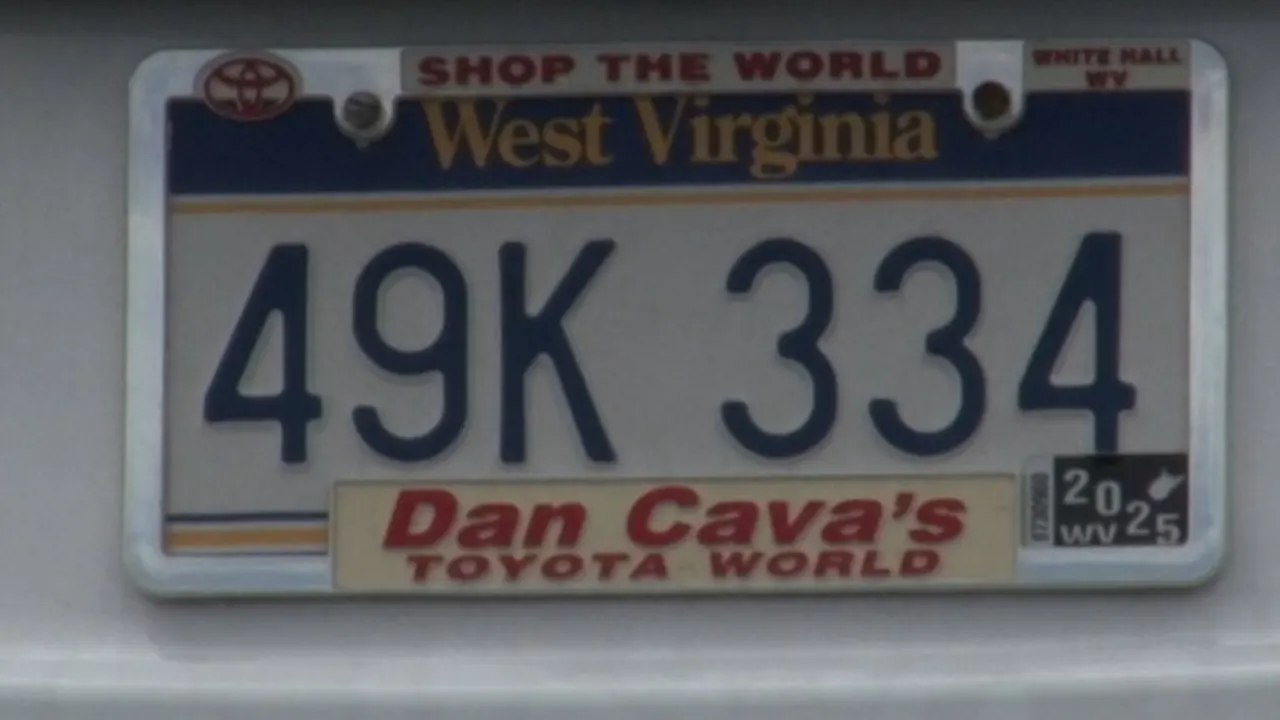
West Virginia generally requires one license plate at the rear of a registered vehicle. It must be securely fastened, horizontal, clearly visible, and legible. A frame is not automatically a problem, but West Virginia’s vehicle-inspection procedure lists a registration-plate frame that obscures identification information as a reason for rejection. Keep the plate’s identifying details clear and make sure the frame does not loosen, tilt, or hide the plate.
Are license plate frames legal in West Virginia?
A frame can be used if it leaves the plate’s identifying information visible and does not interfere with the state’s display requirements. The West Virginia Code requires plate numbers to be plainly readable from 100 feet during daylight, and requires a plate to be clearly visible and clearly legible. The official inspection procedure is more specific for frames: it identifies a frame that obscures information on the plate as a rejection item.
For a practical check, keep the entire plate number visible and avoid covering the state name, registration markings, or any other identifying text. Don’t assume a partial obstruction is acceptable because a person standing close to the car can still guess what the plate says. The relevant question is whether the installed plate remains plainly readable and unobstructed in ordinary use.
Does West Virginia require a front plate?
For most vehicles, the registration plate is attached to the rear. The code makes an exception for truck tractors and road tractors designed to pull trailers or semitrailers; their plate is mounted at the front. This differs from states that require two plates on ordinary passenger cars.
If you drive a vehicle registered in another state, that state’s plate rules still govern its registration. For a West Virginia-registered passenger car, a decorative front frame is not a substitute for a required plate—because the ordinary requirement is a rear plate.
How should a West Virginia plate be mounted?
West Virginia requires the plate to be securely fastened in a horizontal position so it cannot swing. The bottom of the plate must be at least 12 inches above the ground, and it must be placed where it is clearly visible. It also has to be maintained free from foreign materials and in a condition to remain clearly legible.
Attach the frame and plate at the vehicle’s intended mounting points. Tighten the screws evenly, then check that the plate is not bent, angled, or hidden by bumper trim. If the installation uses a bracket, make sure the bracket does not block the rear plate light or let the assembly vibrate loose.
What can cause an inspection problem?
The most direct frame-related issue is covering plate identification information. A thick top or bottom bar, a large logo, or an oversized screw cap can overlap letters, numbers, state markings, or a validation detail. A frame can also create a problem indirectly if it prevents the plate from sitting flat or secure.
West Virginia’s inspection criteria also flag a plate that is not mounted horizontally and a plate light that does not illuminate the plate or is not securely fastened. So check the complete installation, not just the frame edge. A clean plate, visible markings, secure hardware, and working illumination are all part of a sound setup.
How to check a frame on your West Virginia vehicle
Before installation, lay the frame over the plate and look for any overlap with printed information. Mount the plate, then stand several steps back and read the full number without leaning or changing the viewing angle. Check the assembly from both sides, make sure it remains horizontal, and turn on the vehicle lights to confirm the plate is illuminated.
If information is hidden, remove the frame or choose one with a larger clear opening. Avoid trimming a plate or drilling new holes just to force a fit. If your plate is damaged or its characters are already difficult to read, contact the West Virginia DMV about replacement instead of trying to disguise the problem with a frame.
Choosing a frame with enough clear opening
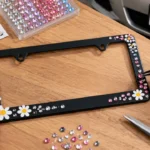
For this type of installation, border width and opening height matter more than the frame’s outside dimensions. Compare the actual plate artwork with the open area, and include screw heads and caps in the check. The license plate frame size guide can help you identify the measurements that affect clearance.
When looking at U.S.-format license plate frames, treat a slim profile as a design description, not proof that it clears every plate or passes inspection. Confirm on your own plate after the frame is mounted.
West Virginia frame checklist
- Mount the plate at the rear for ordinary vehicles; apply the front-mount exception only to the specified tractor types.
- Keep the plate horizontal, secure, visible, and at least 12 inches above the ground.
- Do not let the frame or fasteners obscure plate identification information.
- Check the plate light and confirm the plate remains legible from a normal viewing distance.
- If the plate is damaged or unreadable, ask the DMV about replacement rather than covering the damage.
Frequently asked questions
Can a West Virginia frame cover part of a plate number?
It should not. The number must be plainly readable from 100 feet during daylight, and the inspection procedure identifies frames that obscure plate information as a rejection item.
Does a West Virginia passenger car need two plates?
Generally, no. West Virginia ordinarily places one plate at the rear. The code has a front-mount exception for certain truck tractors and road tractors.
Can I use a decorative or dealership frame?
Yes, if the installed frame does not obscure identifying information and the plate remains secure, horizontal, visible, and legible. The source of the frame does not change the inspection requirement.