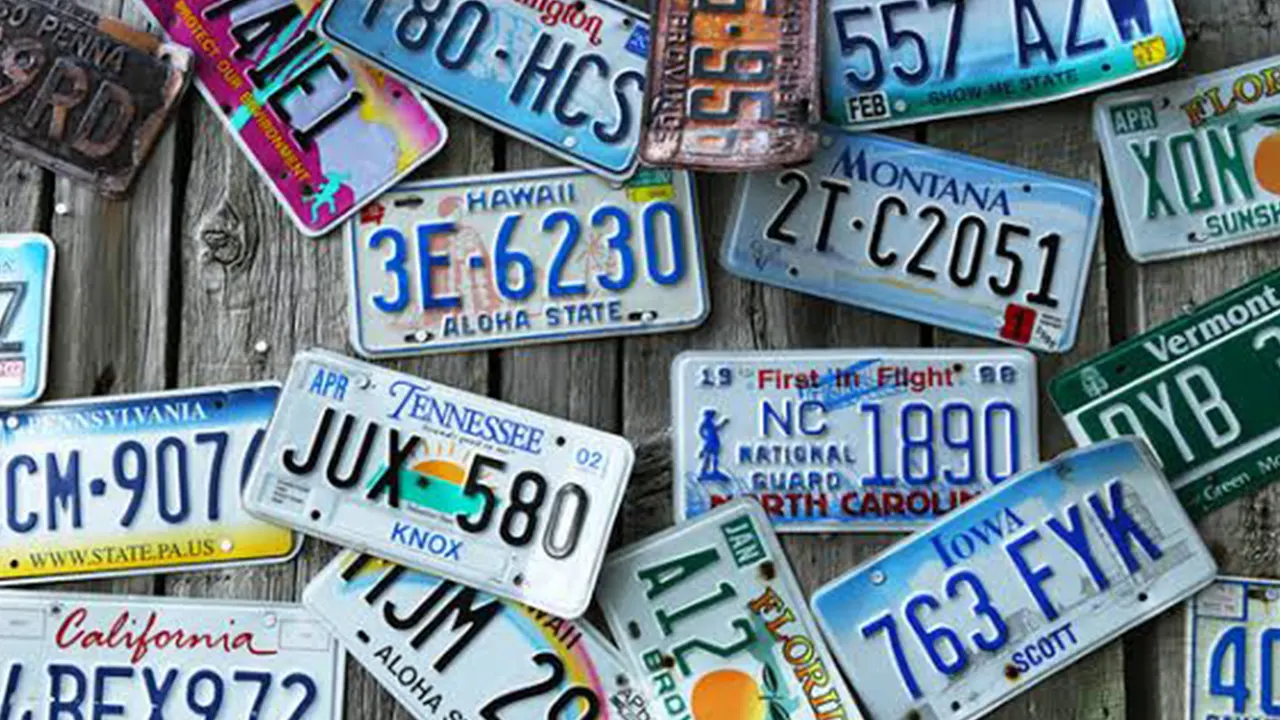
Several states have blue license plate designs, but “blue plate” can describe different things: a solid blue background, a blue-and-white gradient, or a plate that uses blue only in its lettering or artwork. Two clear examples are Delaware, with a familiar gold-on-blue look in certain designs, and Montana, which offers a solid-blue retro design. Neither color alone tells you whether a plate is standard, specialty, historic, or personalized.
Delaware: blue with gold lettering
Delaware is a classic blue-and-gold example. Delaware law specifies gold letters on a blue background for certain vanity plates, with a stated exception for another color arrangement. That wording is a useful reminder that even within one state, plate type can change the design. If you are identifying a plate, read its state name and other markings rather than assuming every Delaware plate follows one exact layout.
Montana: a solid-blue retro design
Montana’s Motor Vehicle Division describes its blue “retro” plate as having a solid blue background, a white outline of the state, and white lettering. It recalls earlier Montana plate styles. Montana also has many specialty designs, so a blue plate is one recognizable option, not a description of every plate registered there.
Why there isn’t one definitive list
State plate programs change, and many states issue dozens of designs. A state may have a blue standard plate, a blue historic plate, a blue veteran plate, or a sponsored design whose background is mostly another color. Some plates also use blue only for characters or a small emblem. That makes lists based only on the word “blue” inconsistent.
When you’re trying to identify a plate, check four things: the state name, whether the blue covers most of the background, any historic or sponsor wording, and the plate’s overall artwork. Those clues are more reliable than a quick glance at a photo, especially under different lighting.
Which kind of blue plate are you looking at?
“Blue license plate” can describe several different designs. On one plate, blue may cover most of the background; on another, it may appear only in the lettering, state name, or a graphic. When people compare examples, they may also group together solid-color plates, two-color layouts, and specialty or retro designs—even though those are not visually identical.
For a useful description, focus on the plate’s dominant background rather than a small blue detail. A blue field with light characters reads differently from a white field with blue lettering, and both differ from a plate with a blue gradient or a blue emblem. In a photograph, glare, shadows, and color correction can make a pale background look much stronger or weaker, so treat a single image as a clue rather than proof.
How to identify a blue plate from a photo
- Read the state name or abbreviation first; do not rely on color alone.
- Look at the background behind most of the characters and note whether it is solid blue, mostly white, or a mixed design.
- Check for clues that it is a specialty, historic, personalized, or other optional plate. The same state can issue more than one design.
- Compare the image with the state motor-vehicle agency’s current plate examples if you need a confident identification. Older plates may remain in use, and a state’s available designs can change.
Delaware and Montana illustrate why the phrase can cover distinct designs: official state materials describe blue-based options, but their colors and plate programs are not interchangeable. This article highlights examples rather than claiming an exhaustive list of every blue plate in the United States.
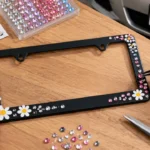
For a frame, the same practical check applies regardless of the plate color: keep the state name, registration stickers, and identifying characters unobstructed. A simple black or metal-finish license plate frame can complement a blue design without making the plate harder to read.
Choosing a frame for a blue plate
A black, silver, or blue license plate frame can work with a blue plate; the best-looking choice depends on the plate’s shade and the vehicle’s paint. A frame is only a border, though. Don’t let its edge cover state lettering, plate characters, a required registration tab, or other information your state requires to remain visible. Check the actual plate layout before choosing a frame, since sticker positions and decorative areas vary.
If you want the plate to stand out, a neutral frame can keep the focus on the blue-and-gold or blue-and-white design. If you prefer a coordinated look, match the frame to one of the plate’s existing colors rather than trying to match an uncertain shade from a screen.
Quick comparison
| State | Blue design example | What to keep in mind |
| Delaware | Gold lettering on blue for certain vanity designs | Delaware law also recognizes a different color arrangement for a specified plate category. |
| Montana | Solid-blue retro plate with white lettering and state outline | It is one option among Montana’s standard and specialty plates. |
FAQ
What state has a blue license plate with gold letters?
Delaware is a recognizable example. State law specifies gold letters on a blue background for certain vanity plates, although the state also has an exception for another plate category.
Does Montana have blue license plates?
Yes. Montana’s MVD describes a solid-blue retro design with white lettering and a white state outline.
Are all blue license plates from the same state?
No. Several states have blue plate designs, and colors can repeat across standard, historic, and specialty plates. Use the state name and design details to identify one.