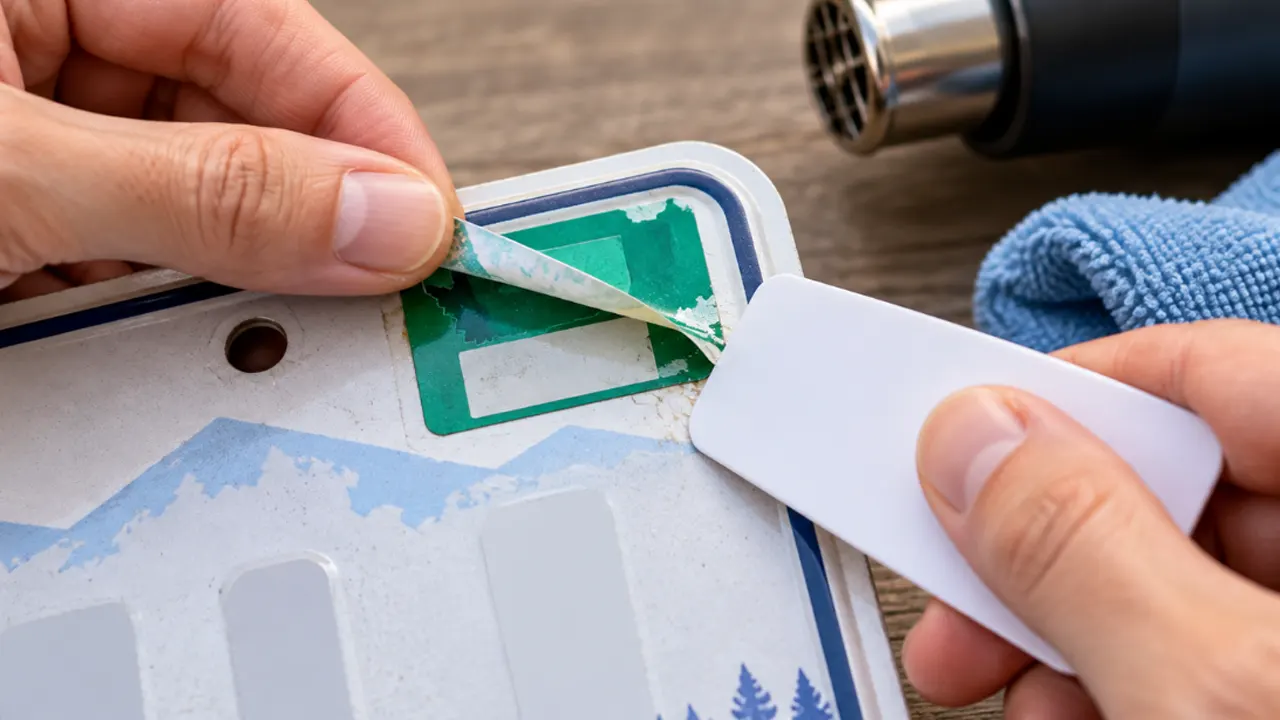
To remove a license plate sticker, first confirm it is no longer required, soften the adhesive with a warm damp cloth, then lift one corner slowly with a plastic card or plastic scraper. Clean any residue with mild soap and water. Avoid metal blades, hard scraping, strong solvents, or concentrated heat, which can scratch the plate or affect its reflective surface.
Before you peel it off, identify the sticker
“License plate sticker” can mean a registration tab issued by a motor-vehicle agency, a temporary permit decal, or a decorative sticker. Those aren’t interchangeable. A current registration tab may be required in your state and may need to stay visible. If the sticker is expired, check the rules of the state that issued the plate before removing it; some places no longer issue plate stickers, while others still use them.
For example, Pennsylvania stopped requiring registration stickers on plates effective December 31, 2016, but PennDOT says owners are not required to remove stickers already on their plates. That is a Pennsylvania rule, not a nationwide instruction. If you’re unsure whether a decal is official or still valid, ask your DMV before touching it.
If the sticker is decorative and sits on the plate itself, take extra care: the plate’s reflective coating and printed or embossed areas can be easier to damage than a car window.
What you’ll need
- A clean microfiber cloth
- Warm water and a little mild soap
- A plastic card or plastic automotive trim scraper
- A second clean cloth for drying
Keep metal razor blades, knives, abrasive pads, and aggressive solvents out of the job. A product that is safe on glass or painted bodywork may not be safe on a plate’s reflective sheeting.
Remove the sticker in a few careful passes
- Clean around it. Rinse or wipe away loose grit so it can’t drag across the plate while you work.
- Soften the adhesive. Hold a warm, damp cloth against the sticker for several minutes. Warm—not boiling—water is enough; you don’t need a heat gun.
- Test a corner. Use a fingernail or the edge of a plastic card to raise one corner. Keep the tool nearly flat against the plate.
- Peel slowly. Pull the sticker back over itself at a low angle. If it resists or begins to tear, stop and re-wet it rather than forcing it.
- Lift remaining bits. Work under small pieces with the plastic edge. Don’t dig at the plate with a sharp point.
- Wash and dry. Use mild soapy water on the area, rinse with clean water, and blot dry with microfiber.
What if adhesive residue remains?
Start with another warm, soapy compress and gentle rubbing with a clean microfiber cloth. If residue still won’t release, don’t assume that a solvent, oil, or household cleaner is plate-safe. Check the plate issuer’s guidance or the cleaner’s label for compatibility with reflective surfaces, and test only if the manufacturer explicitly permits it. If the plate starts to discolor, delaminate, or lose reflectivity, stop.
If the sticker is brittle, layered, or stuck at an edge
Older decals can crack into small pieces instead of lifting as one sheet. Rather than pulling harder, wet the area again with warm, soapy water and give it a little more time to soften. Work on a small section at a time, lifting the sticker gently with a fingernail or a plastic scraper held nearly flat against the plate.
Pay attention to what is lifting. If the sticker comes away but the plate’s reflective layer, printed design, or finish starts to come with it, stop. More heat or scraping may make the damage worse. A plate with peeling reflective material or damaged identifying details may need attention from the issuing agency rather than further cleaning.
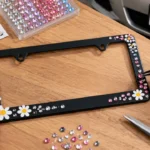
If the sticker is trapped beneath a frame edge, remove the frame only if you can do so safely and without forcing corroded or seized hardware. Support the plate while loosening the fasteners, then clean and dry the exposed area before putting the frame back. A frame can hide residue around the border, but it should not cover required plate information or a registration decal.
If you’re applying a replacement registration sticker
Use the placement instructions from the agency that issued the plate. Sticker location and rules can vary, so don’t assume an old decal’s position is still correct for a replacement. Make sure the surface is clean and fully dry, and avoid placing a new decal over loose sticker fragments, residue, or a frame lip.
If the replacement sticker is torn, damaged, or will not adhere, check with the issuing agency before trying to repair or reposition it. Avoid clear tape, extra adhesive, or a protective cover unless the agency specifically allows it; these can interfere with visibility or with the sticker’s intended security features.
Should you remove the plate or its frame first?
Not always. If the sticker is easy to reach and neither the plate nor frame blocks it, you can usually clean the installed plate carefully. If a license plate frame overlaps the sticker or traps dirt along the edge, removing the frame and plate can give you safer access. Support the plate while loosening shared fasteners, and keep the hardware together so the plate can be secured again.
When you reinstall it, check that the new or remaining registration information is unobstructed. A frame should sit around the plate, not over a required decal, month tab, state name, or identifying character. If the frame is damaged or blocks the sticker area, replace it with a shape that leaves the required information clear.
Common mistakes to avoid
- Peeling a current registration tab without checking. Sticker systems differ by state and can change over time.
- Using a razor or metal pick. A small slip can gouge the surface or reflective layer.
- Heating one spot aggressively. High heat can damage coatings or nearby plastic trim.
- Pouring solvent onto the plate. Adhesive removers vary, and a plate’s finish is not the same as glass.
- Trying to save and reuse a removed official decal. Treat registration decals as issuer-specific and follow the DMV’s replacement instructions instead.
FAQ
Can I use a hair dryer to remove a license plate sticker?
A low setting held at a distance may soften some adhesives, but a warm damp cloth is gentler and easier to control. Avoid a heat gun or prolonged heat in one spot.
Can I use a razor blade on a metal license plate?
It’s not a good first choice. A razor can scratch the plate’s reflective layer or printed finish. Use a plastic edge and light pressure instead.
Do I have to remove an expired registration sticker?
Not everywhere. The rule depends on the plate-issuing state. Pennsylvania, for example, says removal of old registration stickers is not required; check your own DMV’s current instructions.
Can a license plate frame cover the sticker?
It can, if the frame’s border overlaps the sticker area. Position or choose the frame so required tabs and plate information remain visible.