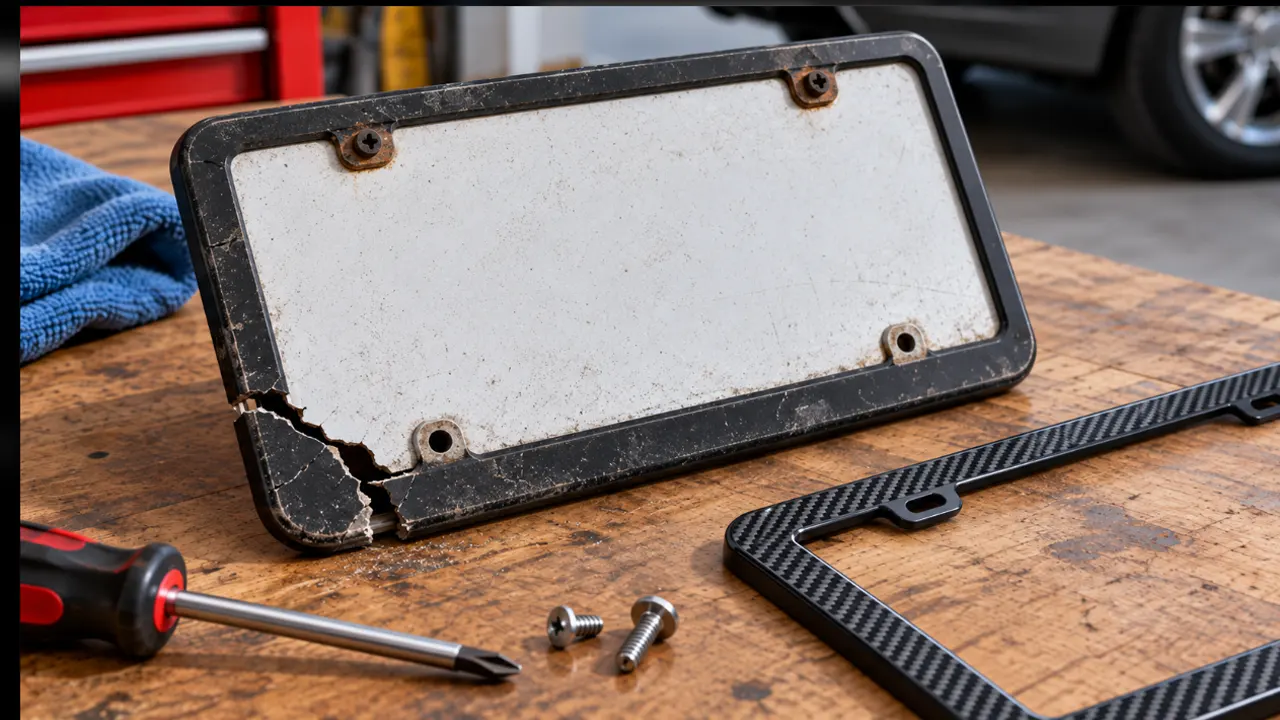
If a license plate frame is cracked through a screw hole, split along an edge, or no longer holds the plate securely, replacement is usually the safer fix. Before ordering a new one, check whether the damaged part is actually the frame, the vehicle-side bracket, the fastener, or the plate itself. Those parts can look similar from behind the car, but they call for different repairs.
First, identify what is broken
Look at the assembly with the car parked and the engine off. A frame is the trim that borders the plate. A mounting bracket sits behind the plate and attaches it to the bumper, hatch, or another vehicle structure. Screws, clips, threaded inserts, and plastic anchors connect those pieces. The plate is the metal registration tag itself.
A crack that starts at a frame screw hole or runs across a bar usually means the frame has lost strength. A frame that looks intact but moves with the plate may be attached to a loose bracket or damaged bumper insert. If the plate is bent, cracked, or has torn mounting holes, replacing only the frame will not correct the plate damage.
Check for a sharp or lifted edge, missing pieces, a loose corner, screw heads pulling through the frame, and fresh rub marks on the paint. Also check that the frame has not shifted over a character, state name, registration decal, or other required plate detail.
Can you repair a broken license plate frame?
A small cosmetic chip away from the mounting points may not affect how the frame holds the plate. A split at a screw hole, a broken corner, or a crack that lets the plate move is different: glue or tape can hide the damage without restoring a dependable attachment. Adhesives also may not bond well to a dirty, flexible, or weather-exposed surface.
For a structural crack, replace the frame rather than relying on a glued joint as a road repair. Don’t bridge a crack with tape, wire, or a zip tie if it can loosen, flap, damage the finish, or interfere with plate visibility. If the vehicle’s bracket or threaded insert is broken, use the appropriate replacement part or have the mounting point repaired; a new frame alone will not fix it.
How to replace a damaged frame without damaging the plate
- Park on a level surface and support the plate. Keep one hand on the plate while you remove the fasteners so it cannot swing against the paint or fall.
- Remove screw caps carefully. Use a plastic trim tool or a small flat tool gently, keeping it away from the plate face. If a screw is seized or stripped, stop before the bit slips into the plate or bodywork. The steps for removing seized frame screws depend on the fastener and the condition of the mount.
- Separate the parts and inspect the back. Note the order of plate, frame, washers, pads, and bracket. Look for corrosion, cracked plastic, elongated holes, paint marks, or a damaged threaded insert.
- Match the replacement to the plate and mounting points. Compare the frame opening, outer dimensions, hole arrangement, and available clearance. A frame can share the same general plate format but still cover a decal or fail to line up with your vehicle’s mounting holes.
- Start each screw by hand. Align the plate and frame before tightening. Begin all fasteners loosely, then tighten them evenly. Stop when the assembly is secure; overtightening can crack a plastic frame or damage the mounting point.
- Check the finished installation. Confirm that the plate is upright, secure, and fully readable, with no frame edge or fastener covering required information. Check the plate light and nearby camera or trim if the frame sits close to them.
When the frame is not the only part to replace
If a screw spins without tightening, the problem may be a stripped insert or vehicle-side anchor. If the bracket is bent or detached, replacing the frame may leave the plate loose. If the plate’s mounting hole is torn, don’t simply add a new hole through the plate; check with the issuing agency about a damaged plate and use a proper vehicle-side mounting solution.
When the noise started after a bump or car wash, inspect the surrounding assembly too. A loose plate can rattle even with an intact frame, and a cracked frame may be only one part of the problem. Use the checks in our license plate frame rattle troubleshooting if the sound continues after the replacement.
Why it’s worth replacing a loose or cracked frame
A damaged frame can let the plate vibrate, shift, or rub against the vehicle. A sharp broken edge may scratch the plate or paint, and a loose assembly can become harder to secure if the screw holes continue to split. Replace it promptly if the plate is not firmly attached or if any identifying information is obscured. Local display requirements still apply, so don’t assume a broken frame is harmless just because the number remains visible from one angle.
If you’re comparing replacement U.S. license plate frame options, check the actual opening and hole layout against your plate and vehicle. Fit depends on the specific frame and mounting setup, not only on the label “standard size.”
Common questions
Can I drive with a broken license plate frame?
That depends on whether the plate remains securely fastened and visible under the rules where the vehicle is registered and driven. If it is loose, swinging, or partly obscured, fix the installation before using the vehicle.
Should I replace the plate frame or the bracket?
Replace the frame if its border or screw area is cracked. Replace or repair the vehicle-side bracket or insert if that is what moves, spins, or has broken away. Sometimes both parts are damaged.
Can a broken frame scratch my car?
It can if a loose edge or trapped grit moves against the paint. Support and remove the assembly, clean the contact area, and inspect for rub marks before installing the replacement.
Do I need a frame at all?
Not necessarily. If the plate can be mounted securely with the vehicle’s intended hardware and remains readable, a frame may be optional. Check the vehicle instructions and local plate-display rules.