Missouri law requires every part of a license plate to be plainly visible and reasonably clean, with its reflective qualities unimpaired. An ordinary frame is therefore usable only when it stays outside the official plate information and does not reduce visibility or reflectivity.
Missouri also allows a transparent cover under the current statute, but only while the plate remains plainly visible and the cover does not impair reflectivity. “Transparent” is a starting condition, not an unconditional exemption.
The current rule in RSMo § 301.130
Section 301.130 requires each plate to be securely fastened so that all parts are plainly visible. It must be reasonably clean so its reflective qualities are not impaired. The statute permits a transparent cover if those same visibility and reflectivity conditions continue to be met.
The phrase “all parts” is important. It is broader than “the large number.” The conservative fit leaves the registration characters, state name, tabs, and other official information exposed.
Are license plate frames legal in Missouri?
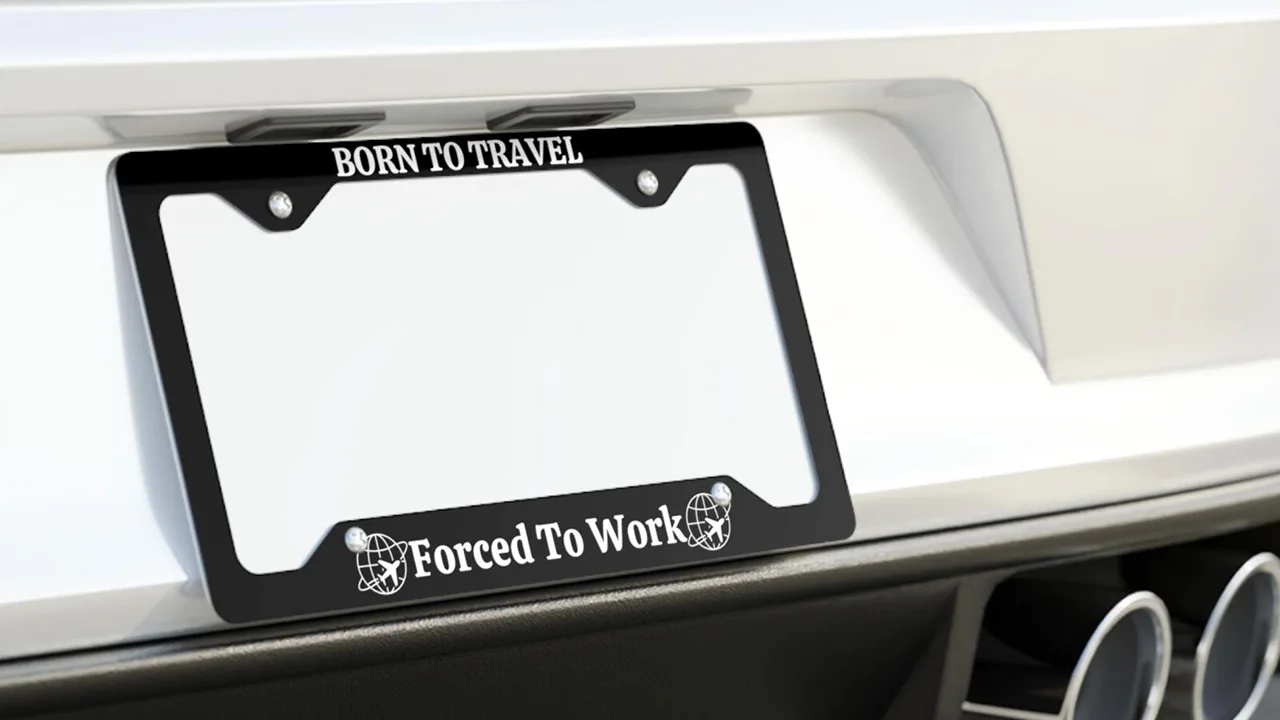
A frame is not automatically unlawful. The installed plate must still satisfy the all-parts-visible rule. A narrow open border can do that; a thick rail that cuts into “Missouri,” the registration number, or the tab area cannot.
Common warning signs include:
- the top rail touches or covers the state name;
- the bottom message rail overlaps official plate wording;
- decorative corners block a registration tab;
- a fastener cap covers part of a character;
- the frame holds the plate at a slant; or
- the finish or attached lens produces enough glare to reduce readability.
Are transparent plate covers allowed?
Missouri is unusual in expressly allowing a transparent cover, but the permission has two conditions: the plate must stay plainly visible and its reflective qualities must not be impaired.
A cover may begin clear and later fail those conditions because of yellowing, scratches, condensation, road film, or reflected light. Tinted and smoked covers are especially difficult to reconcile with a rule written around full visibility and reflectivity.
Do not confuse a legal possibility with a maintenance-free product. Inspect a transparent cover regularly and remove it if the plate no longer looks the same under daylight, the plate lamp, and approaching headlights.
What must a Missouri frame leave uncovered?
| Area | Why it should remain exposed |
| Registration letters and numbers | They identify the vehicle and must be plainly visible |
| “Missouri” | It identifies the issuing state and is part of the plate |
| Registration tab | It is the state’s evidence of current registration when properly attached |
| Reflective face | The law requires the plate’s reflective qualities not to be impaired |
| Other official wording | The statute refers to all parts of the plate |
Where Missouri plates are mounted
Most motor vehicles receive and display front and rear plates, mounted between 8 and 48 inches above the ground with the letters and numbers right side up. The statute lists categories that use one plate, including trailers, motorcycles, motortricycles, autocycles, and motorscooters, which display it at the rear. Certain heavy trucks and buses have different placement.
Follow the rule for your vehicle type. A frame cannot correct a plate installed at the wrong location or one that is loose enough to swing.
Proposed language versus current law
You may find Missouri bills or summaries that use newer language about frames not covering information necessary for law enforcement or about nontinted covers. Proposed text is not automatically current law. As of the review date, the official Revisor’s page for § 301.130 still uses the “all parts plainly visible” and “transparent cover” language described above.
This is why checking the official statute matters for legal-intent searches. News about a filed bill can rank beside the current code even when the bill has not changed the operative section.
A practical Missouri frame check
- Clean the plate. Missouri expressly requires it to be reasonably clean.
- Expose every official area. Do not stop after checking the registration sequence.
- Inspect the tab corner. Make sure the current tab is attached in the designated area and not under a frame rail.
- Check reflectivity at night. Compare the plate with and without any cover if you see haze or glare.
- Secure both required plates. On a two-plate vehicle, the front and rear installations must each meet the display rule.
- Repeat after weathering. Covers and glossy frames change with scratches, dirt, and sun exposure.
Frame or cover?
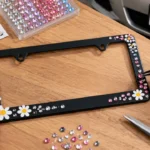
A frame borders the edge. A cover adds a layer over the face. Missouri may allow either when the plate remains fully visible and reflective, but an open frame introduces fewer optical variables. See the practical differences between a plate frame and a cover before choosing a design.
Frequently asked questions
Can a frame cover part of the word “Missouri”?
That does not match the requirement that all parts of the plate be plainly visible. Use a slimmer top rail.
Are smoked covers legal in Missouri?
The statute permits a transparent cover only when the plate remains plainly visible and its reflectivity is not impaired. Smoke tint makes those conditions harder to meet and should not be treated as automatically allowed.
Can a frame cover the registration tab?
No. The tab belongs in the designated plate area and serves as evidence of registration. Keep it fully exposed.
Does Missouri require two plates?
Most passenger vehicles display front and rear plates. The statute lists one-plate categories and special placement rules, so confirm the rule for your vehicle type.
Bottom line
Missouri’s current test is visual and practical: all parts of the plate must be plainly visible, the plate must be reasonably clean, and reflectivity must remain unimpaired. That permits a carefully fitted frame—and conditionally, a transparent cover—but not an accessory that hides or optically degrades the plate.
This information reflects the official Missouri statute reviewed on September 24, 2026. It is general information, not legal advice.