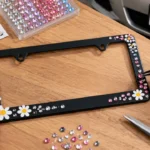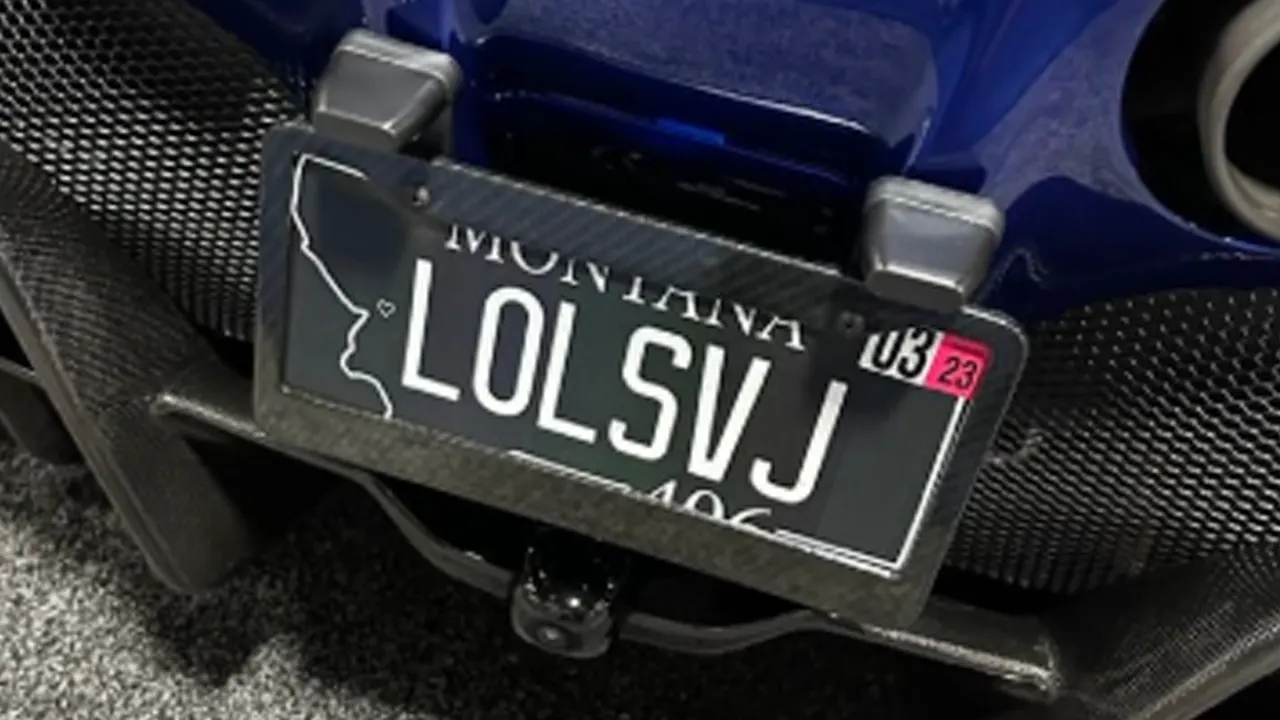
A license plate frame is not automatically illegal in Montana, but the plate must be conspicuously displayed, securely fastened, and unobstructed from plain view. Montana’s current statute also defines conspicuous display to include firm attachment by two separate fasteners at the required location.
A slim open frame can meet those conditions. A thick border, cover, rack, or mounting arrangement that hides the plate or makes it less obviously visible can create a violation.
What Montana Code § 61-3-301 requires
Montana Code Annotated § 61-3-301 says a vehicle must have the proper plates conspicuously displayed. Each plate must be securely fastened to prevent swinging and may not be obstructed from plain view.
The 2025 code defines “conspicuously displayed” as obviously visible and firmly attached by two separate fasteners to the front and rear bumpers when the vehicle is subject to the standard two-plate rule and has those bumpers. Vehicles in one-plate categories use a clearly visible rear location, subject to the statute’s details.
Are license plate frames legal in Montana?
Yes, if the frame does not defeat the display rule. Montana does not list every acceptable border width. Instead, the installed plate must remain obvious, secure, and unobstructed.
A frame is a poor fit when it:
- covers any registration letter or number;
- hides the state name or county prefix used on Montana plates;
- overlaps a registration sticker or official wording;
- places tinted, reflective, or cloudy material over the face;
- uses hardware that leaves the plate loose or able to swing; or
- sits behind another accessory that blocks plain view.
Does Montana require front and rear plates?
Most motor vehicles must display one plate horizontally at the front and one horizontally at the rear. The statute lists exceptions. Motorcycles, quadricycles, trailers, semitrailers, pole trailers, and travel trailers use a single rear plate, which may be vertical when the available space does not permit horizontal display. Custom vehicles and street rods can also qualify for a rear-only rule.
If a vehicle’s body construction prevents normal front-plate display, Montana provides a waiver process through the highway patrol, including an inspection and certificate. Removing the front plate on your own is not the same as receiving that waiver.
Why two fasteners matter
Montana’s current definition is more specific than a general instruction to “mount securely.” It calls for two separate fasteners. The point is not cosmetic: two attachment points help keep the plate from rotating, swinging, or folding behind a frame.
Use the vehicle’s intended mounting points when they align correctly. If the bumper has only one damaged hole or no suitable flat surface, repair the mount or use the proper bracket rather than improvising with wire, adhesive, or a single loose screw.
What counts as an obstruction?
The statute uses “plain view,” which applies to more than a frame rail. A bike rack, hitch accessory, spare tire, mud flap, dark cover, or accumulated dirt can also obstruct the plate. In State v. Haldane, the Montana Supreme Court treated observations that a plate was not obviously visible and was obstructed from plain view as sufficient to support suspicion of a plate-display violation.
The lesson is practical: inspect the vehicle in its driving configuration. A plate that is clear in the garage may be hidden after a rack is loaded or a tailgate accessory is installed.
A Montana frame and mounting check
- Confirm how many plates the vehicle requires. Do not apply a motorcycle or trailer exception to a passenger car.
- Use two separate fasteners. The plate should be firm and unable to swing.
- Keep the entire face in plain view. Expose the number, state identification, county prefix, sticker, and official wording.
- Check accessories. Load the bike rack or carrier and view the vehicle from behind.
- Inspect at normal distance. The plate should be obviously visible, not merely decipherable from one angle.
- Remove optical interference. A cover that adds tint, glare, haze, or condensation is not the low-risk choice.
Frame versus mounting bracket
A frame decorates or supports the plate’s perimeter. A mounting bracket connects the plate to the vehicle when the bumper does not provide a direct mounting surface. Montana’s two-fastener and location requirements make the bracket structurally important on some vehicles.
If the plate still moves after the frame screws are tightened, the bracket behind it may be damaged or mismatched. Repair that mounting layer first; then choose a frame whose visible opening clears the plate information.
Quick answers
Can a Montana frame cover the county prefix?
Do not cover it. The plate must remain unobstructed from plain view, and the county-coded prefix is part of the registration display.
Is one screw enough?
The current definition of conspicuous display calls for two separate fasteners at the required location. Use both and repair a stripped mounting hole rather than leaving the plate loose.
Can you put the front plate in the windshield?
The standard rule calls for attachment at the front bumper when the vehicle has one. If body construction prevents compliance, use Montana’s formal waiver process rather than choosing a different location on your own.
Are clear plate covers allowed?
The statute’s plain-view rule still applies. Any cover that causes glare, haze, dirt buildup, or reduced visibility can make the installation noncompliant even if the material was sold as clear.
Bottom line
Montana combines visibility and mounting in one practical standard: the proper plates must be obviously visible, unobstructed from plain view, and firmly attached with two separate fasteners. A narrow frame can work when it respects all three conditions.
This information reflects the Montana Code Annotated reviewed on September 24, 2026. It is general information, not legal advice.