Yes, a plastic license plate frame can scratch car paint, but plastic alone is not the cause. Scratches develop when a frame, plate, fastener, or trapped grit touches the painted surface and moves. Poor clearance, a loose assembly, warped parts, and contaminated contact points raise the risk.
A well-fitted frame should not depend on painted bodywork for support. The safest approach is to inspect the complete mounting stack and eliminate unwanted contact before driving.
How a License Plate Assembly Marks Paint
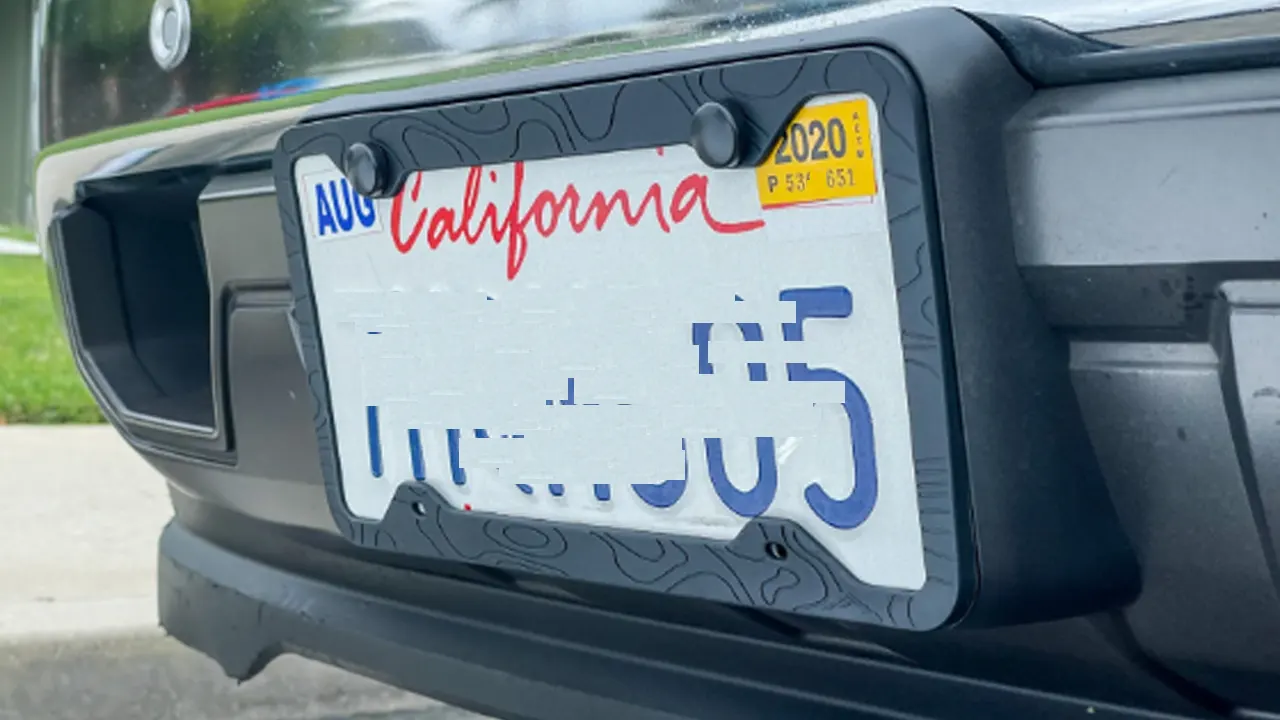
Paint damage needs two things: contact and relative movement. The contact may come from the frame edge, the plate itself, a hard spacer, an oversized fastener, or dirt packed between surfaces. Movement can come from road vibration, a closing trunk, wind load, washing, or a loose lower edge.
| Contact Path | Why It Can Mark Paint | What to Look For |
| Lower frame edge | A two-hole assembly can pivot or flex at the unsupported bottom | Shiny rub line, dust trail, or polished paint below the plate |
| Plate corner | A bowed plate may project beyond the frame or backing bracket | Corner-shaped marks and uneven plate seating |
| Trapped grit | Hard particles act as an abrasive between moving surfaces | Dirt packed behind the frame or circular scuff patterns |
| Fastener or washer | An incorrect stack can press a hard part against the body | Point marks around the mounting holes or behind the bracket |
| Warped frame or bracket | Distortion reduces clearance and concentrates contact pressure | One corner sits closer to the body or springs back when pressed |
Material labels do not settle the question. A hard metal edge and a plastic edge can both cause damage when geometry and movement are wrong. A softer component can also hold grit against paint.
Inspect the Frame Before Installation
- Clean the frame, plate, bracket, and mounting area. Inspection is unreliable when dirt hides an edge or contact mark.
- Check the rear profile. Look for molding flash, sharp corners, raised logos, protruding tabs, damaged clips, or uneven stand-offs.
- Dry-fit the complete stack. Assemble the bracket, plate, frame, spacers, washers, and screws without final tightening.
- Check clearance around the perimeter. Use a light and view the assembly from the side. Do not assume a gap at the top means the bottom is clear.
- Press each corner lightly. The frame should not rock into the paint or make a tapping sound.
- Open and close the trunk or tailgate. Confirm that body movement does not bring the assembly into contact.
If you cannot see the rear edge, place a clean removable paper strip at the suspected area during a stationary fit check. Resistance can reveal contact, but do not drive with test material installed.
How to Prevent Paint Contact and Abrasion
Correct the Mounting Geometry First
Use the vehicle’s intended mounting points and a frame that matches the plate and bracket. Start every screw by hand and tighten the assembly evenly. Overtightening can bow a plastic frame; undertightening can allow it to move.
If the lower edge rattles, identify the moving interface before adding a pad. The license plate frame rattle guide helps you separate frame-to-plate movement from plate-to-vehicle contact.
Use Spacers or Pads Only Where They Belong
A compatible spacer can maintain clearance or support a known contact point. It should be clean, non-abrasive, weather-resistant for the intended use, and placed on an approved surface. It must not cover drainage, trap a hard edge against paint, push the screw beyond safe engagement, or interfere with a camera or closure.
Do not treat generic foam tape as a universal fix. Adhesive compatibility, moisture retention, temperature, removal, and long-term compression all depend on the product and surface.
Keep the Rear Surface Clean
Wash dirt from the visible frame and any accessible gaps with a finish-compatible cleaner and a soft tool. Avoid forcing grit deeper behind the plate. During periodic removal, support the plate so it cannot swing against the body, then clean and inspect the hidden surfaces. The license plate frame cleaning guide covers routine care.
What If You Already See a Mark?
First stop the contact. Photograph the installed position, remove the assembly carefully, and clean the area without abrasive scrubbing. A light residue or transfer mark may look similar to a scratch until the surface is clean.
If a fingernail catches in the mark, the finish is cracked, or bare material is visible, ask a qualified detailer or body repair professional to assess it. Do not keep reinstalling the same parts while you test polishing products.
Design Checks for Private-Label and Dealer Programs
For volume buyers, paint protection is a geometry and quality-control requirement. A sample should be evaluated as an installed system, including the target plate, bracket, hardware, and vehicle interface.
| Design Check | Approval Question |
| Rear edge and corners | Are the contact-side edges smooth, consistent, and free of flash or burr-like features? |
| Stand-off geometry | Does the frame maintain clearance on the intended mount after tightening? |
| Flatness | Does the sample sit flat without rocking or springing toward the body? |
| Lower support | Does a two-hole version remain stable under a light corner movement check? |
| Hardware stack | Are screw length, head profile, washers, caps, and spacers defined for the target application? |
| Contamination control | Are molding, finishing, packing, and assembly steps controlled so hard debris is not trapped on rear surfaces? |
Review the plastic license plate frame options only after the application and mounting interface are defined. For a custom profile or hardware pack, provide an installed sample requirement and a clear no-contact acceptance check when you request a project review.
Frequently Asked Questions
Is plastic safer for paint than metal?
Not automatically. The risk depends on edge geometry, clearance, trapped grit, installation, and movement. Either material can mark paint if it rubs against the body.
Will a rubber or foam pad always prevent scratches?
No. A suitable pad can isolate a controlled contact point, but the wrong material or location can trap dirt and moisture, compress over time, or change the fastener stack.
Why are the marks worse at the bottom of the frame?
On some two-hole assemblies, the lower edge has less restraint and can move against the plate or vehicle. Check fastener security, frame flatness, lower support, and paint clearance.
Can overtightening cause paint damage?
Yes. It can bow the frame or plate and pull an edge closer to the vehicle. Tighten evenly and follow any vehicle- or bracket-specific instruction.
How often should I remove the frame to clean behind it?
There is no universal interval. Inspect sooner after dusty, sandy, salted, or muddy use, and whenever you hear a rattle or see a dirt trail emerging from behind the assembly.