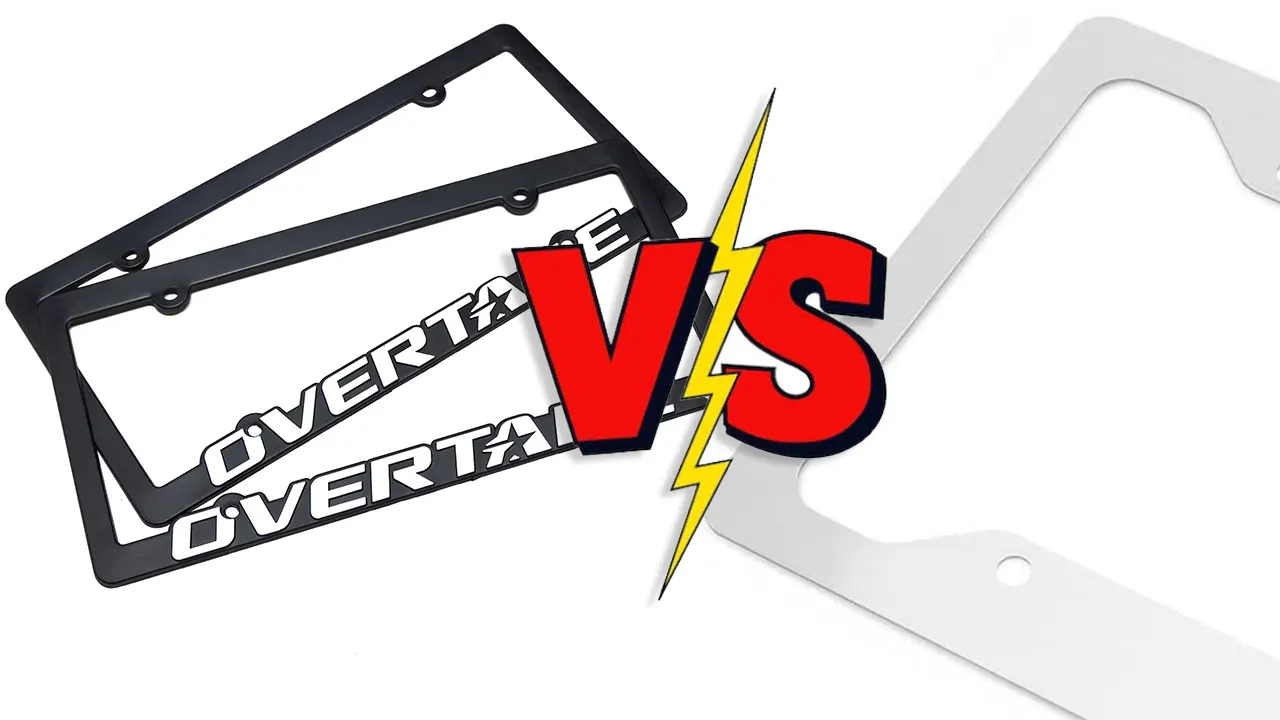
Choose plastic when your product depends on molded clips, ribs, complex contours, integrated color, or repeat-volume geometry. Choose metal when the buyer expects a genuine metal surface, a slim section, engraving, or a brushed or polished appearance.Neither category is automatically stronger, longer-lasting, or less expensive. “Plastic” can mean different resin formulations and constructions. “Metal” can mean aluminum, stainless steel, zinc alloy, or a layered and coated assembly. Your decision should compare finished, production-equivalent frames—not material labels.
Plastic and metal at a glance
| Decision point | Plastic frame | Metal frame |
| Design freedom | Supports molded ribs, clips, bosses, textures, contours, and integrated features | Supports stamped, cut, cast, machined, formed, or assembled designs depending on the metal and process |
| Surface character | Can be molded in color, textured, coated, plated, or printed | Can deliver a true brushed, polished, plated, painted, or anodized metal appearance |
| Section and stiffness | Stiffness depends strongly on resin and cross-section design | Can achieve a relatively slim rigid section, but thin parts can still bend or dent |
| Impact response | May flex, crack, creep, or become brittle depending on formulation and conditions | May bend, dent, crack at cast features, or retain permanent deformation |
| Weather exposure | UV stability, pigment, temperature, and chemical resistance must be verified | Corrosion, coating failure, staining, and galvanic contact must be controlled |
| Branding | Molded details plus printing, labels, badges, or compatible laser marking | Printing, engraving, embossing, etching, badges, or applied finishes |
| Tooling pattern | Injection molding may require meaningful upfront tooling for custom geometry | Tooling ranges from simple cutting fixtures to stamping dies or casting tools |
| Logistics | Often lightweight, but shape and nesting determine carton efficiency | Weight, edge protection, and surface-to-surface contact can increase packaging needs |
First define the plate and vehicle interface
Material selection comes after fit. State whether you are buying a decorative perimeter frame, a full plate holder, a two-piece frame, or a frame-and-hardware kit. Then lock the target market, plate dimensions, mounting pattern, visible opening, vehicle recess, camera and lamp clearance, and permitted coverage.A US-format frame and a European-format holder are not simply different lengths. Their proportions, fastening arrangements, recesses, and product architecture may differ. If your program crosses regions, begin with the US versus European plate frame size comparison and develop separate controlled drawings where necessary.
When plastic is the better starting point
Plastic is valuable when geometry does much of the work. Injection molding can combine ribs, snap features, screw bosses, retention tabs, raised branding, textures, and hidden reinforcement in one part. Molded-in color can also reduce reliance on a decorative topcoat for some programs.That freedom shifts risk into product and mold design. Thick transitions can sink, long rails can warp, clips can fatigue, and poorly selected resin can creep or become brittle. Outdoor performance depends on the complete formulation—including pigment, stabilizers, fillers, recycled content, and processing—not only a generic resin name.Plastic is a strong candidate when you need:
- integrated clips or a full backing-holder structure;
- complex contours or deep molded branding;
- low part weight;
- multiple molded colors based on a controlled resin system; or
- repeat production that can justify the required tooling.
Use the plastic license plate frame page to define the commercial product, then compare ABS versus PP license plate frames if those are your candidate resin families. Do not substitute the article comparison for validation of the exact production formulation.
When metal is the better starting point
Metal is often selected because the material itself contributes to the visual promise. A buyer can see and feel a real brushed, polished, plated, painted, or anodized surface. Metal processes can also produce a comparatively slim frame without relying on deep molded ribs.The metal category still needs to be narrowed. Aluminum and stainless steel differ in weight, stiffness, corrosion behavior, finishing routes, forming, and price structure. Cast alloys introduce another set of section and plating considerations. A thin stamped part and a heavy cast frame should not be treated as equivalent because both are called metal.Metal is a strong candidate when you need:
- a genuine metallic surface for a premium retail position;
- a slim visual profile;
- brushed, polished, anodized, plated, or engraved decoration;
- a formed or cut geometry suited to sheet or plate; or
- a product story tied to a specified metal construction.
For a closer material decision, compare aluminum versus plastic license plate frames or stainless steel versus plastic license plate frames. Those narrower comparisons are more useful than treating all metals as one group.
Compare failure modes, not generic durability claims
A useful durability discussion names the way each construction can fail and the test that would reveal it.
| Failure mode | Plastic-related questions | Metal-related questions |
| Distortion | Can the frame warp after molding, shipment, heat exposure, or screw tightening? | Can the section bend or dent during packing, installation, or impact? |
| Surface wear | Will texture, coating, plating, or print scratch, fade, peel, or become glossy? | Will polish, brushing, plating, paint, anodizing, or print scratch, stain, or wear? |
| Weathering | Does the resin formulation retain color and impact behavior under the intended exposure? | Does the metal and finish system resist corrosion, oxidation, and coating breakdown? |
| Fastener load | Do bosses crack, creep, strip, or whiten at the specified torque? | Do holes elongate, edges deform, or dissimilar-metal contacts create a corrosion risk? |
| Plate and vehicle contact | Do molded edges, rear ribs, or trapped debris rub the plate or paint? | Are cut or formed edges controlled, and are contact points isolated where required? |
| Brand decoration | Is the ink, label, coating, or laser response compatible with the exact resin? | Is the decoration compatible with the finish stack and exposed substrate? |
A plastic frame can outperform a poorly finished metal one, and a well-engineered metal frame can outperform an unsuitable plastic construction. Write your acceptance plan around actual exposure, installation, care products, packaging, and channel expectations.
Protect the plate and vehicle surface
Material alone does not decide whether a frame will scratch vehicle paint. Scratching usually involves contact geometry, sharp or unfinished edges, trapped grit, movement, installation torque, or missing isolation between parts.Review the rear face and all edge conditions on a production sample. Look for burrs, gate remnants, ejector marks, protruding ribs, exposed metal corners, and hardware contact. Install the frame on the intended vehicle or a representative fixture, then check for movement and pressure points after tightening.If surface protection is a priority, the detailed article on whether a plastic license plate frame can scratch car paint provides a practical inspection and installation checklist.
Model total program cost
“Plastic is cheaper” and “metal is premium” are weak purchasing rules. Unit price may point one way while tooling, decoration, rejects, packaging, freight, inventory, and reorders point another.Include these cost lines in the comparison:
- product and mold engineering;
- injection mold, stamping die, casting tool, fixture, or cutting setup;
- raw material and forming or molding conversion;
- surface finishing and decoration;
- inspection, sorting, and expected reject modes;
- hardware and assembly;
- protective film, sleeves, separators, and cartons;
- freight based on packed weight and cube;
- inventory required for each color, finish, or artwork version; and
- requalification when material, coating, or supplier conditions change.
A molded platform may become efficient across repeat programs, while a simpler metal process may reduce initial commitment for some geometries. The opposite can also be true. Request quotes against the same drawing, finish, test plan, order quantity, and packaging specification.
Match the material to the sales channel
For dealership and promotional programs, repeatable branding, order frequency, installation speed, and packed cost may be more important than a premium surface. Molded plastic can work well when it integrates the necessary features and passes outdoor and assembly tests. Metal can work equally well when simple geometry and an engraved or printed mark match the program.For premium retail, the visible and tactile finish often carries more weight. A genuine brushed or polished metal may support that position, but its packaging must prevent rub marks and fingerprints. A coated or plated plastic can create a decorative appearance, but the construction should be described accurately rather than presented as solid metal.For a multi-market product line, do not force one material and geometry into every region. Shared branding and packaging can coexist with different frames or holders designed for the local plate interface.
A practical selection sequence
- Lock the target market, plate, vehicle interface, and legal visibility requirements.
- Define the product architecture: perimeter frame, holder, two-piece assembly, or hardware kit.
- List functional needs such as clips, stiffness, slimness, surface feel, and decoration.
- Shortlist the actual constructions—not just “plastic” and “metal.”
- Request production-equivalent samples with documented material and finish stacks.
- Install them using the intended plate and hardware.
- Test the relevant failure modes, including weathering, abrasion, cleaning, corrosion, torque, fit, and packaging.
- Compare total landed program cost and reorder risk.
- Approve a controlled drawing, specification, test criteria, and physical master sample.
The broader license plate frame material guide can help you build the initial shortlist. For a production request, the custom license plate frame page lets you combine material, finish, logo method, hardware, and packaging in one brief.
What to include in your RFQ
Send suppliers a comparable input package:
- target country, plate drawing, vehicle examples, and frame or holder type;
- annual forecast, order quantity, color count, and artwork versions;
- candidate plastic formulation or metal construction and finish stack;
- 2D drawing, 3D data where relevant, critical dimensions, and visible-opening limits;
- logo method, artwork, color standard, texture, and gloss target;
- hardware, torque, assembly, and installation requirements;
- weathering, corrosion, abrasion, cleaner, and functional test expectations;
- inspection level and acceptance criteria;
- individual packaging, surface protection, and carton requirements; and
- change-control and reapproval conditions.
FAQ
Which lasts longer, a plastic or metal license plate frame?
There is no reliable category-wide winner. Outdoor life depends on the exact resin or alloy, part geometry, finish system, decoration, mounting stress, climate, cleaning, and quality control. Compare production-equivalent samples using the same acceptance plan.
Do metal license plate frames rust?
Some metal constructions can corrode, while others rely on alloy selection and protective finishes. Cut edges, coating damage, road salt, retained moisture, and contact between dissimilar metals can all affect the result. Specify the full construction and corrosion test rather than asking only whether it is “rustproof.”
Can a plastic license plate frame scratch paint?
Yes, if a rough edge, molding remnant, trapped debris, movement, or poor installation creates contact. Metal can scratch paint for similar reasons. Inspect the rear geometry, edge finish, isolation features, and installed movement.
Is plastic always lighter than metal?
Often, but the finished-part mass depends on density and geometry. A deep plastic holder can weigh more than a slim metal frame. Compare measured production samples, including hardware and trim.
Is plastic always cheaper?
No. Plastic may require an injection mold, while metal may require cutting, forming, casting, polishing, plating, or other finishing. Volume, geometry, reject rate, packaging, freight, and variant count determine the total program cost.
Should a brand offer both plastic and metal frames?
It can make sense when the channels or price positions are genuinely different. Use a shared product specification structure, but approve each construction on its own material, finish, installation, testing, and packaging requirements.